Posts tagged matcha
Sencha, Gyokuro, Genmaicha, Hojicha and Matcha: A Simple Guide to Japanese Green Tea

If you've ever stood in front of a list of Japanese green teas and wondered what makes sencha different from gyokuro, or why hojicha is brown, you're not alone. Japan makes some of the most distinctive green teas in the world, and once you know a little about how each one is grown and processed, picking your favorite gets a lot easier.

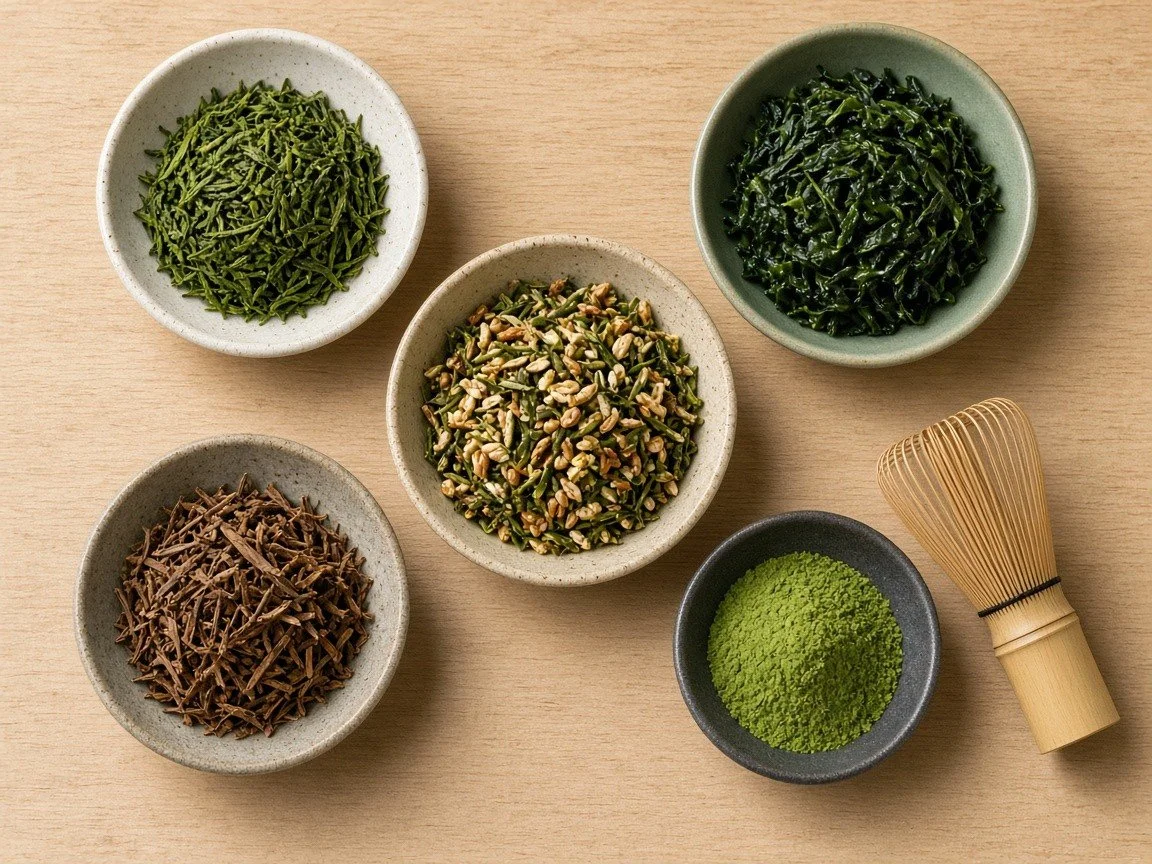
Here's a friendly guide to five classics: Sencha, Gyokuro, Genmaicha, Hojicha and Matcha.
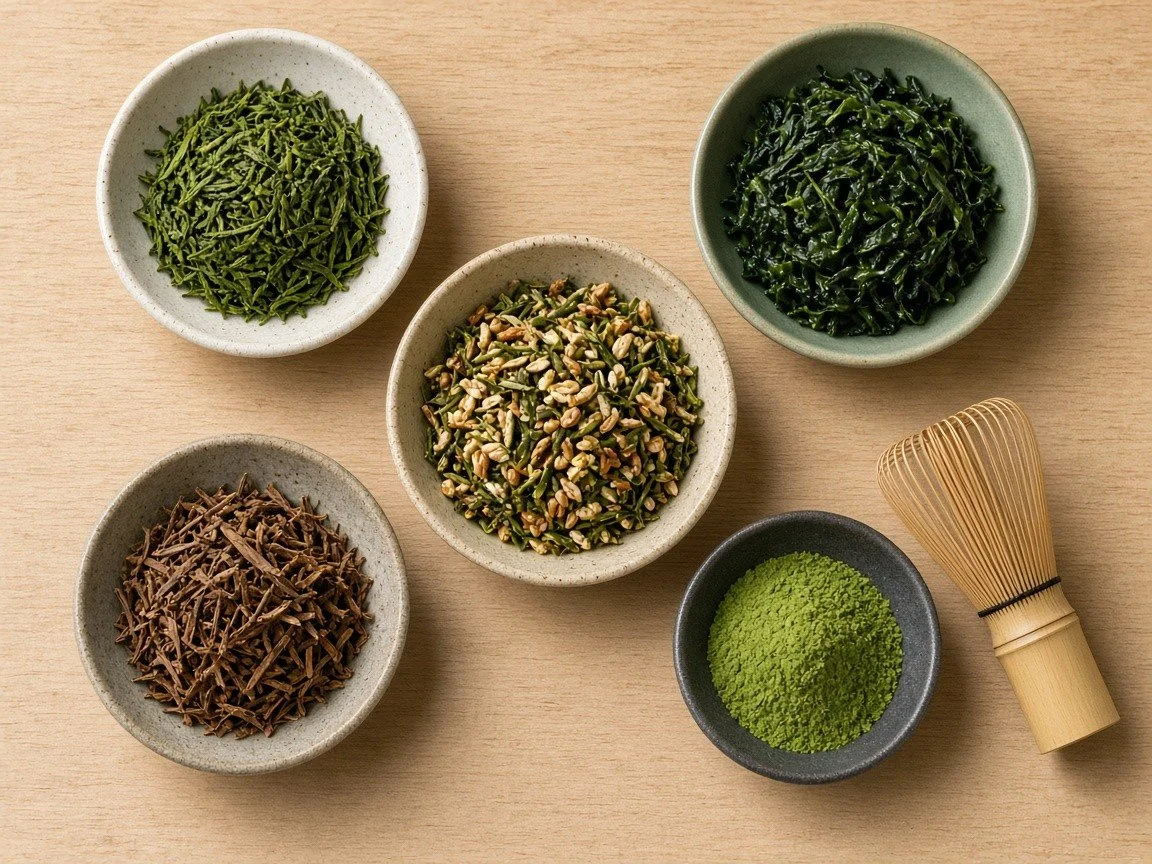
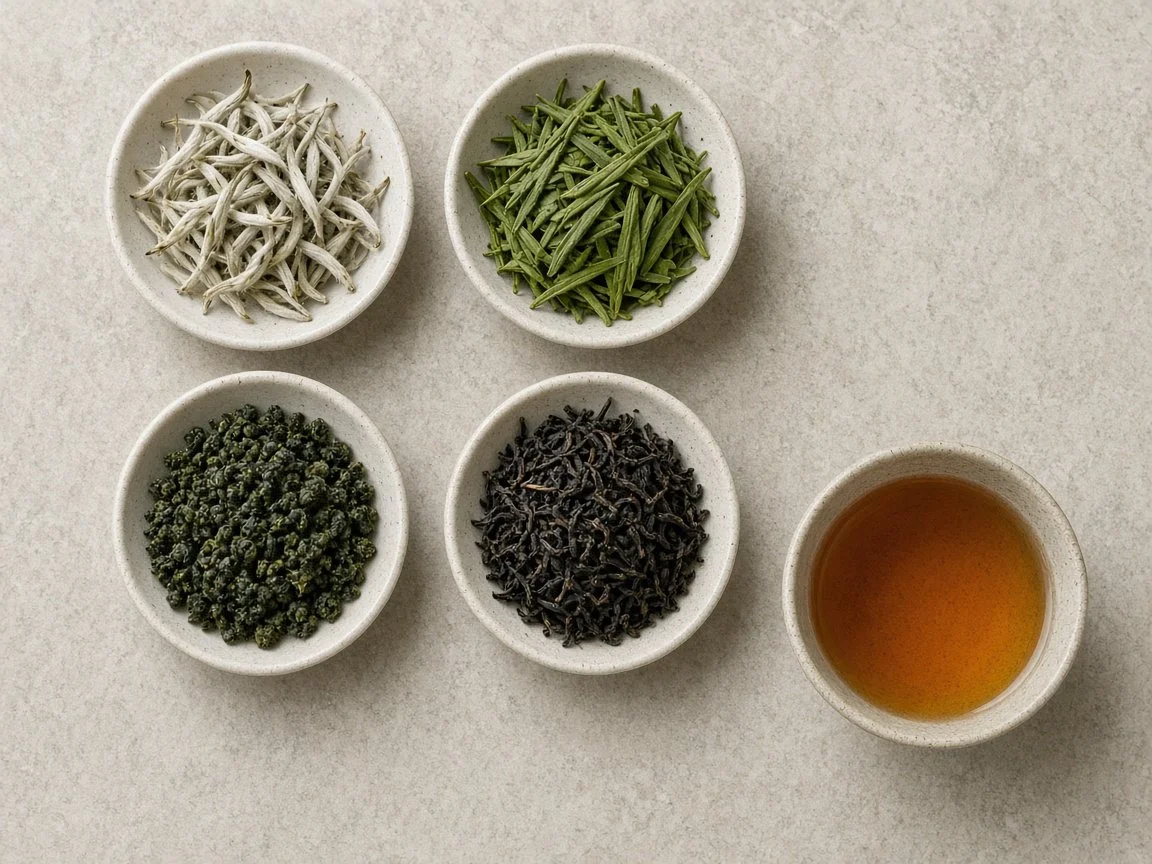
Five dishes of Japanese green tea: sencha, gyokuro, genmaicha, hojicha and matcha powder

What Makes Japanese Green Tea Different

All green tea comes from the same plant, Camellia sinensis, and all of it is heated soon after picking to stop the leaves from oxidizing. The big difference is how that heat is applied. In China, most green tea is pan-fired, which tends to give a toasty, nutty flavor. In Japan, the leaves are usually steamed.

Steaming locks in a bright green color and a fresh, vegetal flavor that many people describe as grassy, sweet or even a little like the sea. The modern steaming method dates to 1738, when Nagatani Soen, a tea farmer in Ujitawara near Kyoto, developed a way to steam fresh leaves and then roll and dry them in stages. Nearly every Japanese green tea you'll meet today grows out of that idea.

Sencha: Japan's Everyday Green Tea

Sencha is the tea most people in Japan drink day to day. The leaves are grown in full sun, steamed, then rolled into thin, needle-like strands. Our Sencha comes from Kagoshima Prefecture on the southern island of Kyushu, one of Japan's largest tea-growing regions.

It brews a cup that's slightly sweet and vegetal, mildly astringent, with a clean finish. It's an easy tea to drink all day, and it makes a very refreshing iced tea, too.

How to brew: 1 heaping teaspoon (about 2 to 3 g) per 8 oz of water at 160 to 175°F, steeped 1 to 2 minutes. Don't over-brew; that's when sencha turns bitter.

Gyokuro: The Shaded "Jade Dew"

Gyokuro means "jade dew," and it's one of Japan's most prized teas. It was created in 1835 in Uji, near Kyoto. About three weeks before harvest, the tea plants are covered with shades of black cloth or bamboo and straw. With less sunlight, the leaves build up more chlorophyll and less of the compounds that cause bitterness, so they turn a deep, dark green and taste sweeter and more savory.

Our Gyokuro is rich and sweet with a smooth, almost brothy texture and a hint of seaweed. It's a tea to sip slowly from a small cup.

How to brew: use cooler water to bring out its sweetness, about 2 teaspoons (4 to 5 g) per 4 to 6 oz of water at 120 to 140°F, steeped about 2 minutes. The leaves can be steeped again.
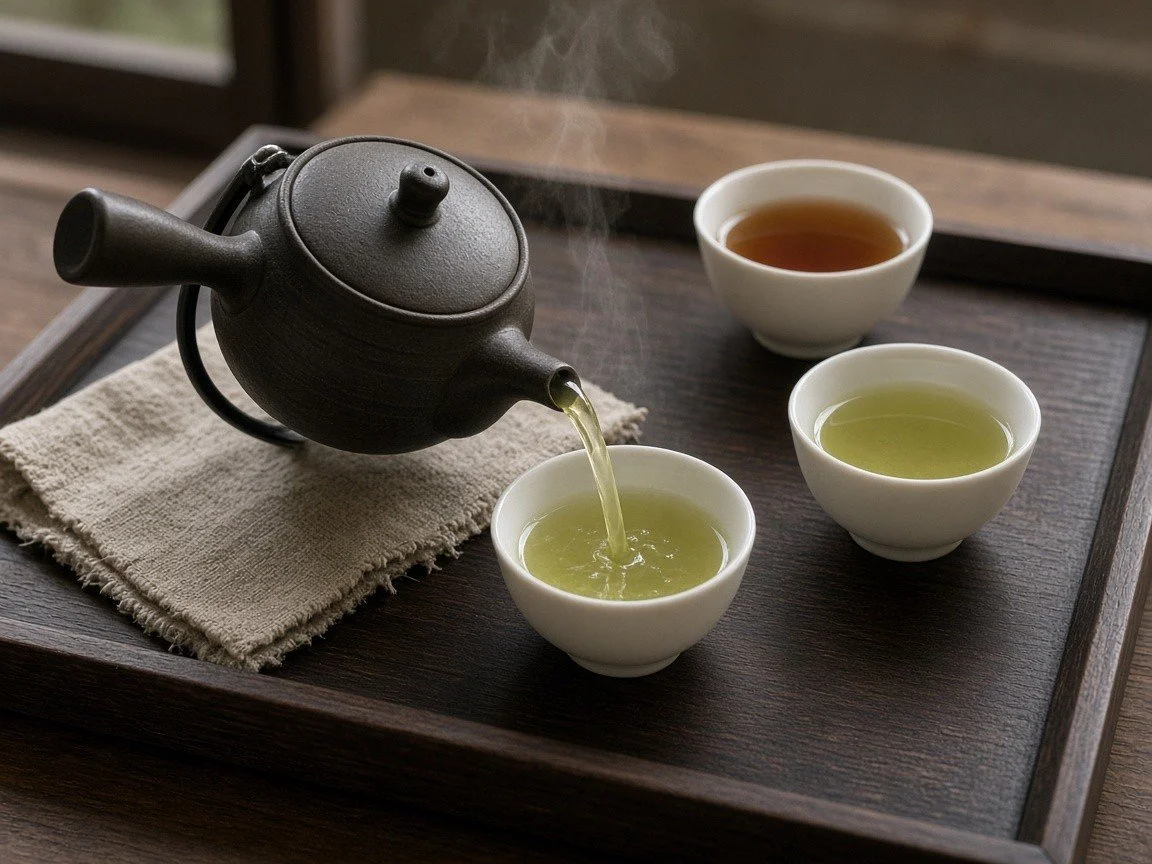
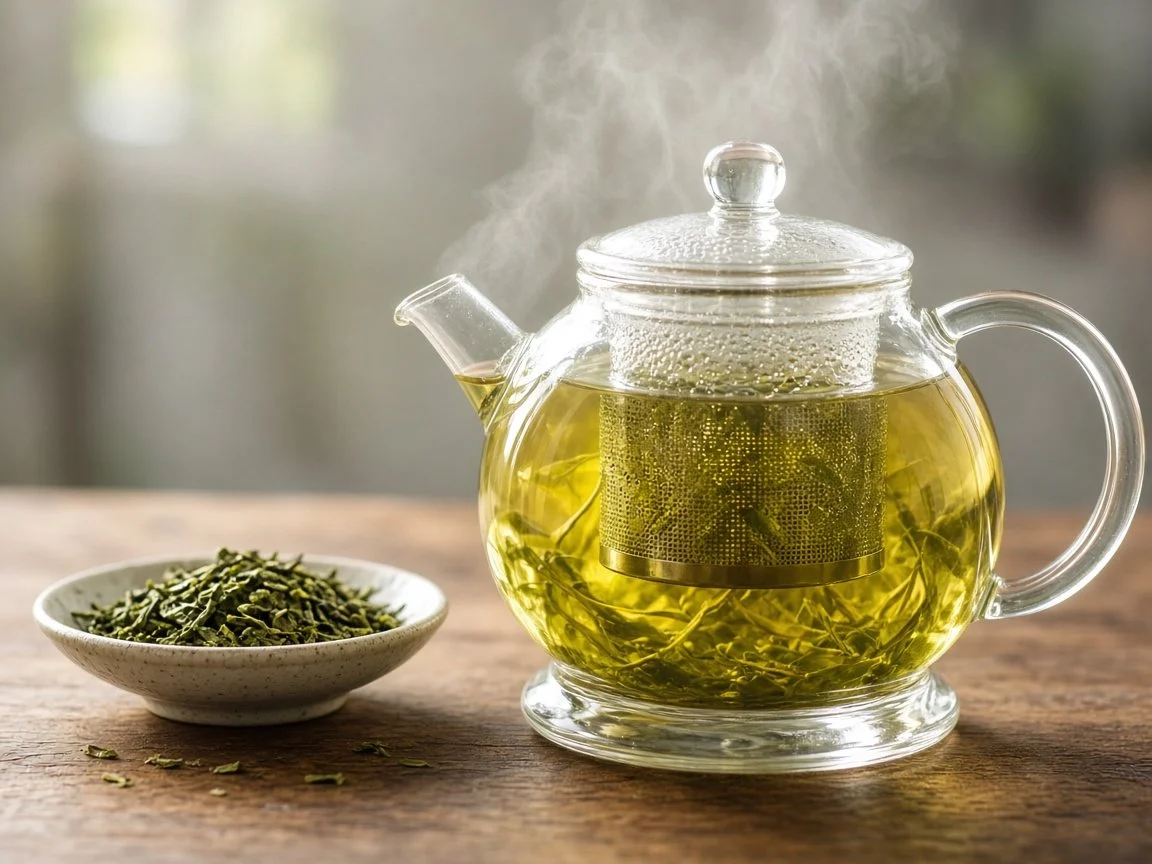
A kyusu teapot pouring pale green sencha into small cups beside a cup of amber hojicha

Genmaicha: Green Tea with Toasted Rice

Genmaicha blends green tea with fire-toasted brown rice. A widely told story says Japanese households added the rice to stretch their tea when tea was expensive, and the combination became a favorite in its own right in the early 20th century. Some of the rice pops during toasting, which is why genmaicha is nicknamed "popcorn tea."

Our Genmaicha uses a high-grade sencha and gyokuro base, so you get a fresh green flavor softened by the warm, bakery-like taste of the rice. It's a great first Japanese tea for anyone who prefers a mellow, savory cup over a grassy one.

How to brew: 1 heaping teaspoon (about 3 g) per 8 oz of water at 175 to 185°F, steeped 2 to 3 minutes.

Hojicha: Roasted Green Tea

Hojicha is the one that surprises people, because it isn't green at all in the cup. It's green tea that has been roasted, which turns the leaves reddish brown and gives them a toasty, caramel-like aroma. The most widely repeated account says it was first made in Kyoto around the 1920s, when a tea merchant began roasting leftover leaves so they wouldn't go to waste.

Our Hojicha is made from roasted bancha, a later-harvest green tea. Roasting removes almost all the astringency and lowers the caffeine a lot, so it's a popular evening tea in Japan. It tastes toasty, nutty and lightly sweet, and it's lovely with dessert.

How to brew: unlike most green teas, hojicha likes hot water. Use 1 to 2 heaping teaspoons (about 3 g) per 8 oz of water at 195 to 212°F, steeped 30 seconds to 2 minutes.

Matcha: Shaded Tea, Ground to a Powder

Matcha starts like gyokuro, with tea plants shaded for weeks before harvest. The leaves are then dried and stone-ground into a fine, bright green powder. Because you whisk the powder right into the water, you drink the whole leaf, which gives matcha its rich body and full flavor. Powdered tea was carried from China to Japan around 1191, traditionally credited to the Zen monk Eisai, and matcha later became the heart of the Japanese tea ceremony.

Our Matcha Samidori is a first-harvest spring matcha from Uji with a vivid color and a sweet, smooth, lingering taste. For lattes, smoothies and baking, our Culinary Matcha is made for mixing.

How to prepare: sift about 1 teaspoon (1 to 2 g) into a bowl, add a few drops of hot water and whisk into a paste. Add 6 to 8 oz of water at 160 to 175°F and whisk briskly in a zigzag motion until frothy. A bamboo whisk makes the froth much easier to get.
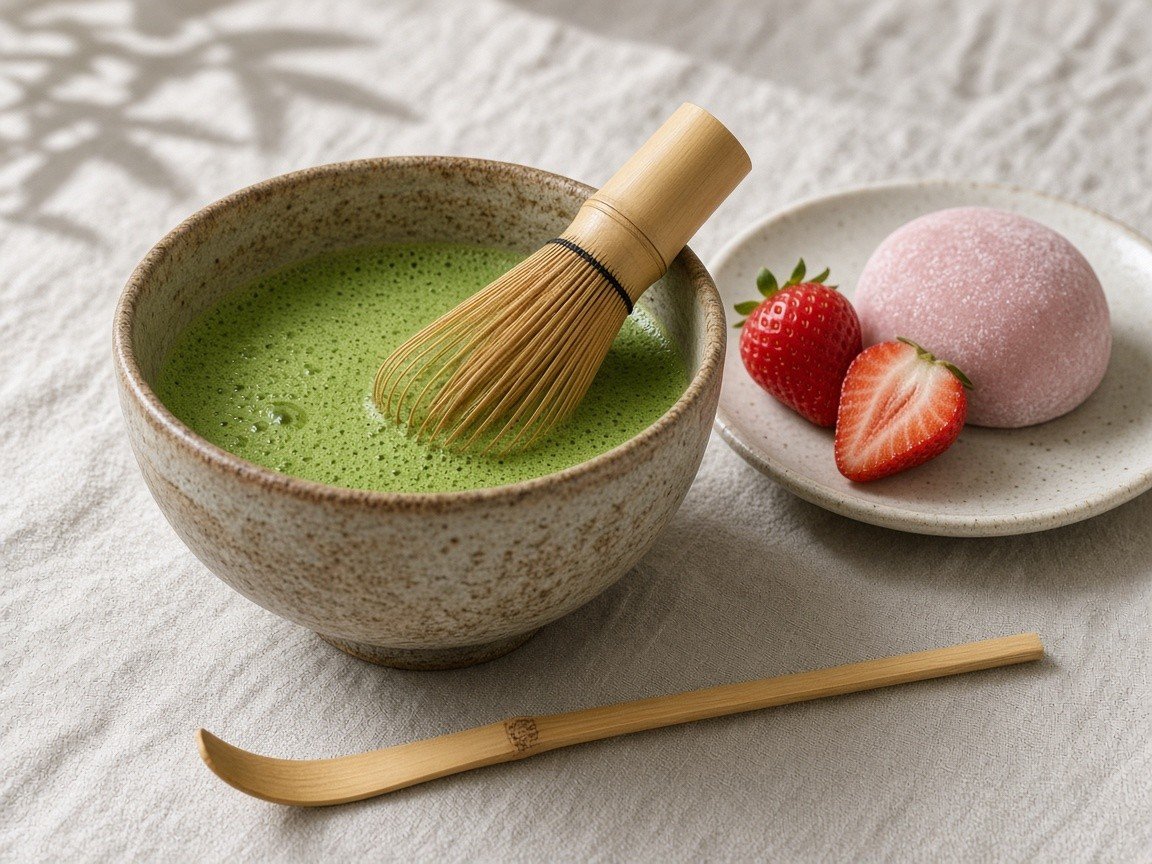
A bowl of frothy whisked matcha with a bamboo whisk, scoop, strawberries and a pink mochi

Which One Should You Try First?

  • For an everyday cup: start with Sencha.

  • For something sweet, rich and special: try Gyokuro.

  • If grassy flavors aren't your thing: Genmaicha or Hojicha.

  • For a low-caffeine evening cup: Hojicha.

  • For lattes or a bold, creamy tea: Matcha.

One tip that applies to almost all of them: go easy on the water temperature. Boiling water is the most common reason Japanese green tea tastes bitter. Hojicha is the happy exception.

And if you've got a bowl of Halloween candy within reach tonight, a cup of toasty Genmaicha or Hojicha is a surprisingly good match for chocolate.

You'll find all of these in our Green Tea and Matcha collections, most with sample sizes so you can taste a few side by side. Quality tea at affordable prices is what we're all about, and Japanese green tea is a wonderful place to explore.

Happy sipping!
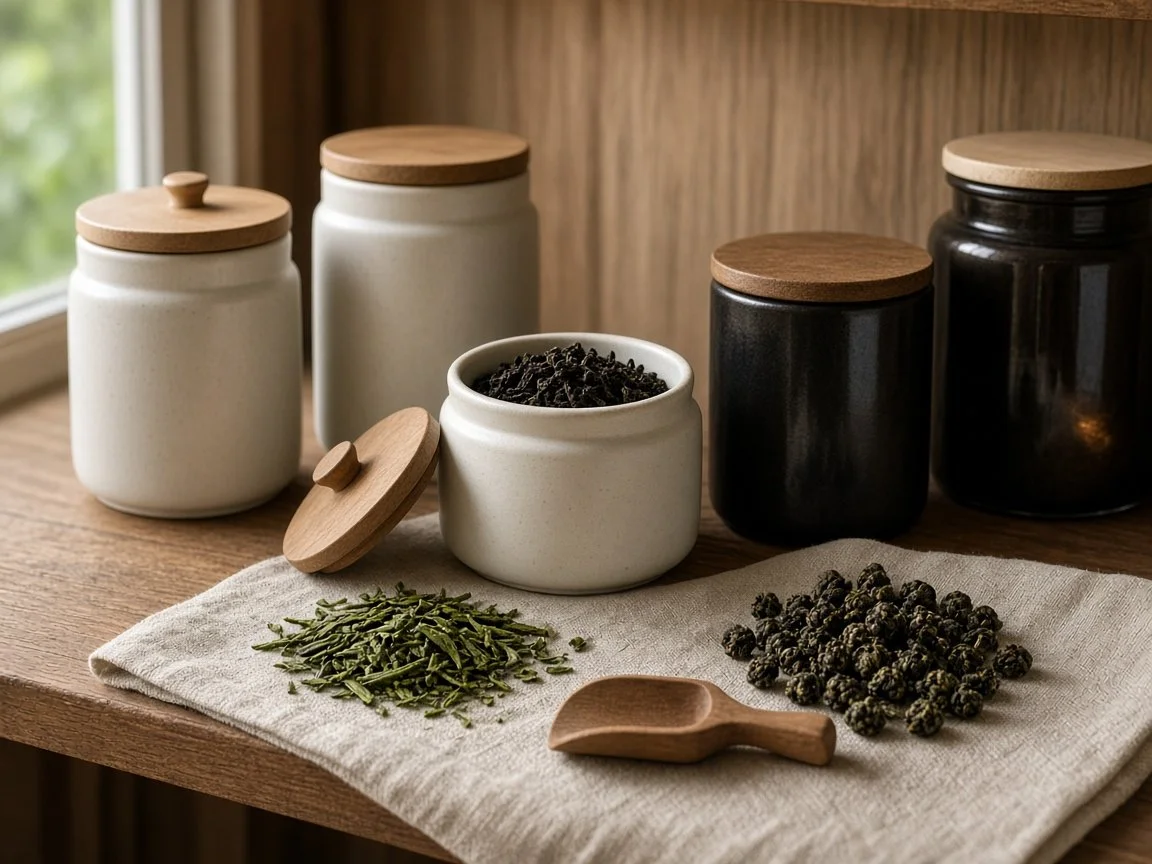
How to Store Loose-Leaf Tea So Every Cup Tastes Fresh

Good loose-leaf tea deserves to taste as good on the last cup as it did on the first. The leaves are dry and shelf-stable, but they're also delicate. Over time, the aroma and flavor slowly fade, and how you store your tea makes a big difference in how fast that happens.

The good news is that keeping tea fresh is simple once you know what wears it down.

The Five Things Tea Doesn't Like

Tea leaves hold their flavor in fragile aromatic compounds, and five things break those down or cover them up:

  • Air. Oxygen slowly dulls the flavor, so less air contact means fresher tea.

  • Light. Sunlight, and even bright kitchen light, fades both the color and the flavor of the leaves.

  • Heat. Warmth speeds up every change in the leaf. A spot next to the stove, oven, or kettle is the worst place for tea.

  • Moisture. Dry leaves keep. Damp leaves go stale fast, and can even mold.

  • Strong odors. Tea readily absorbs smells around it, including coffee, spices, and anything else stored nearby.

The Simple Setup

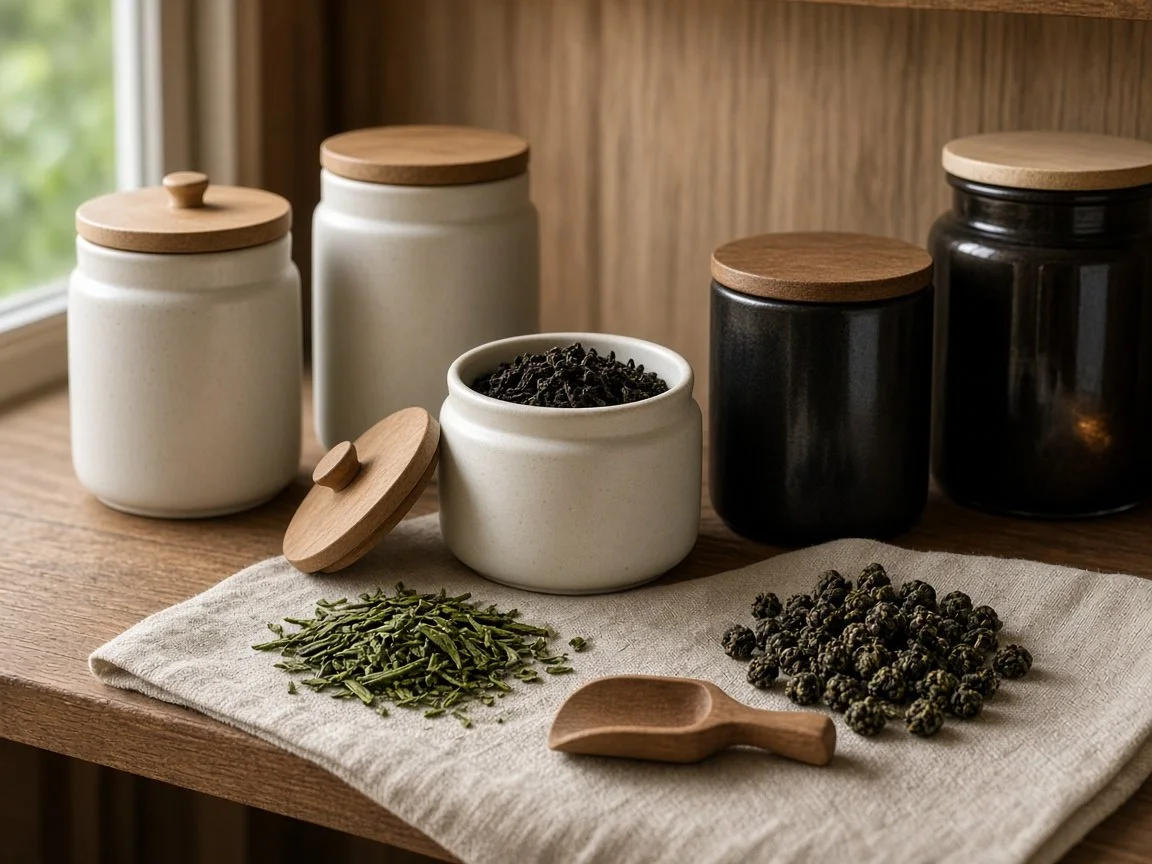
Keep your tea in an airtight, opaque container, and store it in a cool, dark, dry cupboard away from the stove and away from your spice rack. A clear glass jar on a sunny counter looks lovely, but it lets in the light that fades tea, so tuck clear jars into a dark cabinet.

A few habits help too:

  • Use a dry spoon every time, and never scoop tea with wet hands.

  • Close the container right after you measure out your leaves.

  • If your tea came in a bag that doesn't reseal, move it to an airtight container once you open it.

  • Keep flavored and unflavored teas apart. A strongly scented blend like Earl Grey, with its bergamot, or a spiced blend like our Pumpkin Spiced Tea, can lend its aroma to a delicate green or white tea stored in the same box.

  • Buy amounts you'll enjoy within a few months. Fresher tea is better tea.

Tips by Tea Type

All teas like the same basic care, but some are more delicate than others

Green tea. Green teas are the most delicate, and their fresh, grassy sweetness fades the fastest. Japanese greens like Sencha and Gyokuro are at their brightest when enjoyed within several months of opening.

Matcha. Because matcha is a fine powder, it has a lot of surface area exposed to air, so it loses its vivid color and sweetness quickly once opened. Seal it tightly and enjoy it within a month or two of opening. Many matcha drinkers keep an opened, well-sealed container in the refrigerator. If you do, let it come to room temperature before opening so moisture doesn't condense on the powder. If you're new to matcha, our Matcha Sampler Pack lets you try several in small amounts.

Oolong. Lightly oxidized, green-style oolongs such as Ali Shan Oolong are closer to green tea and are best enjoyed fresh. Darker, roasted oolongs like Roasted Tung Ting Oolong are sturdier and hold their character longer.

Black tea. Fully oxidized black teas are the most forgiving. A brisk, malty Assam like Assam Behora keeps its flavor well for a long time when it's stored airtight and away from light.

White tea. Fresh white teas are light and delicate, so treat them like green tea. Some white teas can actually be aged, though. Our Aged Silver Needle is a good example. When stored right, white tea continues to oxidize slowly and develops a richer, more mellow taste.

Should You Refrigerate or Freeze Tea?

For most loose-leaf tea, a cool, dark cupboard is the best spot. The fridge and freezer are humid places full of food smells, and every time a cold container is opened in a warm kitchen, moisture can condense on the leaves. Matcha is the main exception, as noted above. If you do chill tea, keep it sealed tightly and let it warm up before you open it.

How to Tell If Your Tea Is Still Fresh

Tea doesn't spoil the way food does, but it does lose its flavor. Rub a few leaves between your fingers and smell them. Fresh tea smells lively and distinct, whether that's grassy, floral, malty, or fruity. Tea that smells faint or dusty has faded, and it will brew a flat cup. Throw out any tea that smells musty or shows signs of moisture.

Fresh Tea, Better Cups

Good storage is the easiest way to get your money's worth from every bag of tea. Find a cool, dark cupboard, keep the lid on tight, and your leaves will reward you cup after cup. If you'd like to explore new teas in small amounts that you'll finish while they're at their best, our 10 Tea Variety Sampler Pack is a great place to start.

Happy steeping!

Matcha Samidori: A Vivid, Sweet Spring Matcha from Uji

Matcha is one of the teas our customers search for most, and Matcha Samidori is the one we reach for when we want a bowl that's vivid, sweet, and rich. It's a premium first-harvest spring matcha from Uji, Kyoto, made from leaves of the Samidori cultivar. And with all the pumpkin spice around this month, a bright green bowl makes a refreshing change.

Here's where it comes from, what it tastes like, and how to whisk a good bowl at home.

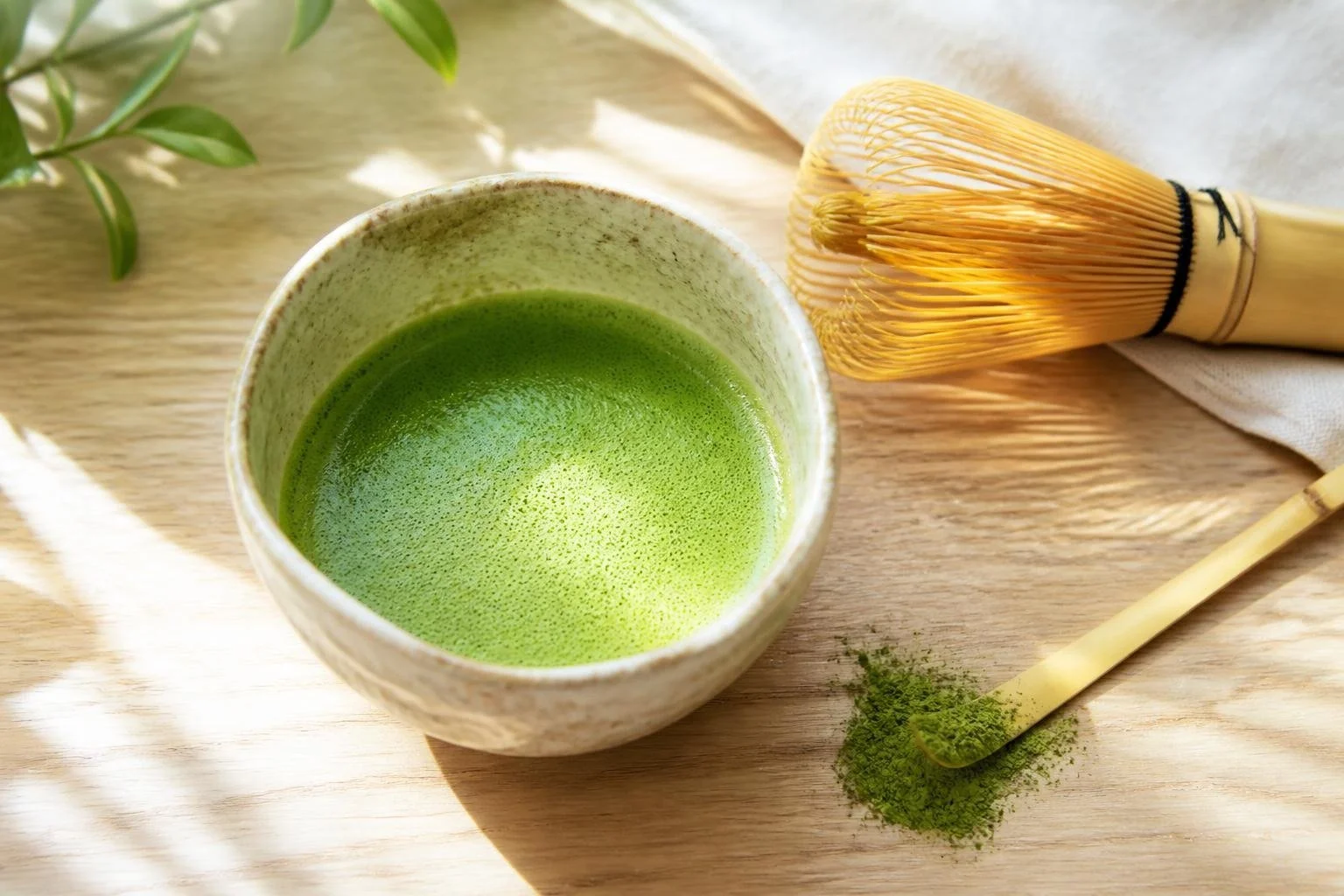
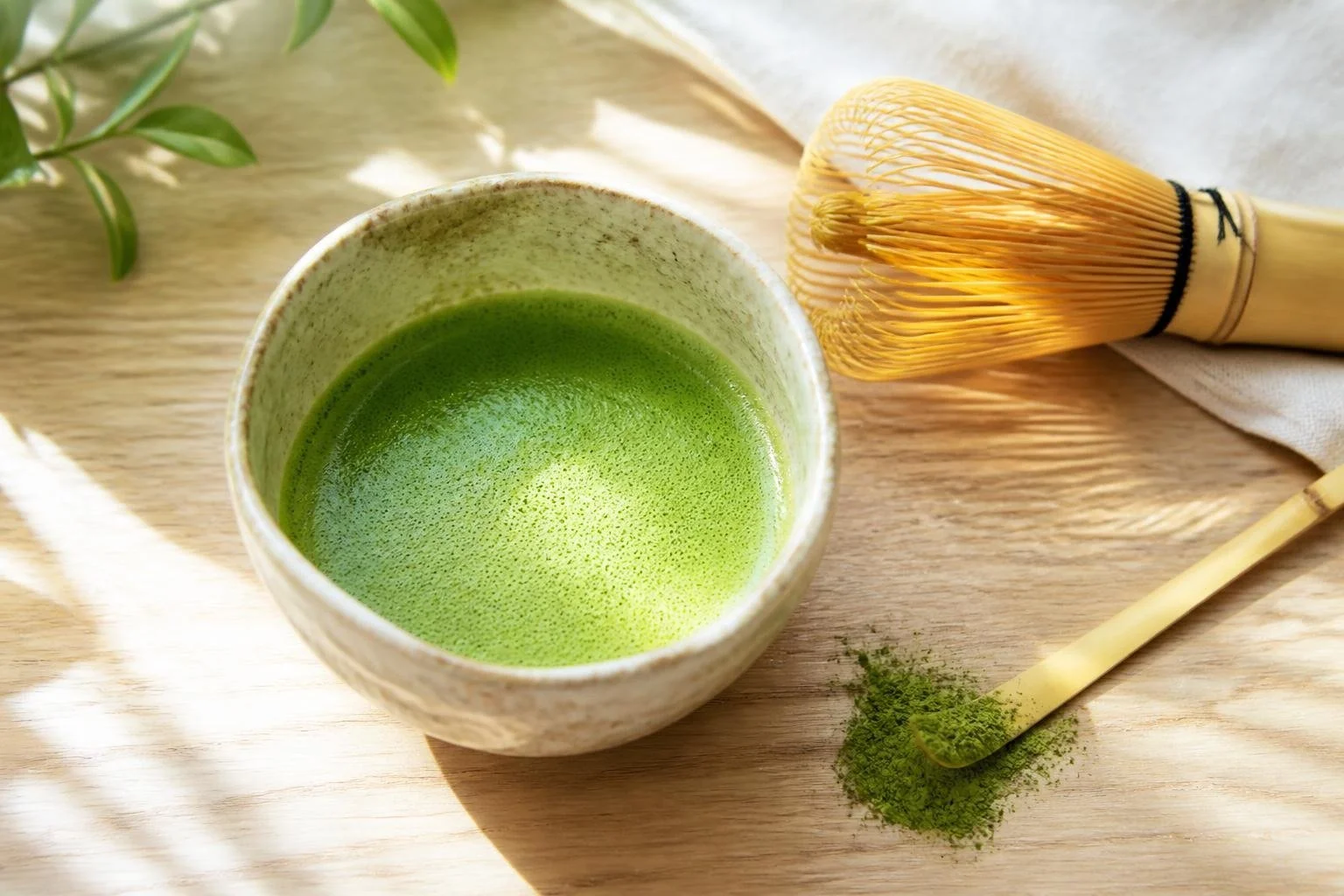
A bowl of whisked Matcha Samidori with a bamboo whisk and scoop


From Song Dynasty China to Uji

Matcha's roots reach back to Song dynasty China, where tea was ground to powder and whisked in bowls. The Zen monk Eisai is traditionally credited with bringing tea seeds and the practice of powdered tea to Japan around 1191. Over the following centuries, matcha became the heart of the Japanese tea ceremony, which the tea master Sen no Rikyu refined in the 16th century.

Uji, near Kyoto, has been one of Japan's most celebrated tea regions for centuries. Growers there developed the technique of shading tea plants before harvest. The plants rest under special shades for about three weeks before plucking, which deepens their green color and sweetness. Those shaded spring leaves are what get ground into a fine matcha like Matcha Samidori.

What It Tastes Like

Matcha Samidori whisks up into a rich, vegetal cup with sweet notes from full-flavored spring leaves. It's smooth, with a finish that lingers. Since you drink the whole powdered leaf, the flavor is fuller than a steeped green tea, but a good first-harvest matcha like this one stays sweet instead of bitter.

Enjoy it whisked on its own, with a traditional Japanese sweet, or as a matcha latte. It also pairs beautifully with white chocolate and fresh strawberries.

How to Whisk Matcha Samidori

These are the preparation steps from our product page:

  1. Add 1 teaspoon of matcha to a bowl.

  2. Put a few drops of hot water into the bowl and whisk the matcha into a paste.

  3. Pour 6 to 8 oz. of hot water (160–180°F) into the bowl.

  4. Using a slow "M" motion, submerge any loose bits of matcha floating on the surface.

  5. Whisk more briskly, back and forth, until the surface becomes frothy.

  6. Enjoy right away.

Keep the water below boiling. Water that's too hot can make matcha taste bitter. A traditional Bamboo Matcha Whisk, carved from a single piece of bamboo into fine tines, makes the froth much easier than a spoon or fork.

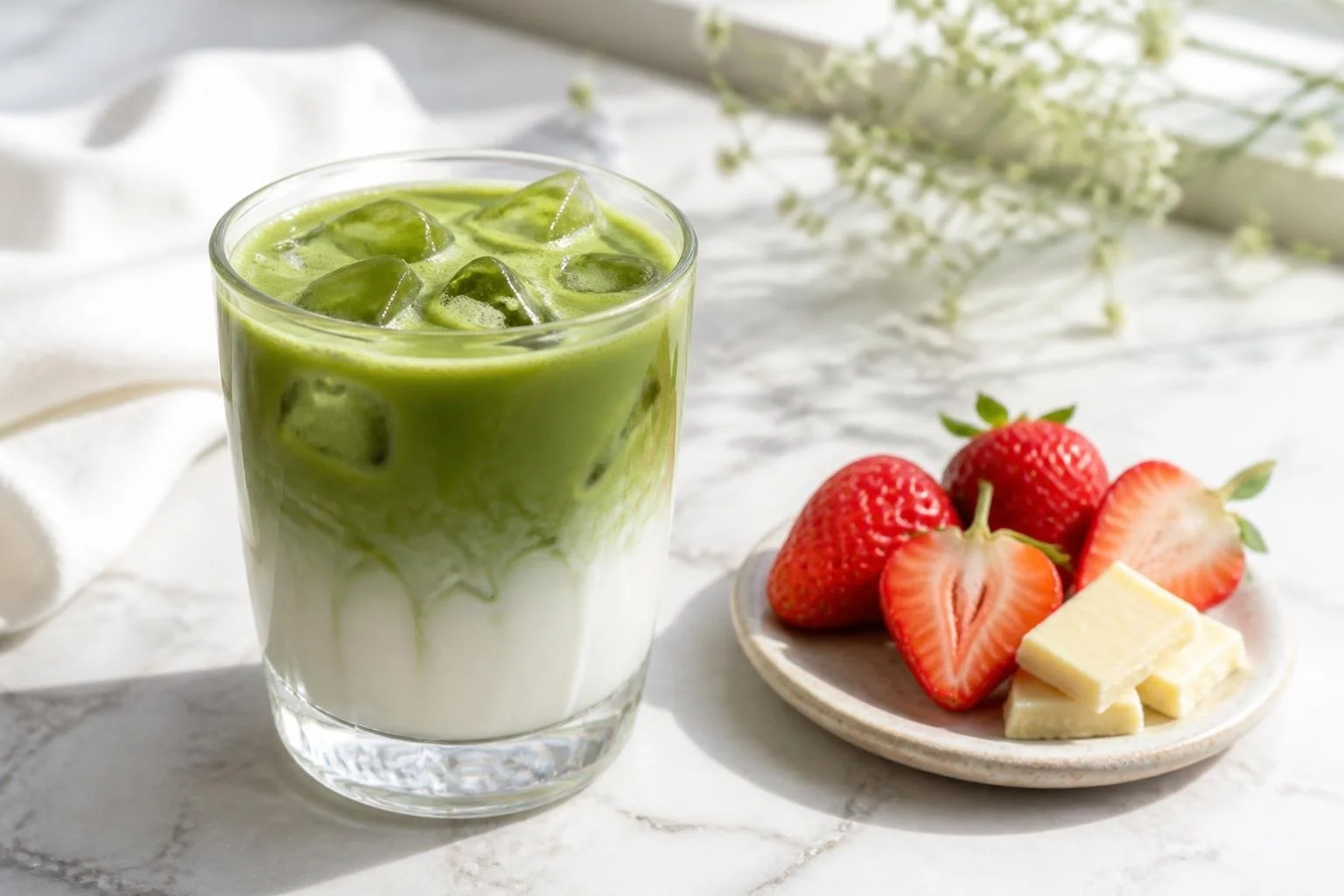
Iced matcha latte with fresh strawberries and white chocolate


Beyond the Bowl

Matcha has broken from tradition, and now it's enjoyed cold, in lattes and smoothies, and in ice cream and baked goods. For a simple iced latte, whisk your matcha into a paste with a little warm water, then pour it over ice and cold milk. For baking and everyday mixing, our Culinary Matcha is made for exactly that, so you can save Samidori for sipping.

Sizes and Where to Find It

Matcha Samidori comes in a sample size, plus 1 oz. (12 servings), 2 oz. (25 servings), and 4 oz. (50 servings) bags. If you'd like to compare it with our other matchas, the Matcha Sampler Pack includes Matcha Samidori, Matcha Green, Matcha Kenya Highlands, Matcha Kenya Superior, and Culinary Matcha. You can see them all in our Matcha collection.

As tea enthusiasts, we have been sharing quality tea at affordable prices since 2006. If you've been curious about matcha, Matcha Samidori is a lovely place to start.

Happy whisking!

Calm Focus in a Cup: What Research Says About L-Theanine and Caffeine in Tea

Ask a group of tea drinkers how a cup of tea makes them feel, and many will say the same thing: awake, but in a gentler way than coffee. Some people call it "calm focus." Is there something real behind that feeling, or is it just the cozy ritual of brewing a cup?

Researchers have been testing this for years, mostly by looking at two natural compounds in tea leaves: caffeine and an amino acid called L-theanine. Here's what the studies found, what they didn't, and how much caffeine different teas contain. With darker afternoons and a busy Halloween week ahead, it's a good time to think about what's in your mug.

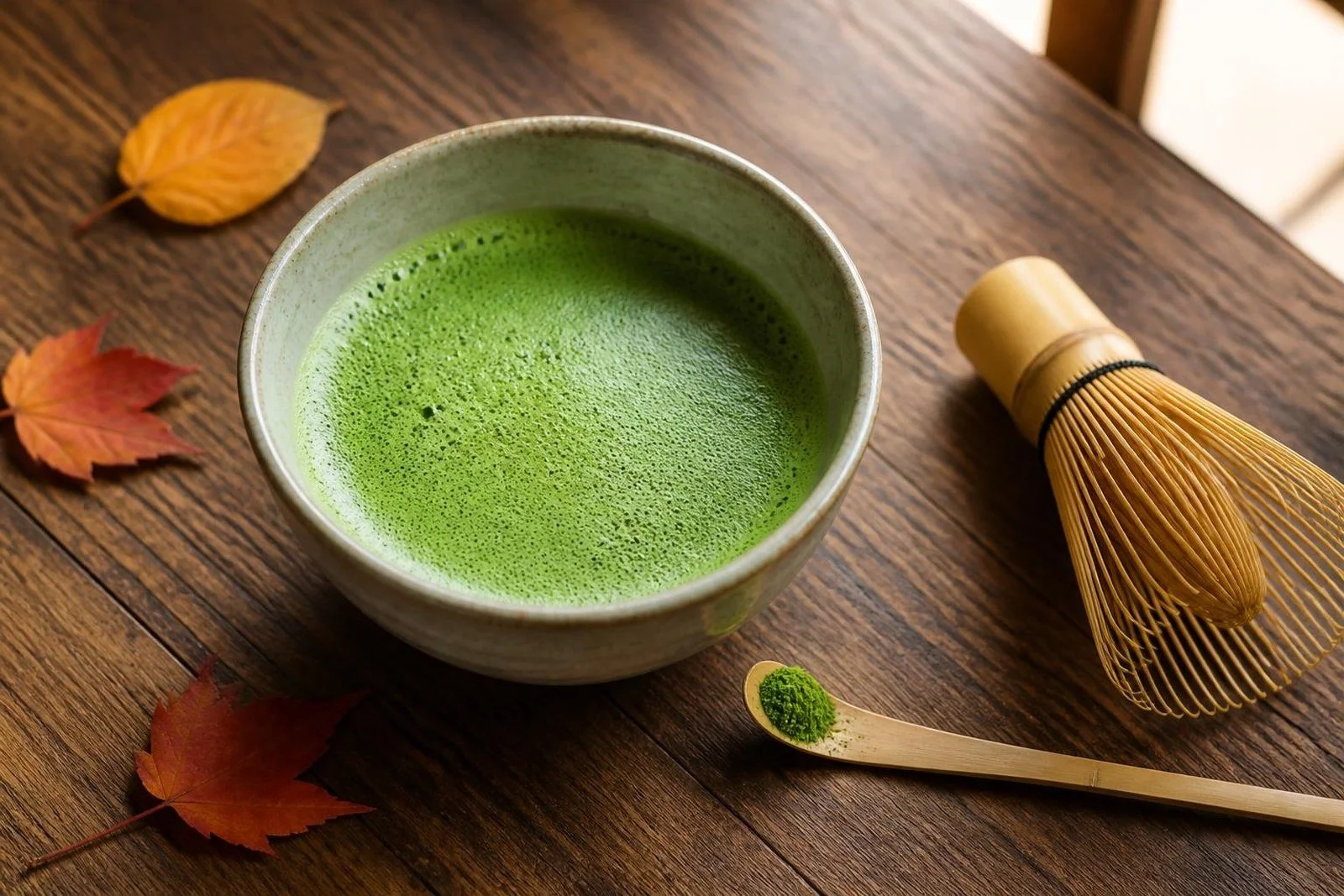
A ceramic bowl of frothy whisked matcha green tea beside a bamboo whisk and a bamboo scoop of matcha powder on a wooden table with a few autumn leaves

What Is L-Theanine?

L-theanine (often just called theanine) is an amino acid found naturally in tea. Coffee doesn't contain it. That simple difference is one reason scientists wonder whether theanine helps explain why tea and coffee can feel so different, even though both contain caffeine.

One thing to keep in mind: many studies test theanine and caffeine as measured ingredients, not as brewed tea, and often in larger amounts than one cup provides.

What the Research Says

1. The big picture: a 2025 review of 50 trials

Journal: Nutrition Reviews, 2025 (systematic review and meta-analysis)

A team at the University of Aberdeen in the UK gathered 50 randomized controlled trials in healthy people that tested tea, theanine alone, or theanine plus caffeine. Fifteen of those trials had data that could be combined. Compared with a placebo, theanine plus caffeine was linked with small-to-moderate improvements on attention tasks, such as accuracy when switching between tasks and accuracy on a test of staying alert. These effects showed up mainly in the first two hours. Theanine alone was linked with faster reaction times in the first hour. The evidence on sleep was inconclusive.

Limits: The authors say the size, and sometimes even the direction, of these effects is uncertain. Most studies took place in a lab, and few used real tea or tea-sized amounts. The lowest theanine dose in the theanine-alone analyses was 50 mg, which the authors note is about two cups of black tea. The review was partly funded by Lipton Teas and Infusions, and two co-authors work for Lipton or Unilever.

Read the study

2. A moderate dose: 97 mg theanine plus 40 mg caffeine

Journal: Nutritional Neuroscience, 2010 (placebo-controlled study)

Researchers gave 44 young adults either a placebo or a combination of 97 mg of theanine and 40 mg of caffeine. That much caffeine is in the range of a cup of tea (see the chart below). They tested people 20 and 70 minutes later. The combination improved accuracy on a task-switching test and raised how alert people said they felt, while lowering how tired they felt.

Limits: There was no effect on other tests, like visual search, choice reaction time, or mental rotation. It was a small study of a single dose, with more theanine than a typical cup provides. The lead researcher worked for Unilever, which makes and sells tea.

Read the study

3. Tea vs. coffee: does theanine take the edge off caffeine?

Journal: Psychopharmacology, 2008 (randomized, double-blind, placebo-controlled trial)

Scientists at the University of Bristol in the UK asked why tea often feels less stimulating than coffee. They gave 48 healthy adults 250 mg of caffeine, 200 mg of theanine, both, or neither. Caffeine raised alertness, jitteriness and blood pressure. Theanine countered caffeine's rise in blood pressure, but it did not significantly change jitteriness, alertness or mood. The authors concluded that it is unclear how theanine's effects might explain the different feel of tea and coffee.

Limits: These were large single doses, not brewed drinks. 250 mg of caffeine is roughly what you'd get from five cups of black tea. The study measured short-term effects only.

Read the study

4. Testing matcha itself

Journal: Food Research International, 2017 (randomized, placebo-controlled, single-blind study)

A team at Wageningen University in the Netherlands tested matcha directly. Twenty-three people tried a matcha drink, a matcha snack bar (each with 4 g of matcha powder), and placebo versions of each, one per session. One hour later, the matcha products mainly improved scores on basic attention and reaction-speed tasks. There were barely any effects on the other thinking tests and no changes in mood. The matcha drink did better than the bar on most measures.

Limits: The study was small and single-blind rather than double-blind. Each product was tested only once. The authors describe the effects as "slight." The 4 g dose is also more than the 1 to 2 g in our usual matcha brewing guide.

Read the study

A glass cup of brewed green tea next to an open blank notebook and pencil, with a small glass teapot of loose tea leaves on a sunny wooden desk

How Much Caffeine Is in Tea?

Caffeine varies with how the tea is grown and how long you steep it, so treat these Mayo Clinic figures for an 8 oz cup as rough guides:

  • Brewed coffee: 96 mg

  • Brewed black tea: 48 mg

  • Brewed green tea: 29 mg

  • Brewed decaf black tea: 2 mg

What about matcha? With matcha you drink the whole powdered leaf, so a serving can contain more caffeine than a cup of brewed green tea. In a 2024 trial in Japan (Nutrients), a 2.7 g daily serving of matcha contained 71.5 mg of caffeine and 50.3 mg of theanine. That study was sponsored by a matcha producer, and amounts vary from one matcha to another. Our brewing guide uses about 1 to 2 g per bowl, so a typical bowl may contain less. (Read the study)

The FDA says 400 mg of caffeine a day is not generally linked with negative effects for most healthy adults, but people differ a lot in how sensitive they are. If you're pregnant, breastfeeding, taking medication, or brewing for kids, it's worth checking with a health care provider. Caffeine-free herbal teas are an easy swap for little ones and for late evenings.

What This Means for Your Cup

  • The effects are real but modest. Across studies, tea's theanine-and-caffeine pairing was linked with small, short-term boosts in attention, mostly within two hours.

  • A cup is not a lab dose. Many trials used more theanine than a typical cup of tea contains, so results may not carry over to everyday drinking.

  • Theanine doesn't cancel caffeine. In the tea-versus-coffee study, theanine did not reduce caffeine's jittery feeling. If caffeine bothers you, choose a lower-caffeine tea or enjoy your caffeinated cups earlier in the day.

  • The pause counts, too. Waiting for the leaves to steep is a small, welcome break in a busy day.

Close-up of thin, needle-shaped loose-leaf sencha green tea leaves in a handmade ceramic dish on a light wooden surface

Teas to Try This Week

A few of our green teas to brew this week, with tips from each product page:

  • Matcha Samidori: a premium first-harvest spring matcha from Uji, Kyoto, where you drink the whole leaf. Sift about 1 teaspoon (1 to 2 g) into a bowl, whisk it into a paste with a few drops of hot water, then add 6 to 8 oz of water at 160 to 175°F and whisk briskly until frothy.

  • Sencha: a classic steamed green tea from Japan's Kagoshima Prefecture, slightly sweet and vegetal. Use 1 heaping teaspoon (about 2 to 3 g) per 8 oz of water at 160 to 175°F and steep 1 to 2 minutes. Don't over-brew.

  • Jasmine Dragon Pearls: hand-rolled green tea pearls with a soft jasmine scent. Use about 6 to 8 pearls (about 2 to 3 g) per 8 oz of water at 175 to 185°F and steep 2 to 3 minutes. The pearls can be infused several times.

  • Hojicha: a toasty roasted green tea from Japan. Roasting significantly reduces its caffeine, so it's a nice choice for later in the day. Use 1 to 2 heaping teaspoons (about 3 g) per 8 oz of water at 195 to 212°F and steep 30 seconds to 2 minutes.

This post is for general information only and is not medical advice. Please talk with your doctor before making changes to your diet or health routine, especially if you take medication or are sensitive to caffeine.

Matcha and Focus: What Caffeine and L-Theanine Do for Your Brain

Matcha is finely stone-ground green tea that you whisk into water and drink whole. It's been part of Japanese tea culture for centuries, and many people now reach for it as a calmer alternative to coffee when they need to concentrate.

So can matcha actually help your brain? Here's what's in it, what the research does and doesn't show, and how to make a good bowl at home.

What makes matcha different

Matcha comes from tea plants that are shaded for several weeks before harvest. Shading boosts chlorophyll, which gives matcha its vivid green color, and L-theanine, the amino acid behind its smooth, savory taste. The leaves are then steamed, dried, and ground into powder.

Because you drink the whole leaf instead of steeping and removing it, a bowl of matcha usually delivers more caffeine, L-theanine, and catechins than a cup of regular steeped green tea. How much depends on how much powder you use.

Caffeine and L-theanine: the focus pair

Caffeine is the main reason matcha makes you feel more alert. It blocks adenosine, a brain chemical that builds up during the day and makes you feel tired.

L-theanine is the other half of the story. Several small human studies have found that L-theanine and caffeine taken together improve attention and accuracy on demanding tasks more than caffeine alone. A few studies of matcha itself have found modest improvements in attention, too. Many people describe the effect as calm focus, without the jittery peak some feel from coffee. Keep in mind that most of these studies are short and small, so the effects are real but modest.

What about long-term brain health?

You may have read that matcha prevents memory loss or diseases like Alzheimer's. The honest answer is that this hasn't been shown. Some studies of large groups of people link regular green tea drinking with better brain health as people age, and the catechins in tea, especially EGCG, are being studied in the lab. But that research can't prove matcha protects the brain. Enjoy matcha for its flavor and its gentle lift, not as a treatment.

How to whisk matcha

As a general guideline from our product pages:

  1. Sift about 1 teaspoon (1 to 2 g) of matcha into a bowl.

  2. Add a few drops of hot water and whisk into a smooth paste.

  3. Add 6 to 8 oz of water at 160 to 175°F.

  4. Whisk briskly in a zigzag motion until frothy, then adjust to taste.

Start with about a teaspoon and see how you feel before using more. A bamboo matcha whisk makes the froth much easier, and a matcha bowl gives you room to work.

Which matcha to choose

  • Matcha Samidori is a premium first-harvest matcha from Uji, Kyoto, rich and sweet enough to drink on its own.

  • Organic Matcha is smooth and pure, a great everyday bowl.

  • Matcha Green is a versatile all-purpose matcha for drinking straight or in lattes.

  • Culinary Matcha is made for lattes, smoothies, and baking.

The bottom line

Matcha's mix of caffeine and L-theanine can give you a calm, focused lift, and that's backed by a modest amount of research. Claims that it prevents brain disease go beyond the evidence. If you're sensitive to caffeine, pregnant, or taking medication, check with your doctor. Otherwise, whisk up a bowl and enjoy one of the most rewarding ways to drink tea. Explore our full matcha selection.