Posts tagged oolong tea
How Many Times Can You Re-Steep Loose-Leaf Tea? A Simple Guide by Tea Type

You've just finished a lovely cup of loose-leaf tea, and there's a scoop of damp leaves still sitting in your pot or infuser. Before you toss them, try pouring more hot water over them. With many teas, the second cup is just as good as the first, and sometimes it's even better.

So how many times can you re-steep loose-leaf tea? The honest answer is that it depends on the tea, the leaf and the way you brew. Here's a simple guide to getting the most out of every scoop.
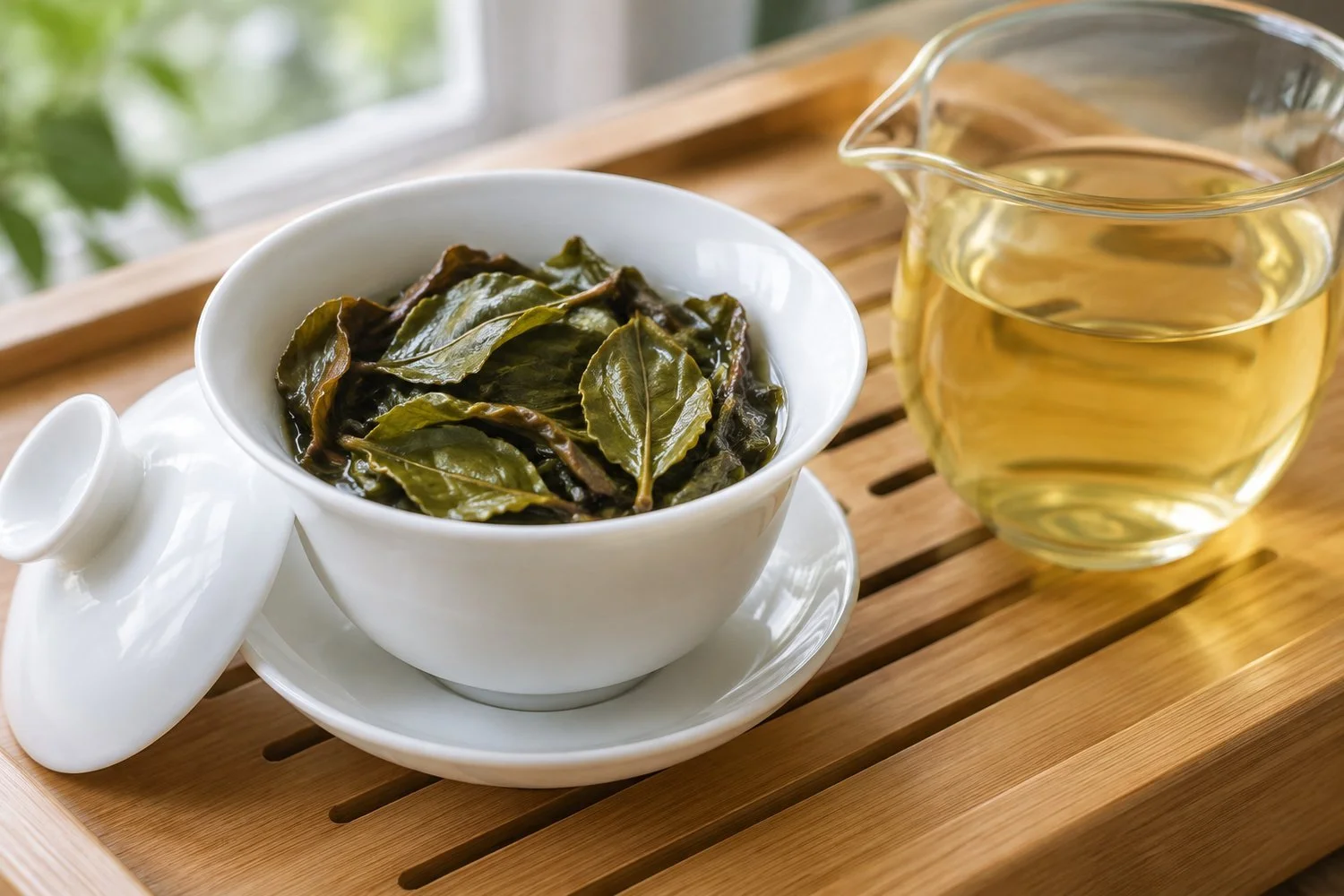
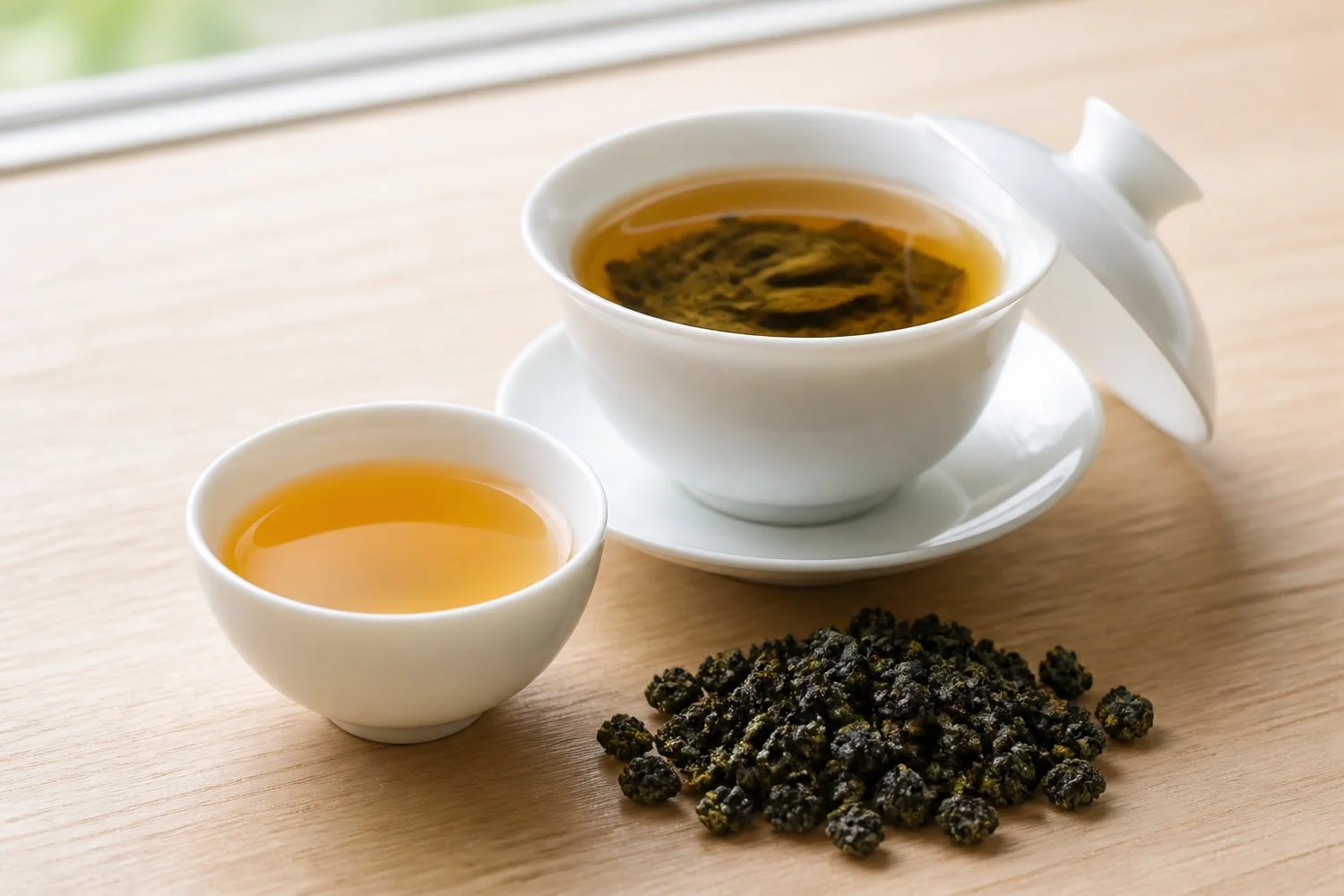
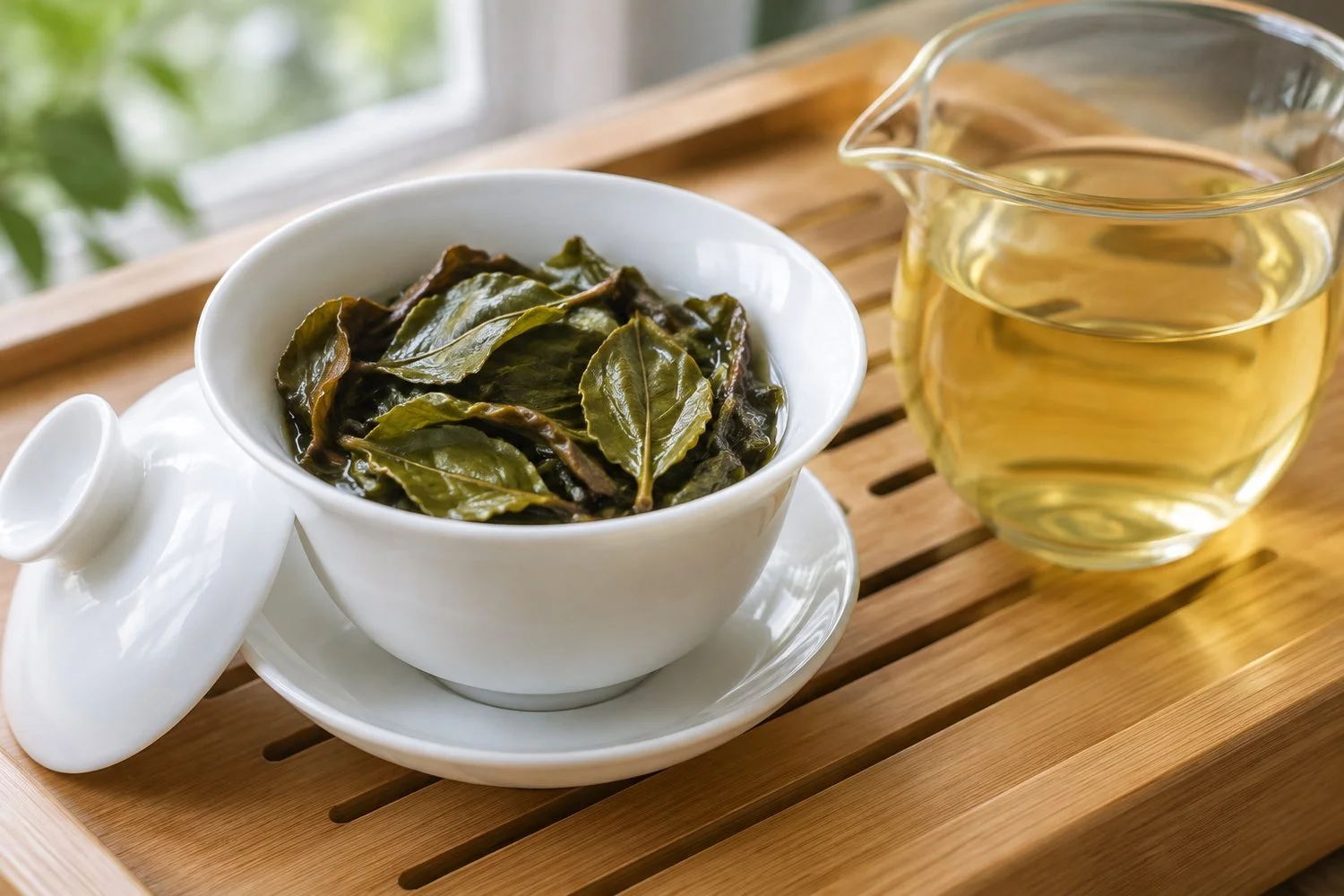
Fully unfurled oolong leaves in a white gaiwan beside a glass pitcher of pale golden tea

Why Loose-Leaf Tea Can Be Re-Steeped

Whole and large-leaf teas release their flavor gradually. In the first steep, the leaves are still curled, rolled or twisted, so only part of their surface meets the water. As they soak and open up, more of the leaf is exposed, and the next infusion draws out flavors the first one didn't reach.

Tea bags usually hold small, finely cut pieces that give up nearly everything in one go. That's why a bag is usually done after one cup, while a good loose-leaf tea often has more to give.

How Many Infusions by Tea Type

These are general guidelines for Western-style brewing (a teaspoon or two of leaf in a mug or teapot, steeped for a few minutes). Every tea is a little different, so let your taste be the final judge.

  • Oolong: about 3 to 5 steeps. Oolongs are the champions of re-steeping. Tightly rolled teas like our Ali Shan Oolong and Iron Goddess (Ti Kuan Yin) Oolong open slowly, and each cup reveals new notes, from floral and orchid-like to nutty and mineral.

  • Green tea: about 2 to 3 steeps. Whole-leaf greens hold up well. Our Dragonwell Green Tea, with its flat, pan-fired leaves, is good for multiple infusions. Finely cut or broken greens tend to fade faster.

  • White tea: about 2 to 3 steeps. Gentle white teas like our White Peony brew a soft, fruity second cup that's often just as pleasant as the first.

  • Black tea: about 2 steeps. Whole-leaf black teas like our Golden Yunnan can give a good second cup, though it will be lighter than the first. Broken-leaf and CTC black teas, such as many breakfast blends, give up most of their flavor in the first steep.

  • Herbal, rooibos and flavored blends: usually 1 to 2 steeps. Rooibos often has a pleasant second cup in it, but most herbal and fruit blends, and teas flavored with fruit pieces or flowers, are at their best in the first steep.

Adjusting Time and Temperature on Later Steeps

The main rule is simple: steep a little longer each time. Because the leaves have already given up some of their flavor, add about 30 seconds to 1 minute for each new infusion. For example, if your first steep of an oolong was 3 minutes, try 3½ to 4 minutes for the second.

Keep the water temperature the same as the first steep, or raise it slightly for oolong and black tea if later cups taste thin. For delicate greens and whites, keep the water on the cooler side every time, since hotter water can turn them bitter. If you need a refresher, our post on brewing temperature by tea type covers the basics.
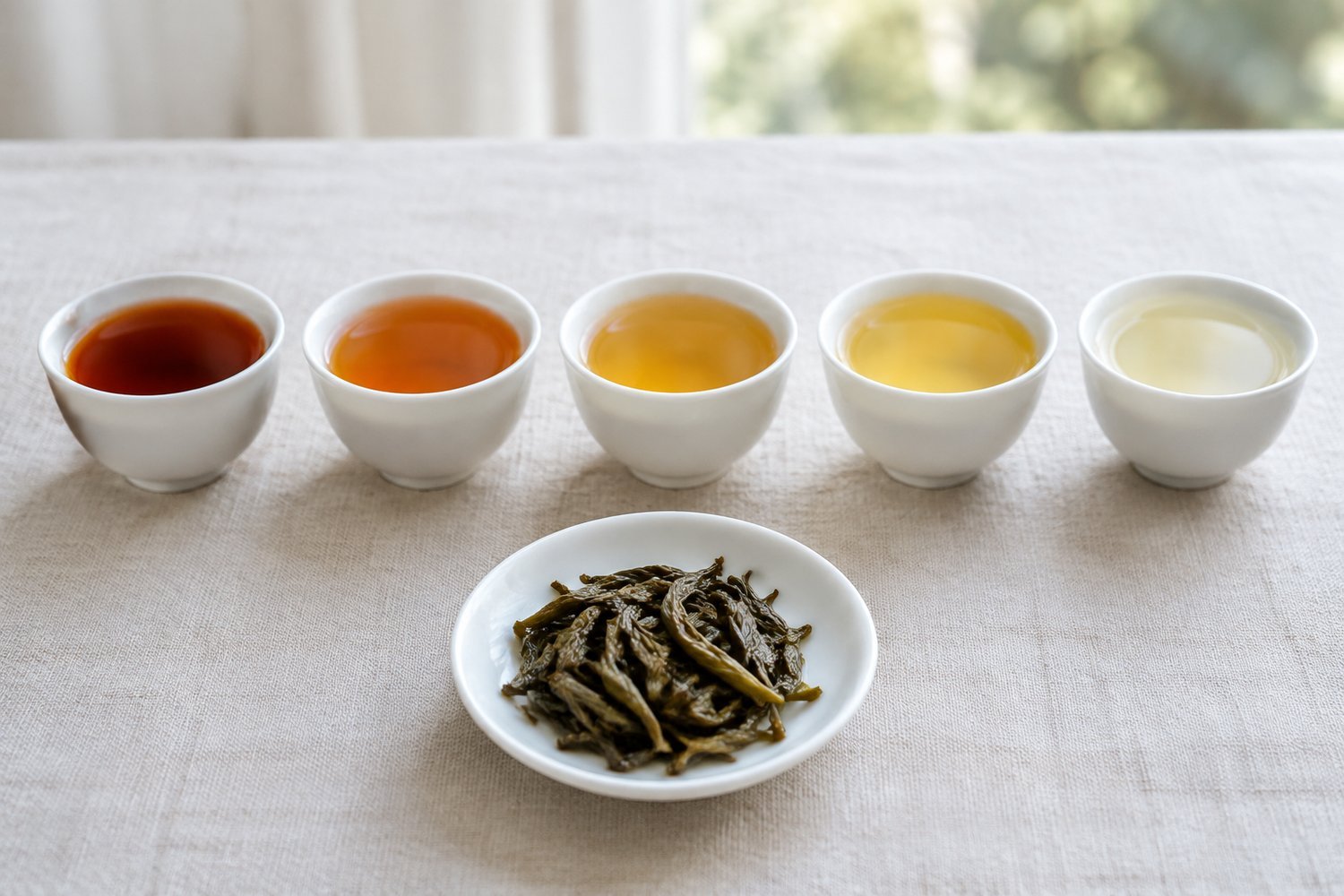


Five white cups of tea from successive steeps, fading from deep amber to pale gold, with wet leaves

Western Style vs. Gongfu-Style Short Steeps

Everything above applies to Western-style brewing. There's another approach, called gongfu style, that gets even more infusions from the same leaves.

In gongfu brewing, you use more leaf in a small vessel, such as a gaiwan (a lidded cup) or a small teapot, and steep for just 15 to 30 seconds at a time. Each pour gives a small, concentrated cup, and you simply add a few seconds to each round. Because each steep is so short, oolongs brewed this way can often go 6 to 8 rounds or more, and you can taste how the flavor changes from one cup to the next.

Gongfu style works best with oolongs and other whole-leaf teas. If you're curious why oolong behaves so differently from green or black tea, our post on how one tea plant makes four kinds of tea explains how processing shapes each style.

Saving Used Leaves Between Steeps

You don't have to brew every infusion back to back. If you'd like a second cup later in the day, that's fine. A few tips:

  • Drain the leaves well after each steep so they don't keep soaking and turn bitter.

  • Leave the lid off or set the infuser on a saucer so the leaves can breathe.

  • Plan to finish your re-steeps the same day. Wet tea leaves left out overnight can spoil and grow mold, so compost them at the end of the day and start fresh tomorrow.
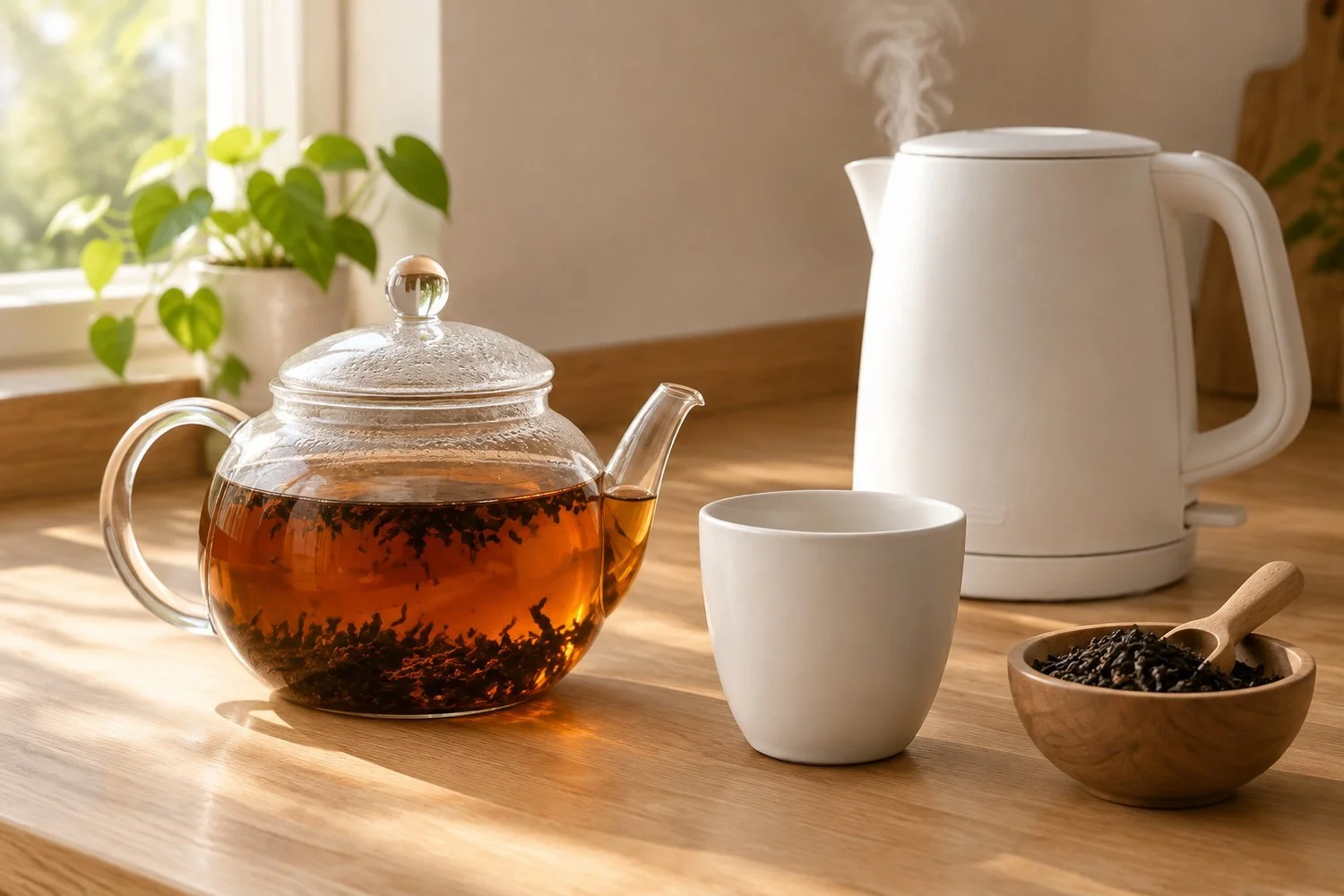


Loose-leaf black tea steeping in a glass teapot beside a white kettle, a cup and a bowl of dry tea

Signs Your Leaves Are Spent

Your tea will tell you when it's done. Watch for these signs:

  • The brewed tea is very pale, even after a longer steep.

  • The aroma is faint, and the flavor tastes thin, flat or watery.

  • The leaves are fully opened and limp, with nothing left to unfurl.

  • A longer steep only adds bitterness, not flavor.

When you notice these, it's time for a fresh scoop. The used leaves make a nice addition to a compost pile or garden soil.

Get More from Every Scoop

Re-steeping is one of the simple pleasures of loose-leaf tea. It lets you taste how a tea changes from cup to cup, and it stretches each scoop a little further. The best way to learn is to experiment: brew an oolong three or four times and note what you taste in each cup. On a cool autumn afternoon, there's no better excuse to keep the kettle going.

As tea enthusiasts, we have been sharing quality tea at affordable prices since 2006, and many of our teas come in a sample size, so it's easy to try a few. Explore our Oolong Tea collection to find a favorite for your next round of re-steeping.

Happy steeping!
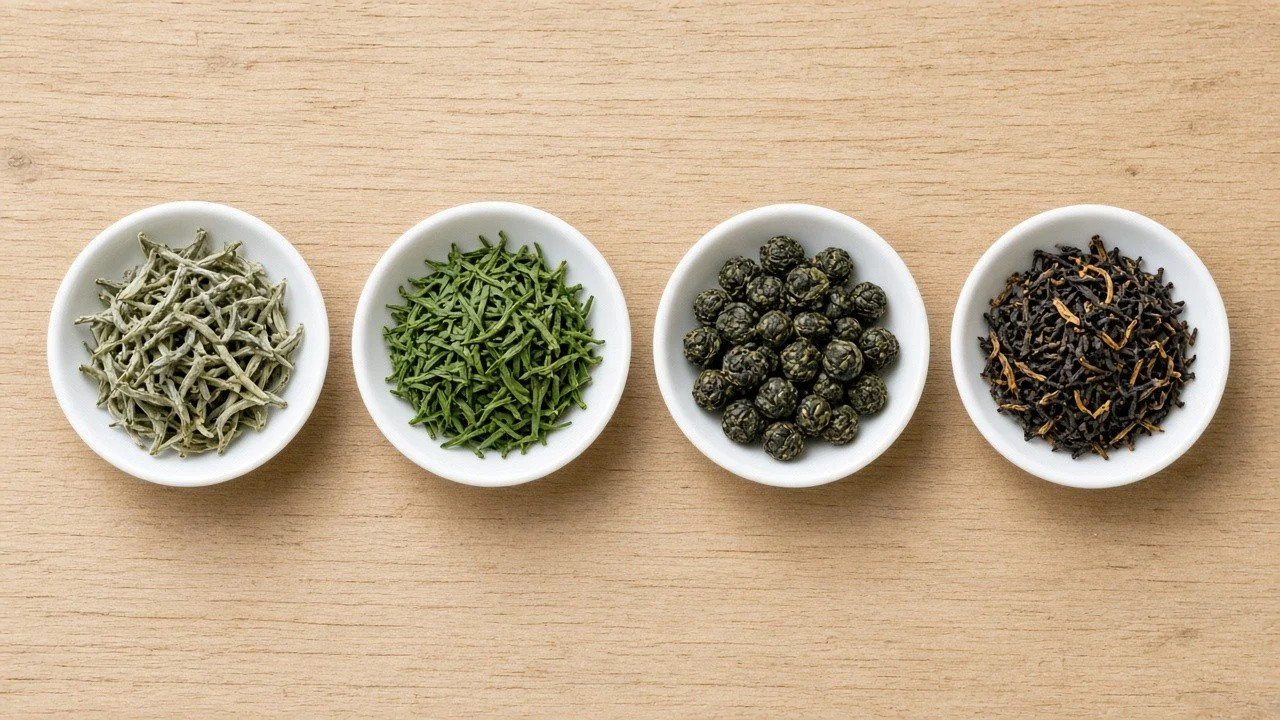
White, Green, Oolong, Black: How One Tea Plant Makes Four Kinds of Tea

Here's a fact that surprises a lot of tea drinkers: white, green, oolong, and black tea all come from the very same plant. The difference between a pale, honeyed cup of white tea and a bold, malty black tea isn't the plant. It's what happens to the leaves after they're picked.

Let's walk through the four main kinds of tea, what makes each one unique, and how to brew them so they taste their best.

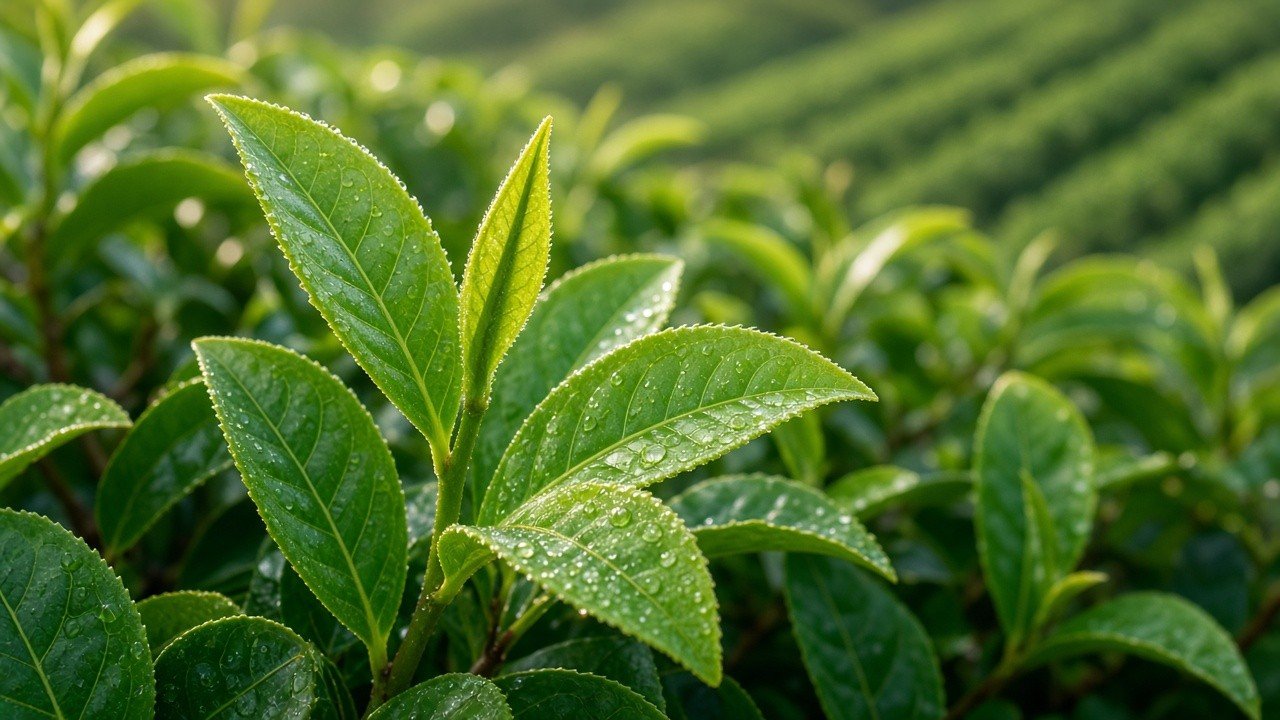
Green leaves and buds on a Camellia sinensis tea plant

One Plant: Camellia sinensis

True tea comes from Camellia sinensis, an evergreen shrub grown in places like China, Japan, Taiwan, India, and Sri Lanka. Climate, soil, and altitude all shape the flavor, but the biggest factor is processing, and especially oxidation.

Oxidation is the same natural browning you see when a sliced apple sits out. Once a tea leaf is bruised or rolled, it starts to darken and its flavor changes from fresh and grassy toward fruity, malty, and rich. Tea makers decide how far to let that go, and that choice gives us the four main kinds of tea.

(Herbal "teas" like rooibos and peppermint are a different story. They're made from other plants, which is why they're naturally caffeine-free.)

White Tea: The Least Handled

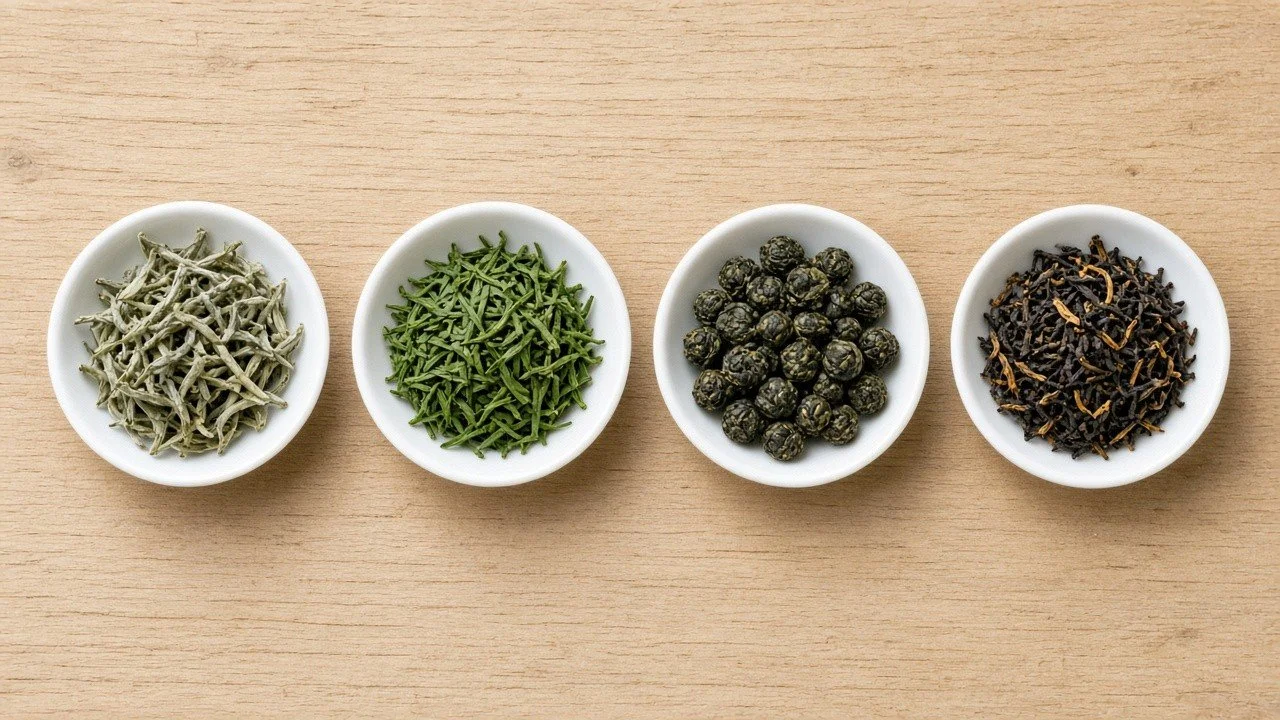
White tea is the simplest of all. Young leaves and buds are picked and gently withered and dried, with very little rolling or shaping. The result is a soft, delicate cup with notes of honey, melon, or hay.

Try White Peony for a velvety, gently fruity cup, or Silver Needle, made only from downy buds. Brew white tea with 1 to 2 teaspoons of leaves in water at 170–185°F for 3 to 5 minutes.

Green Tea: Fresh and Bright

Green tea is heated soon after picking to stop oxidation, so the leaves stay green and the flavor stays fresh. Japanese green teas are usually steamed, which gives them a grassy, ocean-like sweetness. Chinese green teas are usually pan-fired, which gives them a toastier, nuttier edge.

For a Japanese style, try Sencha. For a classic Chinese green, try Dragonwell, with its flat, glossy leaves. Green tea likes cooler water: about 160–175°F for Sencha (1 to 2 minutes) and 160–180°F for Dragonwell (2 to 3 minutes). Boiling water can make green tea taste bitter.

Dry white, green, oolong and black tea leaves side by side

Oolong Tea: The In-Between

Oolong sits between green and black. The leaves are tossed or rolled to bruise their edges, then allowed to oxidize partway before they're heated and shaped. Depending on the tea maker, an oolong can be light and floral or dark, roasted, and nutty.

Ali Shan Oolong from Taiwan is a lovely light, floral example, while Roasted Tung Ting Oolong shows the warm, toasty side. Brew oolong with 1 to 2 teaspoons of leaves in water at 185–205°F for 3 to 5 minutes. Rolled oolongs unfurl as they steep, and many can be brewed more than once.

Black Tea: Fully Oxidized

Black tea is rolled and left to oxidize fully, which turns the leaves dark and gives the cup its deep color, brisk body, and malty or fruity flavor. It's the base for classics like English Breakfast and Earl Grey, and it holds up beautifully to milk.

Try Golden Yunnan for a smooth, golden-tipped Chinese black tea, or Ceylon Lover's Leap for a bright, lively cup from Sri Lanka. Brew black tea with 1 rounded teaspoon per 8 oz of water at a full boil (205–212°F) for 3 to 5 minutes.

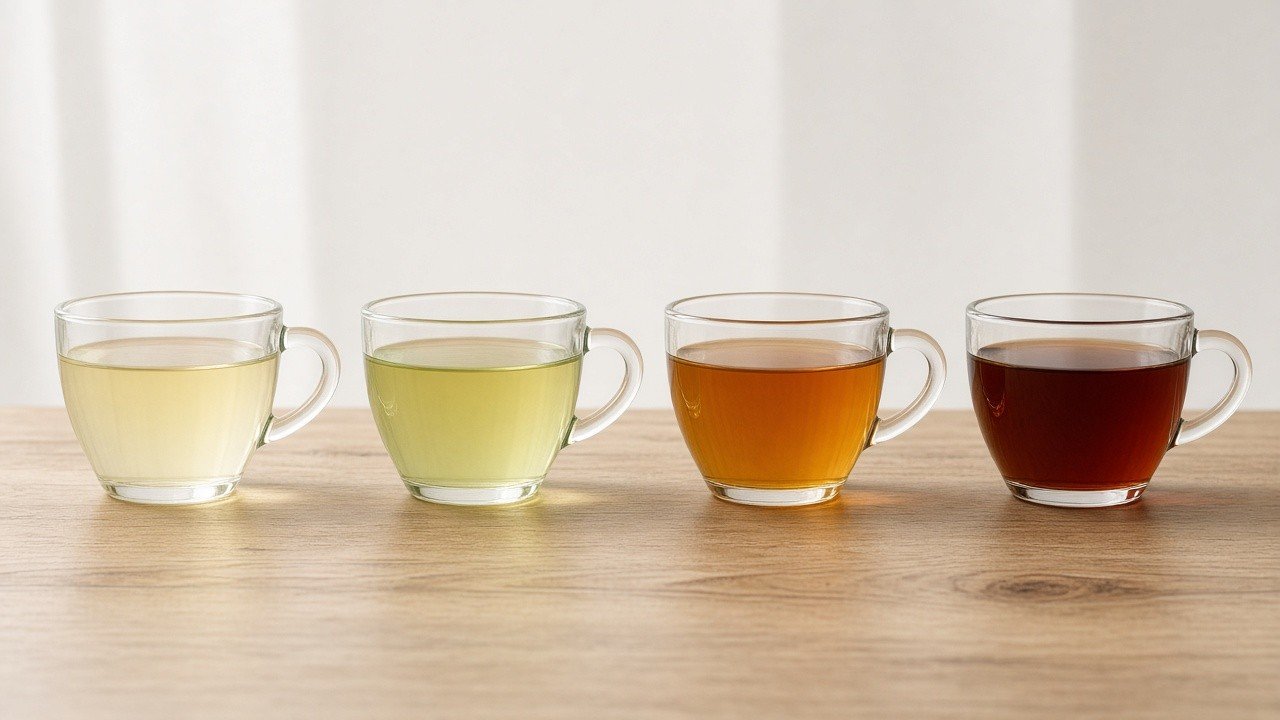
Four cups of brewed tea, from pale white tea to dark black tea

A Quick Brewing Cheat Sheet

  • White tea: 170–185°F, 3 to 5 minutes

  • Green tea: 160–180°F, 1 to 3 minutes

  • Oolong tea: 185–205°F, 3 to 5 minutes

  • Black tea: 205–212°F, 3 to 5 minutes

The general rule is simple: the less oxidized the tea, the cooler the water and the gentler the brew. Each product page lists its own brewing guidelines, so check there for the details on your favorite. Our tea accessories include infusers and filters that make loose-leaf brewing easy.

Find Your Favorite

The best way to learn the difference is to taste it. Brew a white, a green, an oolong, and a black side by side, and you'll see how one plant can taste so many ways. Browse our White Tea, Green Tea, Oolong Tea, and Black Tea collections to start exploring. If you'd like a little fall flavor while it lasts, our Pumpkin Spiced Tea is a cozy, spiced black tea to add to the lineup.

We've been sharing quality tea at affordable prices since 2006, and we love helping tea lovers find the cup that's right for them.

Happy sipping!

The Iron Goddess of Mercy: The Legends and Real History of Tieguanyin Oolong

Few teas carry a name as memorable as Tieguanyin. It translates to "Iron Guanyin," and it is usually rendered in English as "Iron Goddess of Mercy." Guanyin is the bodhisattva of compassion, one of the most beloved figures in Chinese Buddhism. The tea named for her is one of China's best-known oolongs, and it comes from Anxi County in Fujian Province.

Like many famous Chinese teas, Tieguanyin arrives wrapped in legend. This week we're looking at those stories, and at what the historical record actually supports.

A cup of Tieguanyin oolong tea beside a gaiwan

Two legends, one tea

There are two traditional accounts of how Tieguanyin got its name, known in Chinese as the "Wei telling" and the "Wang telling."

The more famous one centers on Wei Yin, a tea farmer in Xiping, Anxi, who was devoted to Guanyin. According to the version summarized on Wikipedia, which draws on Chinese and Taiwanese sources, Guanyin appeared to Wei in a dream and guided him to an unusual tea plant growing in a crevice among the rocks. He found the plant where the dream had shown him, brought it home, and cultivated it. Because the plant came to him through Guanyin, and because the finished leaves were dark, glossy, and heavy like iron, he named the tea Tieguanyin. Some tellings, as the tea history site Oolong Tea notes, add that he raised the plant in a cracked iron pot.

Western tea sellers often tell a slightly different version, in which a poor farmer named Wei sweeps and tends a run-down temple holding an iron statue of Guanyin, and is rewarded with a tea shoot he shares with all his neighbors. Wikipedia points out that this version circulates among tea merchants in Canada and the UK but has no clear counterpart in China or Taiwan.

The second account swaps the miracle for imperial approval. In this version, a scholar named Wang Shirang found a special tea bush near his study in 1736, the first year of the Qianlong Emperor's reign. A few years later he brought the tea to Beijing as a gift. It passed through a court official to the emperor, who is said to have admired the dark, heavy leaves and named the tea after Guanyin. The UN's Food and Agriculture Organization (FAO) includes this story in its heritage documentation for Anxi, and it is careful to introduce it with "according to the legend."

What history can and can't confirm

So which story is true? Probably neither, at least not literally. Oolong Tea's review of the evidence cites a Chinese-language analysis concluding that both are folk legend, and notes that no document confirms the dream, the crevice, or the emperor's tasting.

What the record does support is still impressive. According to the FAO, tea production in Anxi is believed to date back to the 10th century, and Tieguanyin itself emerged in the 18th century. The FAO also cites county records compiled during Qianlong's reign showing that Anxi tea was already supplying neighboring towns at that time.

There is even a living link to the first legend. According to People's Daily Online, tea maker Wei Yuede of Anxi is the ninth generation of his family in the tea business and traces the tea's story to his ancestor, Wei Yin.

The farming trick that made a single bush famous

A great tea plant is only useful if you can grow more of it, and tea grown from seed doesn't come out exactly like its parent.

According to the FAO, around 1640 Anxi tea farmers noticed that tea branches accidentally buried in soil could take root and sprout. From that, they developed whole-plant layering: pinning a branch to the ground so it roots while still attached to the mother plant. Later generations refined this into cutting methods, including a short-cutting technique developed in Xiping around 1935. The FAO describes Anxi as the birthplace of vegetative propagation of tea trees in China.

That matters for Tieguanyin, because it is both a tea style and a specific tea plant variety. Propagating by layering and cuttings let farmers multiply an outstanding bush with its character intact. Oolong Tea calls this the real mechanism behind the legend: however the first bush was found, cuttings are what turned it into a countywide tea.

From Anxi to Taiwan, and to world heritage

Tieguanyin's reputation eventually crossed the Taiwan Strait. According to the Taipei City Government, tea master Zhang Nai-miao brought Tieguanyin plants from Fujian in 1895 and replanted them in the hills of Muzha, in what is now Taipei. The Maokong area there is still known for its Tieguanyin, and a memorial hall in Zhang's name tells the story.

Back in Anxi, the tea has earned formal recognition. In May 2022, the FAO designated the Anxi Tieguanyin Tea Culture System a Globally Important Agricultural Heritage System, citing local farmers' traditional know-how in managing the land and producing exceptional tea leaves.

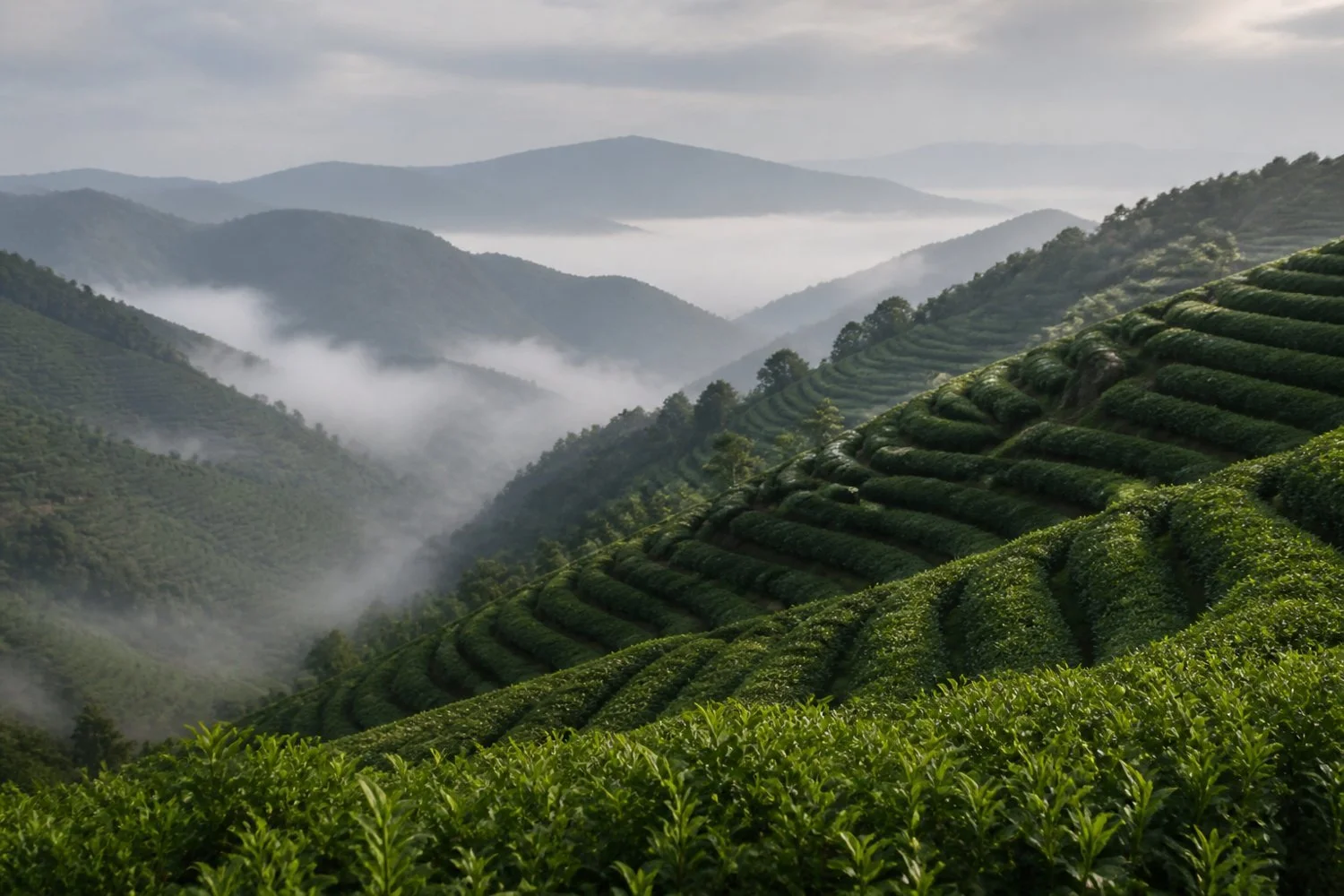
Terraced tea fields in the hills of Anxi, Fujian

How the leaf becomes Iron Goddess

Tieguanyin is a semi-oxidized tea, sitting between green and black tea. As our Iron Goddess Oolong product page describes, the leaves are wilted in the sun and then shaken in bamboo baskets to bruise their edges, so the edges oxidize faster than the center. After a period of oxidation, the tea is fired to stop the process. Look closely at the leaves after brewing and you'll often see those slightly brownish edges.

The result is a cup that's nutty and mineral, with a lingering floral, orchid-like finish. It's also a tea that rewards patience: the same leaves can be steeped several times, and each cup shows something a little different.

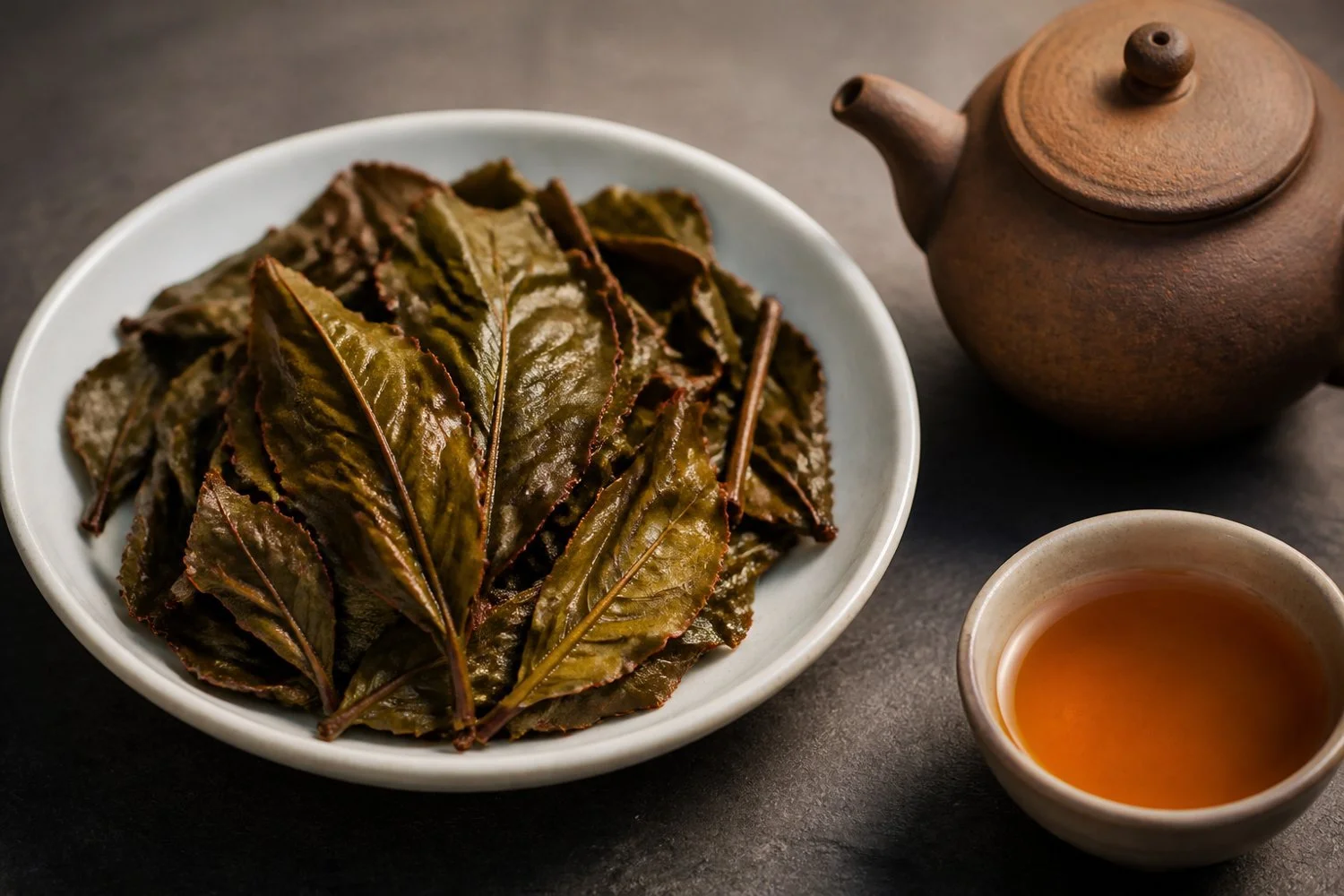
Unfurled oolong tea leaves beside a clay teapot

Brewing a cup of the Iron Goddess

Our general guideline is 1 to 2 teaspoons (about 3 grams) per 8 ounces of water at 185 to 205°F, steeped 3 to 5 minutes. Then add more hot water to the same leaves and steep again. Pair it with dim sum, roasted nuts, or a fruit plate. As the evenings get cooler, it also makes a calm, warming cup after dinner, and it's a nice treat between handfuls of Halloween candy.

If Tieguanyin's story makes you curious about Fujian's other great oolongs, try our Wuyi Oolong, a "rock tea" from the Wuyi Mountains in the north of the province, with its own famous legend of the Big Red Robe. It's toasty, earthy, and honeyed, a fine contrast to the floral Iron Goddess.

Taste the legend

Whether you believe in Wei Yin's dream or Wang Shirang's trip to the emperor, the tea itself is the best part of the story. Brew a pot of Iron Goddess Oolong, steep it a few times, and see how the cup changes. Then explore the rest of our Oolong Tea collection to find your next favorite.

How Oolong Tea Is Made: From Fresh Leaf to Your Cup

Oolong sits right between green tea and black tea. It's made from the same plant, Camellia sinensis, but the leaves are only partially oxidized. That in-between step is what gives oolong its huge range, from light, floral, almost green-tasting cups to dark, toasty, roasted ones.

Oolong comes from China's Fujian Province, where tea makers perfected the craft centuries ago, and from Taiwan, which became famous for its oolongs in the 1800s. Here's how a fresh tea leaf becomes oolong, and how to brew it at home.

How oolong tea is made

Every tea maker has their own touch, and oolong is one of the most hands-on teas there is. Most oolongs go through the same basic steps.

1. Plucking

Oolong is usually made from more mature leaves than many green teas. Pickers typically take a bud with two or three leaves, or a few open leaves, which hold up well to the handling that comes next.

2. Withering in the sun

The fresh leaves are spread out on bamboo trays or cloths, often in the sun and then indoors, so they lose some moisture and soften. Soft leaves can be handled without breaking.

3. Bruising and partial oxidation

This is the step that makes oolong, oolong. The leaves are gently tossed or shaken in bamboo baskets, which bruises their edges. The bruised edges react with air and oxidize faster than the center of the leaf. Tea makers repeat this tossing and resting several times, watching and smelling the leaves until they reach the right level of oxidation. Some oolongs are lightly oxidized, around 15–30%, while darker styles go much further.

4. Firing to stop oxidation

Once the leaves are where the tea maker wants them, they're heated in a hot pan or drum. This "kill green" step stops oxidation and locks in the flavor.

5. Rolling and shaping

Next the leaves are rolled. Some oolongs, like many from Taiwan and Iron Goddess from Anxi, are rolled into tight little balls that slowly unfurl in hot water. Others, like Wuyi rock oolongs, are twisted into long, dark strips.

6. Drying and roasting

Finally the leaves are dried. Many oolongs are also roasted, sometimes over charcoal, which adds warm, toasty, nutty notes. A lightly roasted oolong stays fresh and floral; a heavily roasted one tastes deeper and more caramel-like.

What oolong tastes like

Because oxidation and roasting can be dialed up or down, oolong covers a lot of ground:

  • Light and floral: our Ali Shan Oolong is clean, with notes of orchid and honey, and our Milk Oolong is naturally creamy (no dairy involved).

  • Balanced and nutty: Iron Goddess (Ti Kuan Yin) brews a nutty, mineral cup with a lingering orchid finish, and Formosa Oolong is a smooth, easy introduction to oolong.

  • Dark and toasty: Wuyi Oolong is full-bodied and earthy with a honeyed, floral aftertaste.

How to brew oolong tea

Oolong likes water that's hot but not quite boiling. As a general guideline:

  • Use 1–2 teaspoons of loose leaf (about 3 grams) per 8 ounces of water.

  • Heat the water to 185–205°F. Use the lower end for light, floral oolongs and the higher end for darker, roasted ones.

  • Steep for 3–5 minutes, then taste and adjust.

  • Don't throw the leaves out after one cup. Good oolong can be steeped several times, and each cup brings out new notes.

A teapot, a gaiwan, or a simple infuser all work well. Just give tightly rolled leaves room to open up.

Is oolong good for you?

Like green and black tea, oolong contains natural antioxidants called polyphenols, and it has a moderate amount of caffeine, usually somewhere between green and black tea. Researchers have studied tea's polyphenols for their possible effects on metabolism and heart health, but the research is still developing, so we think of oolong first as a delicious, calorie-free cup rather than a cure for anything.

The bottom line

Oolong is a tea of craft. Plucking, withering, bruising, partial oxidation, firing, rolling, and roasting each shape the final cup, which is why no two oolongs taste quite the same. The best way to find your favorite is to try a few, from light and floral to dark and toasty. You can explore them all in our oolong tea selection.