Posts tagged white tea
Silver Needle: The Delicate, Honey-Sweet White Tea Made from Spring Buds

If you've only ever tried white tea in a bag, Silver Needle is a lovely surprise. It's made from nothing but slender, downy tea buds that shimmer silver-white in the tin, and it brews a clear, glowing cup that's sweet, mellow and gently fragrant. Known in Chinese as Bai Hao Yin Zhen, or "white hair silver needle," it's the most celebrated of China's white teas, and one of the gentlest ways to enjoy loose-leaf tea.
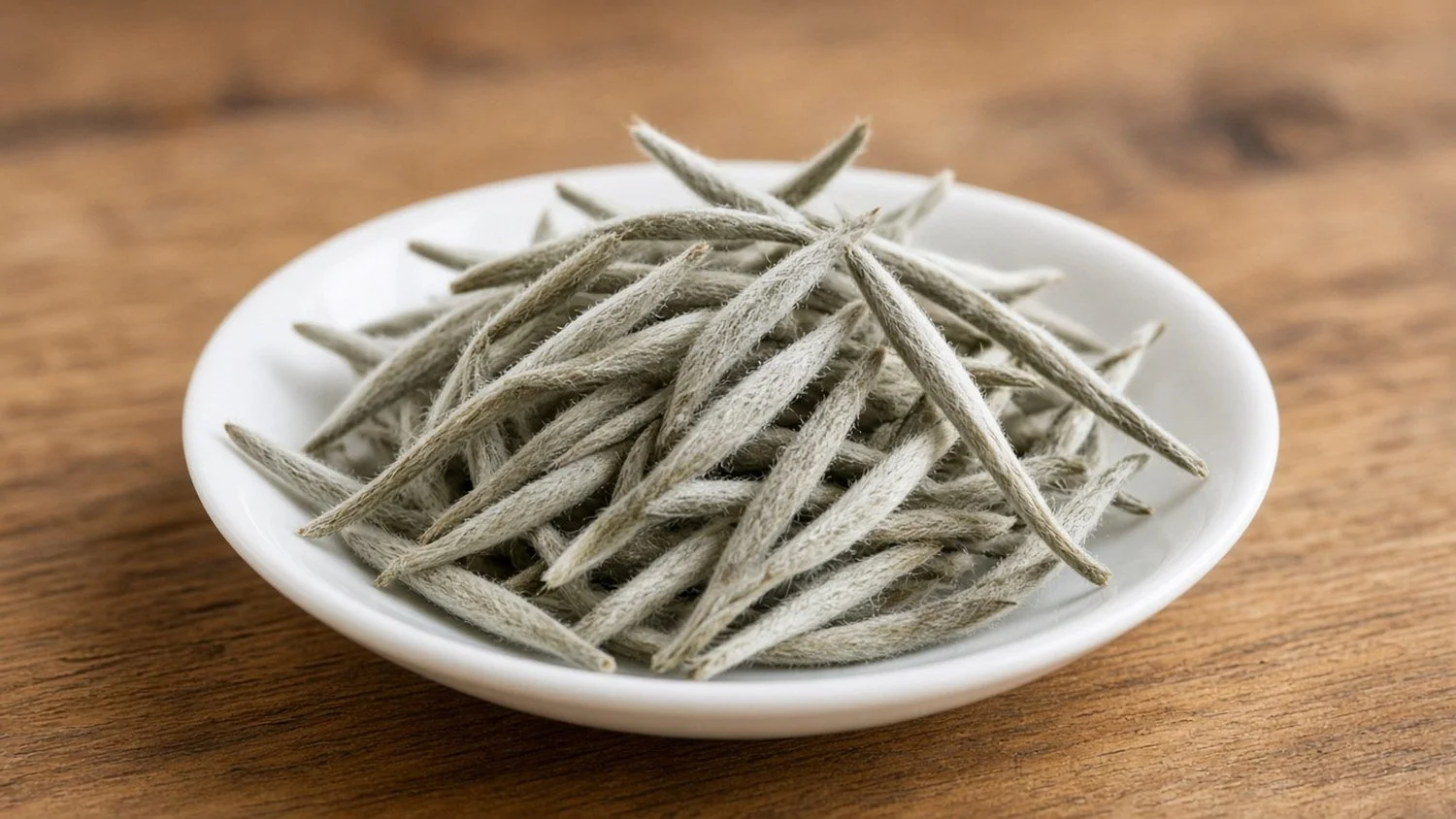
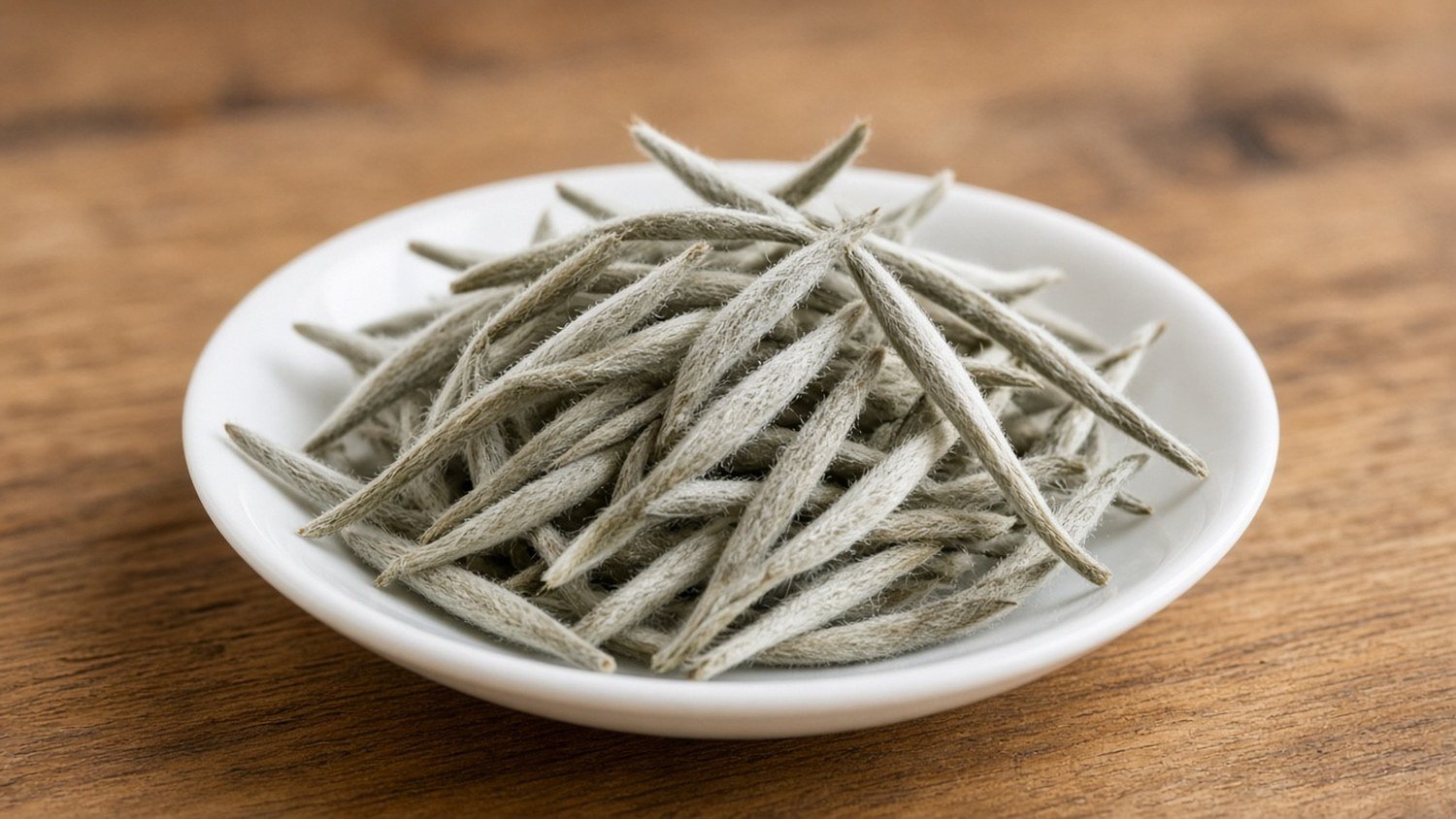
Slender silvery-white Silver Needle tea buds covered in fine down in a small white porcelain dish on a wooden table

Where Silver Needle Comes From

Silver Needle comes from Fujian Province in southeastern China, the traditional home of white tea. It first appeared in Fuding around 1796, when growers began making tea from the buds of local tea bushes. In the late 1800s, tea makers in Fuding and Zhenghe selected bush varieties with especially large, downy buds, and the modern Silver Needle was born. Those two counties are still its classic homes, and each gives the tea a slightly different character.

Why It's So Special

Silver Needle is the top grade of white tea. It's made in a very short window in early spring, when the young buds are at their best, and it's handled with a light touch. White tea is traditionally made with little more than gentle withering and drying, with no rolling or pan-firing. That simple process keeps the buds whole and preserves the fine silvery down that gives the tea its name.

Look closely at the dry leaf and you'll see plump, needle-shaped buds covered in that soft fuzz, sometimes with a couple of grayish-white leaves alongside. It's one of the prettiest teas to look at before you even add water.

How It Tastes

Brewed, Silver Needle pours a shimmering, pale gold liquor. The flavor is fresh, mellow and sweet, smooth and refreshing, without the grassiness or dryness some people expect from light teas. Tea lovers often describe hints of honey, melon and soft white flowers. It's delicate, but not thin. The sweetness lingers well after the last sip.
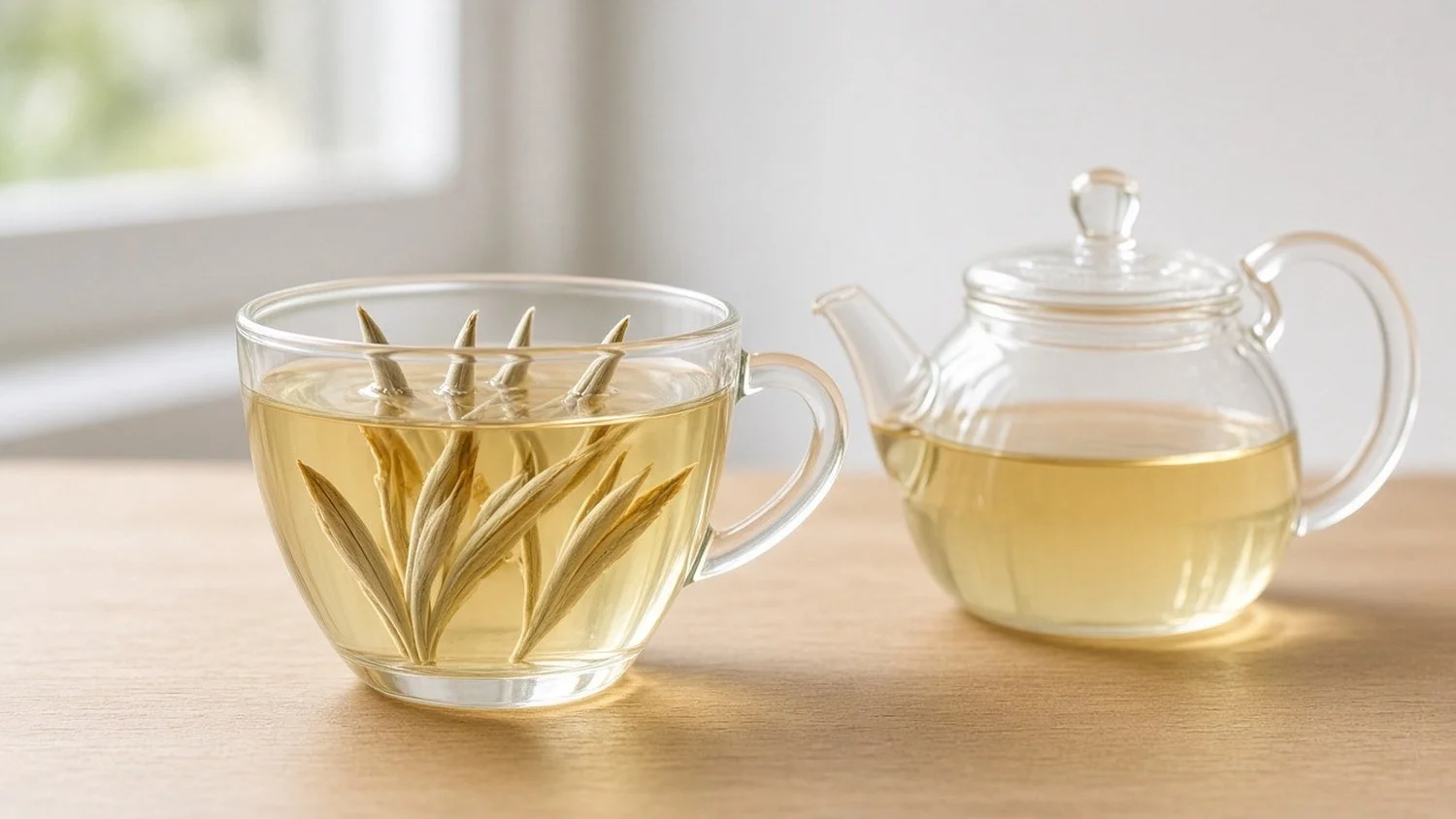
Clear glass cup of pale gold Silver Needle white tea with tea buds standing upright in the water

How to Brew Silver Needle

Gentle tea likes gentle brewing. Here's a simple starting point:

  • Tea: 1 to 2 teaspoons (about 2 to 3 grams) per 8 oz of water. The buds are fluffy, so a generous spoonful is normal.
  • Water: 170 to 185°F. Water that's too hot can flatten the delicate sweetness. If you don't have a thermometer, let boiled water rest a few minutes before pouring.
  • Time: 3 to 5 minutes. Taste at 3 minutes, then let it go longer if you'd like more depth.

A glass cup or teapot is a nice choice here, because you can watch the buds slowly drift and stand upright as they soak up water. Silver Needle can also be re-steeped. Add a minute or so to each new infusion and notice how the flavor shifts from cup to cup. For more on brewing times and temperatures, see our tea brewing guide, and for a deeper look at second and third cups, see How Many Times Can You Re-Steep Loose-Leaf Tea?
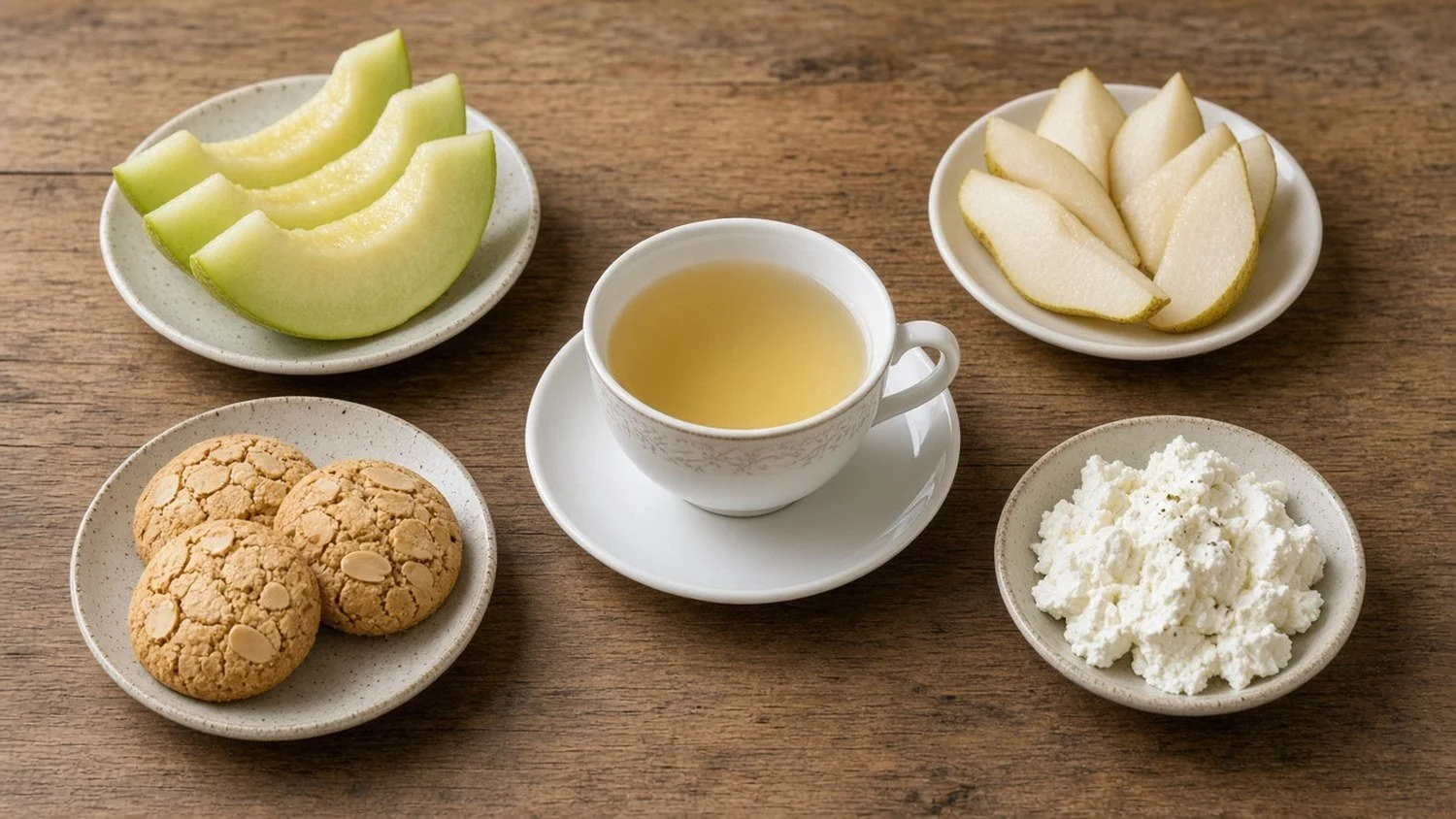
Cup of pale white tea beside slices of melon and pear, almond cookies and a small dish of fresh goat cheese

What to Pair It With

Silver Needle's quiet sweetness shines next to light foods that won't overpower it:

  • Fresh fruit: melon, pears or peaches.
  • Mild cheeses: fresh goat cheese or ricotta.
  • Light sweets: almond cookies or a plain butter cookie.
  • Delicate seafood: steamed white fish, scallops or shrimp.

Skip heavy spices and very sweet desserts, which can drown out the tea's soft fragrance. For more ideas, see our beginner's guide to tea and food pairing.

More White Teas to Explore

If you enjoy Silver Needle, try Aged Silver Needle, which has been aged for more than five years. It brews a warm amber cup that's more honey-like and less floral than young Silver Needle, smooth and deep. For something a little fuller than Silver Needle, White Peony (Bai Mu Dan) adds young leaves to the buds for a cup with gentle fruity notes. And if you can't decide, the White Tea Sampler Pack is an easy way to taste your way through.

Like every tea at Beantown Tea & Spices, Silver Needle is a quality loose-leaf tea at an affordable price, with sample and larger sizes so you can find your favorite. Brew a cup slowly, watch the buds dance, and enjoy one of the most graceful teas in the world.
Tea and Food Pairing for Beginners: A Simple Guide by Tea Type

Most of us choose a tea by mood and a snack by whatever is in the cupboard. Put the two together with a little thought, though, and both can taste better. Pairing tea with food doesn't take special training. A few simple ideas and a willingness to taste will get you most of the way there. Here's a beginner-friendly guide, organized by tea type, with easy pairings to try at home.

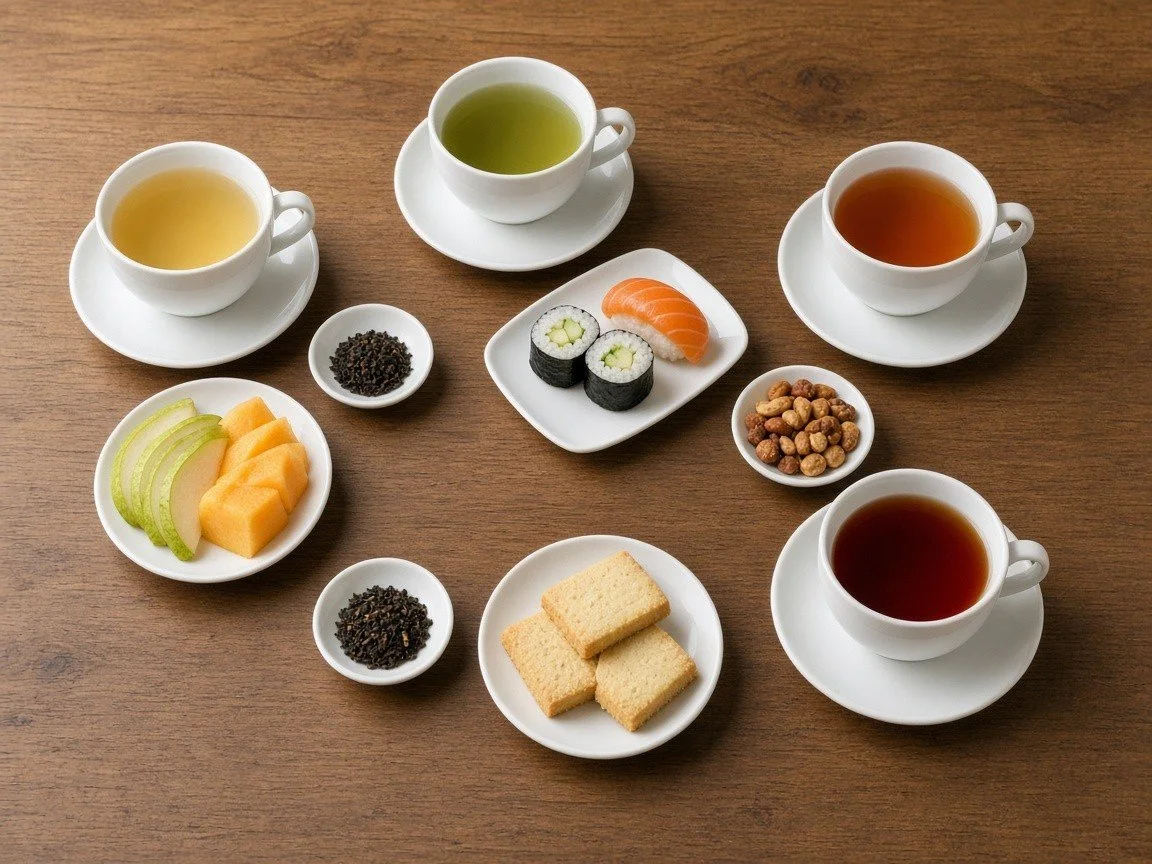
Four cups of tea in different colors on a wooden table, each beside a small plate of matching food such as pear slices, sushi, roasted nuts and shortbread

Three Simple Principles

1. Match intensity. This is the big one. Delicate teas go best with delicate foods, and bold teas can stand up to rich, strongly flavored foods. A soft white tea will get lost next to a spicy curry, and a strong breakfast blend can overpower a plain cucumber sandwich.

2. Complement or contrast. You can echo a flavor or play against it. A nutty, toasty tea next to toasted nuts is a complementary pairing. A bright, brisk black tea next to buttery shortbread is a contrasting one, where the tea cuts through the richness. Both work. Echoing tends to feel cozy and harmonious, and contrasting tends to feel lively.

3. Let the tea reset your palate. Many teas, especially brisk black teas and roasted oolongs, have a light dryness (astringency) that clears away fat and sweetness between bites. That's why tea and rich food have been friends for so long. Each sip makes the next bite taste fresh again.

One more tip: brew well before you pair. A tea that's over-steeped or brewed too hot turns harsh and won't play nicely with anything. Our tea brewing guide has times and temperatures by tea type, and if a cup ever turns sharp, see Why Is My Tea Bitter? 6 Common Causes and Easy Fixes.

White Tea: Keep It Gentle

White teas are the most lightly processed teas, with soft, subtle flavors. Silver Needle is made from downy buds and brews a clear, delicate cup, and White Peony (Bai Mu Dan) is a little fuller, with gentle fruity notes.

Good matches:

  • Fresh fruit: melon, pears or peaches.

  • Mild cheeses: fresh goat cheese or ricotta.

  • Light bites: plain rice crackers, cucumber sandwiches or a simple green salad.

Skip anything heavily spiced or very sweet. The goal is to let the tea's quiet fragrance come through.

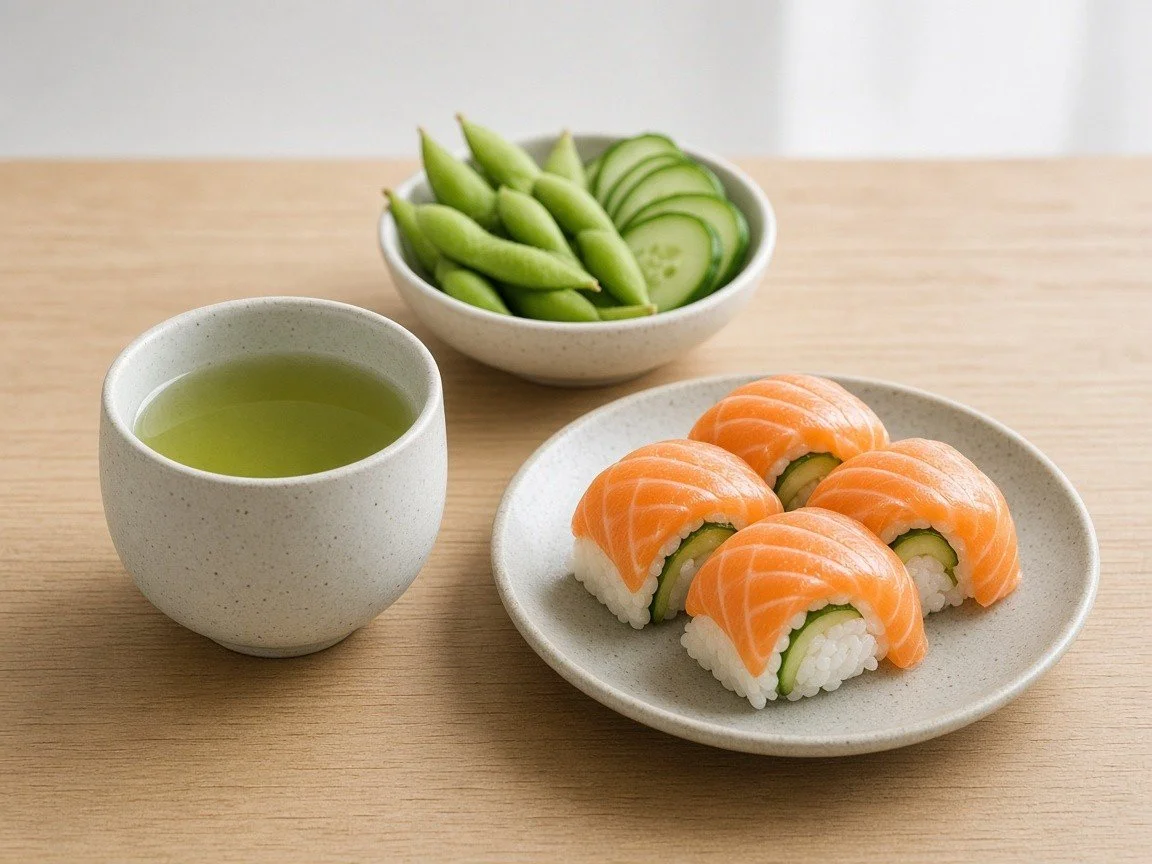
Cup of pale green tea beside a small plate of sushi, a bowl of edamame and cucumber slices

Green Tea: Japanese vs. Chinese

Green teas split into two broad styles, and they pair a bit differently.

Japanese green teas are usually steamed, which gives them a fresh, grassy, sometimes savory taste. Sencha is bright, slightly sweet and vegetal, and it's a natural with:

  • Seafood: sushi, sashimi or simply grilled fish.

  • Vegetables: steamed greens, edamame or a light vegetable stir-fry.

  • Rice dishes: plain rice, rice balls or a light noodle bowl.

For a toastier option, Genmaicha blends green tea with toasted brown rice. Its nutty, comforting flavor goes well with savory snacks, rice crackers and even a grilled cheese sandwich. For a deeper look at the Japanese styles, see our simple guide to Japanese green tea.

Chinese green teas are usually pan-fired, which tends to bring out sweeter, nuttier notes. Dragonwell is gentle, sweet and nutty, and Bi Luo Chun is floral and slightly earthy. Try them with:

  • Steamed dumplings or lightly sauced vegetables.

  • Mild white fish or shrimp.

  • Lightly sweet treats: almond cookies or a plain sponge cake.

Oolong: Light vs. Roasted

Oolongs sit between green and black tea, so they're wonderfully flexible at the table. The easiest way to pair them is to think about how roasted they are.

Light, floral oolongs such as Ali Shan, with its orchid and honey notes, and the fragrant Jade Oolong pair with:

  • Shellfish: scallops, shrimp or crab.

  • Fresh fruit: pears, apples or stone fruit.

  • Mild, creamy cheeses and light pastries.

Roasted oolongs have warm, toasty depth. Roasted Tung Ting is nutty and gently sweet, and Wuyi Rock Oolong (Da Hong Pao) is full-bodied and earthy. They can handle heartier foods:

  • Roasted or grilled meats: pork, duck or chicken.

  • Mushroom dishes and other earthy, savory flavors.

  • Toasted nuts, caramel or a nutty dessert.

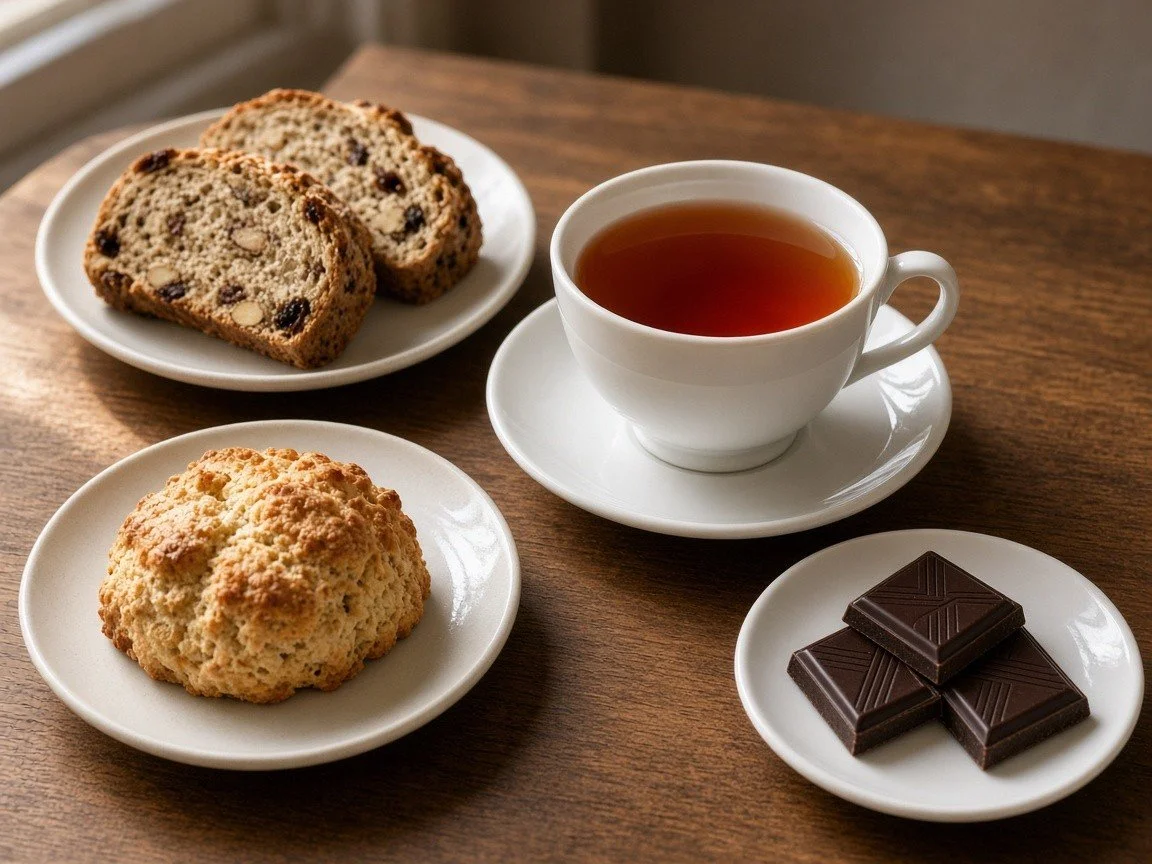
Cup of amber black tea with a buttery scone, squares of dark chocolate and slices of fruit and nut bread

Black Tea: From Delicate to Bold

Black teas range widely, so match the tea's strength to the food.

Darjeeling is the lightest and most fragrant of the common black teas, often with a "muscatel" grape-like note. Darjeeling Margaret's Hope and Darjeeling Castleton are lovely with:

  • Scones with a little jam or cream.

  • Egg dishes such as quiche or an omelet.

  • Mild cheeses and fruit tarts.

Assam and breakfast blends are bold and malty, and they're made for hearty food. Assam Hunwal and our English Breakfast blend (great with milk) pair with:

  • A full breakfast: eggs, bacon or sausage, and toast.

  • Buttery baked goods: shortbread, croissants or pound cake.

  • Sharp cheddar or a hearty sandwich.

Chinese black teas tend to be smooth, with less bite. Keemun Mao Feng is gently winey and fragrant, and Golden Yunnan is smooth and rich. Both are wonderful with:

  • Dark chocolate: the tea's depth meets the chocolate's richness.

  • Fruit and nut breads or dried fruit.

  • Savory roasts and soy-glazed dishes.

Herbal and Caffeine-Free Pairings

Herbal teas don't come from the tea plant, but the same principles still apply.

  • Mint: Peppermint is cool and clean, a classic after a rich meal or next to chocolate desserts. Lemon Mint adds a crisp citrus lift that suits salads and lighter dishes.

  • Fruit blends: the bright, tart Very Berry pairs nicely with cheesecake, vanilla desserts or yogurt, and the tangy citrus of Red Orange goes well with almond cakes or a simple butter cookie.

Try a Simple Pairing Experiment at Home

The best way to learn is to taste side by side. Here's an easy experiment:

  1. Pick three teas: one light (a white or green tea), one medium (an oolong) and one bold (a breakfast black tea).

  2. Pick three foods: something light (cucumber or pear slices), something rich (a piece of shortbread or cheddar) and something sweet (a square of dark chocolate).

  3. Brew each tea carefully using the brewing guide, and let the cups cool slightly so you can taste clearly.

  4. Taste in order: sip the tea alone, take a bite of food, then sip again. Notice whether the tea tastes brighter, flatter, sweeter or more bitter after the bite.

  5. Jot down your favorites. You'll quickly see the intensity rule in action, and you may discover a surprise match or two.

If you'd like to try several teas without committing to full bags, a variety sampler pack is a handy way to set up your tasting.

Find Your Own Favorite Pairings

There are no wrong answers in tea pairing, only discoveries. Start with the simple principles, trust your own taste, and have fun with it. When you're ready to explore, browse our white tea, green tea, oolong, black tea and herbal tea collections, or see everything in our full tea shop.

Happy sipping!

Blueberry White Tea: Juicy Berry Flavor on a Soft, Silky White Tea

If you love the taste of fresh blueberries, this one's for you. Our Blueberry White Tea is one of our most popular teas, and it's easy to see why: it brews a soft, fruity cup that tastes like summer berries without being heavy or sugary.

Here's what makes it special, where the base tea comes from, and how to brew it hot or iced.

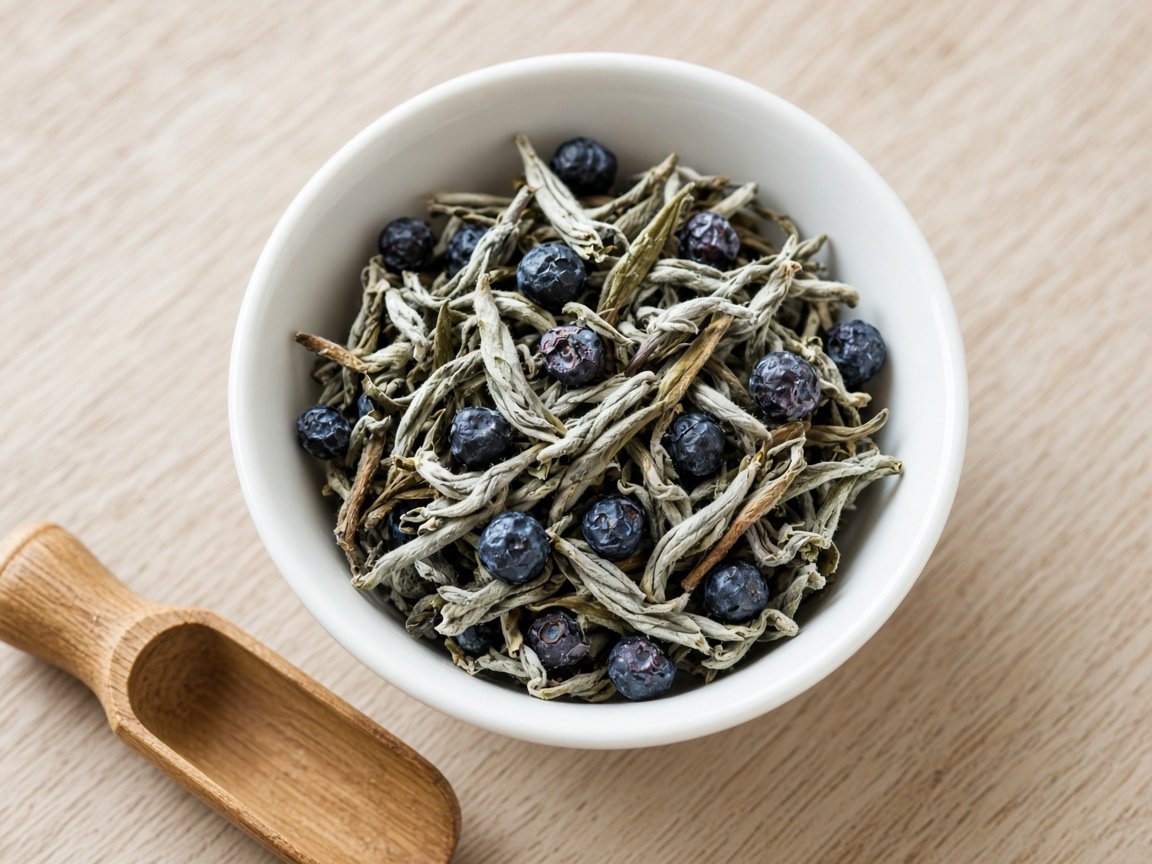
Loose-leaf Blueberry White Tea with silvery white tea leaves and dried blueberries in a white dish


What's in the Cup

Blueberry White Tea combines blueberries with Peony white tea. The berries bring sweet, luscious blueberry notes, and the white tea underneath adds a gentle, jammy character of its own. Together they make a cup that's light, smooth and naturally fruity.

White tea has a soft, velvety body and very little bitterness when it's brewed with cooler water. That makes it a great match for fruit. Instead of covering up the blueberry, the tea gives it a silky backdrop so the berry flavor really shines.

The Base Tea: White Peony (Bai Mu Dan)

Peony white tea, called Bai Mu Dan in Chinese, was first developed in Fujian Province, China, in the area of Shuiji in Jianyang. Production later grew in nearby Zhenghe in the early 1920s. Its leaves come from a special tea bush varietal known as Narcissus, or chaicha.

Unlike green tea, these leaves are never steamed or pan-fired. They're picked as two leaves and a bud, then naturally withered and dried in the sun. That simple, gentle processing is what gives white tea its delicate, sweet taste. If you'd like to try the base tea on its own, our White Peony is a lovely way to compare.


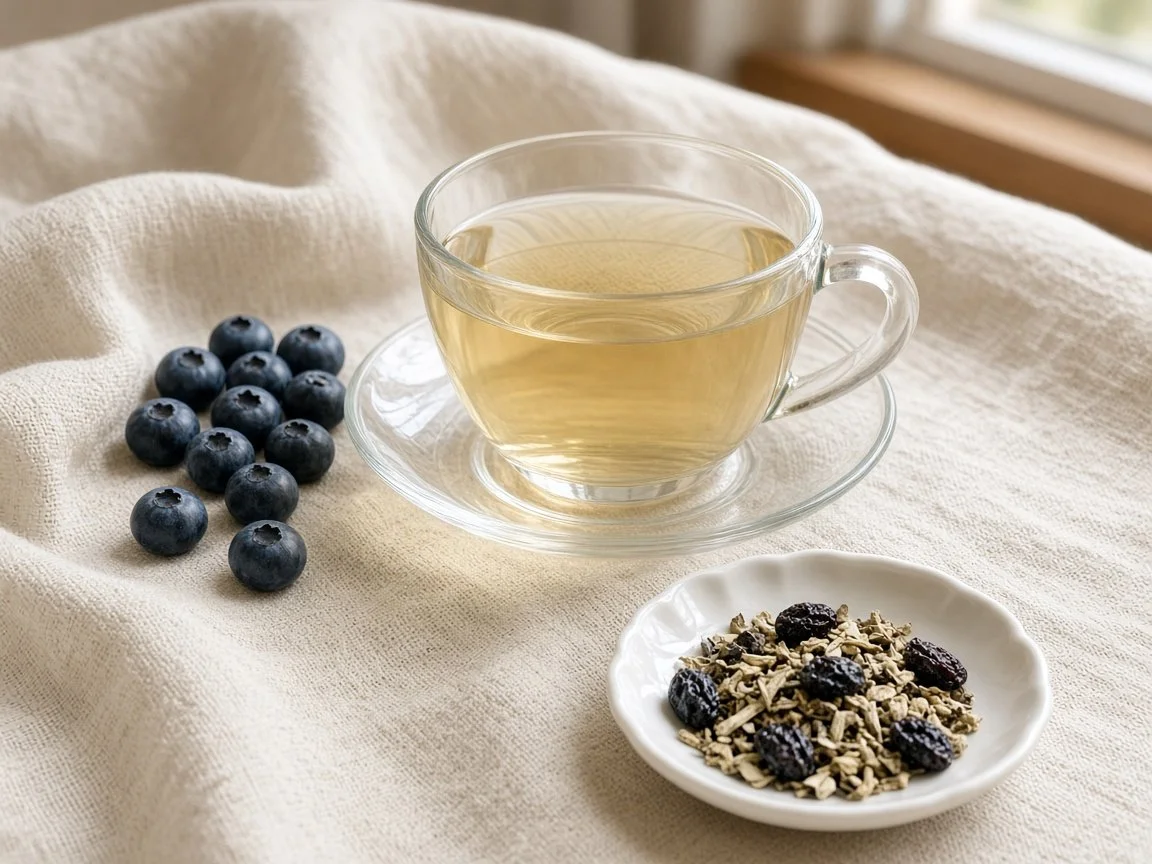
A glass cup of pale golden Blueberry White Tea with fresh blueberries and a dish of loose tea

How to Brew Blueberry White Tea

White tea is happiest with water that's hot but not boiling. Here's a simple starting point for one 8 oz cup:

  1. Heat water to 170 to 185°F. If you don't have a thermometer, bring the water to a boil and let it rest for a few minutes.

  2. Add 1 to 2 teaspoons (about 2 to 3 grams) of tea to an infuser, filter or teapot.

  3. Pour the water over the leaves and steep for 3 to 5 minutes. A shorter steep gives a lighter cup, and a longer one brings out more of the berry and the white tea's jammy depth.

  4. Remove the leaves and enjoy it plain, or with a little honey if you like it sweeter.

Our Paper Filters (100 count) and other tea accessories make loose-leaf brewing easy, even at the office.

Make It Iced

Like most fruit-flavored teas, Blueberry White is excellent iced. For a quick glass, brew it hot with about twice the usual amount of tea, then pour it over a full glass of ice. For a smoother, sweeter pitcher, try cold brewing: add about 1 tablespoon of tea for every 8 oz of cold water, cover, and let it sit in the fridge for 6 to 8 hours before straining.

A few fresh blueberries or a thin slice of lemon in the glass makes it look as good as it tastes.


A tall glass of iced Blueberry White Tea with blueberries, next to blueberry muffins and lemon cake

What to Pair It With

Blueberry White Tea goes naturally with baked treats. Try it with blueberry muffins, lemon cake, or scones with jam. It's also nice with a cheese plate, where the fruity notes play well with mild, creamy cheeses. And with all the pumpkin spice going around this week, a bright berry cup makes a refreshing change of pace.

Sizes and More White Teas to Explore

Blueberry White Tea comes in a sample size (makes 3 cups), plus 4 oz. (50 cups) and 8 oz. (100 cups) bags. The sample is a simple way to try it for the first time. If you enjoy fruity white teas, our Peach White Tea is another favorite, and for something unflavored and elegant, try our Silver Needle. You'll find them all in our White Tea collection.

As tea enthusiasts, we have been sharing quality tea at affordable prices since 2006, and Blueberry White is one of those teas that brightens any part of the day. Brew a cup and see why so many of our customers keep coming back to it.

Happy sipping!

How Many Times Can You Re-Steep Loose-Leaf Tea? A Simple Guide by Tea Type

You've just finished a lovely cup of loose-leaf tea, and there's a scoop of damp leaves still sitting in your pot or infuser. Before you toss them, try pouring more hot water over them. With many teas, the second cup is just as good as the first, and sometimes it's even better.

So how many times can you re-steep loose-leaf tea? The honest answer is that it depends on the tea, the leaf and the way you brew. Here's a simple guide to getting the most out of every scoop.

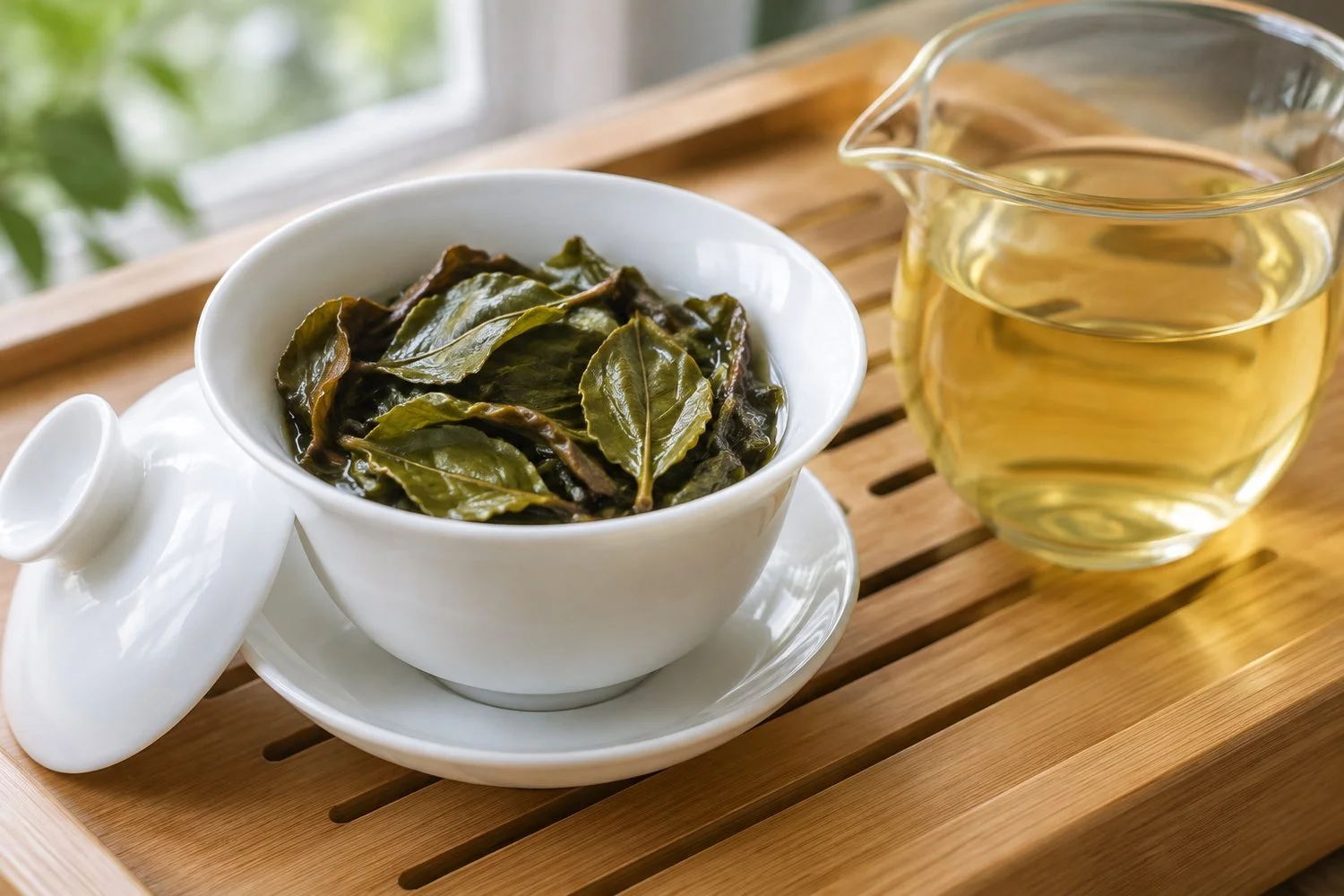
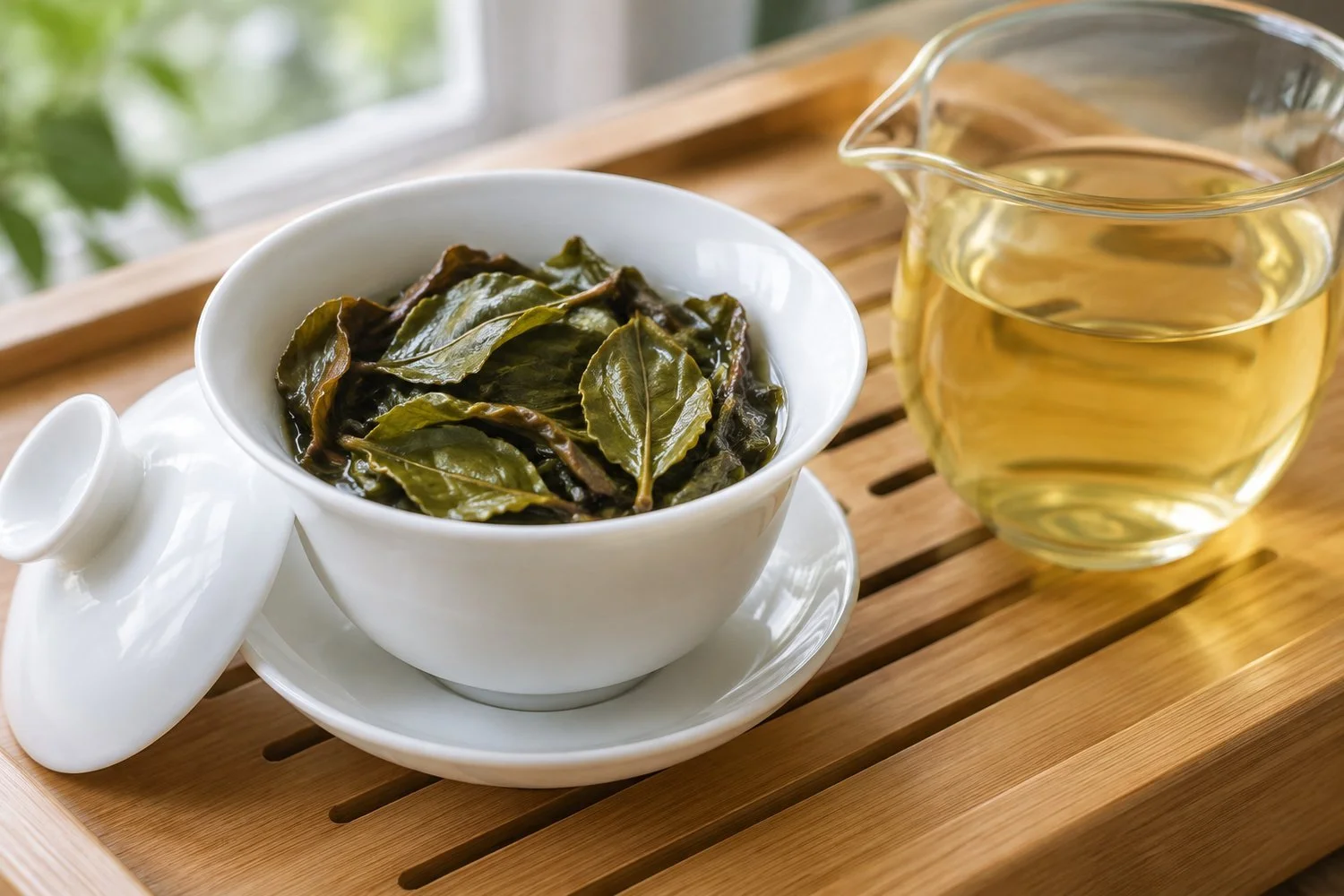
Fully unfurled oolong leaves in a white gaiwan beside a glass pitcher of pale golden tea

Why Loose-Leaf Tea Can Be Re-Steeped

Whole and large-leaf teas release their flavor gradually. In the first steep, the leaves are still curled, rolled or twisted, so only part of their surface meets the water. As they soak and open up, more of the leaf is exposed, and the next infusion draws out flavors the first one didn't reach.

Tea bags usually hold small, finely cut pieces that give up nearly everything in one go. That's why a bag is usually done after one cup, while a good loose-leaf tea often has more to give.

How Many Infusions by Tea Type

These are general guidelines for Western-style brewing (a teaspoon or two of leaf in a mug or teapot, steeped for a few minutes). Every tea is a little different, so let your taste be the final judge.

  • Oolong: about 3 to 5 steeps. Oolongs are the champions of re-steeping. Tightly rolled teas like our Ali Shan Oolong and Iron Goddess (Ti Kuan Yin) Oolong open slowly, and each cup reveals new notes, from floral and orchid-like to nutty and mineral.

  • Green tea: about 2 to 3 steeps. Whole-leaf greens hold up well. Our Dragonwell Green Tea, with its flat, pan-fired leaves, is good for multiple infusions. Finely cut or broken greens tend to fade faster.

  • White tea: about 2 to 3 steeps. Gentle white teas like our White Peony brew a soft, fruity second cup that's often just as pleasant as the first.

  • Black tea: about 2 steeps. Whole-leaf black teas like our Golden Yunnan can give a good second cup, though it will be lighter than the first. Broken-leaf and CTC black teas, such as many breakfast blends, give up most of their flavor in the first steep.

  • Herbal, rooibos and flavored blends: usually 1 to 2 steeps. Rooibos often has a pleasant second cup in it, but most herbal and fruit blends, and teas flavored with fruit pieces or flowers, are at their best in the first steep.

Adjusting Time and Temperature on Later Steeps

The main rule is simple: steep a little longer each time. Because the leaves have already given up some of their flavor, add about 30 seconds to 1 minute for each new infusion. For example, if your first steep of an oolong was 3 minutes, try 3½ to 4 minutes for the second.

Keep the water temperature the same as the first steep, or raise it slightly for oolong and black tea if later cups taste thin. For delicate greens and whites, keep the water on the cooler side every time, since hotter water can turn them bitter. If you need a refresher, our post on brewing temperature by tea type covers the basics.


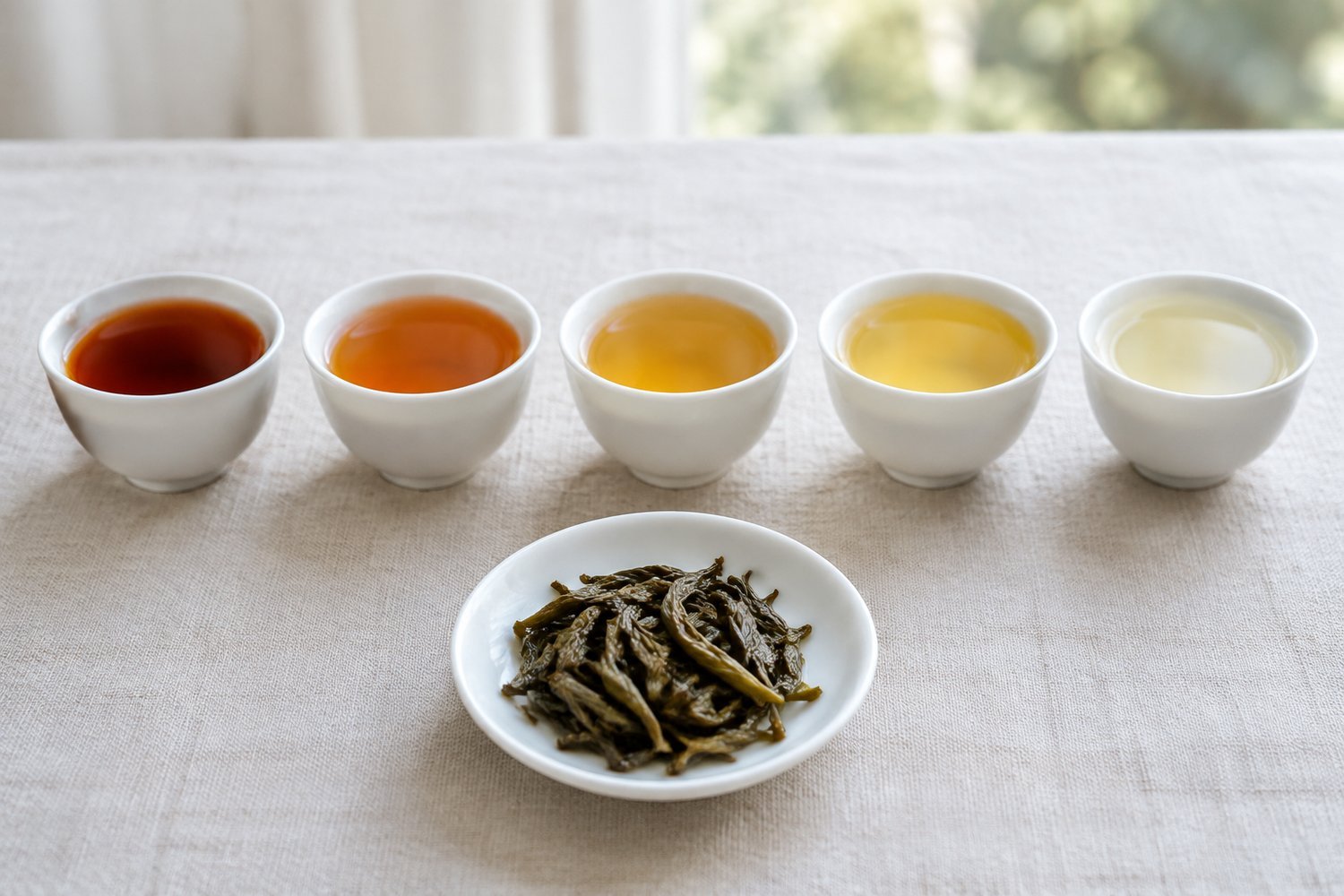
Five white cups of tea from successive steeps, fading from deep amber to pale gold, with wet leaves

Western Style vs. Gongfu-Style Short Steeps

Everything above applies to Western-style brewing. There's another approach, called gongfu style, that gets even more infusions from the same leaves.

In gongfu brewing, you use more leaf in a small vessel, such as a gaiwan (a lidded cup) or a small teapot, and steep for just 15 to 30 seconds at a time. Each pour gives a small, concentrated cup, and you simply add a few seconds to each round. Because each steep is so short, oolongs brewed this way can often go 6 to 8 rounds or more, and you can taste how the flavor changes from one cup to the next.

Gongfu style works best with oolongs and other whole-leaf teas. If you're curious why oolong behaves so differently from green or black tea, our post on how one tea plant makes four kinds of tea explains how processing shapes each style.

Saving Used Leaves Between Steeps

You don't have to brew every infusion back to back. If you'd like a second cup later in the day, that's fine. A few tips:

  • Drain the leaves well after each steep so they don't keep soaking and turn bitter.

  • Leave the lid off or set the infuser on a saucer so the leaves can breathe.

  • Plan to finish your re-steeps the same day. Wet tea leaves left out overnight can spoil and grow mold, so compost them at the end of the day and start fresh tomorrow.


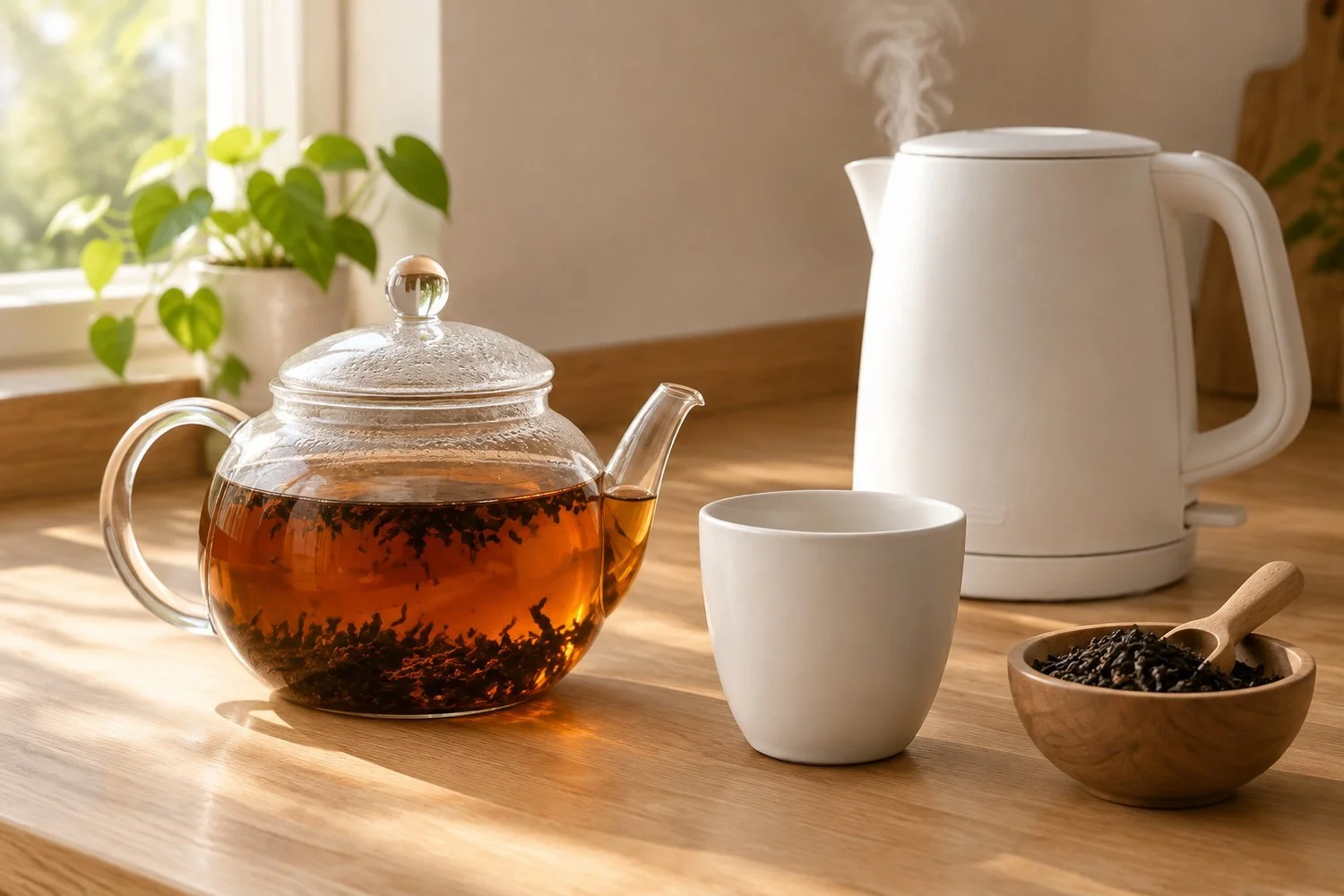
Loose-leaf black tea steeping in a glass teapot beside a white kettle, a cup and a bowl of dry tea

Signs Your Leaves Are Spent

Your tea will tell you when it's done. Watch for these signs:

  • The brewed tea is very pale, even after a longer steep.

  • The aroma is faint, and the flavor tastes thin, flat or watery.

  • The leaves are fully opened and limp, with nothing left to unfurl.

  • A longer steep only adds bitterness, not flavor.

When you notice these, it's time for a fresh scoop. The used leaves make a nice addition to a compost pile or garden soil.

Get More from Every Scoop

Re-steeping is one of the simple pleasures of loose-leaf tea. It lets you taste how a tea changes from cup to cup, and it stretches each scoop a little further. The best way to learn is to experiment: brew an oolong three or four times and note what you taste in each cup. On a cool autumn afternoon, there's no better excuse to keep the kettle going.

As tea enthusiasts, we have been sharing quality tea at affordable prices since 2006, and many of our teas come in a sample size, so it's easy to try a few. Explore our Oolong Tea collection to find a favorite for your next round of re-steeping.

Happy steeping!

White, Green, Oolong, Black: How One Tea Plant Makes Four Kinds of Tea

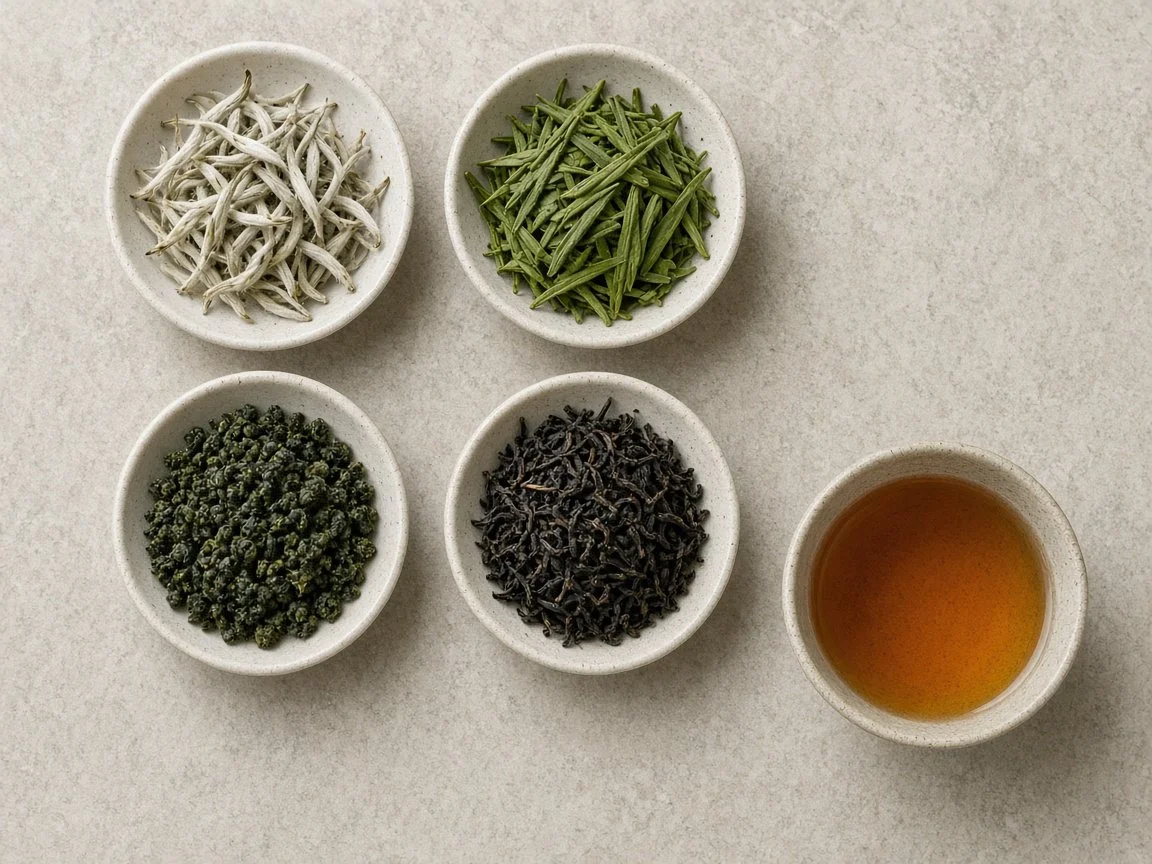
Here's a fact that surprises a lot of tea drinkers: white, green, oolong, and black tea all come from the very same plant. The difference between a pale, honeyed cup of white tea and a bold, malty black tea isn't the plant. It's what happens to the leaves after they're picked.

Let's walk through the four main kinds of tea, what makes each one unique, and how to brew them so they taste their best.

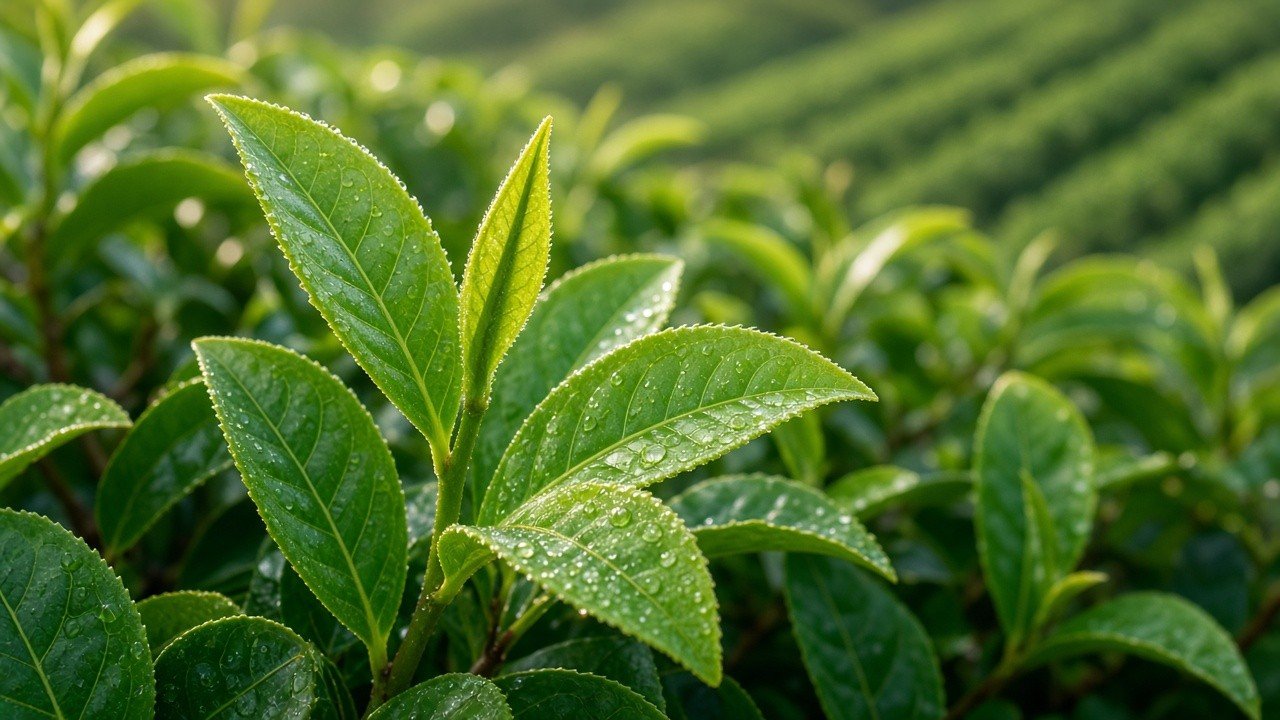
Green leaves and buds on a Camellia sinensis tea plant

One Plant: Camellia sinensis

True tea comes from Camellia sinensis, an evergreen shrub grown in places like China, Japan, Taiwan, India, and Sri Lanka. Climate, soil, and altitude all shape the flavor, but the biggest factor is processing, and especially oxidation.

Oxidation is the same natural browning you see when a sliced apple sits out. Once a tea leaf is bruised or rolled, it starts to darken and its flavor changes from fresh and grassy toward fruity, malty, and rich. Tea makers decide how far to let that go, and that choice gives us the four main kinds of tea.

(Herbal "teas" like rooibos and peppermint are a different story. They're made from other plants, which is why they're naturally caffeine-free.)

White Tea: The Least Handled

White tea is the simplest of all. Young leaves and buds are picked and gently withered and dried, with very little rolling or shaping. The result is a soft, delicate cup with notes of honey, melon, or hay.

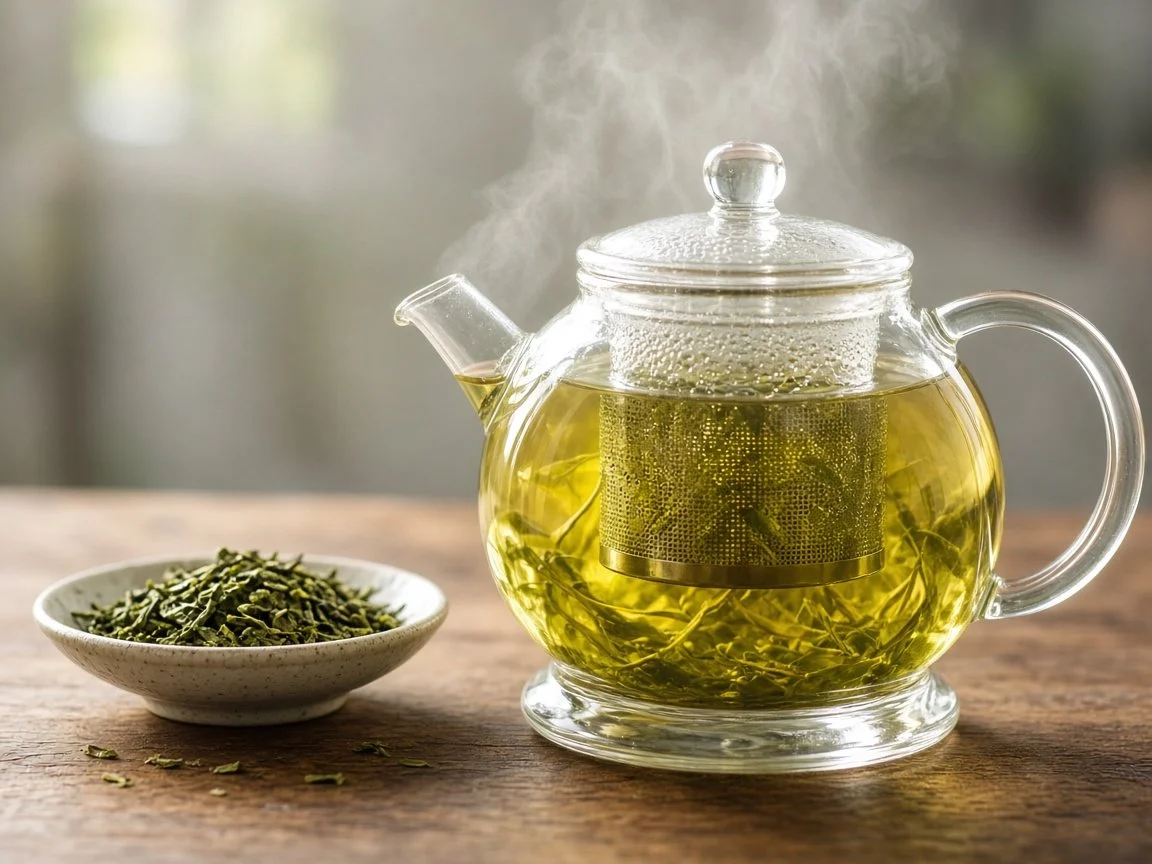
Try White Peony for a velvety, gently fruity cup, or Silver Needle, made only from downy buds. Brew white tea with 1 to 2 teaspoons of leaves in water at 170–185°F for 3 to 5 minutes.

Green Tea: Fresh and Bright

Green tea is heated soon after picking to stop oxidation, so the leaves stay green and the flavor stays fresh. Japanese green teas are usually steamed, which gives them a grassy, ocean-like sweetness. Chinese green teas are usually pan-fired, which gives them a toastier, nuttier edge.

For a Japanese style, try Sencha. For a classic Chinese green, try Dragonwell, with its flat, glossy leaves. Green tea likes cooler water: about 160–175°F for Sencha (1 to 2 minutes) and 160–180°F for Dragonwell (2 to 3 minutes). Boiling water can make green tea taste bitter.

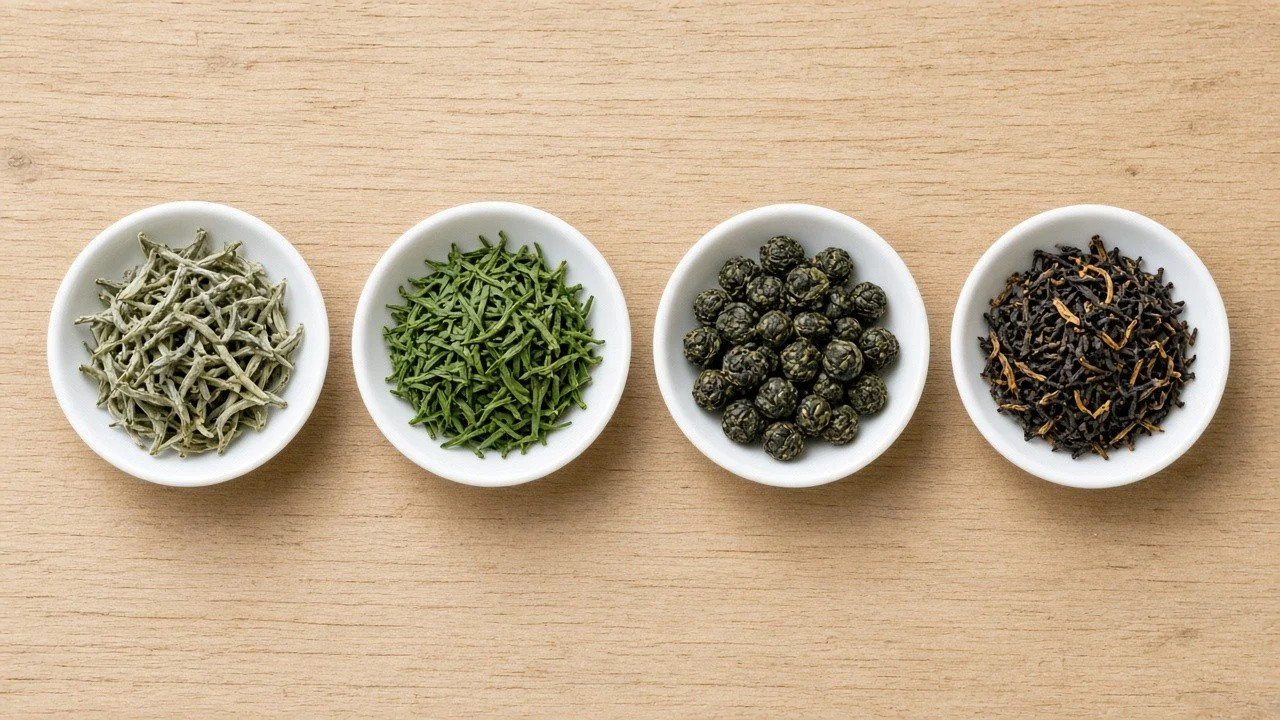
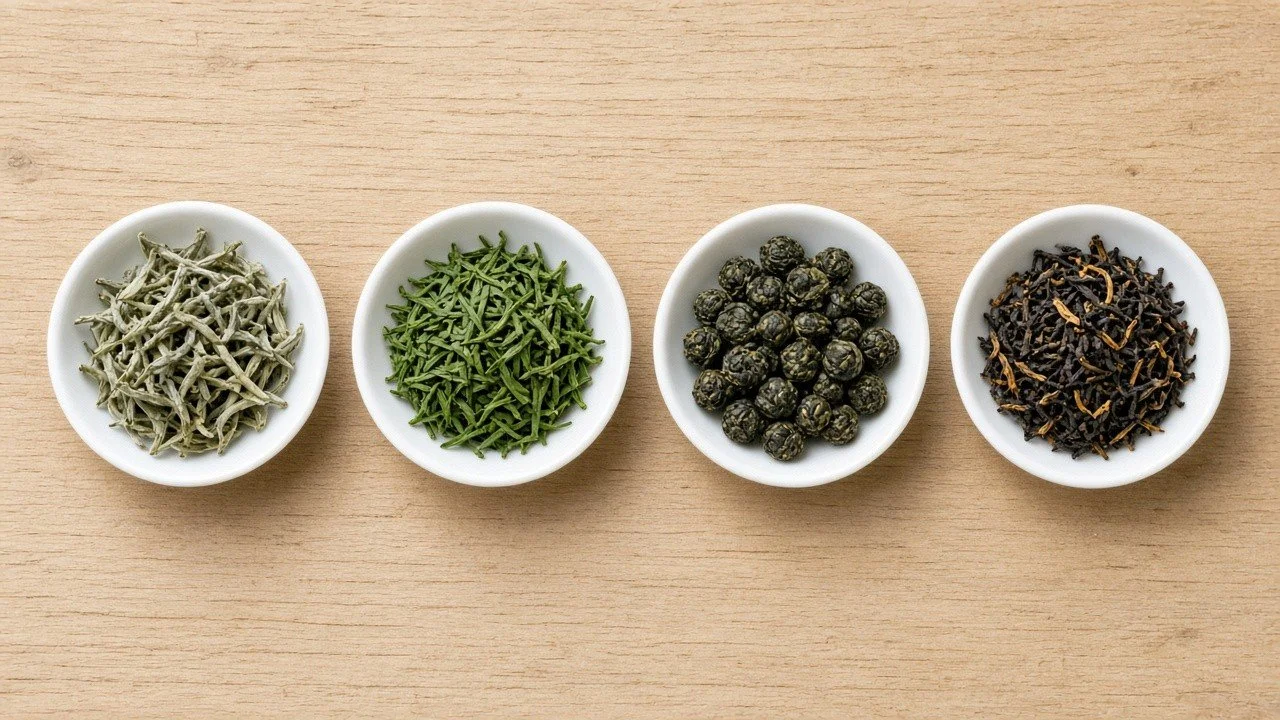
Dry white, green, oolong and black tea leaves side by side

Oolong Tea: The In-Between

Oolong sits between green and black. The leaves are tossed or rolled to bruise their edges, then allowed to oxidize partway before they're heated and shaped. Depending on the tea maker, an oolong can be light and floral or dark, roasted, and nutty.

Ali Shan Oolong from Taiwan is a lovely light, floral example, while Roasted Tung Ting Oolong shows the warm, toasty side. Brew oolong with 1 to 2 teaspoons of leaves in water at 185–205°F for 3 to 5 minutes. Rolled oolongs unfurl as they steep, and many can be brewed more than once.

Black Tea: Fully Oxidized

Black tea is rolled and left to oxidize fully, which turns the leaves dark and gives the cup its deep color, brisk body, and malty or fruity flavor. It's the base for classics like English Breakfast and Earl Grey, and it holds up beautifully to milk.

Try Golden Yunnan for a smooth, golden-tipped Chinese black tea, or Ceylon Lover's Leap for a bright, lively cup from Sri Lanka. Brew black tea with 1 rounded teaspoon per 8 oz of water at a full boil (205–212°F) for 3 to 5 minutes.

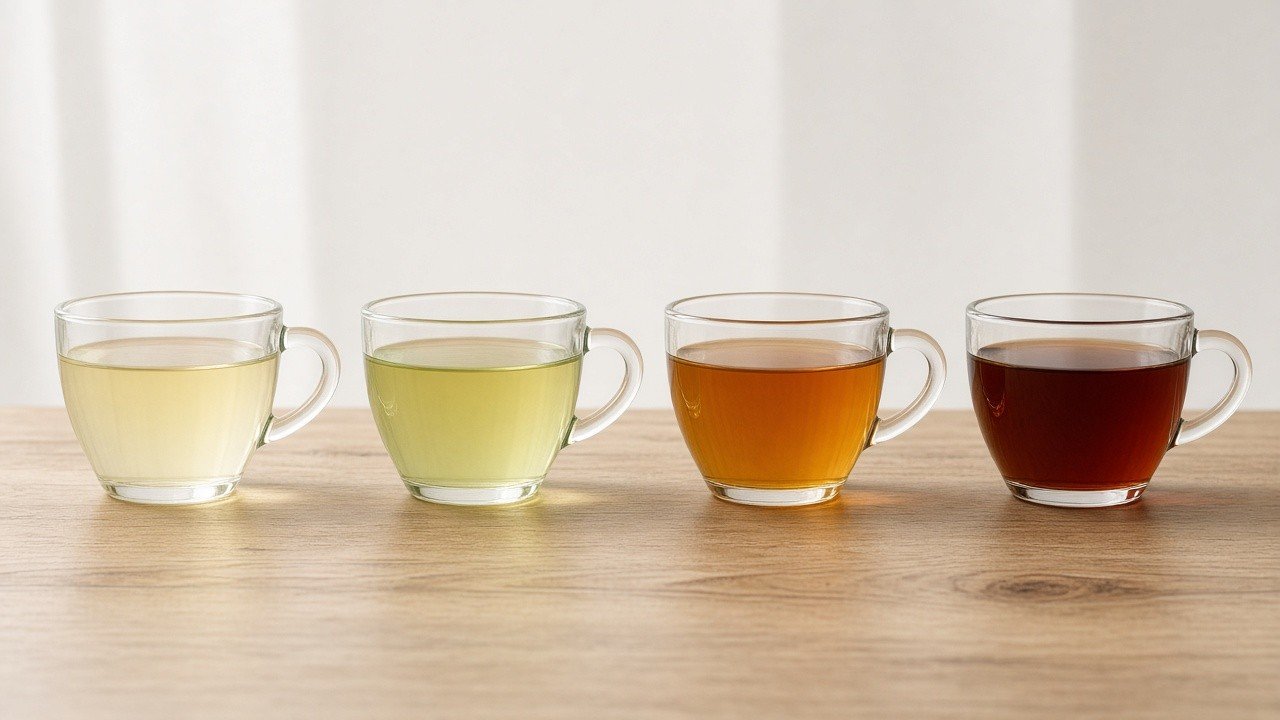
Four cups of brewed tea, from pale white tea to dark black tea

A Quick Brewing Cheat Sheet

  • White tea: 170–185°F, 3 to 5 minutes

  • Green tea: 160–180°F, 1 to 3 minutes

  • Oolong tea: 185–205°F, 3 to 5 minutes

  • Black tea: 205–212°F, 3 to 5 minutes

The general rule is simple: the less oxidized the tea, the cooler the water and the gentler the brew. Each product page lists its own brewing guidelines, so check there for the details on your favorite. Our tea accessories include infusers and filters that make loose-leaf brewing easy.

Find Your Favorite

The best way to learn the difference is to taste it. Brew a white, a green, an oolong, and a black side by side, and you'll see how one plant can taste so many ways. Browse our White Tea, Green Tea, Oolong Tea, and Black Tea collections to start exploring. If you'd like a little fall flavor while it lasts, our Pumpkin Spiced Tea is a cozy, spiced black tea to add to the lineup.

We've been sharing quality tea at affordable prices since 2006, and we love helping tea lovers find the cup that's right for them.

Happy sipping!

How to Store Loose-Leaf Tea So Every Cup Tastes Fresh

Good loose-leaf tea deserves to taste as good on the last cup as it did on the first. The leaves are dry and shelf-stable, but they're also delicate. Over time, the aroma and flavor slowly fade, and how you store your tea makes a big difference in how fast that happens.

The good news is that keeping tea fresh is simple once you know what wears it down.

The Five Things Tea Doesn't Like

Tea leaves hold their flavor in fragile aromatic compounds, and five things break those down or cover them up:

  • Air. Oxygen slowly dulls the flavor, so less air contact means fresher tea.

  • Light. Sunlight, and even bright kitchen light, fades both the color and the flavor of the leaves.

  • Heat. Warmth speeds up every change in the leaf. A spot next to the stove, oven, or kettle is the worst place for tea.

  • Moisture. Dry leaves keep. Damp leaves go stale fast, and can even mold.

  • Strong odors. Tea readily absorbs smells around it, including coffee, spices, and anything else stored nearby.

The Simple Setup

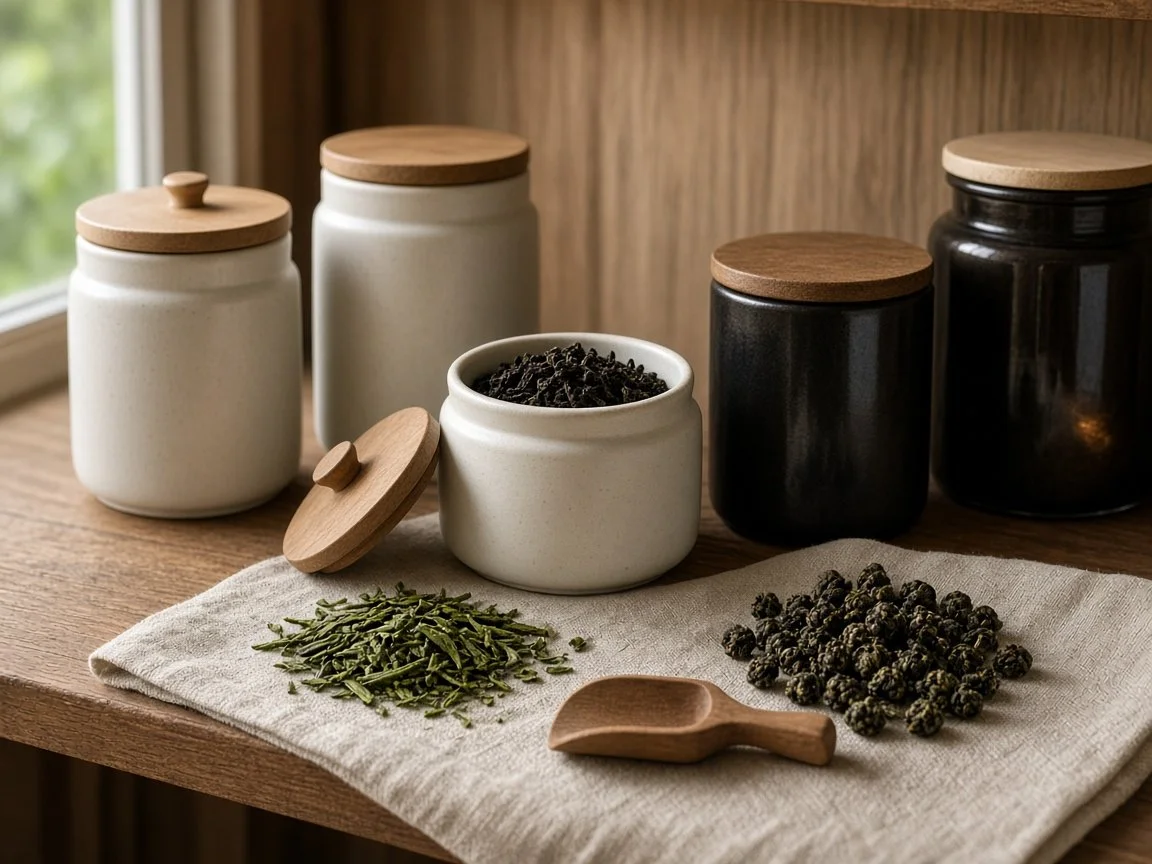
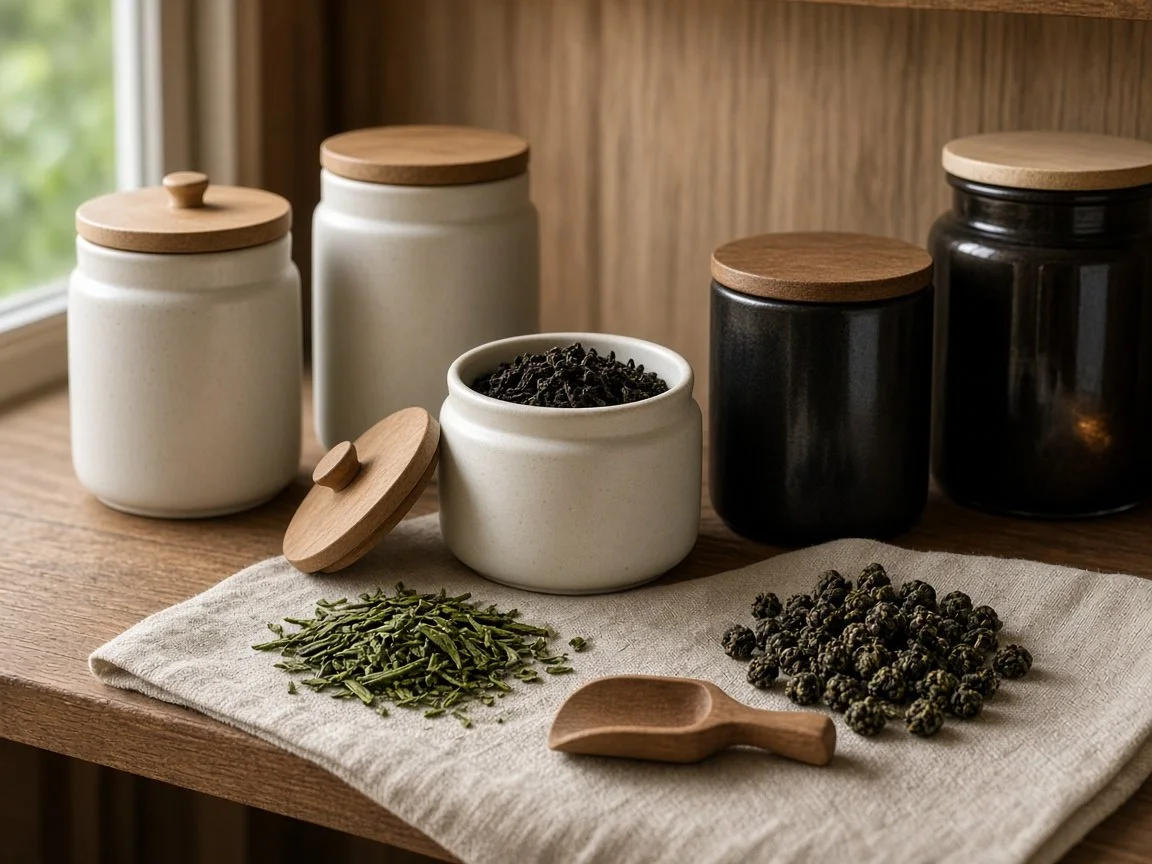
Keep your tea in an airtight, opaque container, and store it in a cool, dark, dry cupboard away from the stove and away from your spice rack. A clear glass jar on a sunny counter looks lovely, but it lets in the light that fades tea, so tuck clear jars into a dark cabinet.

A few habits help too:

  • Use a dry spoon every time, and never scoop tea with wet hands.

  • Close the container right after you measure out your leaves.

  • If your tea came in a bag that doesn't reseal, move it to an airtight container once you open it.

  • Keep flavored and unflavored teas apart. A strongly scented blend like Earl Grey, with its bergamot, or a spiced blend like our Pumpkin Spiced Tea, can lend its aroma to a delicate green or white tea stored in the same box.

  • Buy amounts you'll enjoy within a few months. Fresher tea is better tea.

Tips by Tea Type

All teas like the same basic care, but some are more delicate than others

Green tea. Green teas are the most delicate, and their fresh, grassy sweetness fades the fastest. Japanese greens like Sencha and Gyokuro are at their brightest when enjoyed within several months of opening.

Matcha. Because matcha is a fine powder, it has a lot of surface area exposed to air, so it loses its vivid color and sweetness quickly once opened. Seal it tightly and enjoy it within a month or two of opening. Many matcha drinkers keep an opened, well-sealed container in the refrigerator. If you do, let it come to room temperature before opening so moisture doesn't condense on the powder. If you're new to matcha, our Matcha Sampler Pack lets you try several in small amounts.

Oolong. Lightly oxidized, green-style oolongs such as Ali Shan Oolong are closer to green tea and are best enjoyed fresh. Darker, roasted oolongs like Roasted Tung Ting Oolong are sturdier and hold their character longer.

Black tea. Fully oxidized black teas are the most forgiving. A brisk, malty Assam like Assam Behora keeps its flavor well for a long time when it's stored airtight and away from light.

White tea. Fresh white teas are light and delicate, so treat them like green tea. Some white teas can actually be aged, though. Our Aged Silver Needle is a good example. When stored right, white tea continues to oxidize slowly and develops a richer, more mellow taste.

Should You Refrigerate or Freeze Tea?

For most loose-leaf tea, a cool, dark cupboard is the best spot. The fridge and freezer are humid places full of food smells, and every time a cold container is opened in a warm kitchen, moisture can condense on the leaves. Matcha is the main exception, as noted above. If you do chill tea, keep it sealed tightly and let it warm up before you open it.

How to Tell If Your Tea Is Still Fresh

Tea doesn't spoil the way food does, but it does lose its flavor. Rub a few leaves between your fingers and smell them. Fresh tea smells lively and distinct, whether that's grassy, floral, malty, or fruity. Tea that smells faint or dusty has faded, and it will brew a flat cup. Throw out any tea that smells musty or shows signs of moisture.

Fresh Tea, Better Cups

Good storage is the easiest way to get your money's worth from every bag of tea. Find a cool, dark cupboard, keep the lid on tight, and your leaves will reward you cup after cup. If you'd like to explore new teas in small amounts that you'll finish while they're at their best, our 10 Tea Variety Sampler Pack is a great place to start.

Happy steeping!

What Is White Tea? How It's Made, How It Tastes, and How to Brew It

White tea is the most lightly handled of all teas. It comes from the same plant as green, oolong, and black tea, Camellia sinensis, but the leaves are simply withered and dried. There's no rolling, no pan-firing, and no steaming, which is why the cup tastes so soft, clean, and naturally sweet.

Here's what makes white tea different, the main styles to know, and how to brew it well.

How white tea is made

White tea traditionally comes from Fujian Province in China. Growers pick the unopened buds, sometimes with one or two young leaves, in early spring. The fresh leaves are then spread out to wither slowly, losing moisture and oxidizing just a little, before they're dried. Because the leaves are never rolled or broken, they stay whole, and many of the buds keep the fine silvery down that gives white tea its name.

The main styles of white tea

  • Silver Needle (Bai Hao Yin Zhen). Made only from downy buds, this is the most celebrated white tea. Our Silver Needle brews a clear, glowing cup with a delicate fragrance.

  • White Peony (Bai Mu Dan). Made from a bud and two young leaves, it's a little fuller and fruitier. Our White Peony is soft and velvety with gentle jammy notes.

  • Bud-and-leaf teas like Snowbud. Snowbud is bright, crisp, and mellow with floral hints.

  • Aged white teas. Some white teas are stored for years and grow deeper and honeyed. Try Aged Silver Needle.

  • Flavored white teas. White tea's light base pairs well with fruit, as in Peach White Tea and Blueberry White Tea.

What does white tea taste like?

Expect a pale gold cup that's light, smooth, and lightly sweet, with notes that can run from fresh hay and melon to honey and flowers. It's rarely bitter, which makes it a lovely tea for people who usually find green tea too grassy.

Does white tea have caffeine?

Yes. All true teas contain caffeine, white tea included. It's often said to be the lowest, but that isn't always so. Bud-heavy teas like Silver Needle can hold about as much as some green teas. How you brew matters more: cooler water and shorter steeps keep the caffeine on the gentle side. If you want no caffeine at all, an herbal or fruit tea is the way to go.

White tea and your health

Because it's so lightly processed, white tea keeps plenty of the plant's natural polyphenols, including catechins, the same antioxidant family found in green tea. Researchers are interested in these compounds, but most of the evidence so far comes from lab and animal studies, so it's best to enjoy white tea for its flavor and treat any health perks as a bonus, not a treatment.

How to brew white tea

Our product pages suggest this general guideline for Silver Needle and White Peony:

  • Use 1–2 teaspoons (about 2–3 g) of leaf per 8 oz of water.

  • Heat the water to 170–185°F, well below boiling.

  • Steep 3–5 minutes, then adjust to taste.

The fluffy leaves are bulky, so don't be shy with the scoop. Good white tea can be steeped two or three times. It also makes a beautiful iced tea, and you can try it cold brewed. For water temperatures across every tea type, see our brewing temperature guide.

Find your white tea

Every white tea we carry comes in a sample size plus larger sizes, so it's easy to taste a few before you pick a favorite. Browse them all in our white tea collection, or start with the White Tea Sampler Pack.