What New Research Says About Tea and Your Health (2025–2026)
Here in Boston, we drink tea mostly because it tastes good and slows the day down. Researchers keep studying what else it might do. Below are four studies published between July 2025 and October 2026, explained in plain language. Each one shows a link between tea and a health result. None of them proves that tea causes that result, and we point out the limits of each one.

Photo: Bert Christiaens / Pexels
1. Tea and blood pressure
Journal: Frontiers in Nutrition, August 2026 (systematic review and meta-analysis)
Researchers combined 20 observational studies with about 320,000 adults in total. In the four studies that followed people over time, regular tea drinkers were about 13% less likely to develop high blood pressure than people who did not drink tea. The link was strongest at lower intakes and leveled off at higher intakes, so more cups did not keep adding benefit. In the subgroup analyses, the link was stronger among black tea drinkers.
Limits: All of the studies were observational, and their results varied a lot. The authors write that a clear protective effect "cannot be confirmed."
2. Tea and bone strength over 13 years
Journal: The American Journal of Clinical Nutrition, October 2026 (prospective cohort study)
A team in Guangzhou, China, measured bone mineral density in 1,708 adults four times over 13 years. People who drank tea at a moderate frequency generally had the highest bone density scores across the whole body, lower spine and hip. People with higher blood levels of certain tea catechins (EGCG and ECG) also tended to have better bone measurements.
Limits: The differences were small, and the blood-marker results did not rise in a straight line. The study was done in one region of China, and as an observational study it cannot show cause and effect.
3. Unsweetened tea and longer life
Journal: Frontiers in Nutrition, July 2025 (prospective cohort study)
Using data from 195,361 UK Biobank participants followed for a median of 13.6 years, researchers compared people who drank no tea with people who drank tea unsweetened, with sugar, or with artificial sweeteners. People who drank about 3.5 to 4.5 cups of unsweetened tea a day had a 20% lower risk of dying from any cause during the study, plus lower risks of dying from heart disease and cancer. Tea with sugar or artificial sweeteners showed no consistent link with lower risk.
Limits: Tea intake came from short dietary recalls, and tea drinkers may differ from non-drinkers in other ways. The link was U-shaped, so the lowest risk sat at a moderate intake, not at the highest one.
4. Green tea catechins, exercise and leg strength
Journal: Archives of Gerontology and Geriatrics, August 2026 (randomized, placebo-controlled trial)
In Japan, 78 adults aged 60 and older who felt they were getting weaker or slower all took part in group exercise classes for 24 weeks. Half also drank a catechin-enriched green tea each day (613 mg of catechins), and the rest drank a placebo drink. The green tea group gained more knee-extension (thigh) strength.
Limits: There was no difference between the groups in overall physical performance tests or muscle mass. Only 51 people completed the trial. The tea used was specially enriched with catechins, more than a typical cup provides, and the study was partly funded by a tea company whose employees were co-authors.
What this means for your cup
Moderate and regular seems to be the pattern. In three of these studies, the best results came at moderate intake, not the highest.
Try it plain. The UK Biobank study linked lower risk with unsweetened tea only. A naturally flavorful tea makes skipping the sugar easy.
Tea works alongside a healthy lifestyle. In the strength trial, everyone exercised, and the tea was an addition.
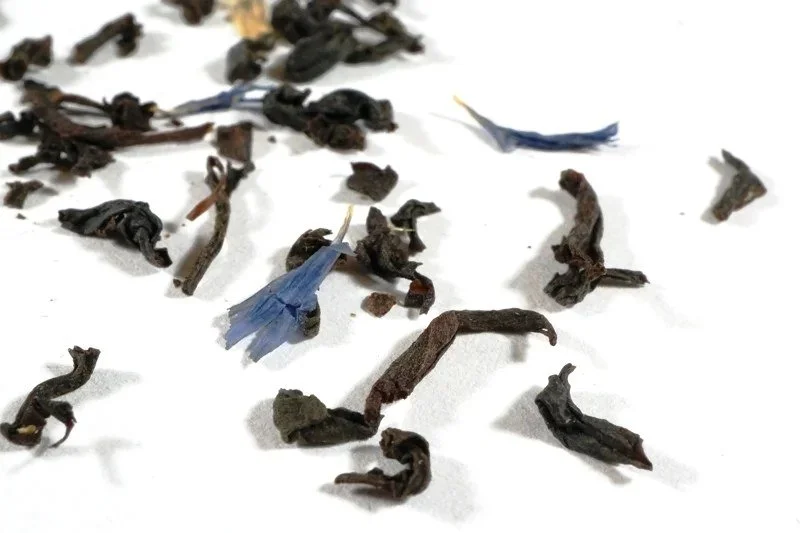
A few teas from our shop to brew this week:
Earl Grey: a classic black tea with bergamot, bright enough to enjoy without sugar.
Jasmine Dragon Pearls: hand-rolled green tea with a natural floral sweetness.
Matcha Samidori: powdered green tea, where you drink the whole leaf.
This post is for general information only and is not medical advice. Please talk with your doctor before making changes to your diet or health routine, especially if you take medication or are sensitive to caffeine.