Hibiscus tea is hard to miss. It brews up a deep ruby red and tastes bright and tart, a little like cranberry. It also has a reputation as a tea that may be good for blood pressure. Is that reputation backed by real research? We read the human studies and reviews ourselves and pulled together an honest, plain-English look at what's known, what isn't, and how to enjoy a caffeine-free cup of hibiscus.
What Is Hibiscus Tea?
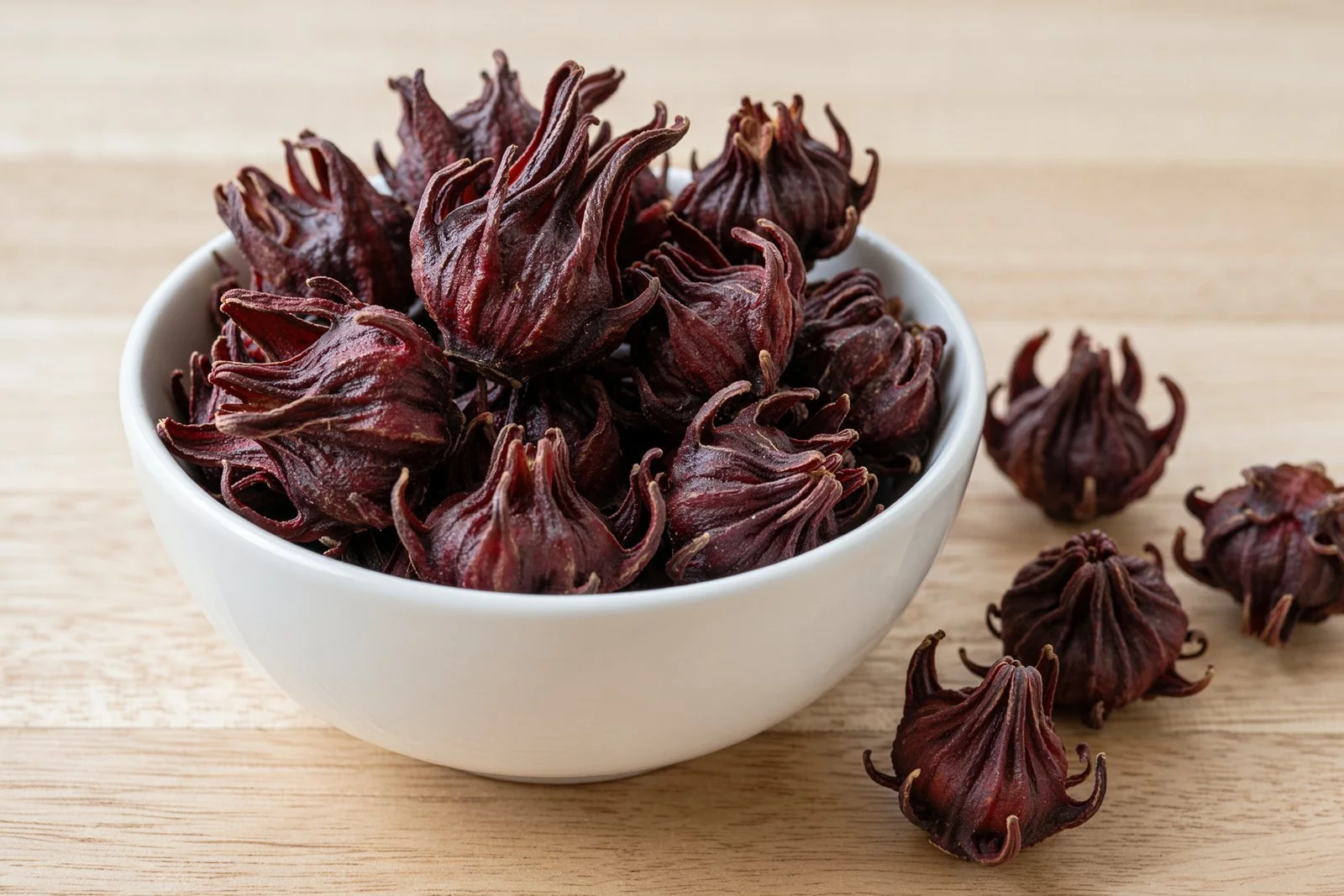
The hibiscus used for tea is Hibiscus sabdariffa, also called roselle or sour tea. The part that gets dried and brewed isn't the showy petals. It's the calyx, the fleshy red cup that wraps around the base of the flower. Dried calyces brew into tart red drinks enjoyed around the world, such as sorrel in the Caribbean and agua de Jamaica in Mexico.
Like chamomile and rooibos, hibiscus is a tisane, an herbal tea made without the tea plant, so it's naturally caffeine free. (New to the term? Our guide to herbal tea vs. true tea explains the difference.)
Why might hibiscus affect blood pressure? It's rich in plant compounds such as polyphenols and anthocyanins, the pigments behind its red color (Serban et al., 2015). Researchers have also identified hibiscus as an ACE inhibitor, meaning it may act on the same enzyme targeted by a common type of blood pressure medicine (Ellis et al., 2022). Those are interesting leads, but the real test is what happens when people actually drink it.
What the Human Studies Found
A hibiscus tea trial right here in Boston. Researchers at the Jean Mayer USDA Human Nutrition Research Center on Aging at Tufts University ran a randomized, double-blind, placebo-controlled trial with 65 adults aged 30 to 70. Their blood pressure was slightly to mildly raised, and none were taking blood pressure medicine. For six weeks, one group drank three 240 mL (about 8 oz) cups of brewed hibiscus tea a day, each made with 1.25 grams of dried hibiscus steeped for 6 minutes. The other group drank a red, fruit-flavored placebo drink. After six weeks, systolic blood pressure (the top number) fell by an average of 7.2 mmHg in the hibiscus group, compared with 1.3 mmHg in the placebo group. Diastolic pressure (the bottom number) also dipped, but that change wasn't significantly different from placebo. People who started with higher readings tended to see bigger drops (McKay et al., 2010). One detail worth knowing: the study was funded in part by a tea company, which also supplied the hibiscus.
A 2015 meta-analysis. Researchers pooled five randomized controlled trials with 390 participants in total. Hibiscus was linked with an average drop of 7.58 mmHg in systolic and 3.53 mmHg in diastolic blood pressure, and again the effect was larger in people who started with higher readings. The authors still called for more well-designed trials (Serban et al., 2015).
A larger 2022 review. A team at the University of Leeds reviewed 17 trials. Compared with placebo, hibiscus lowered systolic blood pressure by about 7.1 mmHg on average, with the biggest effects in people whose blood pressure was raised to begin with. Hibiscus was also linked with a small drop in LDL ("bad") cholesterol. Results varied a lot from trial to trial, though, and the authors said more studies are needed to work out the best amount and how long to drink it (Ellis et al., 2022).
A stricter Cochrane review. Cochrane reviews use especially strict rules about which trials count. When Cochrane reviewers looked only at trials comparing hibiscus with a placebo or no treatment in adults with high blood pressure, just one small study of 60 people (all with type 2 diabetes) qualified, and it used hibiscus extract capsules, not tea. The reviewers concluded the evidence is currently insufficient to say whether hibiscus lowers blood pressure in people with hypertension (Pattanittum et al., 2021).
The Honest Bottom Line
Put simply, several small trials link regular hibiscus drinking with modest drops in blood pressure, mostly the top number, and mostly in people whose readings were slightly raised. The U.S. National Center for Complementary and Integrative Health (NCCIH) lists hibiscus among foods and supplements that may help reduce blood pressure, but adds that the evidence is limited, the effects are small, and no dietary supplement has been shown to work as well as blood pressure medicine (NCCIH).
A few limitations are worth keeping in mind:
The trials are small and short. Most ran for weeks, not years.
Not every study used tea. Some used concentrated extracts or capsules, and doses varied, so results don't translate neatly to one home-brewed cup.
Results vary. The reviews found big differences from one trial to the next, and the strict Cochrane review found too little evidence to draw a firm conclusion.
Our take: hibiscus tea isn't a treatment for high blood pressure, and it shouldn't replace one. It's a delicious, naturally caffeine-free drink, and the research suggests it may be a small plus alongside the healthy habits your doctor recommends.
A Few Safety Notes
In the trials pooled in the 2022 review, hibiscus was generally well tolerated. One study reported mild stomach symptoms that passed within a week. The same reviewers noted that possible interactions with blood pressure medicines, such as diuretics and ACE inhibitors, still need more research (Ellis et al., 2022).
NCCIH advises that if you have high blood pressure, you should follow the treatment plan your health care provider prescribed and not swap it for an unproven product. It also notes that some herbs, including licorice root, may raise blood pressure (NCCIH). That's worth knowing because some herbal blends, including our Throat Soother, contain licorice root alongside hibiscus.
If you take blood pressure medicine or other medications, are pregnant or breastfeeding, or are managing a health condition, please talk with your doctor before making hibiscus tea a daily habit.
Enjoying a Cup of Hibiscus
If you'd like to try hibiscus, our fruit blends are a tasty place to start. Hibiscus is one of the main ingredients in each of these, alongside fruit and other botanicals:
Red Orange: our best-selling fruit blend, with orange peel, hibiscus, apple and rose hip for a tangy citrus cup.
Very Berry: rose hips, hibiscus, cranberries and blueberries, bright and juicy.
Yummy Fruitea: strawberry, hibiscus, blackberry and elderberry, with tart sour cherry notes.
Apple Strawberry: rose hips, hibiscus, apple and strawberry, with a natural fruity sweetness.
Since these are blends, keep in mind that the studies above looked at hibiscus on its own, so a cup of a blend won't match the amounts used in the research.
A few tips for a great cup:
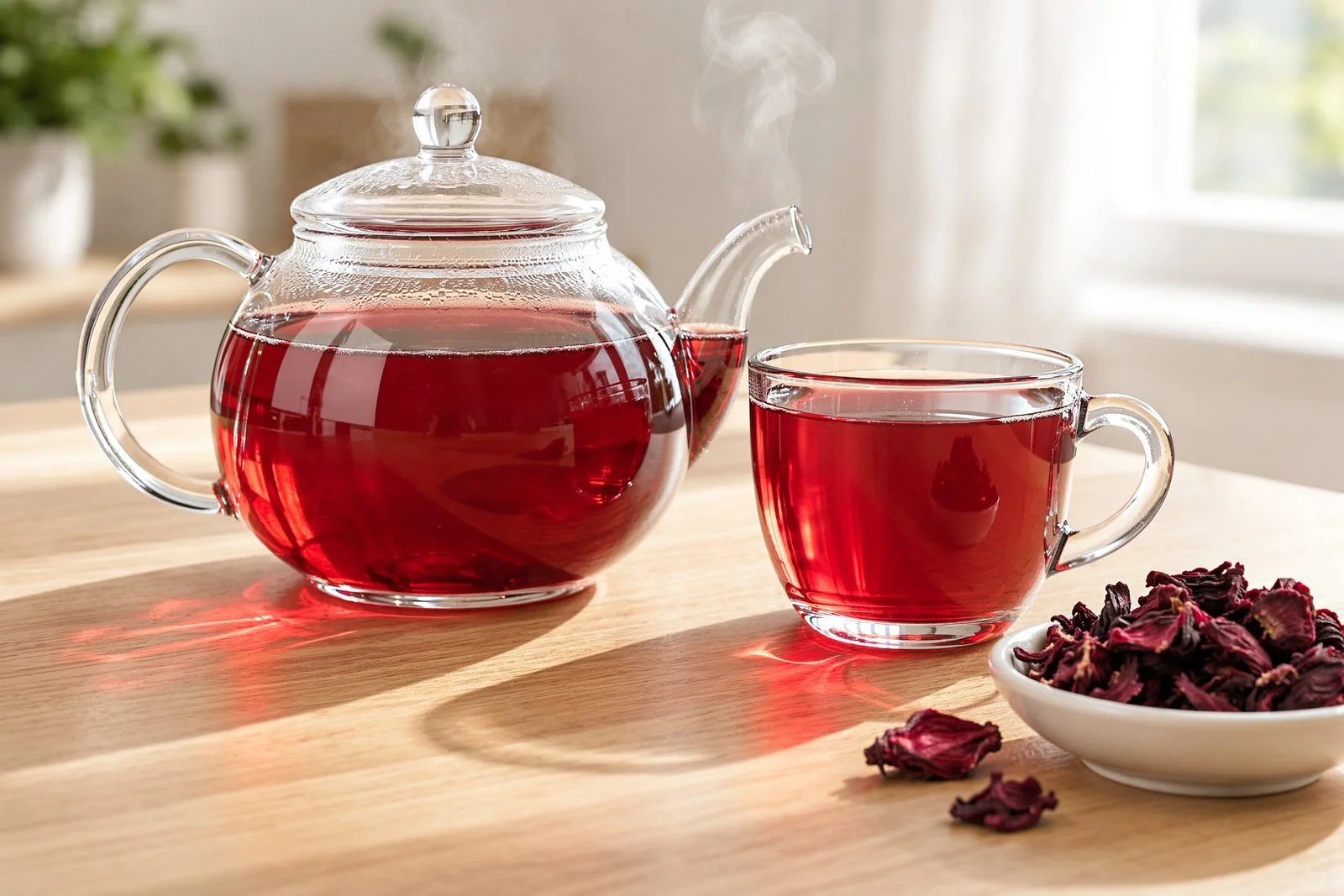
Brew it fully. Use about 2 teaspoons per cup of freshly boiled water and steep 5 to 10 minutes. Longer steeping gives a deeper color and a tarter taste.
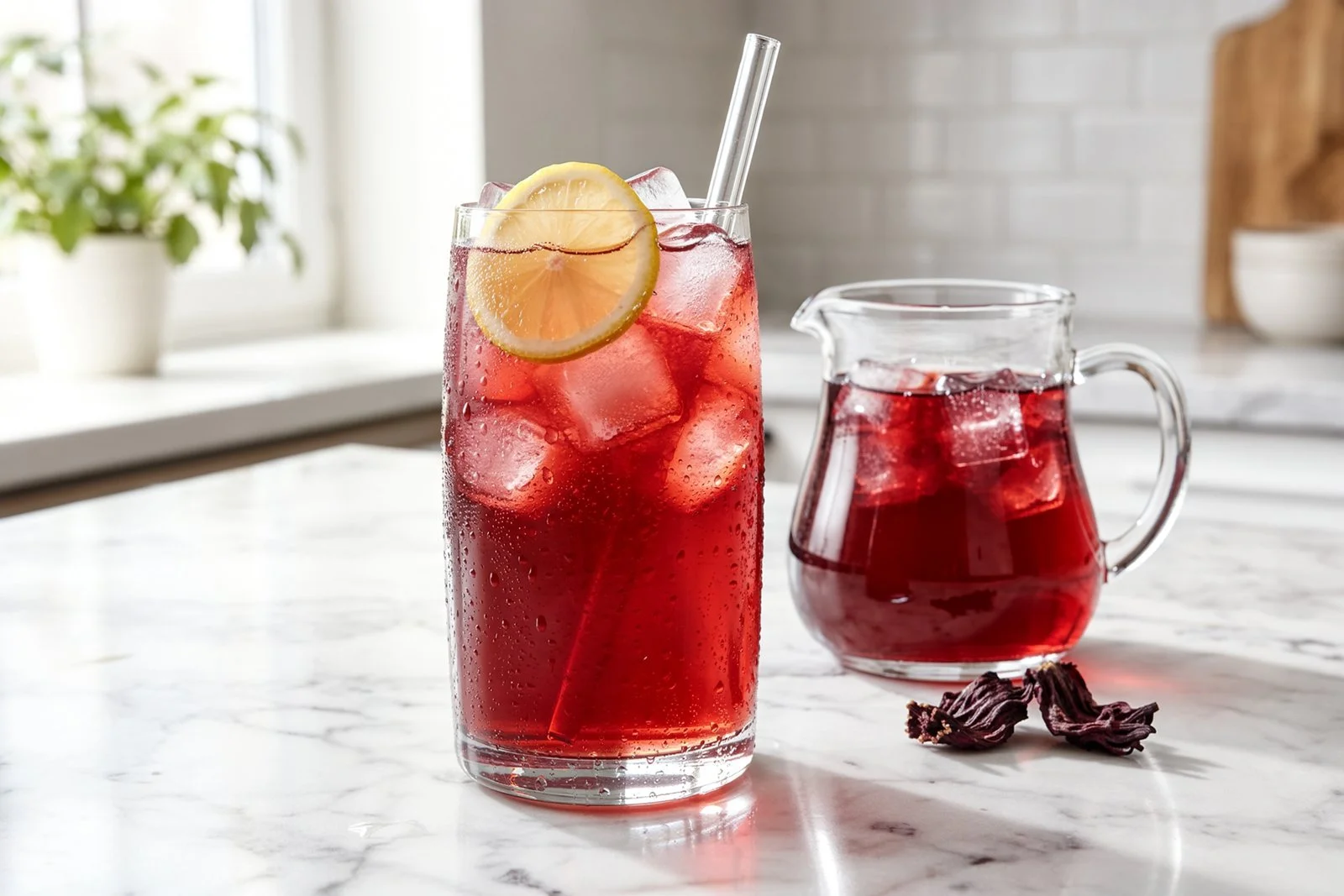
Try it iced. Brew it strong and pour it over ice for a refreshing ruby-red drink.
Go easy on the sugar. Our blends have no added sugar or sweeteners. If you like it sweeter, a little honey goes a long way.
Explore other caffeine-free cups. If you enjoy herbal teas, our post on chamomile and sleep takes the same honest look at another favorite.
You'll find these and more in our Herbal Tea collection. Like everything at Beantown Tea & Spices, they're quality loose-leaf teas at affordable prices, with sample sizes that make it easy to find your favorite.
Sources
McKay DL, Chen CY, Saltzman E, Blumberg JB. Hibiscus sabdariffa L. tea (tisane) lowers blood pressure in prehypertensive and mildly hypertensive adults. Journal of Nutrition. 2010;140(2):298-303. doi:10.3945/jn.109.115097 (PubMed 20018807)
Serban C, Sahebkar A, Ursoniu S, Andrica F, Banach M. Effect of sour tea (Hibiscus sabdariffa L.) on arterial hypertension: a systematic review and meta-analysis of randomized controlled trials. Journal of Hypertension. 2015;33(6):1119-1127. doi:10.1097/HJH.0000000000000585 (PubMed 25875025)
Ellis LR, Zulfiqar S, Holmes M, Marshall L, Dye L, Boesch C. A systematic review and meta-analysis of the effects of Hibiscus sabdariffa on blood pressure and cardiometabolic markers. Nutrition Reviews. 2022;80(6):1723-1737. doi:10.1093/nutrit/nuab104 (PubMed 34927694)
Pattanittum P, Ngamjarus C, Buttramee F, Somboonporn C. Roselle for hypertension in adults. Cochrane Database of Systematic Reviews. 2021;11(11):CD007894. doi:10.1002/14651858.CD007894.pub3 (PubMed 34837382)
National Center for Complementary and Integrative Health. High Blood Pressure (Hypertension) and Complementary Health Approaches. nccih.nih.gov/health/hypertension-high-blood-pressure