
Hojicha


Hojicha
Warm, toasty and soothing, Hojicha is a low-caffeine roasted green tea from Japan. It brews a nutty cup that is slightly sweet with a very clean finish.
History & Heritage
Hojicha is a relatively young tea. The most widely repeated account says it was created in Kyoto around the 1920s, when a tea merchant began roasting leftover leaves so they wouldn't go to waste. Roasting transformed the tea, turning the green leaves a reddish brown and giving them a toasty, caramel-like aroma. Today Hojicha is enjoyed throughout Japan and has become a favorite flavor for lattes and desserts. Some accounts add that the roasting idea was encouraged by researchers in Kyoto. Bancha, the later-harvest tea often used for Hojicha, had long been an everyday tea in Japan.
Interesting Facts
Our Hojicha is made from roasted Bancha, a summer-crop green tea.
The roasting process removes almost all astringency and bitterness and significantly reduces caffeine.
In Japan, Hojicha is often enjoyed during and after dinner, and it is popular with children and older people because of its low caffeine.
Roasting turns the leaves from green to a reddish brown.
Tasting Notes & Pairings
Toasty, nutty and lightly sweet, with almost no bitterness. It is also excellent as an iced tea. Pair it with grilled fish, rice bowls, or desserts like vanilla ice cream, roasted sweet potato, or chocolate.
Brewing tips (general guideline): use 1–2 heaping teaspoons (about 3 g) per 8 oz of water at 195–212°F, steeped 30 seconds to 2 minutes. Adjust to taste.
Like every tea at Beantown Tea & Spices, Hojicha is a quality loose-leaf tea offered at an affordable price, with sample and larger sizes so you can find your favorite. Explore more in our Green Tea collection, or pair it with our tea accessories.
Brewing Instructions Per 8 oz. of Water
Toasty, nutty and comforting, Genmaicha is a specialty Japanese green tea blended with fire-toasted brown rice. Our Genmaicha uses a high-grade Sencha and Gyokuro green tea base.
History & Heritage
Genmaicha is often described as the tea of thrifty households. A widely told account says Japanese families added toasted rice to their tea to stretch it further when tea was expensive, and the combination became a beloved tea in its own right in the early 20th century. A popular folk legend tells a different story: a servant named Genmai accidentally dropped rice into his master's tea and gave the drink its name. The legend is charming but undocumented.
Interesting Facts
During firing, some rice grains pop like popcorn, which is why Genmaicha is nicknamed "popcorn tea."
The Gyokuro in our blend adds complexity and umami, a Japanese term for savory taste.
Our Genmaicha comes from Shizuoka Prefecture.
Tasting Notes & Pairings
The fresh, vegetal character of the green tea comes through in the cup, tempered by the warm, bakey character of the rice. There is a natural sweetness and an almost chewy character to the finish. It is a natural partner for Japanese meals: try it with miso soup, onigiri, tempura, or ramen. It is also a wonderful introduction to Japanese tea for anyone who prefers a warm, savory cup to a grassy one, and it makes a mellow after-dinner tea.
Brewing tips (general guideline): use 1 heaping teaspoon (about 3 g) per 8 oz of water at 175–185°F, steeped 2–3 minutes. Adjust to taste.
Like every tea at Beantown Tea & Spices, Genmaicha is a quality loose-leaf tea offered at an affordable price, with sample and larger sizes so you can find your favorite. Explore more in our Green Tea collection, or pair it with our tea accessories.
Gyokuro, meaning "jade dew," is one of Japan's most prized green teas. Our classic Gyokuro brews a full-flavored cup with a satisfying, light and refreshing character, the signature sweet green flavor, and hints of seaweed.
History & Heritage
Gyokuro was created in 1835 in Uji, near Kyoto, Japan's historic tea capital. It is credited to the sixth-generation head of the Yamamoto Kahei tea family, who refined a way of growing and processing shaded tea leaves to bring out their sweetness and savory umami. Shading tea plants had long been practiced in Uji for the tea used in matcha, and Gyokuro applied that idea to a leaf tea, creating a new style that remains a symbol of Japanese tea craftsmanship.
Interesting Facts
The tea is covered with black curtains or bamboo and straw shades for about 3 weeks in early spring. This increases chlorophyll, making the leaves dark green, and reduces tannin for a sweeter flavor.
The leaves are small, about 3/4 inch long, and extremely fragrant and tender.
Immediately after plucking, the leaves are steamed to seal in their freshness.
Tasting Notes & Pairings
Rich, sweet and savory, with a smooth, almost brothy texture. Gyokuro is best sipped slowly from a small cup to savor its depth. Pair it with delicate Japanese sweets, sashimi, or simply enjoy it on its own.
Brewing tips (general guideline): use 2 teaspoons (about 4–5 g) per 4–6 oz of cooler water, 120–140°F, steeped about 2 minutes. Cooler water brings out sweetness and umami. The leaves can be infused again. Adjust to taste.
Like every tea at Beantown Tea & Spices, Gyokuro is a quality loose-leaf tea offered at an affordable price, with sample and larger sizes so you can find your favorite. Explore more in our Green Tea collection, or pair it with our tea accessories.
Our Sencha Superior is a wonderful tea for everyday drinking as well as special occasions. The young leaves are plucked in early spring and steamed to seal in their freshness.
History & Heritage
Sencha, Japan's most popular tea, owes its modern form to Nagatani Soen, a tea farmer in Ujitawara near Kyoto. In 1738 he developed the method of steaming fresh tea leaves and then rolling and drying them, which produced a brilliant green tea with a fresh aroma. The tea was later brought to Edo, now Tokyo, where it became a sensation. Shizuoka Prefecture, home of this Sencha, has since become Japan's best-known tea region. Before Soen's method spread, much of the tea drunk in Japan was brown and coarse, so his bright green Sencha was a revelation. The tea merchant Yamamoto Kahei is credited with selling it in Edo, where its fame spread quickly.
Interesting Facts
The rolling process gives the leaves their fine, needle-like shape, often called "spider legs."
Our Sencha Superior is a Spring Sencha from Shizuoka Prefecture with a very bright infusion.
The same leaves can be infused up to 3 times.
Tasting Notes & Pairings
Fresh, bright and gently sweet, with the clean, grassy-green character that makes Sencha so refreshing. Pair it with sushi, steamed vegetables, rice crackers, or a light lunch. It is a tea that rewards care: use cooler water and a short steep for a sweet, smooth cup.
Brewing tips (general guideline): best brewed with 1 heaping teaspoon per 8 oz of water at 160°F for 2 minutes. Do not over-brew. Adjust to taste.
Like every tea at Beantown Tea & Spices, Sencha Superior is a quality loose-leaf tea offered at an affordable price, with sample and larger sizes so you can find your favorite. Explore more in our Green Tea collection, or pair it with our tea accessories.
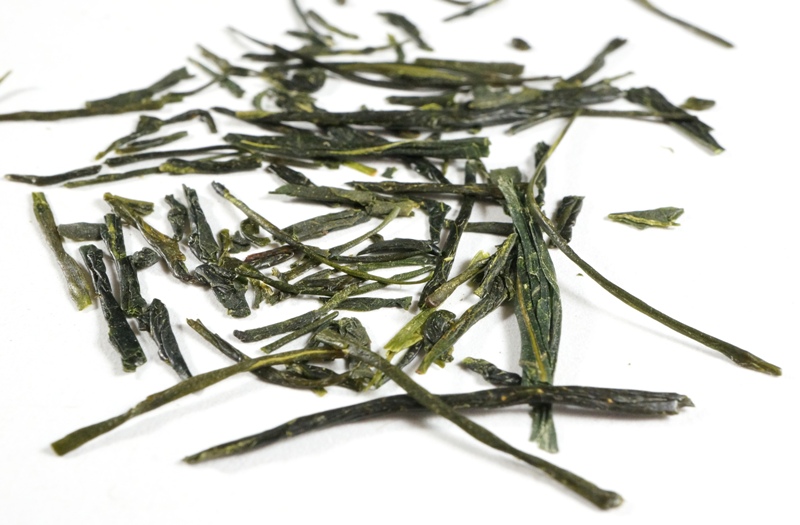
Rare, sweet and vividly green, Tencha is quite special. It is the tea used for making matcha. Our Japanese Tencha brews a sweet cup that is vegetal and green, with hints of walnut.
History & Heritage
Tencha's story is the story of matcha. Powdered tea was whisked in China during the Song dynasty, and the Zen monk Eisai is traditionally credited with bringing tea seeds and the practice of powdered tea to Japan around 1191. In Uji, near Kyoto, growers later developed the technique of shading tea plants before harvest to create especially green, flavorful leaves. Those shaded leaves, steamed and dried flat without rolling, are Tencha. Ground on stone mills, they become matcha.
Interesting Facts
Unlike most Japanese green teas, Tencha leaves are not rolled, which makes them ideal for grinding.
Kagoshima, in southern Japan, has become a major producer of Tencha.
Drinking Tencha as a leaf tea is less common, which makes it a treat for curious tea lovers.
Matcha's roots go back to the whisked powdered tea of Song dynasty China.
Tasting Notes & Pairings
Its taste profile is similar to matcha but lighter, with a soft sweetness, green freshness and a nutty hint of walnut. Pair it with wagashi (Japanese sweets), white chocolate, or fresh berries. Brew it gently to bring out its sweetness, and enjoy a rare glimpse of the leaf behind Japan's famous powdered tea.
Brewing tips (general guideline): use 1 heaping teaspoon (about 2–3 g) per 8 oz of water at 160–175°F, steeped 1–2 minutes. Do not over-brew. Adjust to taste.
Like every tea at Beantown Tea & Spices, Tencha is a quality loose-leaf tea offered at an affordable price, with sample and larger sizes so you can find your favorite. Explore more in our Green Tea collection, or pair it with our tea accessories.
Nutty, creamy and mellow, Kukicha is a traditional green tea from Japan. Our Kukicha uses a Sencha and Gyokuro base with both young leaves and stems.
History & Heritage
Kukicha means "stem tea" and is sometimes called twig tea. It has humble roots: it was traditionally made from the stems and stalks left over from processing leaf tea, a frugal way for farmers to make use of every part of the harvest. What began as a thrifty everyday drink has become a well-loved tea in its own right, prized for its gentle, sweet character. Bancha, the later-season harvest, is another of Japan's traditional everyday teas, and like Kukicha it reflects a practical, nothing-wasted approach to tea.
Interesting Facts
The Gyokuro base leaves enhance the umami (a Japanese term for savory flavor) and give the tea a unique flavor profile.
Kukicha is very low in caffeine, among the lowest of traditional teas.
In Japan it can even be mixed with juice to make a children's drink.
Stems give the tea a lighter color and a naturally sweet taste.
Tasting Notes & Pairings
It brews a flavorful cup that is nutty and slightly creamy, with very little bitterness. It is easy to enjoy any time of day, including the evening. Pair it with rice dishes, roasted vegetables, or simple rice crackers. Its soft sweetness also makes it a lovely iced tea in summer, and a gentle choice for those who find other green teas too grassy.
Brewing tips (general guideline): use 1 heaping teaspoon (about 3 g) per 8 oz of water at 175–185°F, steeped 1–3 minutes. Adjust to taste.
Like every tea at Beantown Tea & Spices, Kukicha is a quality loose-leaf tea offered at an affordable price, with sample and larger sizes so you can find your favorite. Explore more in our Green Tea collection, or pair it with our tea accessories.
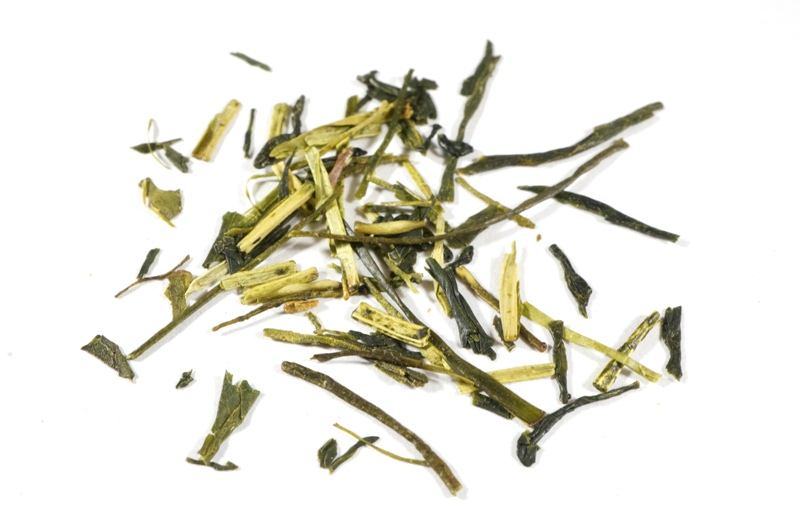
Warm, toasty and soothing, Hojicha is a low-caffeine roasted green tea from Japan. It brews a nutty cup that is slightly sweet with a very clean finish.
History & Heritage
Hojicha is a relatively young tea. The most widely repeated account says it was created in Kyoto around the 1920s, when a tea merchant began roasting leftover leaves so they wouldn't go to waste. Roasting transformed the tea, turning the green leaves a reddish brown and giving them a toasty, caramel-like aroma. Today Hojicha is enjoyed throughout Japan and has become a favorite flavor for lattes and desserts. Some accounts add that the roasting idea was encouraged by researchers in Kyoto. Bancha, the later-harvest tea often used for Hojicha, had long been an everyday tea in Japan.
Interesting Facts
Our Hojicha is made from roasted Bancha, a summer-crop green tea.
The roasting process removes almost all astringency and bitterness and significantly reduces caffeine.
In Japan, Hojicha is often enjoyed during and after dinner, and it is popular with children and older people because of its low caffeine.
Roasting turns the leaves from green to a reddish brown.
Tasting Notes & Pairings
Toasty, nutty and lightly sweet, with almost no bitterness. It is also excellent as an iced tea. Pair it with grilled fish, rice bowls, or desserts like vanilla ice cream, roasted sweet potato, or chocolate.
Brewing tips (general guideline): use 1–2 heaping teaspoons (about 3 g) per 8 oz of water at 195–212°F, steeped 30 seconds to 2 minutes. Adjust to taste.
Like every tea at Beantown Tea & Spices, Hojicha is a quality loose-leaf tea offered at an affordable price, with sample and larger sizes so you can find your favorite. Explore more in our Green Tea collection, or pair it with our tea accessories.
Fresh, bright and quietly sweet, this Sencha is a classic steamed green tea from Japan's Kagoshima Prefecture. It brews a cup that is slightly sweet and vegetal, mildly astringent, with reasonable depth.
History & Heritage
Sencha is the everyday tea of Japan, and its modern form dates to 1738. That year, Nagatani Soen, a tea farmer in Ujitawara near Kyoto, developed a method of steaming fresh leaves and then rolling and drying them in stages, producing a tea with a vivid green color and fresh aroma. Steaming, rather than the pan-firing used in China, became the hallmark of Japanese green tea. Today Sencha is grown across Japan, and Kagoshima, on the southern island of Kyushu, is one of the country's largest tea-producing prefectures. Steamed Sencha was later sold in Edo, today's Tokyo, by the tea merchant Yamamoto Kahei, which helped make it a national favorite.
Interesting Facts
Kagoshima is Japan's second-largest tea-producing prefecture, with a long growing season.
Japan's tea production is among the most efficient in the world, and it exports only a small share of what it grows.
Steaming stops the leaves from oxidizing and locks in their green color and fresh flavor.
Tasting Notes & Pairings
A quality, well-rounded green tea to enjoy throughout the day, with a clean vegetal sweetness and a gentle finish. It also makes a very refreshing iced tea. Pair it with sushi, rice dishes, grilled fish, or lightly sweet treats like mochi.
Brewing tips (general guideline): use 1 heaping teaspoon (about 2–3 g) per 8 oz of water at 160–175°F, steeped 1–2 minutes. Do not over-brew. Adjust to taste.
Like every tea at Beantown Tea & Spices, Sencha is a quality loose-leaf tea offered at an affordable price, with sample and larger sizes so you can find your favorite. Explore more in our Green Tea collection, or pair it with our tea accessories.