
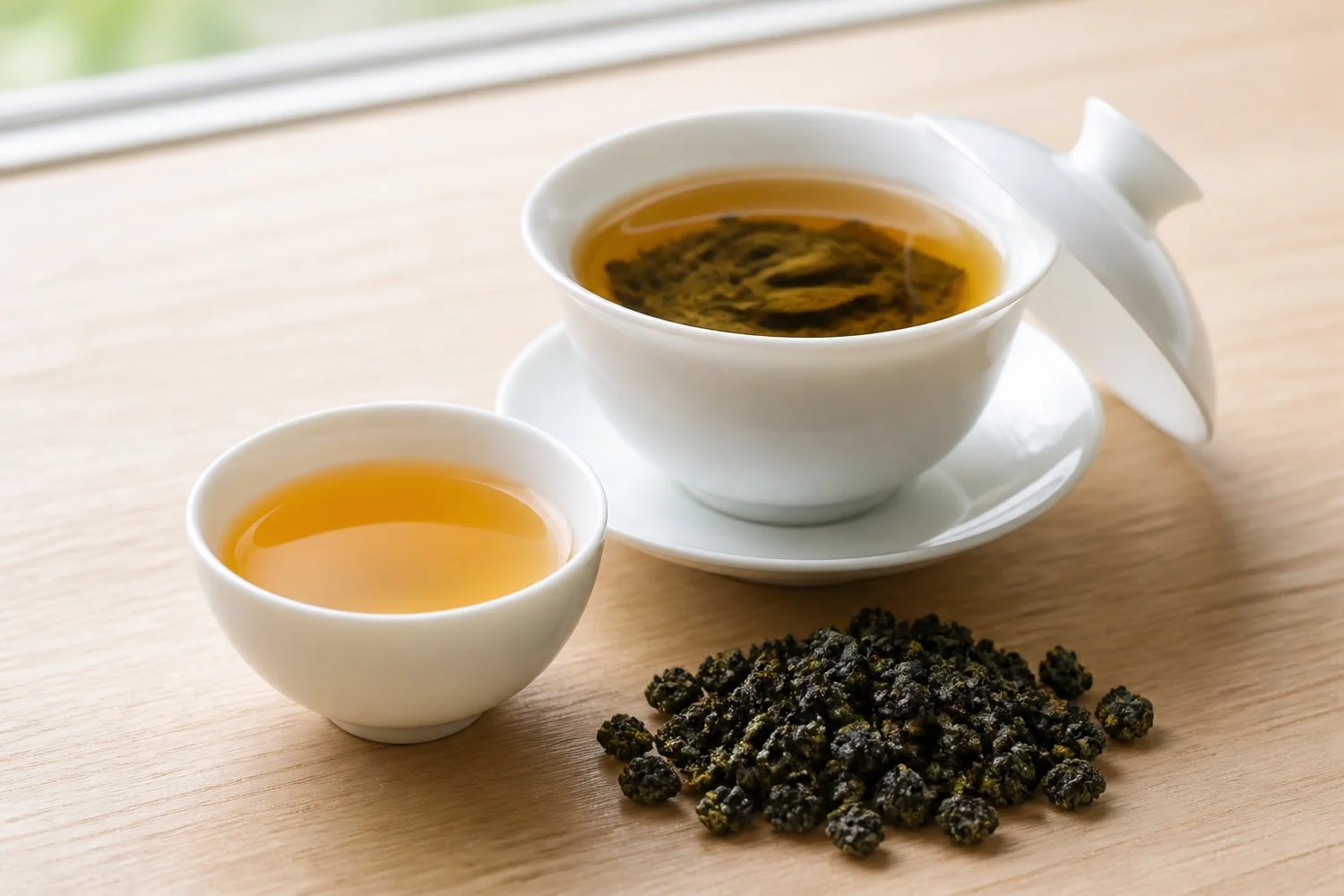
Few teas carry a name as memorable as Tieguanyin. It translates to "Iron Guanyin," and it is usually rendered in English as "Iron Goddess of Mercy." Guanyin is the bodhisattva of compassion, one of the most beloved figures in Chinese Buddhism. The tea named for her is one of China's best-known oolongs, and it comes from Anxi County in Fujian Province.
Like many famous Chinese teas, Tieguanyin arrives wrapped in legend. This week we're looking at those stories, and at what the historical record actually supports.
Two legends, one tea
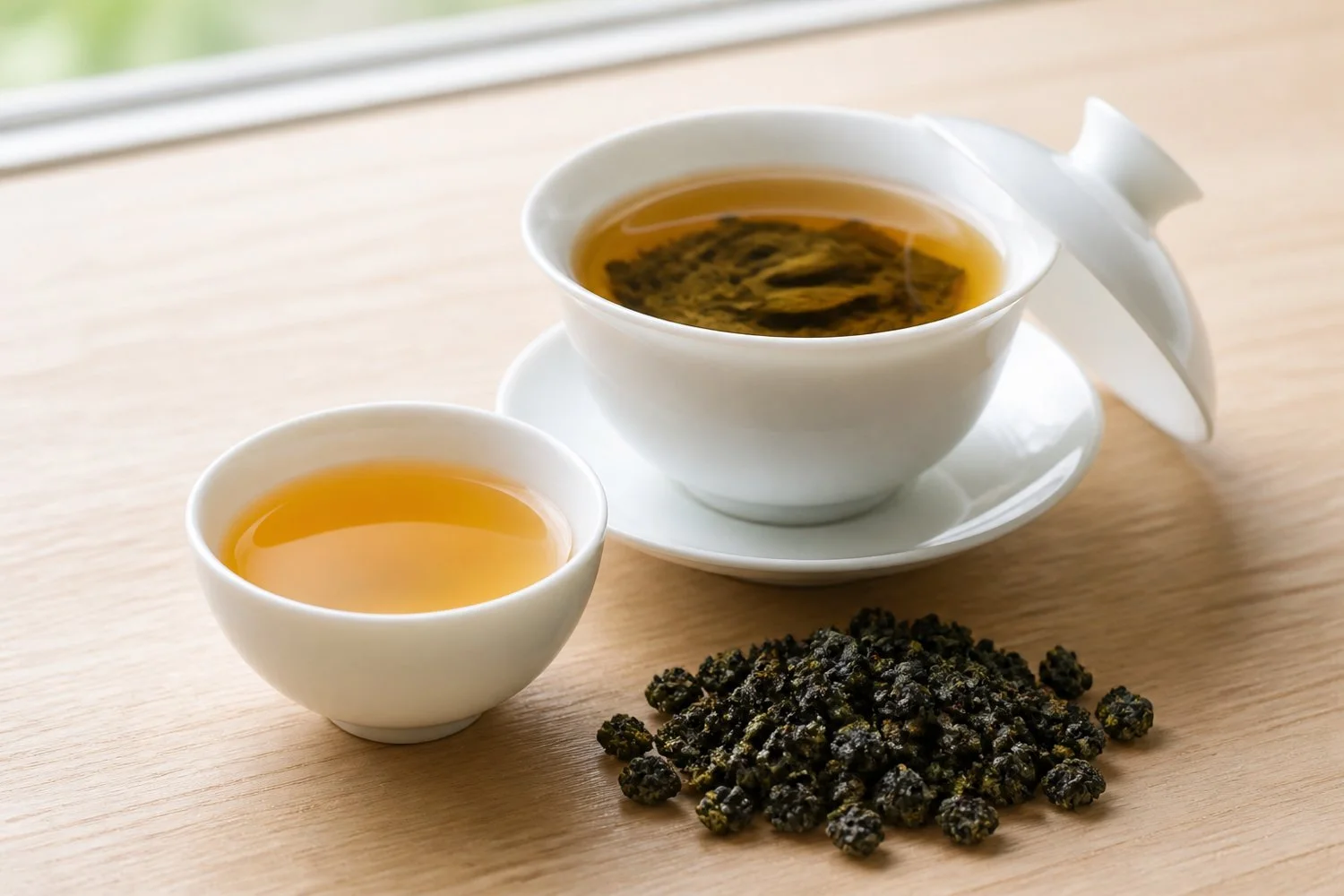
There are two traditional accounts of how Tieguanyin got its name, known in Chinese as the "Wei telling" and the "Wang telling."
The more famous one centers on Wei Yin, a tea farmer in Xiping, Anxi, who was devoted to Guanyin. According to the version summarized on Wikipedia, which draws on Chinese and Taiwanese sources, Guanyin appeared to Wei in a dream and guided him to an unusual tea plant growing in a crevice among the rocks. He found the plant where the dream had shown him, brought it home, and cultivated it. Because the plant came to him through Guanyin, and because the finished leaves were dark, glossy, and heavy like iron, he named the tea Tieguanyin. Some tellings, as the tea history site Oolong Tea notes, add that he raised the plant in a cracked iron pot.
Western tea sellers often tell a slightly different version, in which a poor farmer named Wei sweeps and tends a run-down temple holding an iron statue of Guanyin, and is rewarded with a tea shoot he shares with all his neighbors. Wikipedia points out that this version circulates among tea merchants in Canada and the UK but has no clear counterpart in China or Taiwan.
The second account swaps the miracle for imperial approval. In this version, a scholar named Wang Shirang found a special tea bush near his study in 1736, the first year of the Qianlong Emperor's reign. A few years later he brought the tea to Beijing as a gift. It passed through a court official to the emperor, who is said to have admired the dark, heavy leaves and named the tea after Guanyin. The UN's Food and Agriculture Organization (FAO) includes this story in its heritage documentation for Anxi, and it is careful to introduce it with "according to the legend."
What history can and can't confirm
So which story is true? Probably neither, at least not literally. Oolong Tea's review of the evidence cites a Chinese-language analysis concluding that both are folk legend, and notes that no document confirms the dream, the crevice, or the emperor's tasting.
What the record does support is still impressive. According to the FAO, tea production in Anxi is believed to date back to the 10th century, and Tieguanyin itself emerged in the 18th century. The FAO also cites county records compiled during Qianlong's reign showing that Anxi tea was already supplying neighboring towns at that time.
There is even a living link to the first legend. According to People's Daily Online, tea maker Wei Yuede of Anxi is the ninth generation of his family in the tea business and traces the tea's story to his ancestor, Wei Yin.
The farming trick that made a single bush famous
A great tea plant is only useful if you can grow more of it, and tea grown from seed doesn't come out exactly like its parent.
According to the FAO, around 1640 Anxi tea farmers noticed that tea branches accidentally buried in soil could take root and sprout. From that, they developed whole-plant layering: pinning a branch to the ground so it roots while still attached to the mother plant. Later generations refined this into cutting methods, including a short-cutting technique developed in Xiping around 1935. The FAO describes Anxi as the birthplace of vegetative propagation of tea trees in China.
That matters for Tieguanyin, because it is both a tea style and a specific tea plant variety. Propagating by layering and cuttings let farmers multiply an outstanding bush with its character intact. Oolong Tea calls this the real mechanism behind the legend: however the first bush was found, cuttings are what turned it into a countywide tea.
From Anxi to Taiwan, and to world heritage
Tieguanyin's reputation eventually crossed the Taiwan Strait. According to the Taipei City Government, tea master Zhang Nai-miao brought Tieguanyin plants from Fujian in 1895 and replanted them in the hills of Muzha, in what is now Taipei. The Maokong area there is still known for its Tieguanyin, and a memorial hall in Zhang's name tells the story.
Back in Anxi, the tea has earned formal recognition. In May 2022, the FAO designated the Anxi Tieguanyin Tea Culture System a Globally Important Agricultural Heritage System, citing local farmers' traditional know-how in managing the land and producing exceptional tea leaves.
How the leaf becomes Iron Goddess
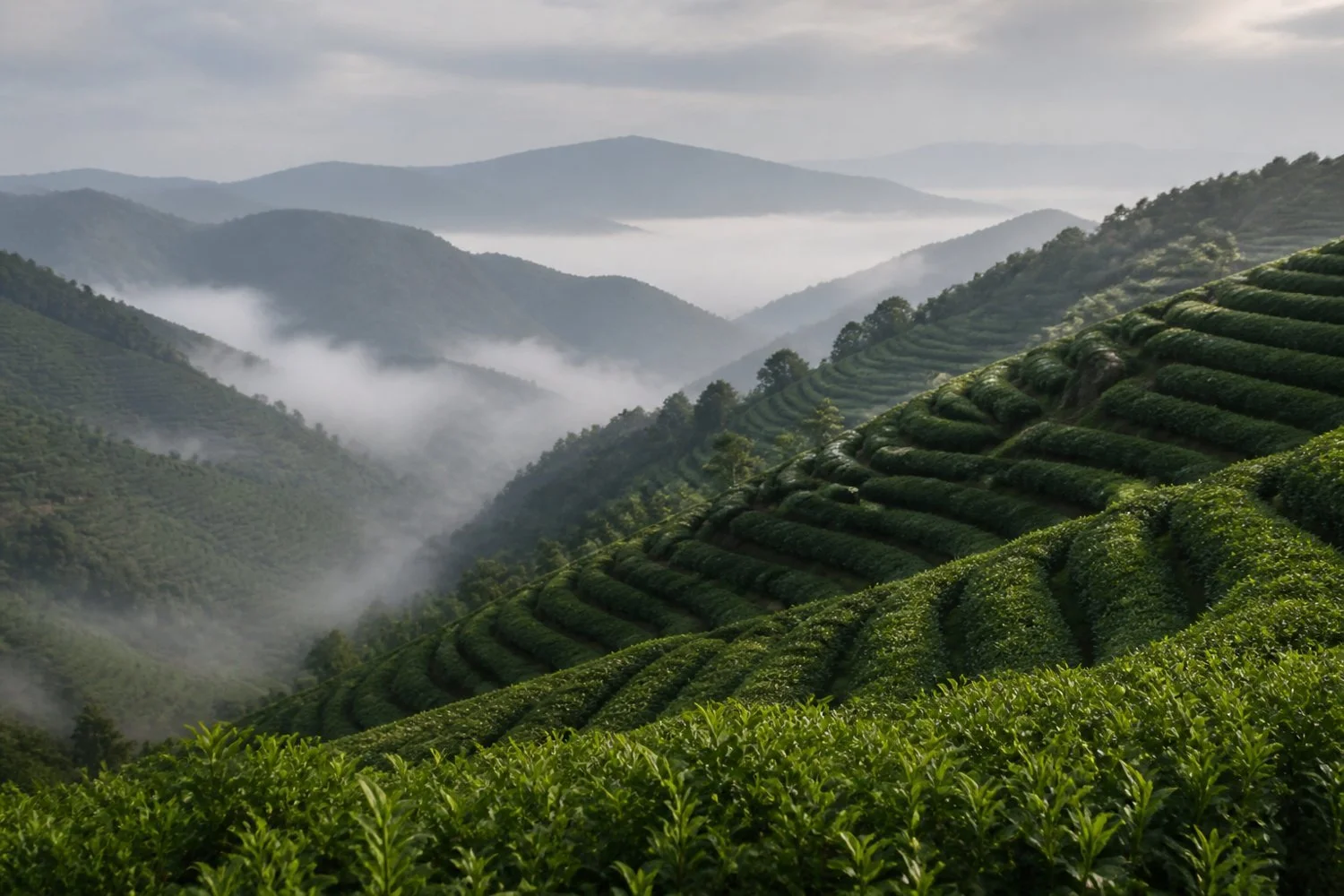
Tieguanyin is a semi-oxidized tea, sitting between green and black tea. As our Iron Goddess Oolong product page describes, the leaves are wilted in the sun and then shaken in bamboo baskets to bruise their edges, so the edges oxidize faster than the center. After a period of oxidation, the tea is fired to stop the process. Look closely at the leaves after brewing and you'll often see those slightly brownish edges.
The result is a cup that's nutty and mineral, with a lingering floral, orchid-like finish. It's also a tea that rewards patience: the same leaves can be steeped several times, and each cup shows something a little different.
Brewing a cup of the Iron Goddess
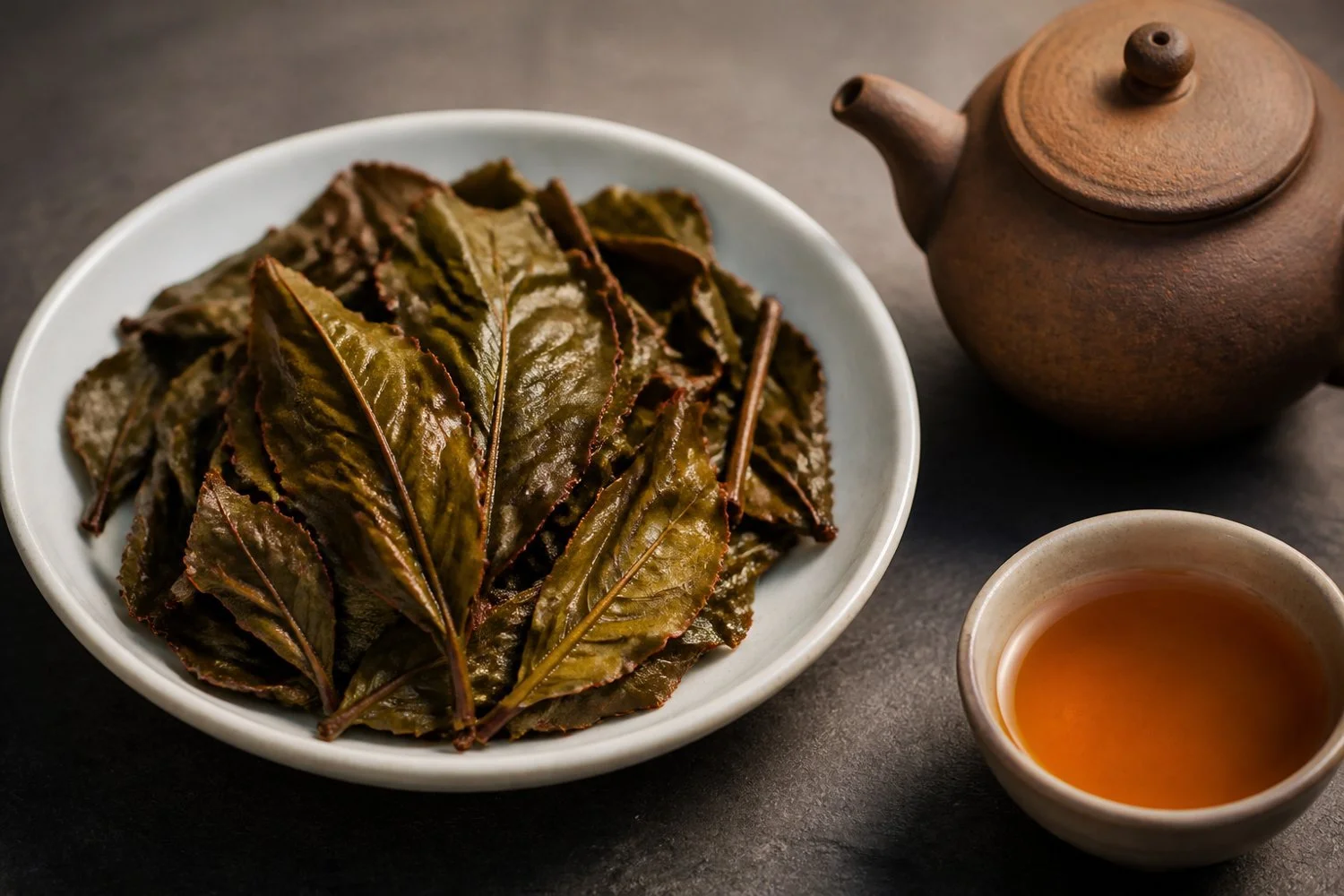
Our general guideline is 1 to 2 teaspoons (about 3 grams) per 8 ounces of water at 185 to 205°F, steeped 3 to 5 minutes. Then add more hot water to the same leaves and steep again. Pair it with dim sum, roasted nuts, or a fruit plate. As the evenings get cooler, it also makes a calm, warming cup after dinner, and it's a nice treat between handfuls of Halloween candy.
If Tieguanyin's story makes you curious about Fujian's other great oolongs, try our Wuyi Oolong, a "rock tea" from the Wuyi Mountains in the north of the province, with its own famous legend of the Big Red Robe. It's toasty, earthy, and honeyed, a fine contrast to the floral Iron Goddess.
Taste the legend
Whether you believe in Wei Yin's dream or Wang Shirang's trip to the emperor, the tea itself is the best part of the story. Brew a pot of Iron Goddess Oolong, steep it a few times, and see how the cup changes. Then explore the rest of our Oolong Tea collection to find your next favorite.