
Kukicha (茎茶) is a green tea from Japan. The name means "stem tea," and it's sometimes called twig tea. As the name suggests, kukicha is made from a mix of green tea leaves and young tea stems, which give it a gentle, naturally sweet character that's very different from leaf-only green teas.
Kukicha has humble roots. It was traditionally made from the stems and stalks left over after processing leaf tea, a thrifty way for farmers to use every part of the harvest. What began as an everyday tea has become a favorite in its own right.

Pictured above is our Kukicha. Ours is Gyokuro and Sencha base green tea with both young leaves and delicate tea stems. Click “here” to view product.
What does kukicha taste like?
Thanks to the stems, kukicha brews a light, golden-green cup that's nutty, slightly creamy and naturally sweet, with very little bitterness. Our kukicha is made with a Sencha and Gyokuro base, and the Gyokuro leaves add a rich layer of umami.
Umami is a Japanese word for the savory, mouth-filling taste linked to amino acids such as glutamate. You'll find it in foods like mushrooms, aged cheese and broths, and in fine Japanese green teas. In kukicha, it balances the sweetness of the stems for a smooth, rounded flavor.

Is kukicha low in caffeine?
Yes. Tea stems contain less caffeine than the leaves, so kukicha is lower in caffeine than most green teas. That makes it a popular choice for the afternoon or evening, and a gentle option if you find other green teas too strong or too grassy.
Different grades of kukicha
Kukicha comes in many grades, depending on the leaves its stems come from. Kukicha made from Gyokuro and Sencha, like ours, is especially prized in Japan for its sweetness and deeper umami.
How to brew kukicha
Tea: 1 heaping teaspoon (about 3 g) per 8 oz of water
Water temperature: 175–185°F (about 80–85°C), never boiling
Steep time: 1–3 minutes, adjusted to taste
Re-steeping: the same leaves can be infused several times
Kukicha also makes a refreshing, naturally sweet iced tea. For step-by-step instructions, see our Cold Brewing Guide.
What to pair with kukicha
Its mellow, nutty flavor goes well with rice dishes, roasted vegetables, grilled fish and simple rice crackers. Our Kukicha comes in sample, 4 oz and 8 oz sizes. If you enjoy toasty Japanese teas, try our Hojicha or Genmaicha too, or browse our full green tea collection.
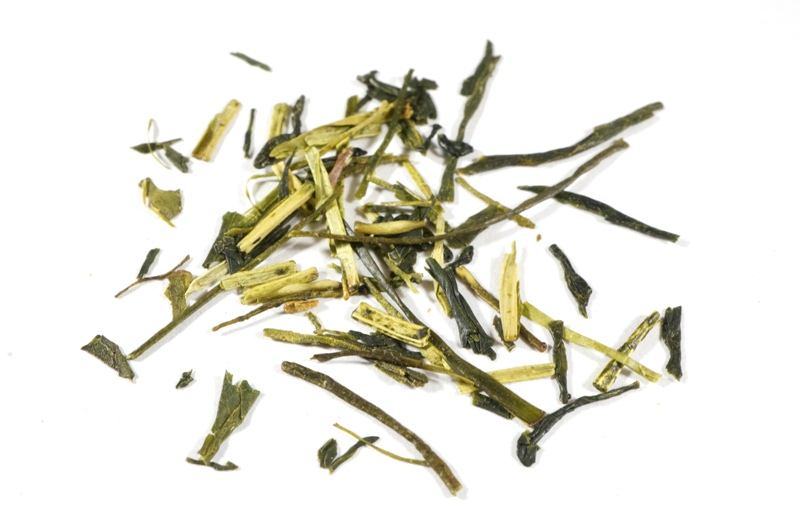
Nutty, creamy and mellow, Kukicha is a traditional green tea from Japan. Our Kukicha uses a Sencha and Gyokuro base with both young leaves and stems.
History & Heritage
Kukicha means "stem tea" and is sometimes called twig tea. It has humble roots: it was traditionally made from the stems and stalks left over from processing leaf tea, a frugal way for farmers to make use of every part of the harvest. What began as a thrifty everyday drink has become a well-loved tea in its own right, prized for its gentle, sweet character. Bancha, the later-season harvest, is another of Japan's traditional everyday teas, and like Kukicha it reflects a practical, nothing-wasted approach to tea.
Interesting Facts
The Gyokuro base leaves enhance the umami (a Japanese term for savory flavor) and give the tea a unique flavor profile.
Kukicha is very low in caffeine, among the lowest of traditional teas.
In Japan it can even be mixed with juice to make a children's drink.
Stems give the tea a lighter color and a naturally sweet taste.
Tasting Notes & Pairings
It brews a flavorful cup that is nutty and slightly creamy, with very little bitterness. It is easy to enjoy any time of day, including the evening. Pair it with rice dishes, roasted vegetables, or simple rice crackers. Its soft sweetness also makes it a lovely iced tea in summer, and a gentle choice for those who find other green teas too grassy.
Brewing tips (general guideline): use 1 heaping teaspoon (about 3 g) per 8 oz of water at 175–185°F, steeped 1–3 minutes. Adjust to taste.
Like every tea at Beantown Tea & Spices, Kukicha is a quality loose-leaf tea offered at an affordable price, with sample and larger sizes so you can find your favorite. Explore more in our Green Tea collection, or pair it with our tea accessories.

