
Host a Tea Tasting: Our Tasting Kits, Plus a Little Tea 101
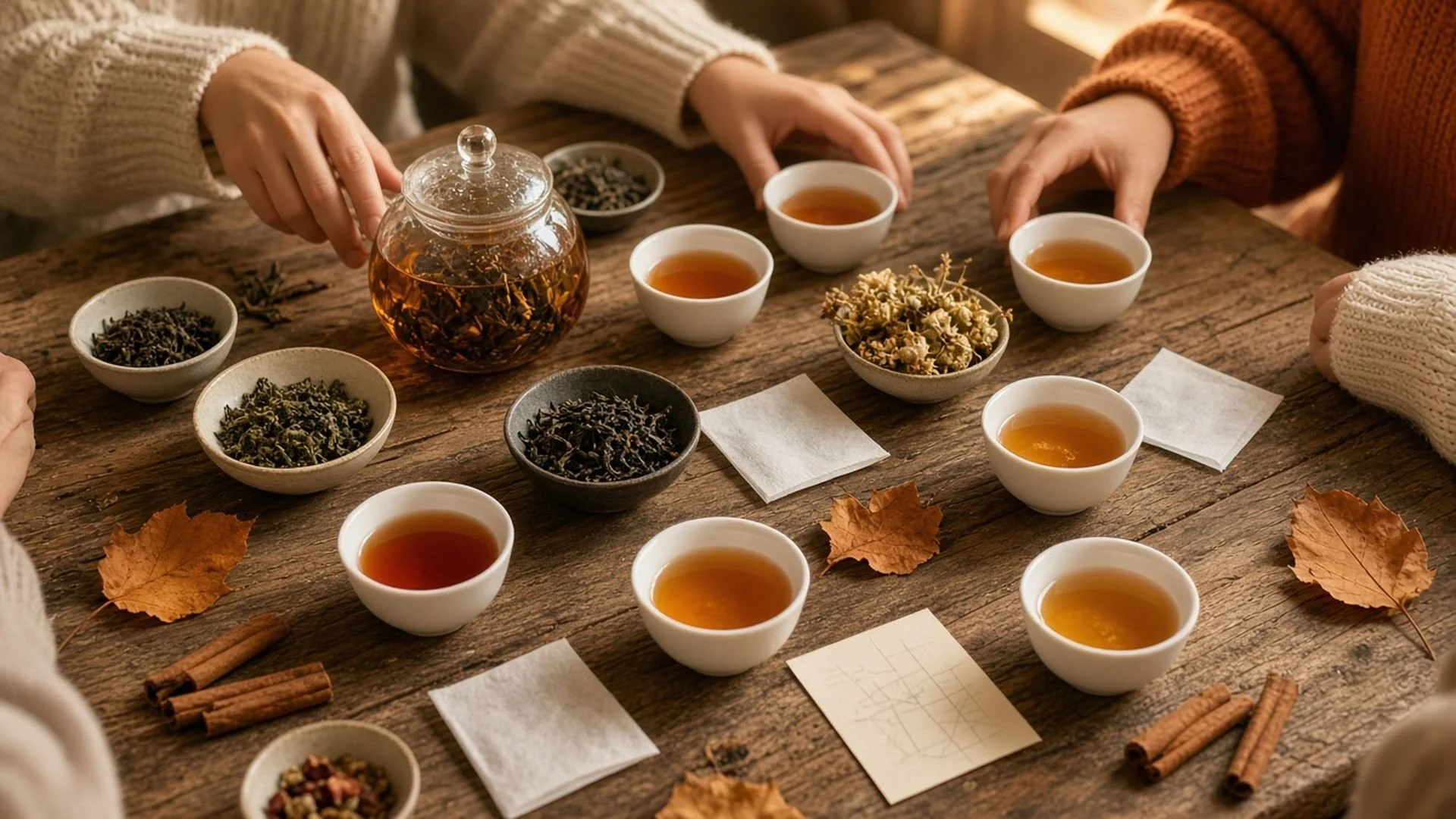
What do you get when you put a few loose-leaf teas, a kettle and a table full of curious friends together? A tea tasting, and it's one of our favorite ways to spend an afternoon. Everyone looks, sniffs, sips and guesses, someone swears they taste popcorn, and by the end of the night your group knows a lot more about tea than when they walked in.
Our tea tasting kits make it easy to host one. Here's what's inside, how a tasting works, a little tea know-how to impress your guests, and how to pick the right kit for your group.
What Is a Tea Tasting Kit?
A tea tasting kit is a guided tasting in a box. Each kit is built around a theme, such as green teas, black teas or caffeine-free herbals, with the teas lined up in tasting order.
Every kit includes:
The main teas, in the order you'll taste them.
Assorted tea samples for guests to explore after the tasting.
Paper tea filters, so brewing loose leaf is mess-free.
A step-by-step tasting guide for the host.
You bring the kettle, the cups and the people. We take care of the tea.
How a Tasting Works
Think of it as a game, not a lecture. There are no wrong answers, only opinions, and everyone gets a vote.
Follow the Step-by-Step Guide
Each kit has its own online guide at beantowntea.com/tasting. Open it on a phone and it walks you through setup, brewing, the tasting order and the group vote. It shows the leaf amount and water temperature for each tea and has a built-in steeping timer.
Look, Smell, Sip, Talk
For each tea, guests look at the leaf and the cup, breathe in the aroma, take a sip and compare notes. Then everyone votes for a favorite before the Reveal shows which tea was which. Expect some friendly debate.
Tea 101: Green, Oolong, Black and Herbal
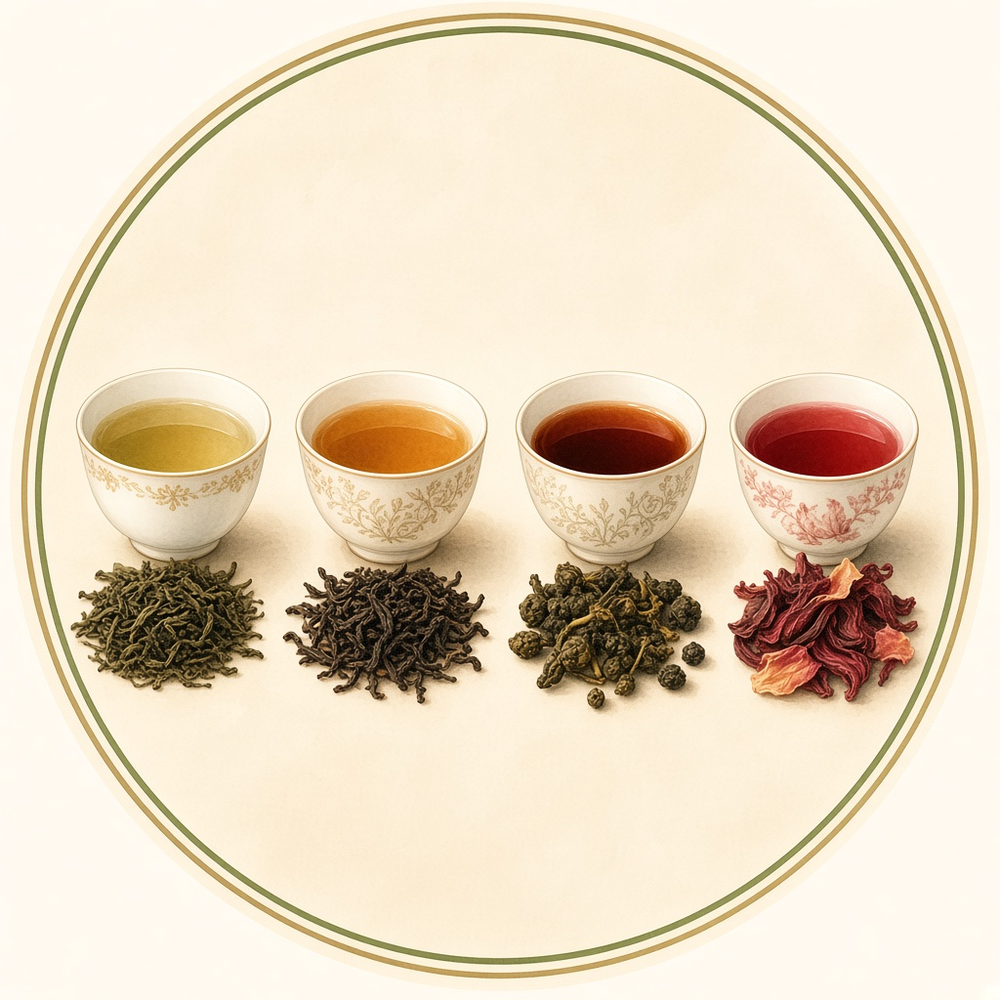
Here's a fun fact to open your tasting with: green, oolong and black teas all come from the same plant, Camellia sinensis. The big difference is what happens after the leaves are picked.
Oxidation, in Plain English
Once tea leaves are picked and bruised, they react with the air and start to darken, a bit like a cut apple turning brown. Tea makers call this oxidation. How much they allow, and when they stop it with heat, shapes the color and flavor of the tea.
Green Tea: Fresh and Bright
Green tea is heated soon after picking, by steaming or pan-firing, to stop oxidation early. That keeps the leaves green and the flavor fresh. Steamed Japanese greens like Sencha tend to taste grassy and sweet. Pan-fired Chinese greens like Chun Mee lean nutty and a little toasty.
Oolong: Somewhere in Between
Oolong is partly oxidized, so it sits between green and black. Lightly oxidized oolongs can be floral and creamy, while darker ones turn toasty and rich. Our current kits focus on green, black and herbal teas, but if your group catches the bug, our oolong selection is a great next stop.
Black Tea: Bold and Full
Black tea is fully oxidized, which turns the leaves dark and gives the cup deeper color, more body and flavors that range from fruity to malty. Darjeeling can taste light and grape-like, while Assam is bold and malty.
Herbal Tea: A Different Plant Altogether
Herbal teas, sometimes called tisanes, aren't made from the tea plant at all. They're blends of herbs, flowers, fruit, spices or rooibos, so they're naturally caffeine-free and full of color and flavor, from tangy hibiscus to cool mint.
Why Tasting Order Matters
Every kit is arranged from lightest to boldest, and there's a good reason for that. Your palate works a bit like your ears: after a loud song, a quiet one is hard to hear.
Start with a bold, malty Assam and a delicate green tea afterward will taste like hot water. Start light and work up, and every tea gets its moment. That's why a black tea kit opens with a Darjeeling and saves the Assam for last.
Tip for hosts: set out plain water or a few plain crackers so guests can reset between cups.
What to Notice When You Taste
You don't need a fancy vocabulary. Just pay attention to these five things and say what you notice.
1. Aroma
Smell the dry leaf first, then the brewed cup. Much of what we call flavor is really smell. Is it floral, fruity, grassy, toasty, spicy or earthy?
2. Liquor Color
Tea people call the brewed tea the "liquor." Hold your cup up to the light. Green teas run pale yellow-green, black teas amber to deep copper, and hibiscus blends a bright ruby red.
3. Taste
Take a small sip and let it cover your tongue. Is it sweet, a little bitter, tangy or savory? Does it remind you of anything, like honey, toasted rice or citrus?
4. Mouthfeel
This is how the tea feels, not how it tastes. Is it light and silky or full and round? Does it leave a dry, puckery feeling, like a strong black tea can? That's called astringency.
5. Finish
What stays with you after you swallow? Some teas fade fast and clean, while others linger with a sweet or malty aftertaste. A long, pleasant finish is something tea lovers prize.
How Steep Time Changes Flavor
Here's an experiment that always gets a reaction. Brew the same tea for different lengths of time and taste the cups side by side.
Short Steeps: Light and Sweet
The aromas and sweeter flavors come out of the leaf first. A short steep gives you a lighter, softer cup.
Long Steeps: Bolder and Brisker
Given more time, the leaf releases more tannins. Those add body and briskness, and too much can make a cup bitter or drying. That's why delicate greens get cooler water and a shorter steep, and robust black teas can take boiling water and longer.
Try It With the Guide
The steeping timer in the tasting guide has quick-pick buttons, like 2, 3 and 5 minutes for many of the teas. Brew one cup at 2 minutes and another at 5, then compare. Guests are often surprised how different the same tea can taste.
Pick Your Tier: Kits for 5 to 30 People
We offer 10 themed kits in three tiers, sized by group.
Tier 1: For 5 to 10 People
Just right for a book club, a dinner party or a cozy afternoon tea with friends. Each Tier 1 kit has three main teas, with 4 oz of each.
Tier 2: For 10 to 20 People
Great for office get-togethers, hobby clubs and bigger tea parties. Each Tier 2 kit has four main teas, with 4 oz of each.
Tier 3: For 20 to 30 People
Made for classrooms, larger clubs and holiday gatherings. Each Tier 3 kit has six main teas, with 8 oz of each.
Meet the Kits
Tier 1 Kits
1A Green Tea Tasting: Cherry Blossom Green Tea, Genmaicha and Chun Mee, from fragrant cherry and rose to nutty and full-bodied.
1B Black Tea Tasting: Darjeeling Margaret's Hope, Earl Grey and Assam Hunwal, from light and fruity to bold and malty.
1C Green & Black Tea Tasting: Cherry Blossom Green Tea, Darjeeling Margaret's Hope and Earl Grey, from fragrant and fruity to bright and citrusy.
Tier 2 Kits
2A Green Tea Tasting: Cherry Blossom Green Tea, Genmaicha, Gunpowder and Chun Mee, from fragrant cherry and rose to toasty and full-bodied.
2B Black Tea Tasting: Darjeeling Margaret's Hope, Earl Grey, Keemun Mao Feng and Assam Hunwal, from light and fruity to bold and malty.
2C Classic & Herbal Tasting: Sencha, Darjeeling Margaret's Hope and Assam Hunwal, finishing with Red Orange, a tangy, caffeine-free blend of orange peel and hibiscus.
Tier 3 Kits
3A Green Tea Tasting: Six greens from Japan and China: Sencha, Jasmine Dragon Pearls, Cherry Blossom Green Tea, Genmaicha, Gunpowder and Chun Mee. Steamed, jasmine-scented, flavored, rice-toasted and pan-fired, all in one tasting.
3B Black Tea Tasting: Darjeeling Margaret's Hope, Earl Grey, Keemun Mao Feng, Golden Monkey, Monk's Blend (vanilla and grenadine) and Assam Behora, from light and bright to bold and malty.
3C Green & Black Tea Tasting: Jasmine Dragon Pearls, Sencha, Moroccan Mint, Darjeeling Margaret's Hope, Earl Grey and Golden Monkey, from fresh and floral to rich and full-bodied.
3D Herbal & Caffeine-Free Tasting: Lemon Mint, Sleep Well (chamomile and garden herbs), Summer Medley Green Rooibos, Red Orange, Very Berry and a warming Indian Chai Spice Mix to finish. A great pick when you want everyone to join in.
If a Tea Is Out of Stock
Our teas are real loose-leaf teas, and once in a while one runs out. If a tea is out of stock, we'll swap in one with a similar taste profile, so your tasting keeps the same character from start to finish.
Great Occasions for a Tea Tasting
Book clubs and hobby clubs
Office break rooms and team get-togethers
Tea parties, birthday parties and game nights
Classrooms and student groups
Fall gatherings and holiday get-togethers
A host or hostess gift for a tea lover
With crisp air outside and a kettle on inside, autumn is an especially cozy time to gather around a few steaming cups.
Ready to Host Your Own Tea Tasting?
As tea enthusiasts, we have been sharing quality tea at affordable prices since 2006, and a tasting is our favorite way to share it. Pick a theme, gather your people and let the sniffing, sipping and friendly debate begin.
Happy sipping!
Wayne