Posts tagged herbal tea
Flavored, Scented and Blended Teas: What's the Difference?

Browse any tea shelf and you'll see words like "flavored," "scented" and "blend" used almost interchangeably. They're related, but they don't mean the same thing, and knowing the difference makes it much easier to find teas you'll love and to brew them well. Here's a simple guide to what each term means, how to read an ingredient list, and how to brew each style.
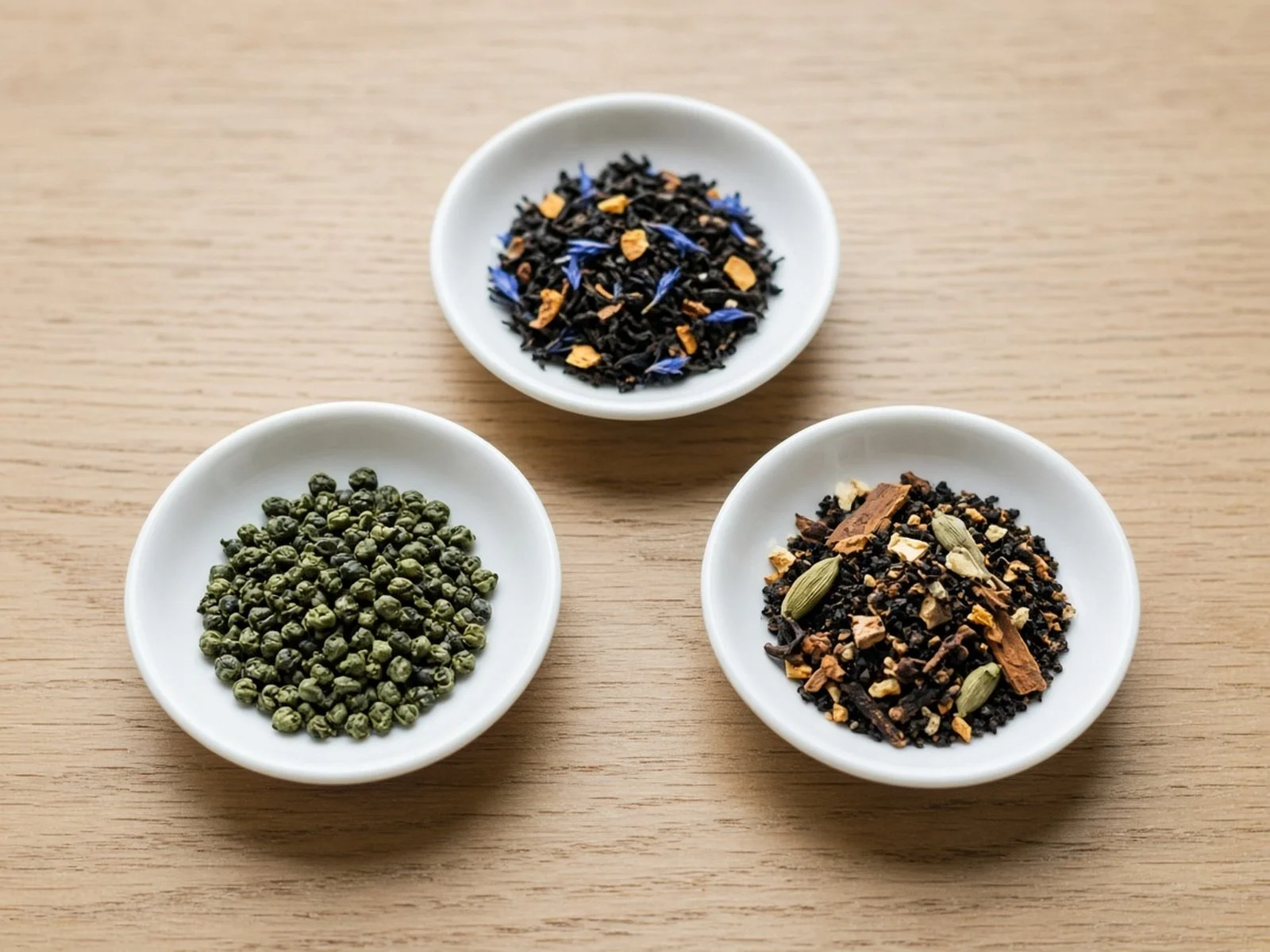
Earl Grey with blue petals, jasmine pearls and a spiced chai blend in three white dishes

Double-click to edit...

Start with True Tea

"True tea" means tea made from the leaves of the tea plant, Camellia sinensis. White, green, oolong and black tea all come from that one plant; the differences come from how the leaves are processed. A plain single-origin tea is just that: tea leaves and nothing else.

Herbal "teas" such as peppermint or chamomile aren't made from the tea plant at all. They're tisanes, and we cover them in more detail in What Is a Tisane? Herbal Tea vs. True Tea, Explained. Flavored, scented and blended teas all start from one of these two bases and add something more.

Flavored Teas: A Tea Base Plus Added Flavor

A flavored tea is a true tea with flavoring added, usually natural flavors or essential oils. The tea leaves carry the flavor, so every cup has both the character of the base tea and the added taste.

The best-known example is Earl Grey. Our Earl Grey is premium black tea flavored with bergamot oil, from a fragrant citrus fruit, along with blue cornflower petals and citrus peels. Its balance of flavoring gives it a piquant, refreshing taste. If you're curious how this classic got its name, our post on the history of Earl Grey tea tells the story.

Flavored teas also come in many variations. Cream Earl Grey uses Ceylon black tea with cornflower petals and natural flavors, so smooth vanilla overtones sit above the bergamot. Monk's Blend is a Ceylon black tea with natural flavor oils of vanilla and grenadine, plus calendula petals, white daisy and marigold petals. In each case, the tea leaves are the base and the flavoring defines the cup.
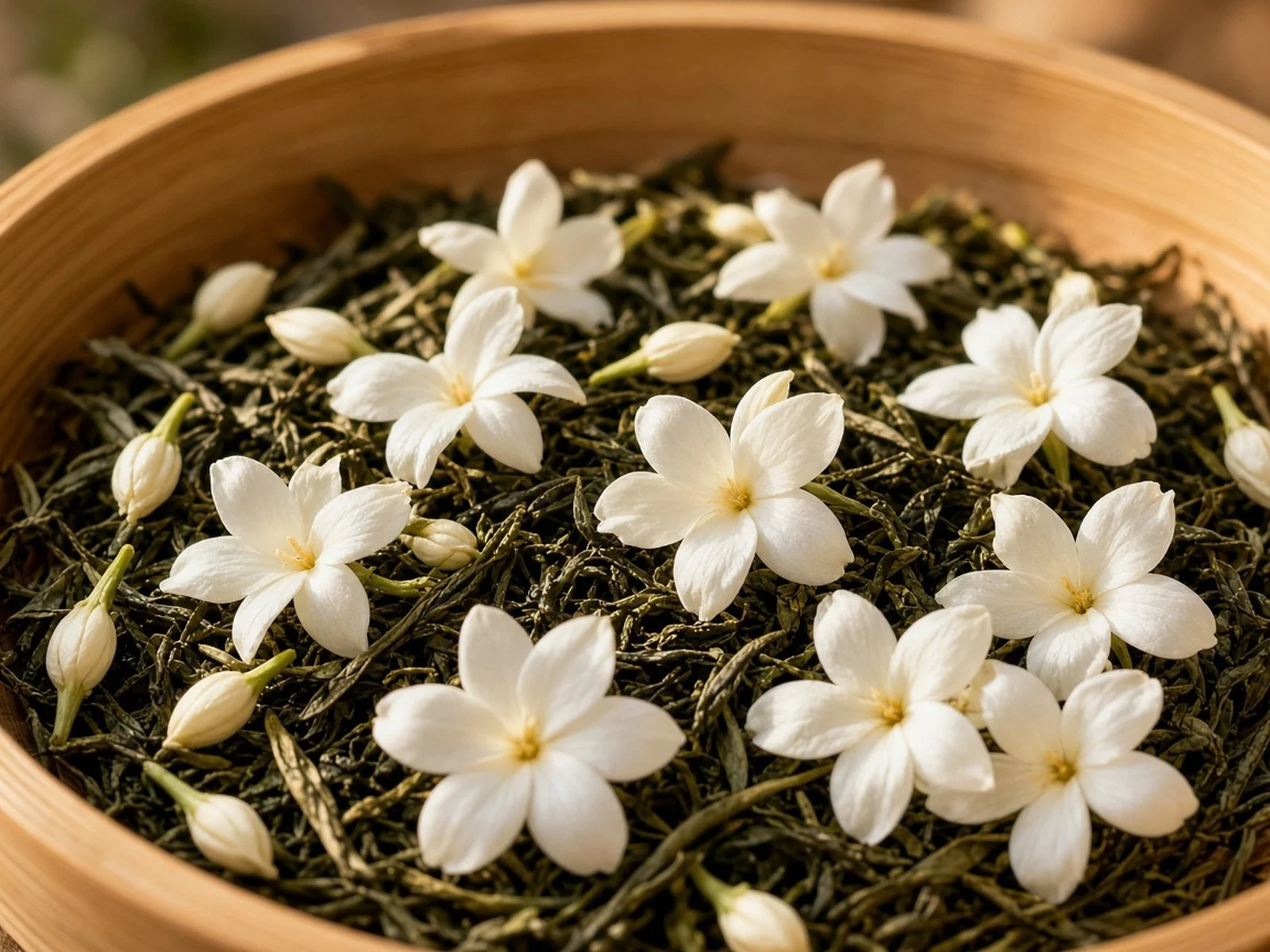
Fresh white jasmine blossoms layered on loose green tea leaves in a shallow bamboo tray

Scented Teas: Fragrance from Real Flowers

A scented tea gets its aroma from contact with real flowers rather than from added flavoring. Jasmine tea is the classic example, and the city of Fuzhou in Fujian, China, is especially famous for it, with scenting traditions recorded as far back as the Southern Song dynasty.

The craft depends on timing. Jasmine blossoms are gathered during the day while they're still closed, then layered with the tea in the evening as the flowers open and release their fragrance. After the tea and blossoms rest together, the spent flowers are removed and the tea is dried. The process is often repeated several times for a deeper scent.

You can taste this in our Jasmine Green Tea, a first-grade pan-fired green tea from China that's sweet, floral and smooth. Some jasmine blossoms stay in the mix, giving the dry tea real visual appeal. Jasmine Dragon Pearls take the idea further: the top two leaves and bud of new-season growth are scented with fresh spring jasmine blooms and hand-rolled into pearls that unfurl in your cup. Our post on Jasmine Dragon Pearls has the full story.

Blends: Two or More Ingredients Mixed Together

A blend combines a tea with other whole ingredients you can see, such as spices, herbs or a second tea. Instead of relying on a flavoring, the ingredients themselves make the flavor.

The lines can overlap. A tea can be both flavored and blended, like Monk's Blend with its natural flavor oils and flower petals. That's why the ingredient list is your best guide.

Herbal and Fruit Blends: No Tea Leaves at All

Herbal and fruit blends mix herbs, flowers, fruits or spices without any leaves from the tea plant. Our Very Berry fruit blend combines rose hips, hibiscus, cranberries, blueberries and natural forest berries flavor for a bright, tart and juicy cup. Sleep Well blends chamomile, peppermint, lemongrass and green rooibos. Both are naturally caffeine free. Single herbs like Peppermint can be enjoyed on their own, too.

How to Read an Ingredient List

The ingredient list tells you which category a tea belongs to. Here's what to look for:

  • The first ingredient: ingredients are generally listed from most to least by weight, so the first one is usually the base. "Black tea" or "green tea" first means a true tea; herbs or fruit first means a tisane.

  • "Natural flavors" or an oil like bergamot oil: the tea is flavored.

  • Whole spices, herbs or a second tea: it's a blend. Moroccan Mint, for example, lists simply "green tea and peppermint."

  • Petals such as cornflower, calendula or marigold: they're part of the mix and add color to the dry leaf.

  • No tea leaves listed: it's an herbal or fruit blend and naturally caffeine free.

  • A single tea and nothing else: it's a straight tea, like a single-origin green or black tea.

Scented teas can be harder to spot from the list alone, because the spent flowers are often removed. The product description, which explains how the tea is made, will tell you.
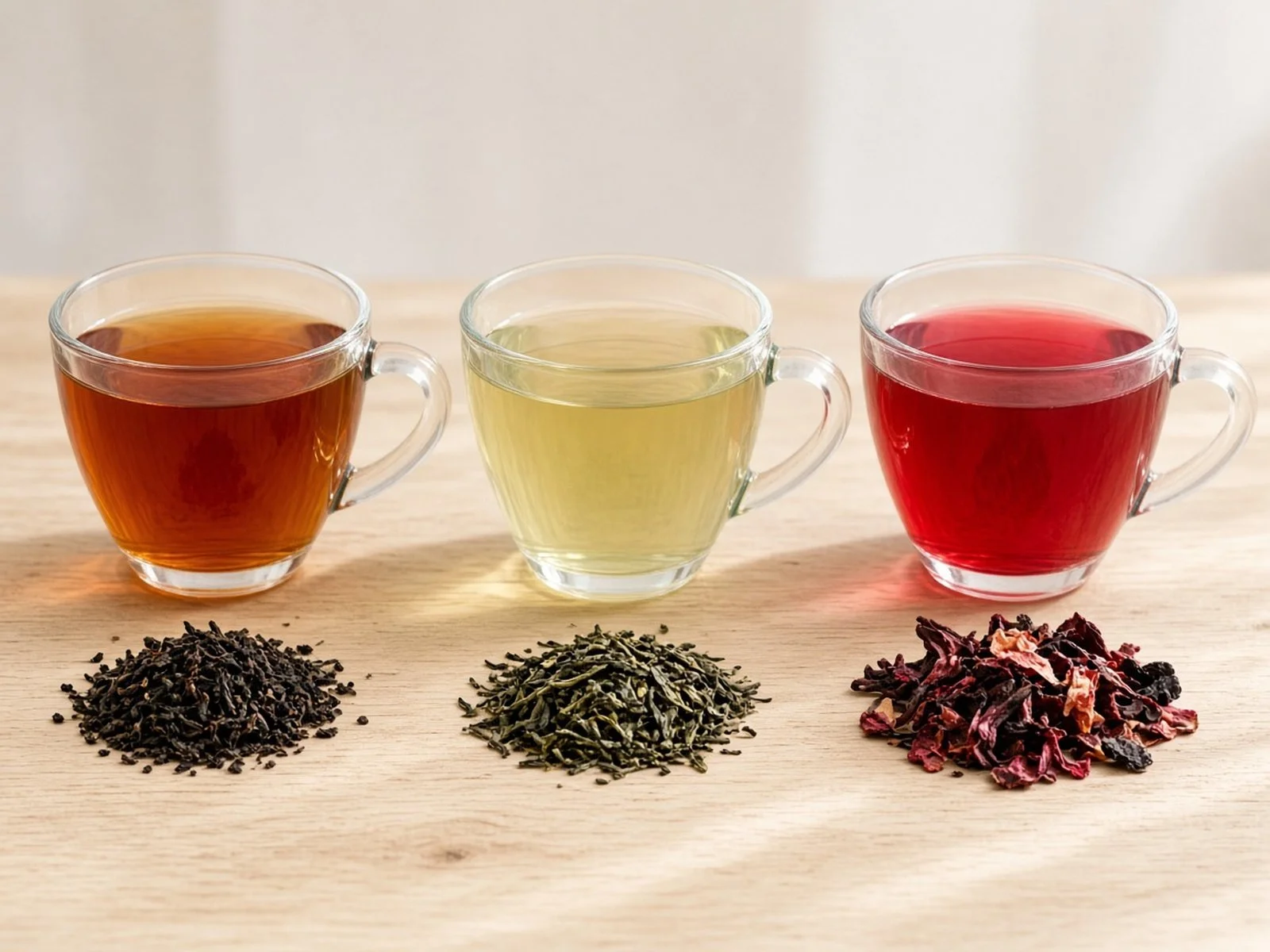
Glass cups of amber black tea, pale jasmine green tea and ruby berry herbal tea on wood

Brewing Tips for Each Style

The base tea sets the brewing rules. Our general guidelines, per 8 oz of water:

  • Flavored black teas (Earl Grey, Cream Earl Grey, Monk's Blend): 1 rounded teaspoon (about 2 to 3 grams) with freshly boiled water at 205 to 212°F for 3 to 5 minutes.

  • Scented green teas (Jasmine Green Tea): 1 teaspoon (about 2 to 3 grams) at 175 to 185°F for 2 to 3 minutes. Avoid boiling water, which can make green tea bitter. For Jasmine Dragon Pearls, use about 6 to 8 pearls; they can be infused several times.

  • Green tea blends (Moroccan Mint): 1 teaspoon at 175 to 185°F for 2 to 3 minutes. It also makes excellent iced tea.

  • Spiced chai (Masala Chai): turn the bag upside down a few times first, since powdered spices can settle. Use 1 heaping teaspoon with water at 212°F, steep 4 to 5 minutes, then add warm milk and sweetener to taste.

  • Herbal and fruit blends: 1 to 2 teaspoons of Sleep Well with water at 212°F for 5 to 7 minutes, or 2 teaspoons of Very Berry per cup of freshly boiled water for 5 to 10 minutes. Brew Very Berry strong and pour it over ice for iced tea.

Taste as you go and adjust. One more tip: store strongly flavored and scented teas in their own sealed containers so their aromas don't drift into your more delicate teas.

Find Your Style

Whether you love the clean taste of a straight tea, the bright citrus of Earl Grey, the floral perfume of jasmine or the warm spice of chai, there's a style for every cup. Explore our Chai collection and our Herbal Tea collection to see more blends. Like every tea at Beantown Tea & Spices, they're quality loose-leaf teas at an affordable price, with sample and larger sizes so you can find your favorite.
Hibiscus Tea and Blood Pressure: What the Research Really Says

Hibiscus tea is hard to miss. It brews up a deep ruby red and tastes bright and tart, a little like cranberry. It also has a reputation as a tea that may be good for blood pressure. Is that reputation backed by real research? We read the human studies and reviews ourselves and pulled together an honest, plain-English look at what's known, what isn't, and how to enjoy a caffeine-free cup of hibiscus.

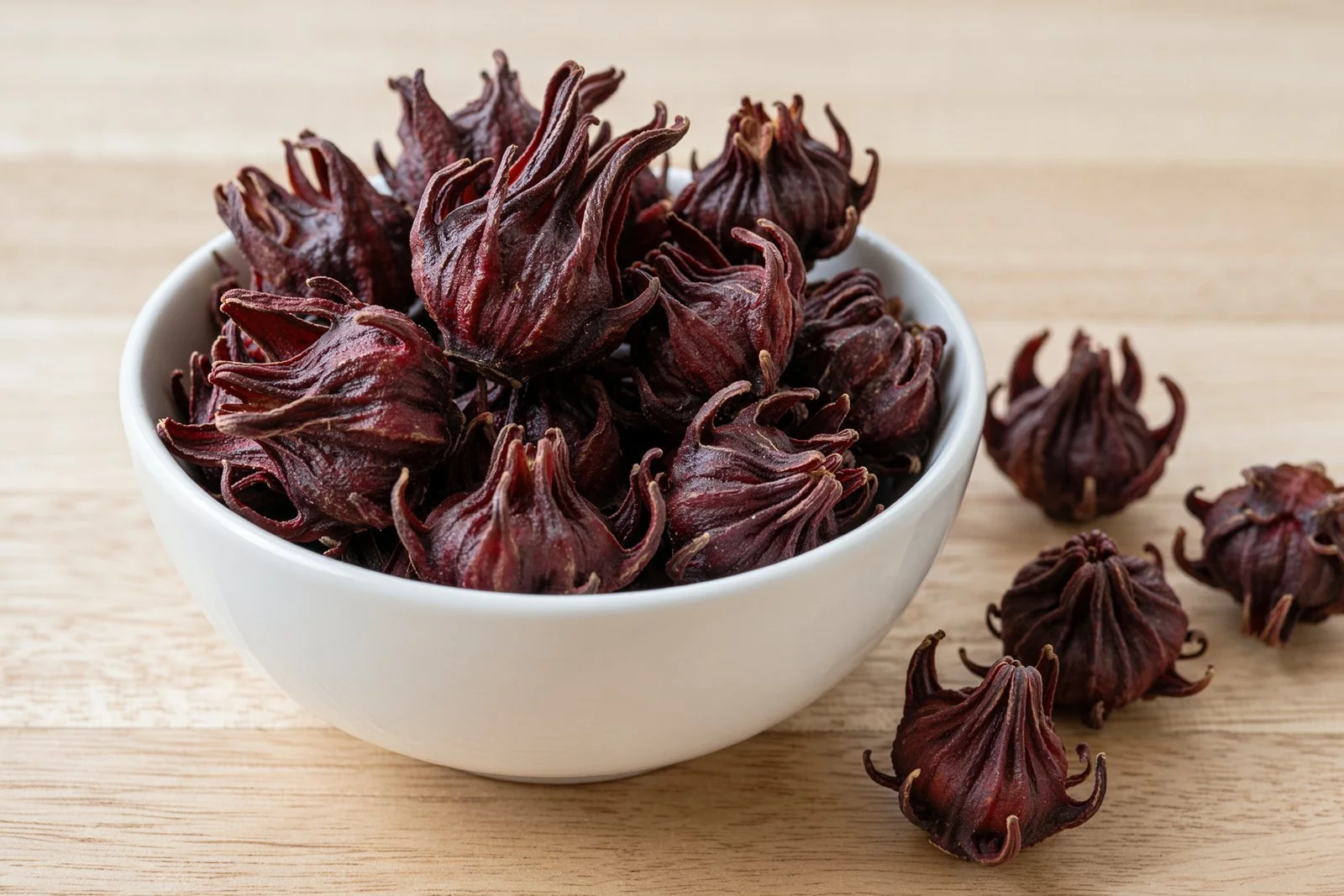
White bowl of whole dried deep-red hibiscus calyces on a light wooden table

What Is Hibiscus Tea?

The hibiscus used for tea is Hibiscus sabdariffa, also called roselle or sour tea. The part that gets dried and brewed isn't the showy petals. It's the calyx, the fleshy red cup that wraps around the base of the flower. Dried calyces brew into tart red drinks enjoyed around the world, such as sorrel in the Caribbean and agua de Jamaica in Mexico.

Like chamomile and rooibos, hibiscus is a tisane, an herbal tea made without the tea plant, so it's naturally caffeine free. (New to the term? Our guide to herbal tea vs. true tea explains the difference.)

Why might hibiscus affect blood pressure? It's rich in plant compounds such as polyphenols and anthocyanins, the pigments behind its red color (Serban et al., 2015). Researchers have also identified hibiscus as an ACE inhibitor, meaning it may act on the same enzyme targeted by a common type of blood pressure medicine (Ellis et al., 2022). Those are interesting leads, but the real test is what happens when people actually drink it.

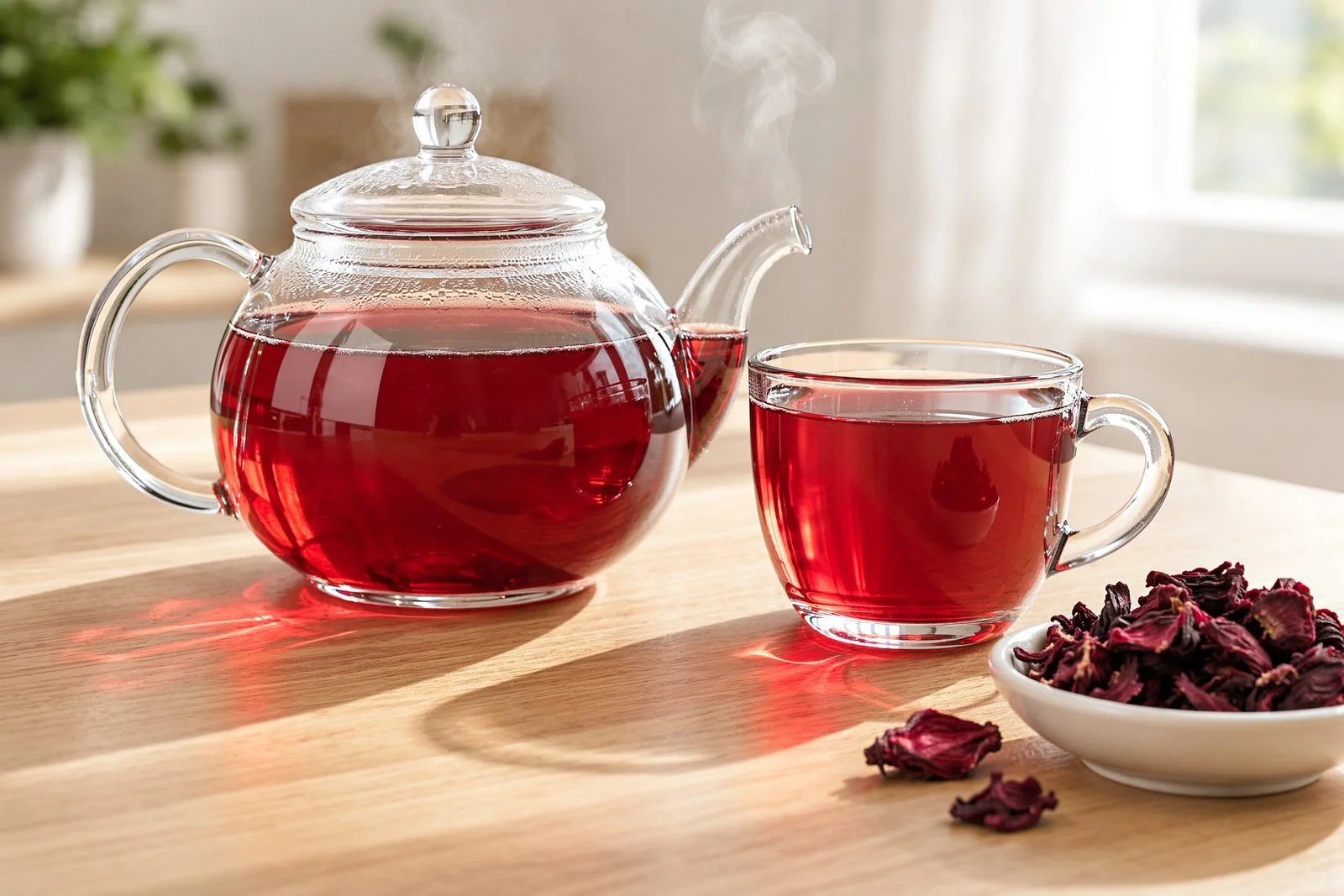
Glass teapot and cup of ruby-red hibiscus tea beside a small dish of dried hibiscus

What the Human Studies Found

A hibiscus tea trial right here in Boston. Researchers at the Jean Mayer USDA Human Nutrition Research Center on Aging at Tufts University ran a randomized, double-blind, placebo-controlled trial with 65 adults aged 30 to 70. Their blood pressure was slightly to mildly raised, and none were taking blood pressure medicine. For six weeks, one group drank three 240 mL (about 8 oz) cups of brewed hibiscus tea a day, each made with 1.25 grams of dried hibiscus steeped for 6 minutes. The other group drank a red, fruit-flavored placebo drink. After six weeks, systolic blood pressure (the top number) fell by an average of 7.2 mmHg in the hibiscus group, compared with 1.3 mmHg in the placebo group. Diastolic pressure (the bottom number) also dipped, but that change wasn't significantly different from placebo. People who started with higher readings tended to see bigger drops (McKay et al., 2010). One detail worth knowing: the study was funded in part by a tea company, which also supplied the hibiscus.

A 2015 meta-analysis. Researchers pooled five randomized controlled trials with 390 participants in total. Hibiscus was linked with an average drop of 7.58 mmHg in systolic and 3.53 mmHg in diastolic blood pressure, and again the effect was larger in people who started with higher readings. The authors still called for more well-designed trials (Serban et al., 2015).

A larger 2022 review. A team at the University of Leeds reviewed 17 trials. Compared with placebo, hibiscus lowered systolic blood pressure by about 7.1 mmHg on average, with the biggest effects in people whose blood pressure was raised to begin with. Hibiscus was also linked with a small drop in LDL ("bad") cholesterol. Results varied a lot from trial to trial, though, and the authors said more studies are needed to work out the best amount and how long to drink it (Ellis et al., 2022).

A stricter Cochrane review. Cochrane reviews use especially strict rules about which trials count. When Cochrane reviewers looked only at trials comparing hibiscus with a placebo or no treatment in adults with high blood pressure, just one small study of 60 people (all with type 2 diabetes) qualified, and it used hibiscus extract capsules, not tea. The reviewers concluded the evidence is currently insufficient to say whether hibiscus lowers blood pressure in people with hypertension (Pattanittum et al., 2021).

The Honest Bottom Line

Put simply, several small trials link regular hibiscus drinking with modest drops in blood pressure, mostly the top number, and mostly in people whose readings were slightly raised. The U.S. National Center for Complementary and Integrative Health (NCCIH) lists hibiscus among foods and supplements that may help reduce blood pressure, but adds that the evidence is limited, the effects are small, and no dietary supplement has been shown to work as well as blood pressure medicine (NCCIH).

A few limitations are worth keeping in mind:

  • The trials are small and short. Most ran for weeks, not years.

  • Not every study used tea. Some used concentrated extracts or capsules, and doses varied, so results don't translate neatly to one home-brewed cup.

  • Results vary. The reviews found big differences from one trial to the next, and the strict Cochrane review found too little evidence to draw a firm conclusion.

Our take: hibiscus tea isn't a treatment for high blood pressure, and it shouldn't replace one. It's a delicious, naturally caffeine-free drink, and the research suggests it may be a small plus alongside the healthy habits your doctor recommends.

A Few Safety Notes

In the trials pooled in the 2022 review, hibiscus was generally well tolerated. One study reported mild stomach symptoms that passed within a week. The same reviewers noted that possible interactions with blood pressure medicines, such as diuretics and ACE inhibitors, still need more research (Ellis et al., 2022).

NCCIH advises that if you have high blood pressure, you should follow the treatment plan your health care provider prescribed and not swap it for an unproven product. It also notes that some herbs, including licorice root, may raise blood pressure (NCCIH). That's worth knowing because some herbal blends, including our Throat Soother, contain licorice root alongside hibiscus.

If you take blood pressure medicine or other medications, are pregnant or breastfeeding, or are managing a health condition, please talk with your doctor before making hibiscus tea a daily habit.

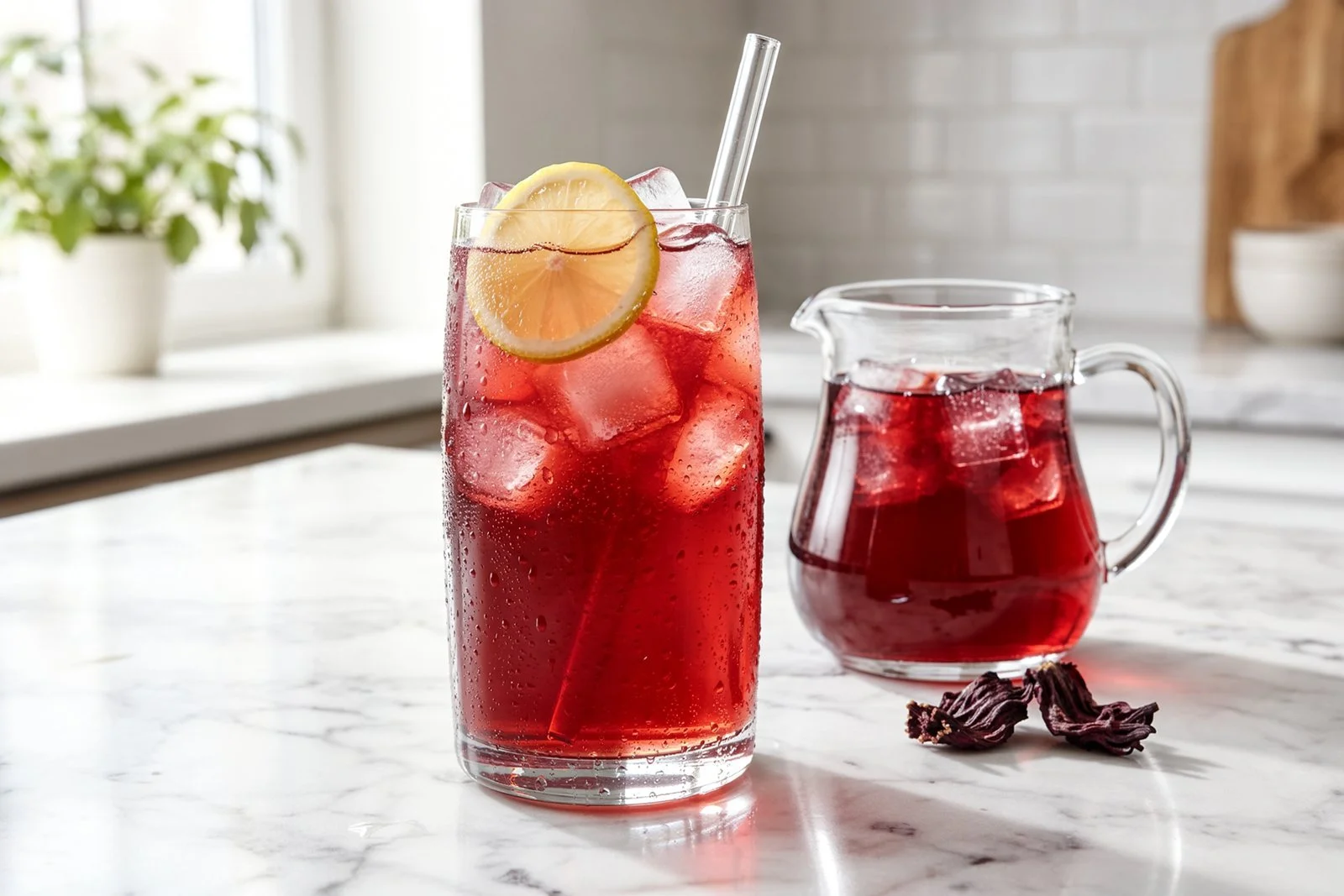
Tall glass of iced hibiscus tea with lemon beside a small pitcher on a marble counter

Enjoying a Cup of Hibiscus

If you'd like to try hibiscus, our fruit blends are a tasty place to start. Hibiscus is one of the main ingredients in each of these, alongside fruit and other botanicals:

  • Red Orange: our best-selling fruit blend, with orange peel, hibiscus, apple and rose hip for a tangy citrus cup.

  • Very Berry: rose hips, hibiscus, cranberries and blueberries, bright and juicy.

  • Yummy Fruitea: strawberry, hibiscus, blackberry and elderberry, with tart sour cherry notes.

  • Apple Strawberry: rose hips, hibiscus, apple and strawberry, with a natural fruity sweetness.

Since these are blends, keep in mind that the studies above looked at hibiscus on its own, so a cup of a blend won't match the amounts used in the research.

A few tips for a great cup:

  • Brew it fully. Use about 2 teaspoons per cup of freshly boiled water and steep 5 to 10 minutes. Longer steeping gives a deeper color and a tarter taste.

  • Try it iced. Brew it strong and pour it over ice for a refreshing ruby-red drink.

  • Go easy on the sugar. Our blends have no added sugar or sweeteners. If you like it sweeter, a little honey goes a long way.

  • Explore other caffeine-free cups. If you enjoy herbal teas, our post on chamomile and sleep takes the same honest look at another favorite.

You'll find these and more in our Herbal Tea collection. Like everything at Beantown Tea & Spices, they're quality loose-leaf teas at affordable prices, with sample sizes that make it easy to find your favorite.
Sources

  1. McKay DL, Chen CY, Saltzman E, Blumberg JB. Hibiscus sabdariffa L. tea (tisane) lowers blood pressure in prehypertensive and mildly hypertensive adults. Journal of Nutrition. 2010;140(2):298-303. doi:10.3945/jn.109.115097 (PubMed 20018807)

  2. Serban C, Sahebkar A, Ursoniu S, Andrica F, Banach M. Effect of sour tea (Hibiscus sabdariffa L.) on arterial hypertension: a systematic review and meta-analysis of randomized controlled trials. Journal of Hypertension. 2015;33(6):1119-1127. doi:10.1097/HJH.0000000000000585 (PubMed 25875025)

  3. Ellis LR, Zulfiqar S, Holmes M, Marshall L, Dye L, Boesch C. A systematic review and meta-analysis of the effects of Hibiscus sabdariffa on blood pressure and cardiometabolic markers. Nutrition Reviews. 2022;80(6):1723-1737. doi:10.1093/nutrit/nuab104 (PubMed 34927694)

  4. Pattanittum P, Ngamjarus C, Buttramee F, Somboonporn C. Roselle for hypertension in adults. Cochrane Database of Systematic Reviews. 2021;11(11):CD007894. doi:10.1002/14651858.CD007894.pub3 (PubMed 34837382)

  5. National Center for Complementary and Integrative Health. High Blood Pressure (Hypertension) and Complementary Health Approaches. nccih.nih.gov/health/hypertension-high-blood-pressure

What Is a Tisane? Herbal Tea vs. True Tea, Explained

Walk down any tea aisle and you'll see the word "tea" on almost everything: peppermint, chamomile, rooibos, berry blends, chai. But to a tea lover, there's a simple dividing line. Some of these drinks are true tea, and some are tisanes, better known as herbal teas. Both are delicious, and knowing the difference makes it much easier to pick the right cup for the moment.

True Tea: One Plant, Many Styles

Every true tea comes from a single plant, Camellia sinensis. White, green, oolong and black teas are all made from its leaves. What makes them taste so different is how the leaves are handled after picking: how long they wither, whether they're heated early to keep them green, and how much they're allowed to oxidize. Our guide White, Green, Oolong, Black: How One Tea Plant Makes Four Kinds of Tea walks through each step.

If a drink is made from Camellia sinensis leaves, it's true tea. If it's made from anything else, it's a tisane.

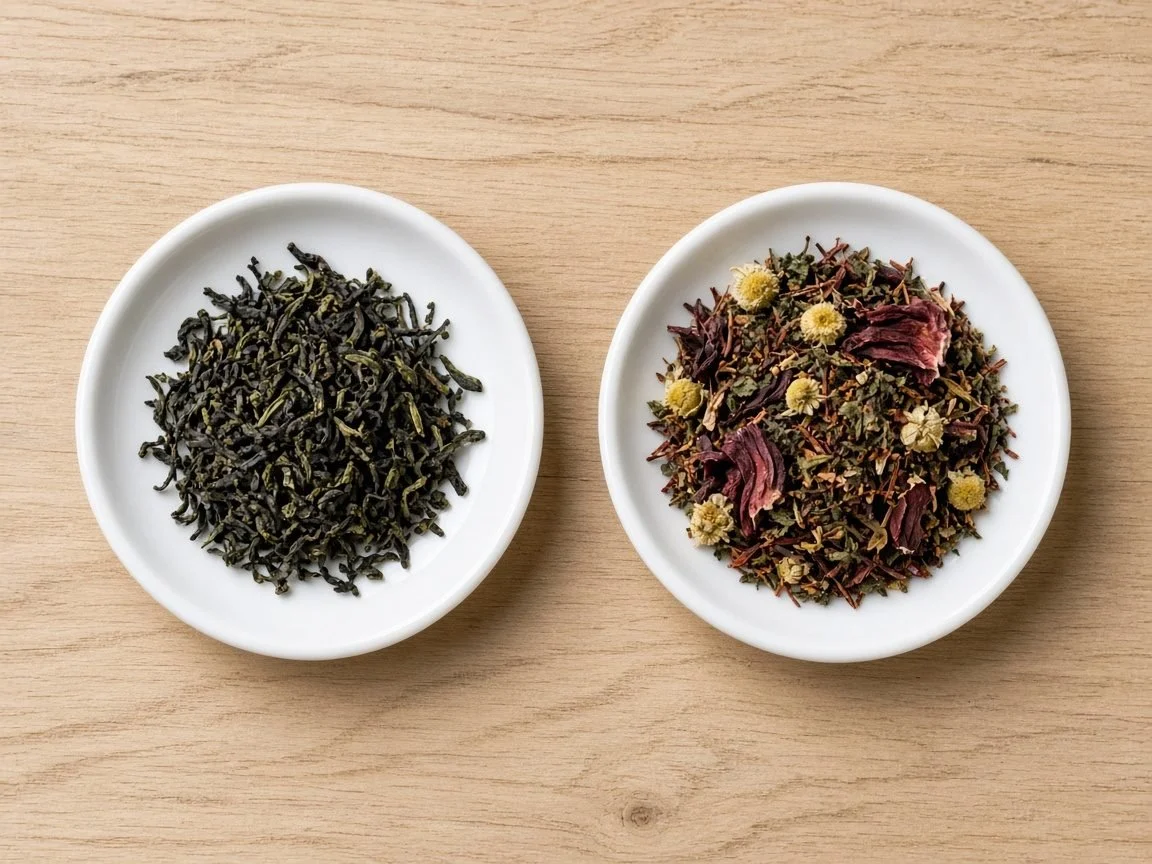
Dry green tea leaves beside a dried herbal mix of chamomile, mint, hibiscus and rooibos

What Is a Tisane?

A tisane is a drink made by steeping herbs, spices or other plant material in water, with no leaves from the tea plant. The word came into English from French, and "herbal tea" is simply the more common name for the same thing.

Tisanes can be made from almost any part of an edible plant:

  • Leaves: peppermint, spearmint, lemon balm and lemongrass.

  • Flowers: chamomile and hibiscus.

  • Fruits and berries: apple, orange peel, rose hips, cranberries and blueberries.

  • Bark, roots and seeds: cinnamon, ginger, cardamom and black pepper.

  • Rooibos and honeybush: two South African shrubs that brew up smooth, naturally sweet cups.

Rooibos is a good example of how "tea" can fool you. It's often called red tea, but it isn't related to the tea plant at all. It comes from Aspalathus linearis, a plant from South Africa's Cederberg mountains. If you're curious about its story, read Red Bush, Big Story: The Real History of Rooibos.

The Caffeine Question

This is the difference most people care about. True tea naturally contains caffeine. A typical cup of black or green tea usually has roughly half the caffeine of a cup of brewed coffee, or less, as we explain in Caffeine in Tea vs. Coffee.

Most tisanes, on the other hand, are naturally caffeine free. Chamomile, peppermint, rooibos and hibiscus blends are all popular choices for an evening cup for exactly that reason.

There are a few exceptions. Yerba mate and guayusa are both made from the leaves of holly trees native to South America, and both contain caffeine. So "herbal" doesn't automatically mean "caffeine free." When in doubt, check the ingredient list.

Flavor Groups to Explore

Because tisanes can be made from so many plants, their flavors cover a lot of ground. Here's a simple way to sort them:

  • Floral and soft: chamomile-based blends are gentle and soothing. Our Sleep Well blend combines chamomile, peppermint, lemongrass and green rooibos for a soft, floral, lightly minty cup with a lemony lift.

  • Minty and cool: our Peppermint is bright and bold, with a cooling, sweet finish. It's traditionally enjoyed after meals and is delicious iced, too.

  • Fruity and tart: hibiscus gives many fruit blends their ruby color and tang. Very Berry mixes rose hips, hibiscus, cranberries and blueberries with natural forest berry flavor, with no added sugar or sweeteners.

  • Spicy and warming: our Indian Chai Spice Mix blends cinnamon, ginger, green cardamom, allspice, cloves and black pepper. There's no tea in it, so it makes a full-bodied, caffeine-free chai.

  • Earthy and sweet: Organic Rooibos is smooth, naturally sweet and gently woody, with hints of honey and a rich amber-red color. It's lovely plain, with milk and honey, or iced.

A quick note on wellness: people have enjoyed herbal infusions for centuries, and many find a warm, caffeine-free cup relaxing at the end of the day. If you'd like to know what science actually says about one popular herb, see Chamomile and Sleep: What the Research Really Says. Herbal tea is a pleasure to drink, not a substitute for medical advice.

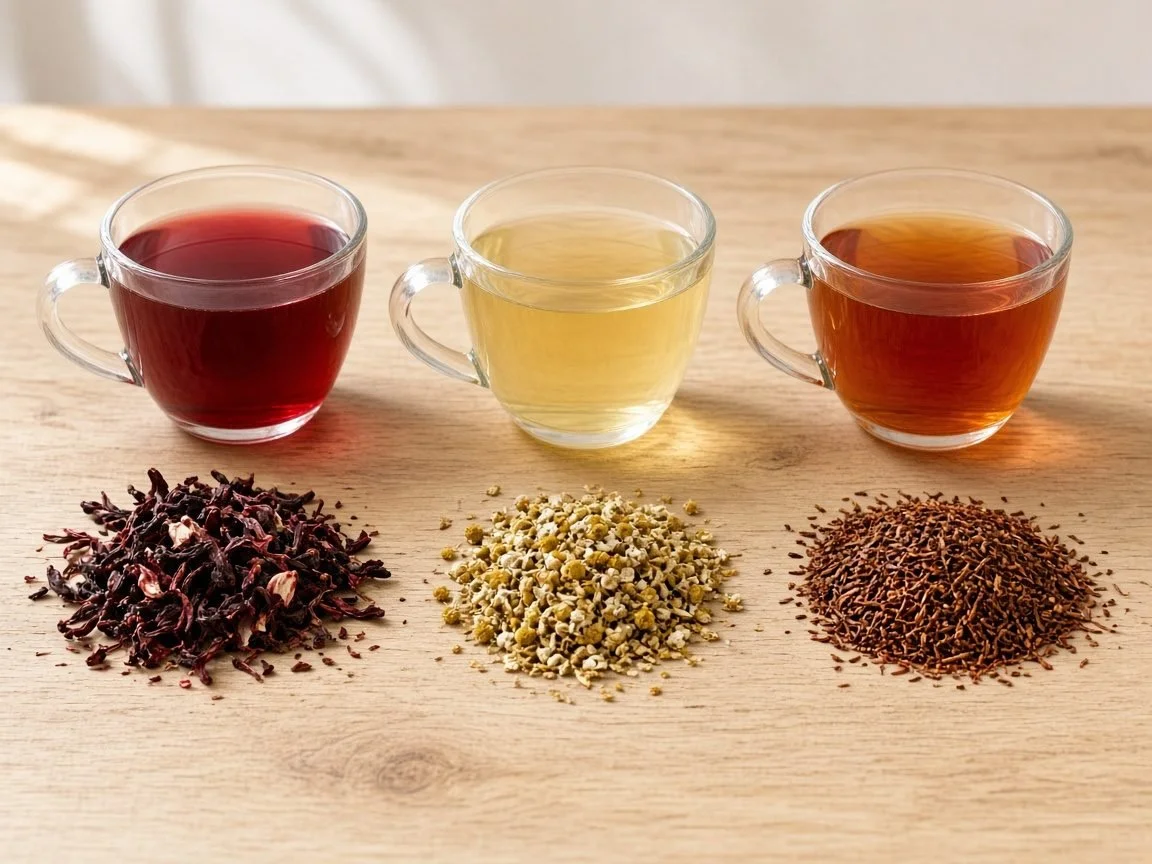
Three glass cups of herbal tea in ruby red, golden yellow and amber colors on a wood table

How Brewing Differs

True tea and tisanes like different treatment in the kettle.

Delicate true teas, especially green and white teas, do best with water below boiling and shorter steeps. Boiling water and long steeps can pull out bitterness. Our Moroccan Mint, for example, is a green tea blend that we suggest brewing at 175–185°F for 2–3 minutes.

Tisanes are much more forgiving. Flowers, roots, bark and dried fruit are sturdy, and they generally need hotter water and more time to release their flavor:

  • Water: freshly boiled water, at 212°F, for most herbal blends.

  • Time: about 5–7 minutes for herbal blends like Sleep Well, Peppermint and Organic Rooibos.

  • Fruit blends: we suggest 2 teaspoons per cup and a 5–10 minute steep for Very Berry.

  • Chai spice mix: steep it for about 5 minutes in boiling water, or simmer it with milk.

Because herbal tea rarely turns bitter, you can steep a little longer for a stronger cup. Every product page lists our brewing guideline for that blend, so it's worth a quick look before you pour.

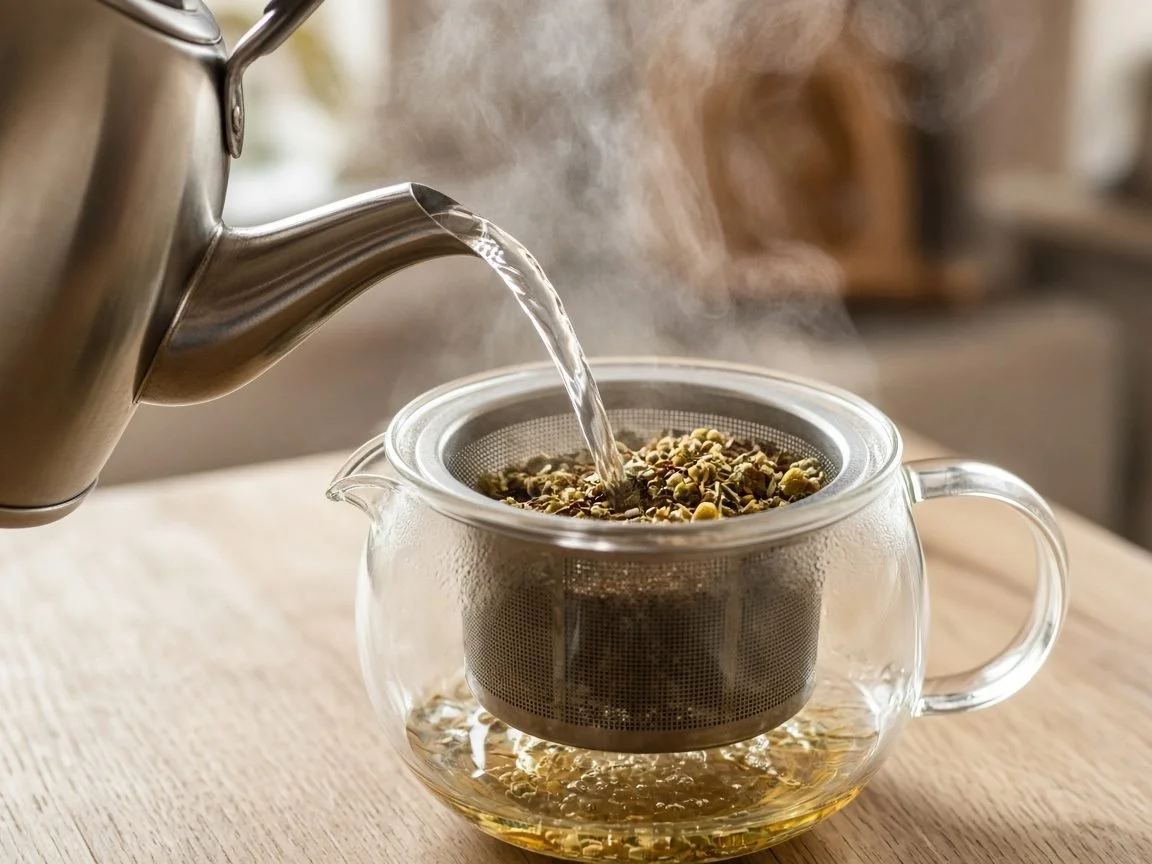
Kettle pouring steaming water over dried herbs in a glass teapot with an infuser

Blends That Mix Both

Some favorites sit in the middle. Moroccan Mint pairs Gunpowder and Chun Mee green teas with peppermint, so it has the cool sweetness of a tisane and the caffeine of true tea. Our Indian Chai Spice Mix works the other way: on its own it's caffeine free, but you can add your favorite black tea, green tea or even coffee to build your own chai.

When a blend includes tea leaves, treat it like true tea, both for caffeine and for brewing. When it's all herbs, fruit and spices, treat it like a tisane.

How to Pick the Right Cup

Not sure where to start? Ask yourself a few questions:

  • Do you want a lift? Reach for a true tea, such as black, green or oolong.

  • Winding down in the evening? Try a caffeine-free tisane like Sleep Well or Organic Rooibos.

  • Craving something bright and fruity? Very Berry is tart and juicy, and it makes an excellent iced tea.

  • Want something to sip after a meal? Peppermint is a classic.

  • Love warm spices? Start with Indian Chai Spice Mix, with or without tea.

As tea enthusiasts, we have been sharing quality tea at affordable prices since 2006, and herbal blends are a big part of that. Browse our Herbal Tea collection to find mint, fruit, rooibos and floral blends, each with sample and larger sizes so you can taste your way to a new favorite. True tea or tisane, the best cup is the one you'll enjoy.
Chamomile and Sleep: What the Research Really Says

When the November evenings close in before dinner, a warm cup of chamomile is one of the oldest wind-down rituals around. Chamomile has a big reputation as a "sleepy tea," but what does the research actually say? We dug into the published studies, read the abstracts and reviews ourselves, and pulled together an honest, plain-English look at what's known, what isn't, and how to enjoy a calming caffeine-free cup at the end of the day.

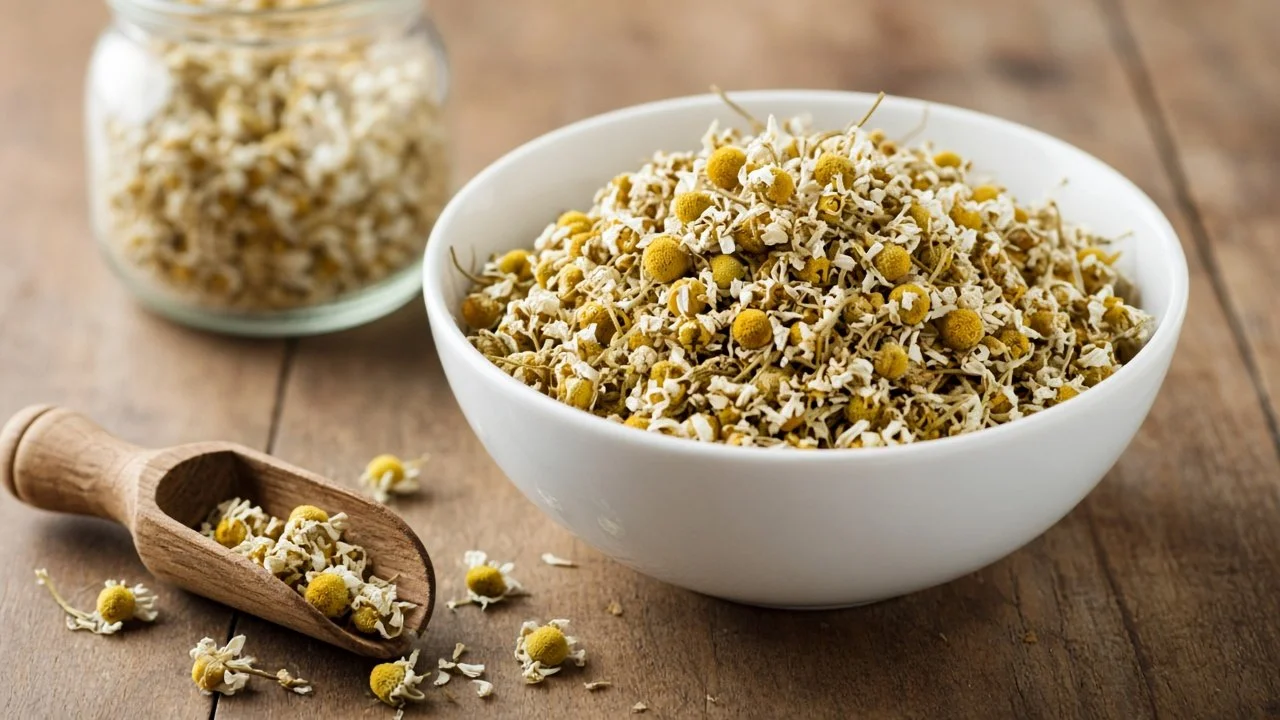
White ceramic bowl of dried chamomile flowers on a wooden table with a scoop and glass jar

Why Chamomile Has a Reputation for Sleep

Chamomile is a daisy-like flower from the Asteraceae (Compositae) family, and people have been brewing it for a very long time. There are two common types, German chamomile and Roman chamomile.

A widely cited review from researchers at Case Western Reserve University describes chamomile as one of the most ancient medicinal herbs known, with chamomile tea consumed at a rate of more than one million cups per day. Traditionally, chamomile tea has been used to help with sleeplessness and to calm nerves (Srivastava et al., 2010).

Why might it work? The same review explains that chamomile's calming effect may come from apigenin, a flavonoid in the flowers that binds to benzodiazepine receptors in the brain. That's an interesting lead, but most of that evidence comes from lab and animal studies. At the time of that review, the authors noted that clinical trials in people were "notable for their absence." Since then, a handful of human studies have been published, and they are where things get more interesting.

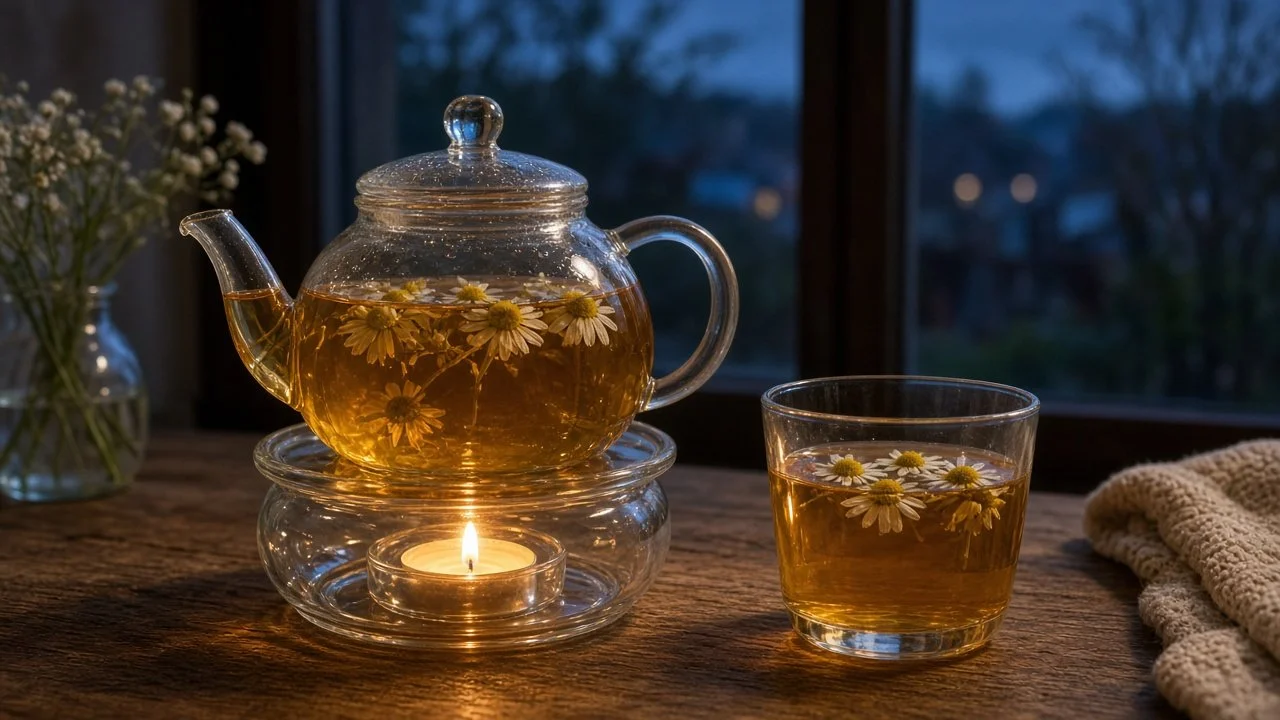
Glass teapot of golden chamomile tea on a candle warmer beside a glass cup at dusk

What the Human Studies Found

A chamomile tea study in new mothers. In a randomized controlled trial from Taiwan, 80 postnatal women with poor sleep quality were split into two groups of 40. One group drank chamomile tea for two weeks, and the other received regular postpartum care only. After two weeks, the tea group had lower scores for physical symptoms linked to poor sleep and fewer symptoms of depression. But by the four-week check, two weeks after the tea stopped, the groups looked similar again, so the benefit seemed to last only while the women were drinking it (Chang & Chen, 2016). This one is notable because it used actual brewed tea, not a capsule. It wasn't blinded or placebo-controlled, though, since the comparison group drank no tea at all.

Chamomile extract in older adults. In a single-blind trial in Iran, 60 adults aged 60 or older living at a day care nursing home took either 200 mg chamomile extract capsules or placebo capsules (made with wheat flour) twice a day for 28 days. Sleep quality, measured with the Pittsburgh Sleep Quality Index, was significantly better in the chamomile group after the intervention (Adib-Hajbaghery & Mousavi, 2017).

Chamomile extract for chronic insomnia. A small pilot study at the University of Michigan tested 270 mg of chamomile extract twice a day against a placebo for 28 days in 34 adults with chronic primary insomnia. This time the results were mixed. There were no significant differences between the groups in sleep diary measures such as total sleep time, time to fall asleep, night awakenings or sleep quality. Chamomile showed a modest advantage on daytime functioning, but that didn't reach statistical significance either (Zick et al., 2011).

Putting the studies together. A 2019 systematic review and meta-analysis gathered 12 randomized trials of chamomile for anxiety and sleep. Pooling the sleep-quality studies, the authors found a significant improvement in sleep quality with chamomile. For insomnia itself, they found only one trial, and it showed no significant change in insomnia severity. They concluded that larger trials are needed (Hieu et al., 2019).

The Honest Bottom Line

Put simply, small studies suggest chamomile is linked with better sleep quality, especially for people who already sleep poorly, like new mothers and older adults. It hasn't been shown to treat insomnia, the medical sleep disorder.

A few limitations are worth keeping in mind:

  • The studies are small. We're talking about 34 to 80 people per trial.

  • Most used extracts, not tea. Two of the three trials above used concentrated capsules, so it's hard to know how much chamomile is in an ordinary home-brewed cup by comparison.

  • Benefits may be short-lived. In the tea study, the improvement faded once people stopped drinking it.

  • Some studies weren't fully blinded, and people often feel better simply from a relaxing routine.

Our take: chamomile isn't a sleeping pill, and it doesn't need to be. A warm, caffeine-free cup is a lovely signal to your body and mind that the day is winding down, and the research suggests it may help a little too.

A Few Safety Notes

The U.S. National Center for Complementary and Integrative Health (NCCIH) says chamomile is likely safe in the amounts commonly found in teas. Allergic reactions are uncommon but can happen, and they're more likely if you're allergic to related plants like ragweed, chrysanthemums, marigolds or daisies. NCCIH also notes reported interactions with warfarin (a blood thinner) and some drugs processed by the liver, possible interactions with sedatives, and that chamomile might reduce the effect of birth control pills. Little is known about its safety during pregnancy or breastfeeding (NCCIH).

If you're pregnant or breastfeeding, take medications, or are managing a health condition, please talk with your doctor before making chamomile a nightly habit. And if poor sleep is sticking around, that's worth a conversation with your doctor too.

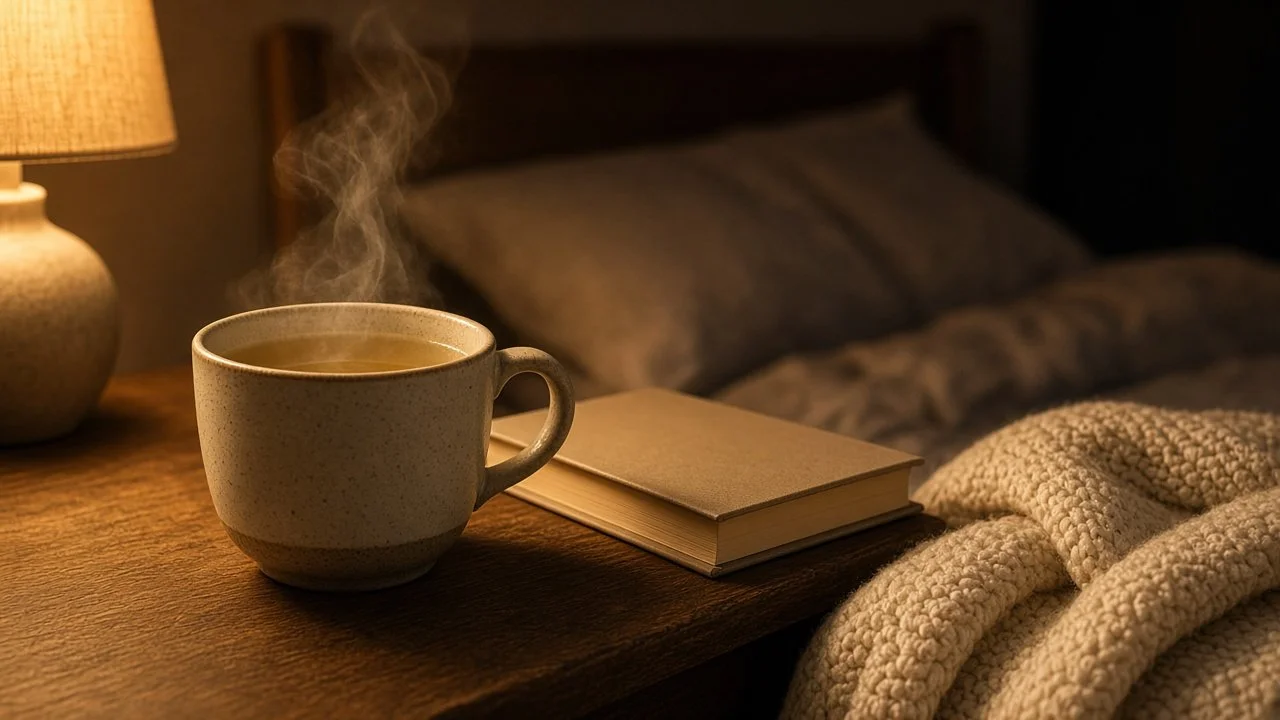
Steaming mug of herbal tea on a bedside table with a book and knit blanket in lamplight

Making Chamomile Part of Your Evening

If you'd like to give chamomile a try, our Sleep Well herbal blend is a gentle place to start. It's our own caffeine-free blend of chamomile, peppermint, lemongrass and green rooibos: soft, floral and lightly minty, with a lemony lift. (Since it's a blend, keep in mind that the studies above looked at chamomile alone, not this exact recipe.)

A few tips for a calming cup:

  • Brew it fully. Use 1 to 2 teaspoons per 8 oz of freshly boiled water and steep 5 to 7 minutes. Cover your cup while it steeps to keep the aroma in.

  • Make it a ritual. Brew your cup about an hour before bed, dim the lights, and put the phone down while you sip.

  • Watch the afternoon caffeine. Green, black and oolong teas all contain caffeine. Our post on L-theanine and caffeine in tea explains how that works, and switching to herbal tea later in the day is an easy swap.

  • Rotate your caffeine-free favorites. If chamomile isn't your thing, our Peppermint, Organic Rooibos and Vanilla Rooibos are all naturally caffeine free. For more ideas, see our list of caffeine-free teas for cozy nights.

You'll find all of these in our Herbal Tea collection. Like everything at Beantown Tea & Spices, they're quality loose-leaf teas at affordable prices, with sample sizes that make it easy to find your favorite evening cup. Sweet dreams!

Sources

  1. Srivastava JK, Shankar E, Gupta S. Chamomile: A herbal medicine of the past with bright future. Molecular Medicine Reports. 2010;3(6):895-901. doi:10.3892/mmr.2010.377 (PubMed 21132119)

  2. Chang SM, Chen CH. Effects of an intervention with drinking chamomile tea on sleep quality and depression in sleep disturbed postnatal women: a randomized controlled trial. Journal of Advanced Nursing. 2016;72(2):306-315. doi:10.1111/jan.12836 (PubMed 26483209)

  3. Adib-Hajbaghery M, Mousavi SN. The effects of chamomile extract on sleep quality among elderly people: A clinical trial. Complementary Therapies in Medicine. 2017;35:109-114. doi:10.1016/j.ctim.2017.09.010 (PubMed 29154054)

  4. Zick SM, Wright BD, Sen A, Arnedt JT. Preliminary examination of the efficacy and safety of a standardized chamomile extract for chronic primary insomnia: a randomized placebo-controlled pilot study. BMC Complementary and Alternative Medicine. 2011;11:78. doi:10.1186/1472-6882-11-78 (PubMed 21939549)

  5. Hieu TH, Dibas M, Surya Dila KA, et al. Therapeutic efficacy and safety of chamomile for state anxiety, generalized anxiety disorder, insomnia, and sleep quality: A systematic review and meta-analysis of randomized trials and quasi-randomized trials. Phytotherapy Research. 2019;33(6):1604-1615. doi:10.1002/ptr.6349 (PubMed 31006899)

  6. National Center for Complementary and Integrative Health. Chamomile. nccih.nih.gov/health/chamomile

Tea and Food Pairing for Beginners: A Simple Guide by Tea Type

Most of us choose a tea by mood and a snack by whatever is in the cupboard. Put the two together with a little thought, though, and both can taste better. Pairing tea with food doesn't take special training. A few simple ideas and a willingness to taste will get you most of the way there. Here's a beginner-friendly guide, organized by tea type, with easy pairings to try at home.

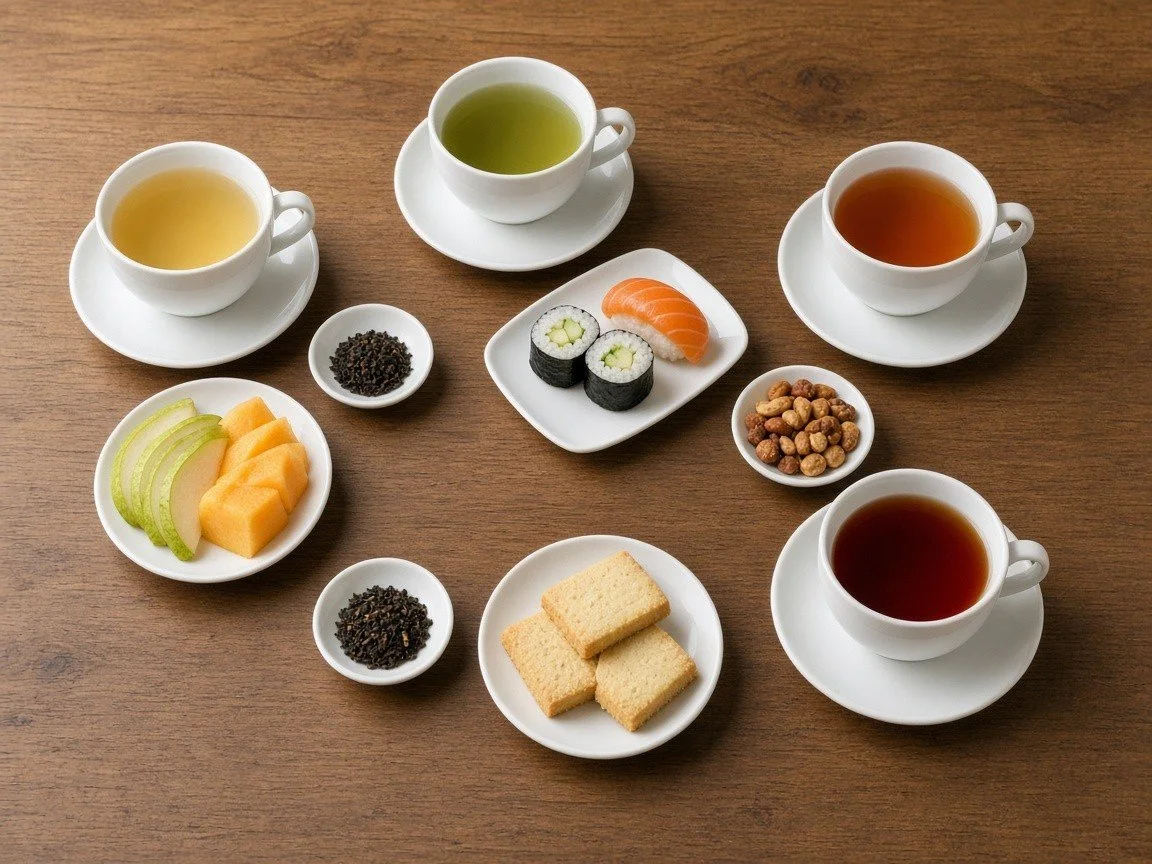
Four cups of tea in different colors on a wooden table, each beside a small plate of matching food such as pear slices, sushi, roasted nuts and shortbread

Three Simple Principles

1. Match intensity. This is the big one. Delicate teas go best with delicate foods, and bold teas can stand up to rich, strongly flavored foods. A soft white tea will get lost next to a spicy curry, and a strong breakfast blend can overpower a plain cucumber sandwich.

2. Complement or contrast. You can echo a flavor or play against it. A nutty, toasty tea next to toasted nuts is a complementary pairing. A bright, brisk black tea next to buttery shortbread is a contrasting one, where the tea cuts through the richness. Both work. Echoing tends to feel cozy and harmonious, and contrasting tends to feel lively.

3. Let the tea reset your palate. Many teas, especially brisk black teas and roasted oolongs, have a light dryness (astringency) that clears away fat and sweetness between bites. That's why tea and rich food have been friends for so long. Each sip makes the next bite taste fresh again.

One more tip: brew well before you pair. A tea that's over-steeped or brewed too hot turns harsh and won't play nicely with anything. Our tea brewing guide has times and temperatures by tea type, and if a cup ever turns sharp, see Why Is My Tea Bitter? 6 Common Causes and Easy Fixes.

White Tea: Keep It Gentle

White teas are the most lightly processed teas, with soft, subtle flavors. Silver Needle is made from downy buds and brews a clear, delicate cup, and White Peony (Bai Mu Dan) is a little fuller, with gentle fruity notes.

Good matches:

  • Fresh fruit: melon, pears or peaches.

  • Mild cheeses: fresh goat cheese or ricotta.

  • Light bites: plain rice crackers, cucumber sandwiches or a simple green salad.

Skip anything heavily spiced or very sweet. The goal is to let the tea's quiet fragrance come through.

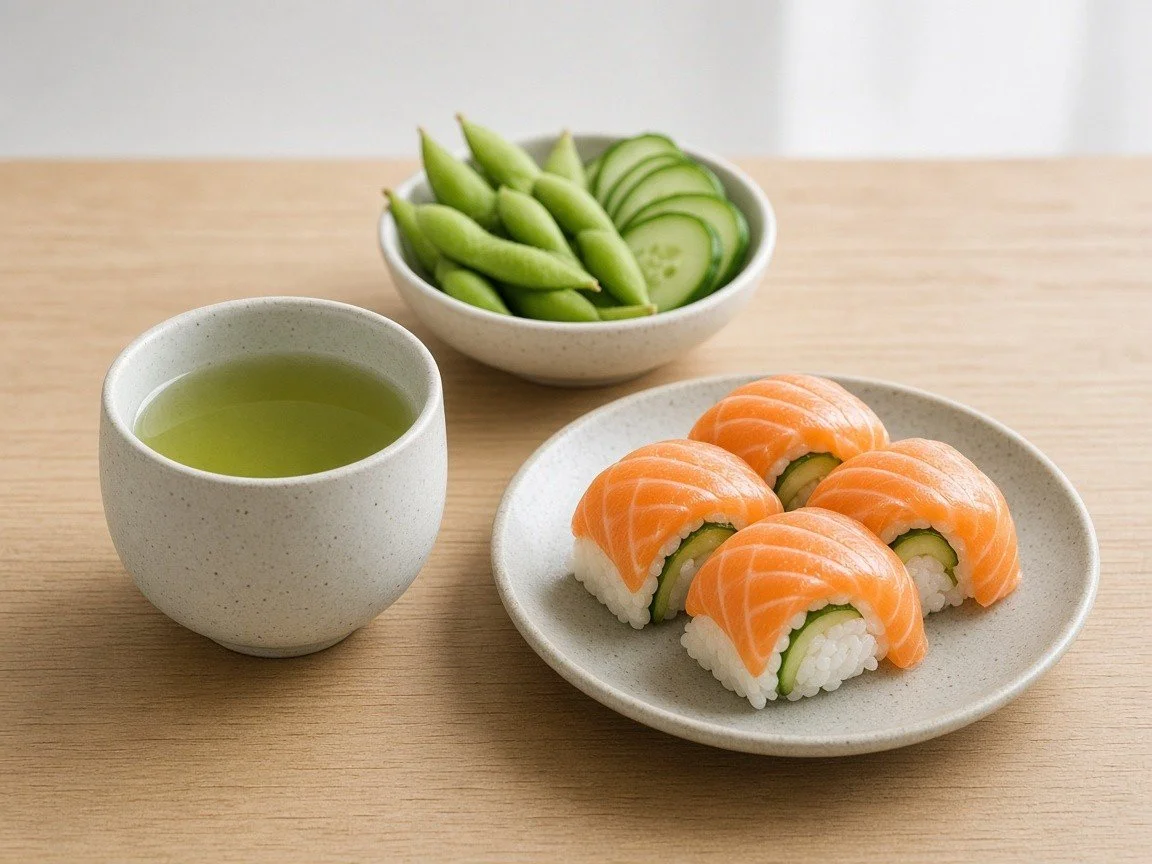
Cup of pale green tea beside a small plate of sushi, a bowl of edamame and cucumber slices

Green Tea: Japanese vs. Chinese

Green teas split into two broad styles, and they pair a bit differently.

Japanese green teas are usually steamed, which gives them a fresh, grassy, sometimes savory taste. Sencha is bright, slightly sweet and vegetal, and it's a natural with:

  • Seafood: sushi, sashimi or simply grilled fish.

  • Vegetables: steamed greens, edamame or a light vegetable stir-fry.

  • Rice dishes: plain rice, rice balls or a light noodle bowl.

For a toastier option, Genmaicha blends green tea with toasted brown rice. Its nutty, comforting flavor goes well with savory snacks, rice crackers and even a grilled cheese sandwich. For a deeper look at the Japanese styles, see our simple guide to Japanese green tea.

Chinese green teas are usually pan-fired, which tends to bring out sweeter, nuttier notes. Dragonwell is gentle, sweet and nutty, and Bi Luo Chun is floral and slightly earthy. Try them with:

  • Steamed dumplings or lightly sauced vegetables.

  • Mild white fish or shrimp.

  • Lightly sweet treats: almond cookies or a plain sponge cake.

Oolong: Light vs. Roasted

Oolongs sit between green and black tea, so they're wonderfully flexible at the table. The easiest way to pair them is to think about how roasted they are.

Light, floral oolongs such as Ali Shan, with its orchid and honey notes, and the fragrant Jade Oolong pair with:

  • Shellfish: scallops, shrimp or crab.

  • Fresh fruit: pears, apples or stone fruit.

  • Mild, creamy cheeses and light pastries.

Roasted oolongs have warm, toasty depth. Roasted Tung Ting is nutty and gently sweet, and Wuyi Rock Oolong (Da Hong Pao) is full-bodied and earthy. They can handle heartier foods:

  • Roasted or grilled meats: pork, duck or chicken.

  • Mushroom dishes and other earthy, savory flavors.

  • Toasted nuts, caramel or a nutty dessert.

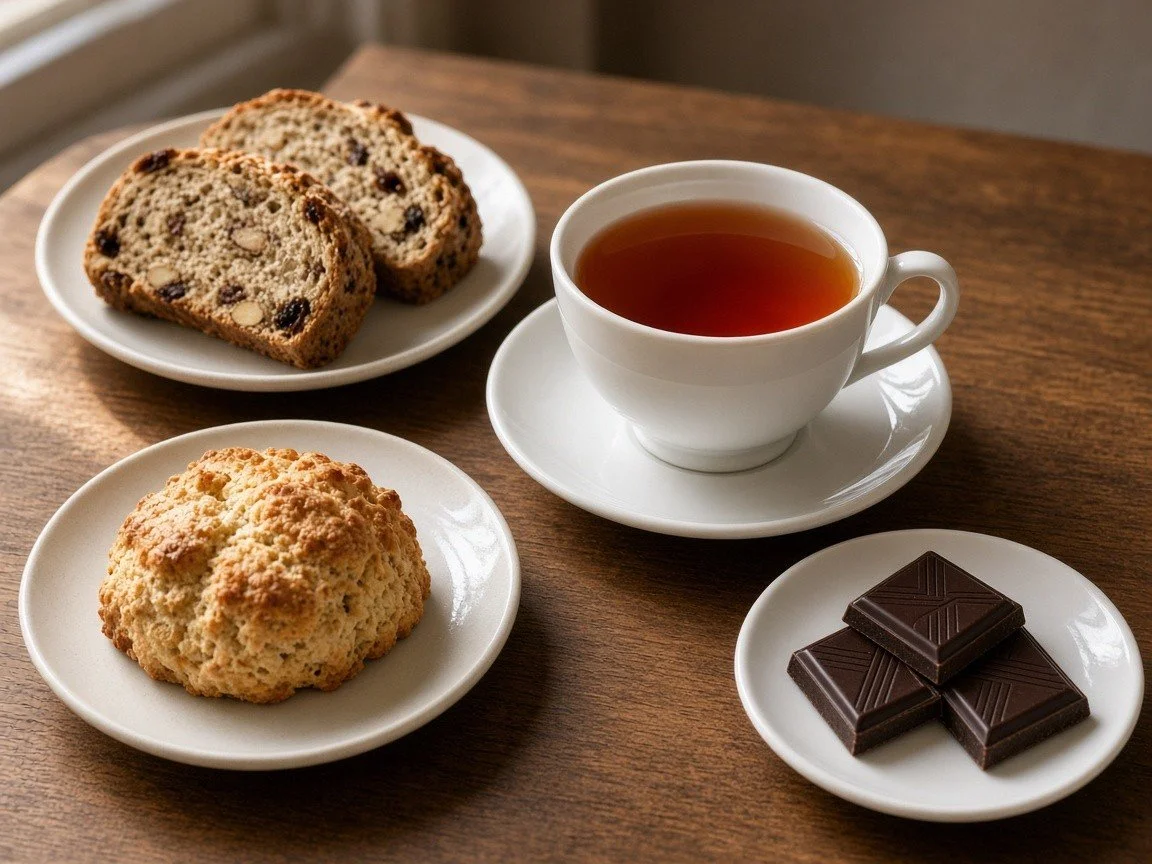
Cup of amber black tea with a buttery scone, squares of dark chocolate and slices of fruit and nut bread

Black Tea: From Delicate to Bold

Black teas range widely, so match the tea's strength to the food.

Darjeeling is the lightest and most fragrant of the common black teas, often with a "muscatel" grape-like note. Darjeeling Margaret's Hope and Darjeeling Castleton are lovely with:

  • Scones with a little jam or cream.

  • Egg dishes such as quiche or an omelet.

  • Mild cheeses and fruit tarts.

Assam and breakfast blends are bold and malty, and they're made for hearty food. Assam Hunwal and our English Breakfast blend (great with milk) pair with:

  • A full breakfast: eggs, bacon or sausage, and toast.

  • Buttery baked goods: shortbread, croissants or pound cake.

  • Sharp cheddar or a hearty sandwich.

Chinese black teas tend to be smooth, with less bite. Keemun Mao Feng is gently winey and fragrant, and Golden Yunnan is smooth and rich. Both are wonderful with:

  • Dark chocolate: the tea's depth meets the chocolate's richness.

  • Fruit and nut breads or dried fruit.

  • Savory roasts and soy-glazed dishes.

Herbal and Caffeine-Free Pairings

Herbal teas don't come from the tea plant, but the same principles still apply.

  • Mint: Peppermint is cool and clean, a classic after a rich meal or next to chocolate desserts. Lemon Mint adds a crisp citrus lift that suits salads and lighter dishes.

  • Fruit blends: the bright, tart Very Berry pairs nicely with cheesecake, vanilla desserts or yogurt, and the tangy citrus of Red Orange goes well with almond cakes or a simple butter cookie.

Try a Simple Pairing Experiment at Home

The best way to learn is to taste side by side. Here's an easy experiment:

  1. Pick three teas: one light (a white or green tea), one medium (an oolong) and one bold (a breakfast black tea).

  2. Pick three foods: something light (cucumber or pear slices), something rich (a piece of shortbread or cheddar) and something sweet (a square of dark chocolate).

  3. Brew each tea carefully using the brewing guide, and let the cups cool slightly so you can taste clearly.

  4. Taste in order: sip the tea alone, take a bite of food, then sip again. Notice whether the tea tastes brighter, flatter, sweeter or more bitter after the bite.

  5. Jot down your favorites. You'll quickly see the intensity rule in action, and you may discover a surprise match or two.

If you'd like to try several teas without committing to full bags, a variety sampler pack is a handy way to set up your tasting.

Find Your Own Favorite Pairings

There are no wrong answers in tea pairing, only discoveries. Start with the simple principles, trust your own taste, and have fun with it. When you're ready to explore, browse our white tea, green tea, oolong, black tea and herbal tea collections, or see everything in our full tea shop.

Happy sipping!

Red Bush, Big Story: The Real History of Rooibos, South Africa's Caffeine-Free Treasure

On a cold November night, a mug of rooibos is about as cozy as it gets: deep red, naturally sweet, and caffeine free, so you can enjoy a second cup right before bed. But that humble "red bush" has a surprisingly dramatic backstory. It involves mountain harvesters and donkeys, a tea merchant who borrowed a Chinese black tea method, a country doctor who cracked the secret of a stubborn seed, and a name that's now protected like champagne.

Wild rooibos bush with needle-like leaves growing on orange sandstone slopes of South Africa's Cederberg mountains

A plant that grows in one small corner of the world

Rooibos (say "ROY-boss") is Afrikaans for "red bush." Botanically it's Aspalathus linearis, a needle-leaved shrub in the legume family. It isn't related to the tea plant, Camellia sinensis, at all, which is why rooibos has no caffeine.

What makes rooibos special is how picky it is about where it lives. It grows in the fynbos, the unique scrubland of South Africa's Western Cape, and it's farmed almost entirely in the Cederberg mountain region, roughly 155 miles north of Cape Town. Even today, virtually all the world's rooibos comes from this one small area.

Mountain harvests, done by hand

According to botanists Ben-Erik van Wyk and Boris Gorelik, who studied the history of Cape herbal teas, the earliest written records of rooibos as a drink date to the late 1800s. It was a traditional drink of the Khoi-descended people of the Cederberg. Archaeological evidence suggests people knew the plant much earlier, but historians are careful to say that doesn't prove it was brewed as tea in precolonial times.

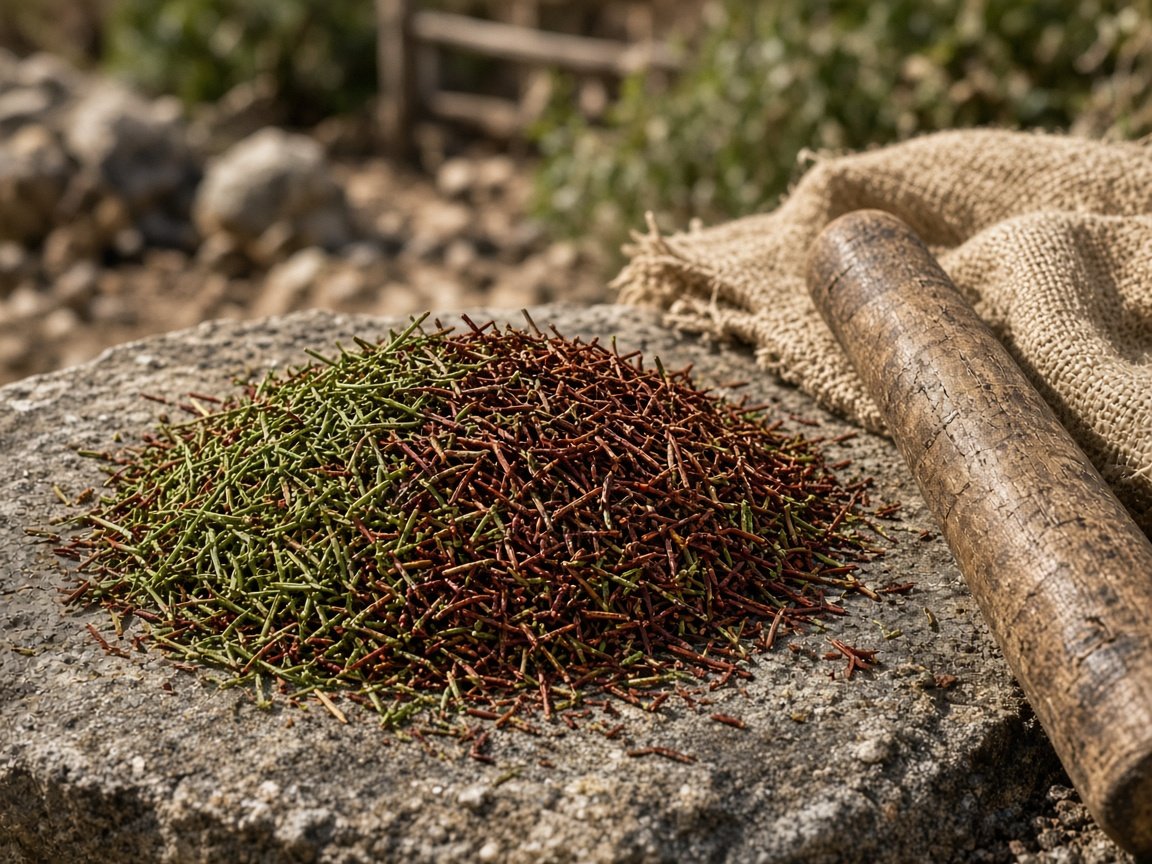
The traditional harvest was hard work. People climbed the mountains, cut the fine needle-like leaves from wild bushes, bundled them into hessian sacks, and brought them down the steep slopes by donkey. Then they bruised the leaves by beating them on a flat rock with a heavy wooden club or hammer, and left them to oxidize and dry in the sun. That oxidation is what turns the green leaves the deep red-brown that gives rooibos its name and its warm, sweet flavor.

A myth worth busting: you may read that the Swedish botanist Carl Peter Thunberg described rooibos tea in 1772. He did write that "country people make tea" from a local plant, but according to van Wyk and Gorelik, he was describing a related Aspalathus species, not rooibos itself.

The tea merchant who saw its potential

The first person to sell rooibos on a larger scale was Benjamin Ginsberg, often called the father of the rooibos industry. Drawing on his family's tradition of brewing tea and herbal infusions, in 1904 he began experimenting with rooibos at Rondegat Farm.

His clever idea was to cure rooibos the way Chinese tea makers produced Keemun black tea, by fermenting (oxidizing) the leaves in barrels. It worked, and he began trading rooibos to a wider market. There was just one big problem: every leaf still came from wild plants, and nobody knew how to grow rooibos from seed.

A country doctor and a stubborn seed

By the late 1920s, demand was outgrowing the wild supply. Enter Dr. Pieter le Fras Nortier, the district surgeon in the town of Clanwilliam and an avid amateur naturalist. With the encouragement of Ginsberg and the help of local farmers Oloff Bergh and William Riordan, Nortier set out to turn wild rooibos into a farm crop.

The seeds were tiny, hard-shelled and very hard to find. As the story is told in a 1949 book by Lawrence Green, an elderly Khoi woman found a remarkable source: she noticed ants dragging rooibos seeds, followed them to their nest, and found a whole store of seeds inside.

Nortier started his cultivation experiments in 1930 and eventually discovered the secret. The seeds' tough coats had to be scarified (lightly scratched or scuffed) before planting in acidic, sandy soil. He then showed local farmers how to germinate their own seed. The variety he developed became the backbone of the industry, and in 1948 Stellenbosch University awarded him an honorary doctorate for his contribution to South African agriculture. Today rooibos is the economic mainstay of the Clanwilliam district.

Cut rooibos leaves turning from green to red as they oxidize on a flat rock beside a wooden club and hessian sack

From local drink to a name protected like champagne

For most of the 20th century, rooibos was mainly a South African favorite. Around the early 2000s, it caught on around the world as more people went looking for flavorful caffeine-free drinks.

Along the way, the name itself became a legal battle. In 1994, a U.S. company registered "Rooibos" as a trademark, when the plant was barely known in America, and later demanded fees from other sellers. The American Herbal Products Association and several importers fought back, and by 2005 the name was returned to the public domain.

South Africa then moved to protect it. In 2013, its Department of Trade and Industry restricted the names "rooibos" and "red bush" to products made from Aspalathus linearis. In 2021, the European Union gave rooibos protected designation of origin (PDO) status, the same kind of protection that covers champagne. Anything sold as rooibos in the EU must come from rooibos grown in the Cederberg region.

Red rooibos and green rooibos

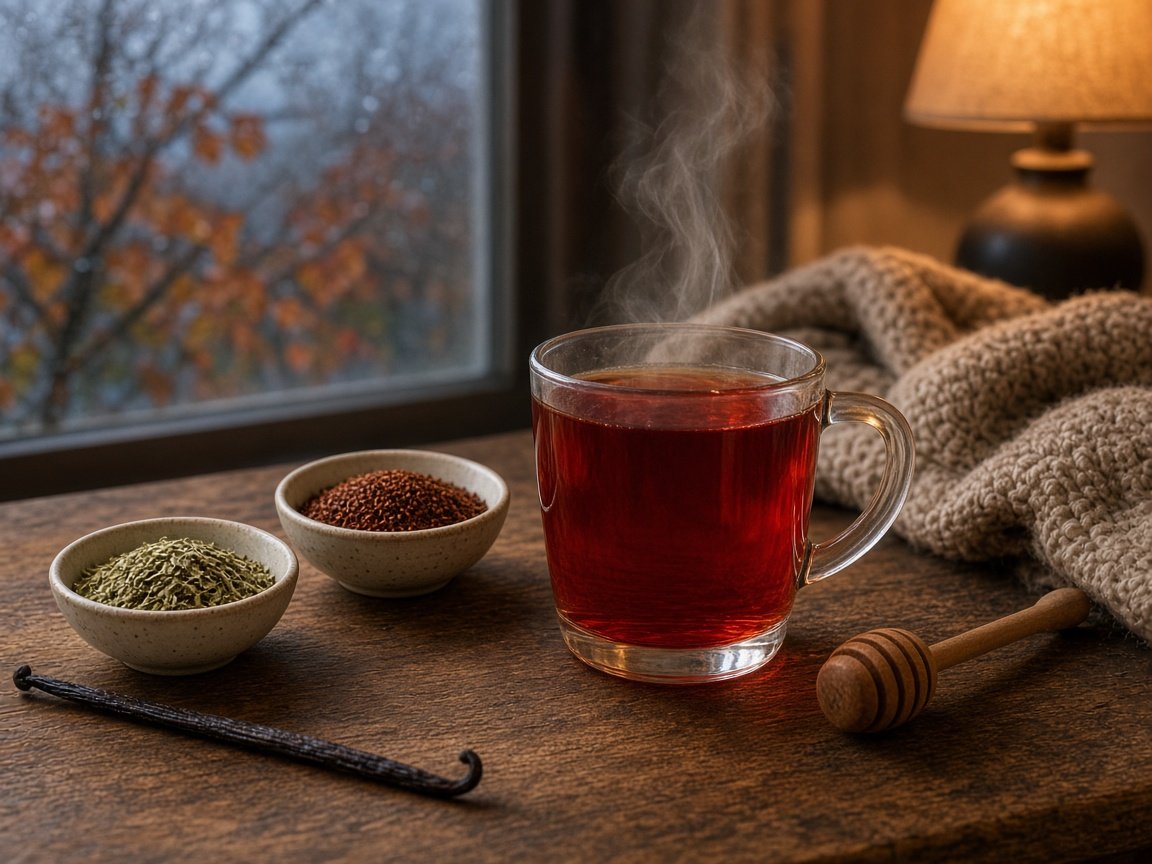
Most rooibos is the classic red, oxidized just as the Cederberg harvesters did it by hand, now with modern equipment. There's also green rooibos, which skips oxidation, a bit like green tea. Because it's more demanding to produce, green rooibos is less common. It brews a lighter, fresher cup with a malty, slightly grassy flavor.

Taste the story at Beantown Tea

Here's how to explore the red bush at home:

  • Vanilla Rooibos: top-grade rooibos with natural vanilla, smooth and dessert-like without any sugar. It's one of our five November Monthly Picks, 20% off through November 30.

  • Organic Rooibos: the classic. Naturally sweet, smooth and caffeine free, a lovely alternative to tea at any time of day.

  • Organic Green Rooibos: the unoxidized style, lighter and more delicate, with grassy notes that remind some people of a good sencha.

  • Summer Medley Green Rooibos: green rooibos in a bright, fruity blend.

  • Rooibos Chai (Caffeine Free): masala spices and vanilla with sweet rooibos, perfect for chilly evenings, with or without a splash of milk.

Brewing tip: rooibos is low in tannins, so it's very forgiving. Use about 1 teaspoon per 8 oz cup and freshly boiled water, and steep around 5 minutes, or longer if you like it bolder. It's delicious plain or with milk and honey, and it makes a wonderful iced tea too. Our tea brewing guide has more tips.

Glass mug of red rooibos tea with bowls of red and green rooibos, a vanilla bean and honey dipper on an autumn evening

So the next time you pour a cup of rooibos, think of the harvesters cutting wild bushes on the Cederberg slopes, Ginsberg and his barrels, and Dr. Nortier patiently coaxing a stubborn seed to sprout. That's a lot of history in one cozy, caffeine-free mug.

Sources

  • Van Wyk, B.-E. and Gorelik, B. (2017). "The history and ethnobotany of Cape herbal teas." South African Journal of Botany, 110: 18–38.
  • Gorelik, B. (2018). "Rooibos: an ethnographic perspective." South African Rooibos Council.
  • Green, L. (1949). In the Land of the Afternoon. Standard Press.
  • American Herbal Products Association, "Rooibos Trademark Abandoned."
  • Republic of South Africa, Department of Trade and Industry, Merchandise Marks Act final prohibition notice (September 6, 2013).
  • AFP via International Business Times (June 9, 2021), "S. Africa's rooibos tea joins champagne on EU protection list."
Host a Tea Tasting: Our Tasting Kits, Plus a Little Tea 101

What do you get when you put a few loose-leaf teas, a kettle and a table full of curious friends together? A tea tasting, and it's one of our favorite ways to spend an afternoon. Everyone looks, sniffs, sips and guesses, someone swears they taste popcorn, and by the end of the night your group knows a lot more about tea than when they walked in.

Our tea tasting kits make it easy to host one. Here's what's inside, how a tasting works, a little tea know-how to impress your guests, and how to pick the right kit for your group.

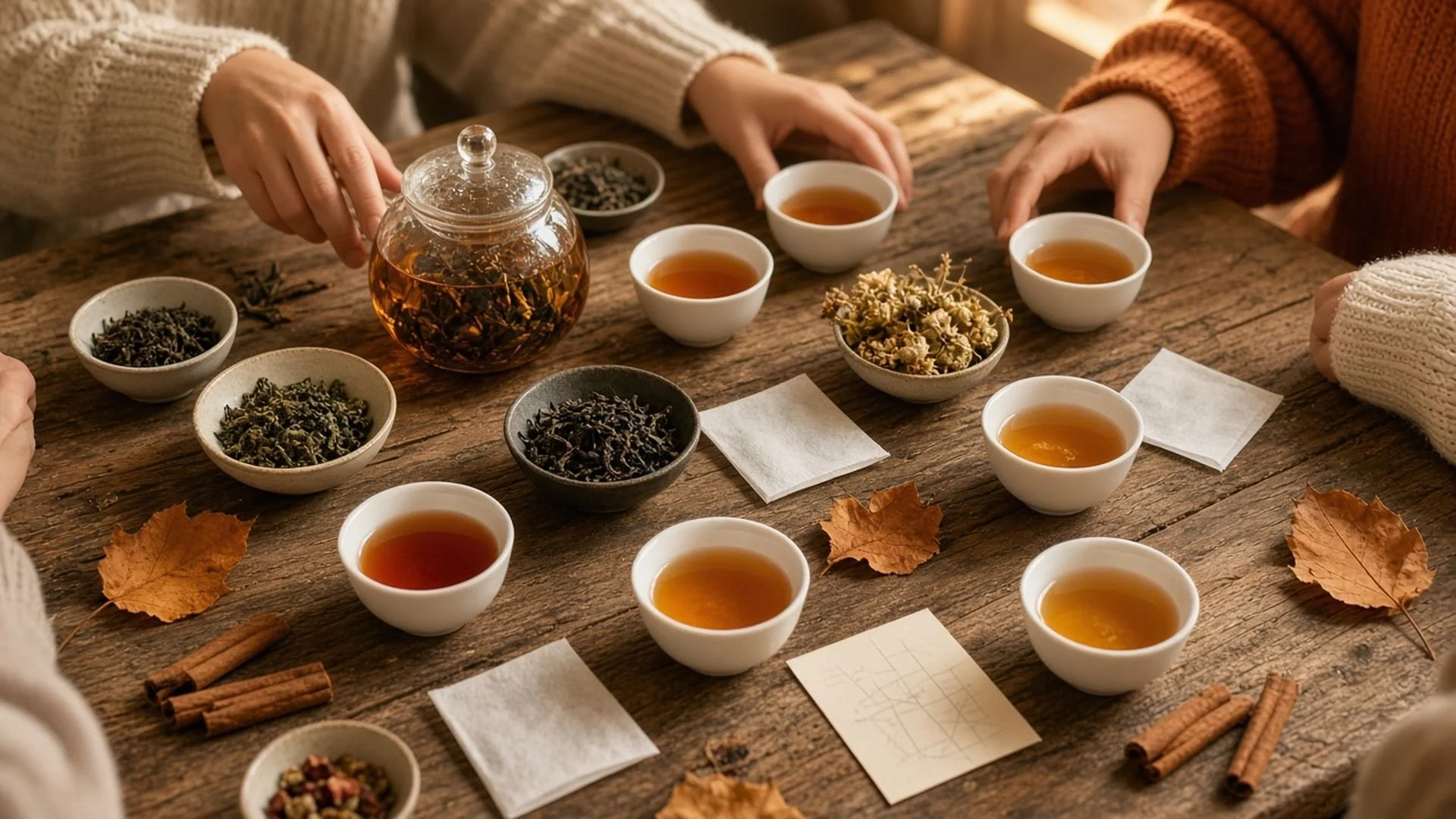
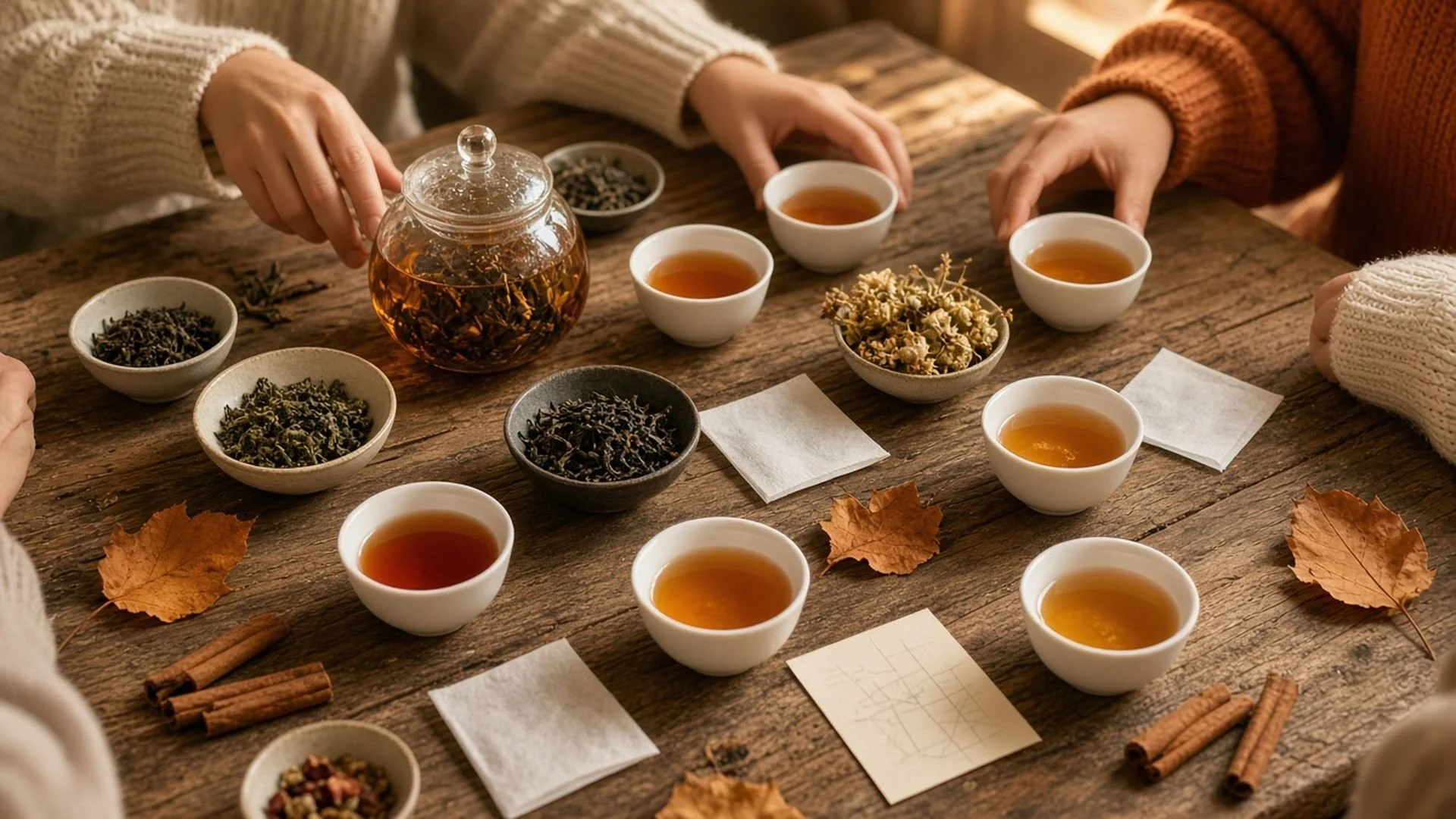
Friends reach for cups of amber tea on a wooden table with loose-leaf tea, a teapot and fall leaves

What Is a Tea Tasting Kit?

A tea tasting kit is a guided tasting in a box. Each kit is built around a theme, such as green teas, black teas or caffeine-free herbals, with the teas lined up in tasting order.

Every kit includes:

  • The main teas, in the order you'll taste them.

  • Assorted tea samples for guests to explore after the tasting.

  • Paper tea filters, so brewing loose leaf is mess-free.

  • A step-by-step tasting guide for the host.

You bring the kettle, the cups and the people. We take care of the tea.

How a Tasting Works

Think of it as a game, not a lecture. There are no wrong answers, only opinions, and everyone gets a vote.

Follow the Step-by-Step Guide

Each kit has its own online guide at beantowntea.com/tasting. Open it on a phone and it walks you through setup, brewing, the tasting order and the group vote. It shows the leaf amount and water temperature for each tea and has a built-in steeping timer.

Look, Smell, Sip, Talk

For each tea, guests look at the leaf and the cup, breathe in the aroma, take a sip and compare notes. Then everyone votes for a favorite before the Reveal shows which tea was which. Expect some friendly debate.

Tea 101: Green, Oolong, Black and Herbal

Here's a fun fact to open your tasting with: green, oolong and black teas all come from the same plant, Camellia sinensis. The big difference is what happens after the leaves are picked.

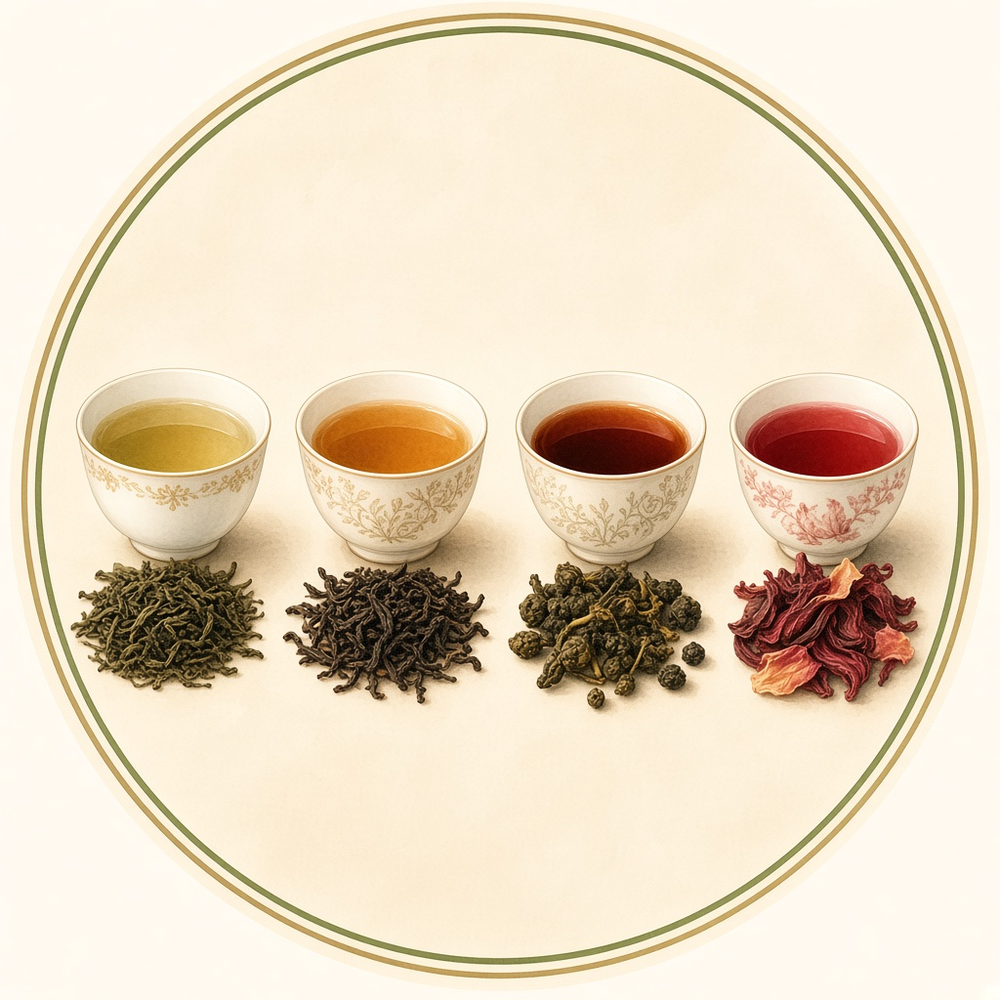
Watercolor of four tea cups, green, amber, dark and ruby red, each with its loose leaves below

Oxidation, in Plain English

Once tea leaves are picked and bruised, they react with the air and start to darken, a bit like a cut apple turning brown. Tea makers call this oxidation. How much they allow, and when they stop it with heat, shapes the color and flavor of the tea.

Green Tea: Fresh and Bright

Green tea is heated soon after picking, by steaming or pan-firing, to stop oxidation early. That keeps the leaves green and the flavor fresh. Steamed Japanese greens like Sencha tend to taste grassy and sweet. Pan-fired Chinese greens like Chun Mee lean nutty and a little toasty.

Oolong: Somewhere in Between

Oolong is partly oxidized, so it sits between green and black. Lightly oxidized oolongs can be floral and creamy, while darker ones turn toasty and rich. Our current kits focus on green, black and herbal teas, but if your group catches the bug, our oolong selection is a great next stop.

Black Tea: Bold and Full

Black tea is fully oxidized, which turns the leaves dark and gives the cup deeper color, more body and flavors that range from fruity to malty. Darjeeling can taste light and grape-like, while Assam is bold and malty.

Herbal Tea: A Different Plant Altogether

Herbal teas, sometimes called tisanes, aren't made from the tea plant at all. They're blends of herbs, flowers, fruit, spices or rooibos, so they're naturally caffeine-free and full of color and flavor, from tangy hibiscus to cool mint.

Why Tasting Order Matters

Every kit is arranged from lightest to boldest, and there's a good reason for that. Your palate works a bit like your ears: after a loud song, a quiet one is hard to hear.

Start with a bold, malty Assam and a delicate green tea afterward will taste like hot water. Start light and work up, and every tea gets its moment. That's why a black tea kit opens with a Darjeeling and saves the Assam for last.

Tip for hosts: set out plain water or a few plain crackers so guests can reset between cups.

What to Notice When You Taste

You don't need a fancy vocabulary. Just pay attention to these five things and say what you notice.

1. Aroma

Smell the dry leaf first, then the brewed cup. Much of what we call flavor is really smell. Is it floral, fruity, grassy, toasty, spicy or earthy?

2. Liquor Color

Tea people call the brewed tea the "liquor." Hold your cup up to the light. Green teas run pale yellow-green, black teas amber to deep copper, and hibiscus blends a bright ruby red.

3. Taste

Take a small sip and let it cover your tongue. Is it sweet, a little bitter, tangy or savory? Does it remind you of anything, like honey, toasted rice or citrus?

4. Mouthfeel

This is how the tea feels, not how it tastes. Is it light and silky or full and round? Does it leave a dry, puckery feeling, like a strong black tea can? That's called astringency.

5. Finish

What stays with you after you swallow? Some teas fade fast and clean, while others linger with a sweet or malty aftertaste. A long, pleasant finish is something tea lovers prize.

How Steep Time Changes Flavor

Here's an experiment that always gets a reaction. Brew the same tea for different lengths of time and taste the cups side by side.

Short Steeps: Light and Sweet

The aromas and sweeter flavors come out of the leaf first. A short steep gives you a lighter, softer cup.

Long Steeps: Bolder and Brisker

Given more time, the leaf releases more tannins. Those add body and briskness, and too much can make a cup bitter or drying. That's why delicate greens get cooler water and a shorter steep, and robust black teas can take boiling water and longer.

Try It With the Guide

The steeping timer in the tasting guide has quick-pick buttons, like 2, 3 and 5 minutes for many of the teas. Brew one cup at 2 minutes and another at 5, then compare. Guests are often surprised how different the same tea can taste.

Pick Your Tier: Kits for 5 to 30 People

We offer 10 themed kits in three tiers, sized by group.

Tier 1: For 5 to 10 People

Just right for a book club, a dinner party or a cozy afternoon tea with friends. Each Tier 1 kit has three main teas, with 4 oz of each.

Tier 2: For 10 to 20 People

Great for office get-togethers, hobby clubs and bigger tea parties. Each Tier 2 kit has four main teas, with 4 oz of each.

Tier 3: For 20 to 30 People

Made for classrooms, larger clubs and holiday gatherings. Each Tier 3 kit has six main teas, with 8 oz of each.

Meet the Kits

Tier 1 Kits

  • 1A Green Tea Tasting: Cherry Blossom Green Tea, Genmaicha and Chun Mee, from fragrant cherry and rose to nutty and full-bodied.

  • 1B Black Tea Tasting: Darjeeling Margaret's Hope, Earl Grey and Assam Hunwal, from light and fruity to bold and malty.

  • 1C Green & Black Tea Tasting: Cherry Blossom Green Tea, Darjeeling Margaret's Hope and Earl Grey, from fragrant and fruity to bright and citrusy.

Tier 2 Kits

  • 2A Green Tea Tasting: Cherry Blossom Green Tea, Genmaicha, Gunpowder and Chun Mee, from fragrant cherry and rose to toasty and full-bodied.

  • 2B Black Tea Tasting: Darjeeling Margaret's Hope, Earl Grey, Keemun Mao Feng and Assam Hunwal, from light and fruity to bold and malty.

  • 2C Classic & Herbal Tasting: Sencha, Darjeeling Margaret's Hope and Assam Hunwal, finishing with Red Orange, a tangy, caffeine-free blend of orange peel and hibiscus.

Tier 3 Kits

  • 3A Green Tea Tasting: Six greens from Japan and China: Sencha, Jasmine Dragon Pearls, Cherry Blossom Green Tea, Genmaicha, Gunpowder and Chun Mee. Steamed, jasmine-scented, flavored, rice-toasted and pan-fired, all in one tasting.

  • 3B Black Tea Tasting: Darjeeling Margaret's Hope, Earl Grey, Keemun Mao Feng, Golden Monkey, Monk's Blend (vanilla and grenadine) and Assam Behora, from light and bright to bold and malty.

  • 3C Green & Black Tea Tasting: Jasmine Dragon Pearls, Sencha, Moroccan Mint, Darjeeling Margaret's Hope, Earl Grey and Golden Monkey, from fresh and floral to rich and full-bodied.

  • 3D Herbal & Caffeine-Free Tasting: Lemon Mint, Sleep Well (chamomile and garden herbs), Summer Medley Green Rooibos, Red Orange, Very Berry and a warming Indian Chai Spice Mix to finish. A great pick when you want everyone to join in.

If a Tea Is Out of Stock

Our teas are real loose-leaf teas, and once in a while one runs out. If a tea is out of stock, we'll swap in one with a similar taste profile, so your tasting keeps the same character from start to finish.

Great Occasions for a Tea Tasting

  • Book clubs and hobby clubs

  • Office break rooms and team get-togethers

  • Tea parties, birthday parties and game nights

  • Classrooms and student groups

  • Fall gatherings and holiday get-togethers

  • A host or hostess gift for a tea lover

With crisp air outside and a kettle on inside, autumn is an especially cozy time to gather around a few steaming cups.

Ready to Host Your Own Tea Tasting?

As tea enthusiasts, we have been sharing quality tea at affordable prices since 2006, and a tasting is our favorite way to share it. Pick a theme, gather your people and let the sniffing, sipping and friendly debate begin.

Choose your tea tasting kit

Happy sipping!

Wayne

Does Tea Count Toward Your Daily Fluids? What Hydration Research Says

You've probably heard it: "Tea doesn't count toward your water for the day, because the caffeine dries you out." It's one of the most repeated bits of tea advice out there. But is it true?

Researchers have tested this in controlled studies, and the answer is reassuring for tea lovers. Here's what they found, how much caffeine is involved, and where the evidence has gaps. With the heat on indoors, cooler days make it easy to forget to drink, so it's a good week to look at what's in your mug.


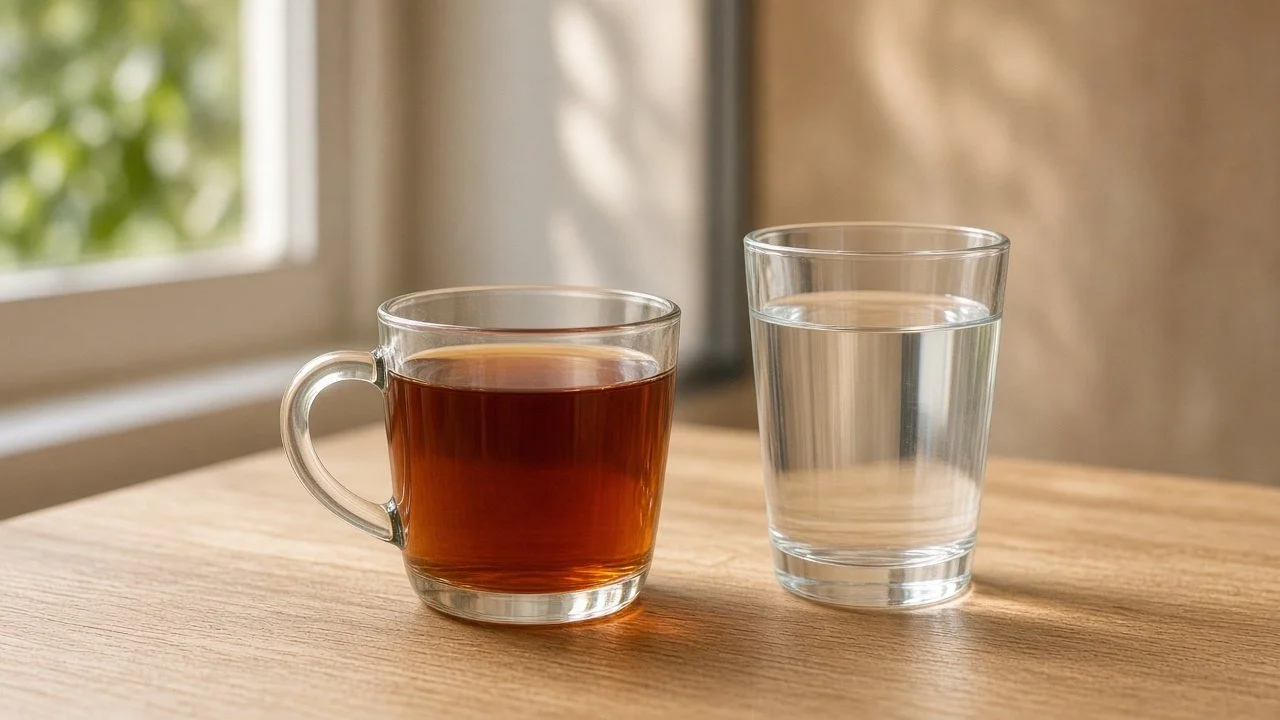
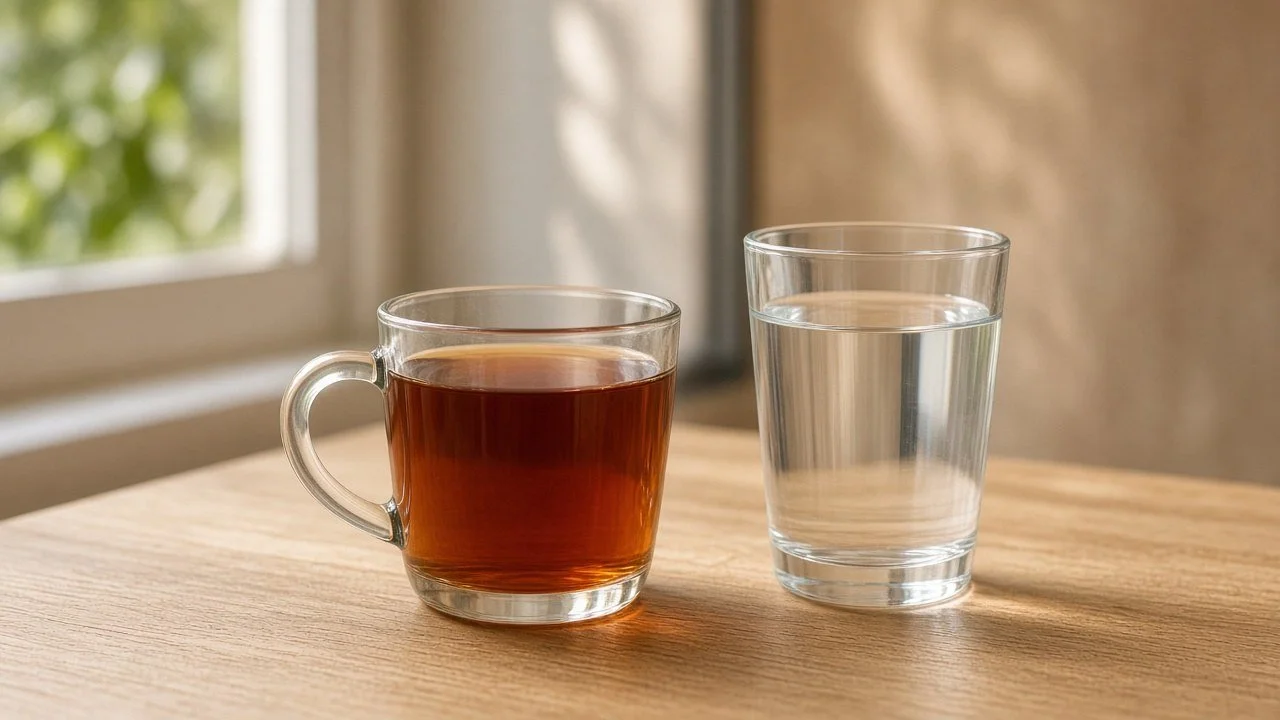
A glass mug of hot black tea next to a clear glass of water on a sunny wooden table

Where the "Tea Dehydrates You" Idea Comes From

The myth has a grain of truth. Caffeine has a mild diuretic effect, meaning it can make your kidneys produce a bit more urine. The real question is whether that outweighs all the water in the cup, and brewed tea is almost entirely water.

A 2004 report from the U.S. National Academies said about 80 percent of the water people take in comes from drinking water and beverages, "including caffeinated beverages," with the rest coming from food. It added that most healthy people meet their needs by letting thirst guide them. Mayo Clinic's current guidance agrees: tea, coffee and milk help keep you hydrated and count toward your daily fluids.

What the Research Says

1. Black tea vs. water, cup for cup

Journal: British Journal of Nutrition, 2011 (randomized controlled crossover trial)

UK researchers had 21 healthy men spend four separate 12-hour days in a lab. On different days they drank four or six mugs (240 ml each) of black tea with a splash of milk, or the same amounts of boiled water. Four mugs provided 168 mg of caffeine; six provided 252 mg. Food was controlled and the men stayed at rest. Across a long list of blood and urine hydration markers, including 24-hour urine volume, there were no significant differences between tea and water. The authors concluded that black tea, in these amounts, hydrated much like water.

Limits: A small study of men only. Participants weren't blinded, and drinks after the lab session weren't controlled. It was funded by the Tea Advisory Panel, which is supported by the UK Tea Council, the trade association for the UK tea industry.

Read the study

2. Ranking 13 drinks with a "Beverage Hydration Index"

Journal: American Journal of Clinical Nutrition, 2016 (randomized trial)

Scientists at three UK universities had 72 men drink 1 liter of water or one of several common drinks over 30 minutes, then collected their urine for four hours. Hot and iced black tea were tested alongside coffee, cola, juice, milk and others; the tea had 179 mg of caffeine per liter. Urine output after hot or iced tea was no different from water. Milk and an oral rehydration solution were retained a bit longer than water, likely thanks to their electrolytes. The authors saw no measurable effect of moderate caffeine (96 to 212 mg) on fluid balance.

Limits: Men only, over just four hours. Downing a liter of hot tea in 30 minutes isn't how anyone sips tea, and six volunteers dropped out because drinking that much hot tea so quickly made them sick. The study was funded by the European Hydration Institute, and the lead author chaired that institute's scientific advisory board.

Read the study

3. A look at coffee, tea's stronger cousin

Journal: PLoS One, 2014 (counterbalanced crossover study)

Coffee has the same "dehydrating" reputation, so it's useful context. University of Birmingham researchers had 50 male coffee drinkers spend three days drinking four 200 ml cups of coffee a day, and three days drinking the same amount of water. Total body water, blood markers and 24-hour urine volume showed no significant differences between the two.

Limits: Participants were men who already drank 3 to 6 cups a day, so results may not apply to people who rarely have caffeine. One author was employed by PepsiCo at the time of publication.

Read the study

4. The review that put caffeine dose in context

Journal: Journal of Human Nutrition and Dietetics, 2003 (literature review)

This review pulled together decades of caffeine research. A short-term rise in urine output showed up mainly with large doses, at least 250 to 300 mg at once (about 2 to 3 cups of coffee or 5 to 8 cups of tea), and mostly in people who had gone without caffeine for days or weeks. Regular drinkers build a strong tolerance, and standard servings of tea and coffee appeared to have no diuretic effect.

Limits: A narrative review, not a new experiment, covering studies only through early 2002.

Read the study


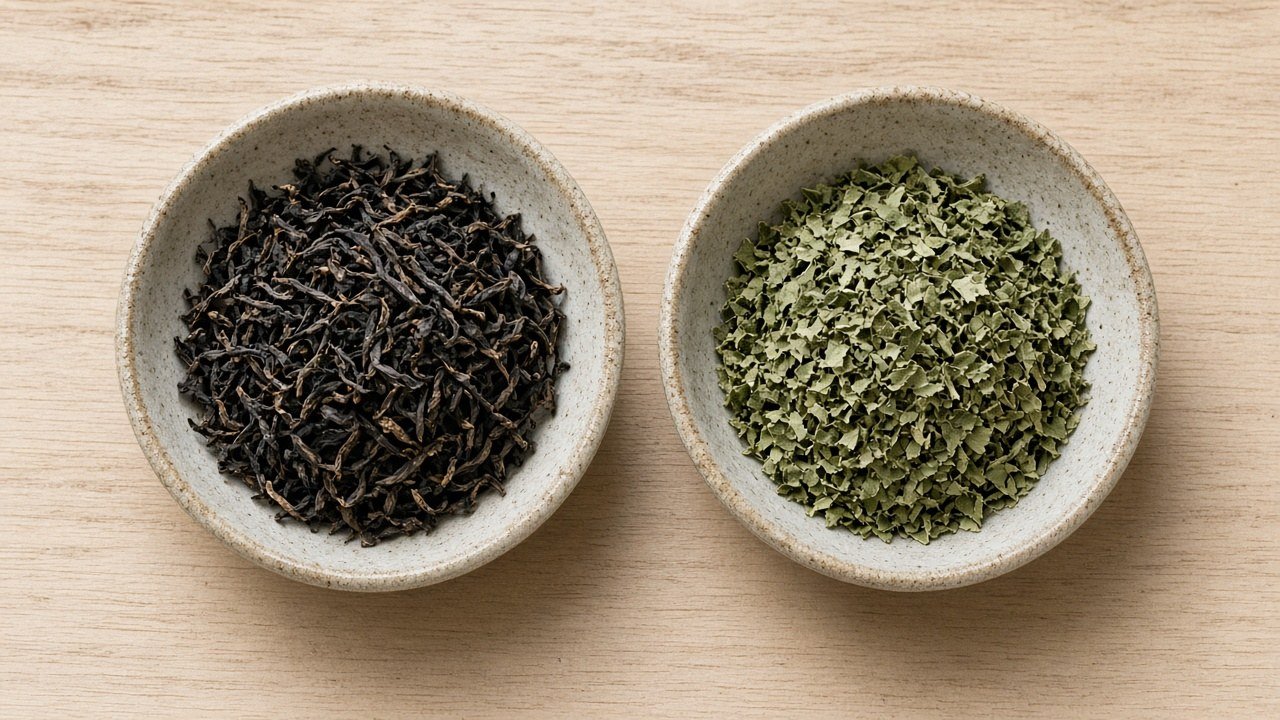
Small ceramic dishes of loose-leaf black tea and dried peppermint leaves side by side on a light wooden surface.

How Much Caffeine Is in Your Cup?

Caffeine varies with the tea and steep time, so treat these Mayo Clinic figures for an 8 oz cup as rough guides:

  • Brewed coffee: 96 mg

  • Brewed black tea: 48 mg

  • Brewed green tea: 29 mg

  • Brewed decaf black tea: 2 mg

  • Herbal teas like peppermint, rooibos and fruit blends: naturally caffeine free

By those numbers, 250 to 300 mg is roughly five or six cups of black tea at once, far more than most people drink in one sitting. The FDA cites 400 mg a day as an amount not generally linked with negative effects for most adults, but sensitivity varies a lot from person to person. (Tea's other well-known compound, L-theanine, was the subject of an earlier post.)

What About Herbal Teas?

Herbal teas like peppermint, rooibos and fruit blends are brewed like tea but contain no caffeine, so the diuretic question doesn't really come up. They count toward your fluids like any unsweetened drink, and they're an easy warm cup for evenings. Just go easy on the honey or sugar.


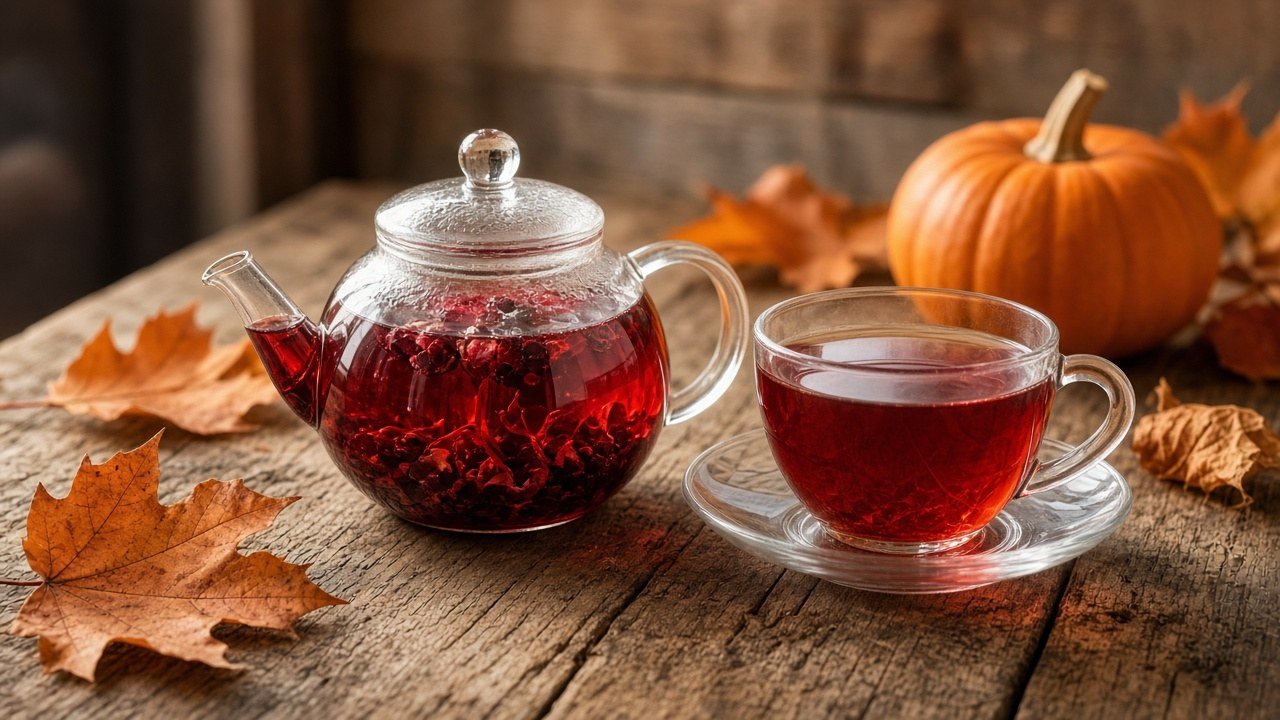
A glass teapot of ruby-red caffeine-free berry herbal tea with a filled cup, a few autumn leaves and a small pumpkin on a wooden table.

The Bottom Line

  • Tea counts. Research suggests that moderate amounts of black tea hydrate about as well as water in healthy adults.

  • Dose matters. Caffeine's small diuretic effect shows up mainly at large single doses (250 to 300 mg or more) and fades in regular drinkers.

  • Herbal teas are an easy add. Caffeine-free blends count as fluids and work well later in the day.

  • The evidence has gaps. Key studies are small, in men, and partly industry-funded.

Easy Ways to Sip More This Week

  • Brew a full pot instead of a single cup, and refill through the day.

  • Switch to a caffeine-free herbal tea in the afternoon and evening.

  • Make a pitcher of iced herbal tea and keep it in the fridge.

  • Let thirst be your guide, and drink more when you're active or sweating.

Teas to Try This Week

A few of our teas to keep your mug full, with tips from each product page:

  • English Breakfast: a full-bodied blend of Ceylon, Kenya and India black teas that takes milk very well. Use 1 rounded teaspoon (about 2 to 3 g) per 8 oz of freshly boiled water (205 to 212°F) and steep 3 to 5 minutes.

  • Irish Breakfast: a strong, malty Assam and Kenya blend, best with milk. Use 1 rounded teaspoon (about 2 to 3 g) per 8 oz of freshly boiled water (205 to 212°F) and steep 3 to 5 minutes.

  • Peppermint: cool, clean and naturally caffeine free. Use 1 to 2 teaspoons per 8 oz of freshly boiled water (212°F) and steep 5 to 7 minutes. For iced peppermint, brew it double strength and pour over ice.

  • Organic Rooibos: naturally sweet, smooth and caffeine free, a popular evening drink. Use 1 to 2 teaspoons per 8 oz of freshly boiled water (212°F) and steep 5 to 7 minutes.

  • Very Berry: a bright, tart fruit blend of rose hips, hibiscus, cranberries and blueberries, naturally caffeine free with no added sugar. Use 2 teaspoons per cup of freshly boiled water and steep 5 to 10 minutes.

This post is for general information only and is not medical advice. If you have a medical condition (for example, one that limits how much fluid you should drink), are pregnant or breastfeeding, take medication, or are sensitive to caffeine, please talk with your health care provider about what's right for you.

Caffeine-Free Teas for Cozy Fall Nights (and Halloween, Too)

Fall evenings are made for a warm mug. The sun sets earlier, the porch lights come on, and on Halloween night there's a long stretch of doorbells, costumes and candy before anyone heads to bed. The trouble is that a strong cup of black tea at 8 p.m. can keep some of us staring at the ceiling.

The good news is you don't have to give up your evening cup. Here's a simple guide to tea without the caffeine, plus five of our favorite cozy picks for fall nights.

A steaming glass mug of rooibos tea beside a glowing jack-o'-lantern and autumn leaves

Caffeine-Free vs. Decaf: What's the Difference?

These two words get mixed up a lot, but they mean different things.

  • Caffeine-free drinks are made from plants other than the tea plant, like rooibos, chamomile, peppermint, spices or dried fruit. They never had caffeine to begin with. These are often called herbal teas or tisanes.

  • Decaf tea is real tea (black, green or oolong) that has had most of its caffeine removed. A small amount usually stays behind, so it's very low in caffeine, not zero.

If you want no caffeine at all, or you're brewing for kids, reach for a caffeine-free blend. If you love the taste of real black tea and just want a lot less caffeine, decaf is your friend.

What Is Rooibos?

Rooibos (say "ROY-boss") means "red bush." It grows in the Cederberg mountains of South Africa's Western Cape and isn't related to the tea plant at all. After it's cut, the leaves are bruised and left to ferment, which gives rooibos its sweet aroma, its red color and its smooth, honey-like taste. It's naturally caffeine free, so it makes a great base for evening blends, and it takes milk beautifully.

Five Cozy Caffeine-Free (and Low-Caffeine) Picks for Fall

1. Rooibos Chai: All the Spice, None of the Caffeine

Love chai but not the late-night buzz? Rooibos Chai blends rooibos with ginger, cinnamon, cloves, cardamom, orange and natural vanilla flavor. Like all chai, it really opens up with warm milk (whole or soy both work well). Serve it with gingersnaps or a slice of pumpkin bread.

How to brew: Turn the bag upside down a few times first so the spices mix evenly. Use 1 heaping teaspoon per 8 oz. of boiling water (212°F) and steep 5–7 minutes. Add warm milk and a little sweetener to taste.


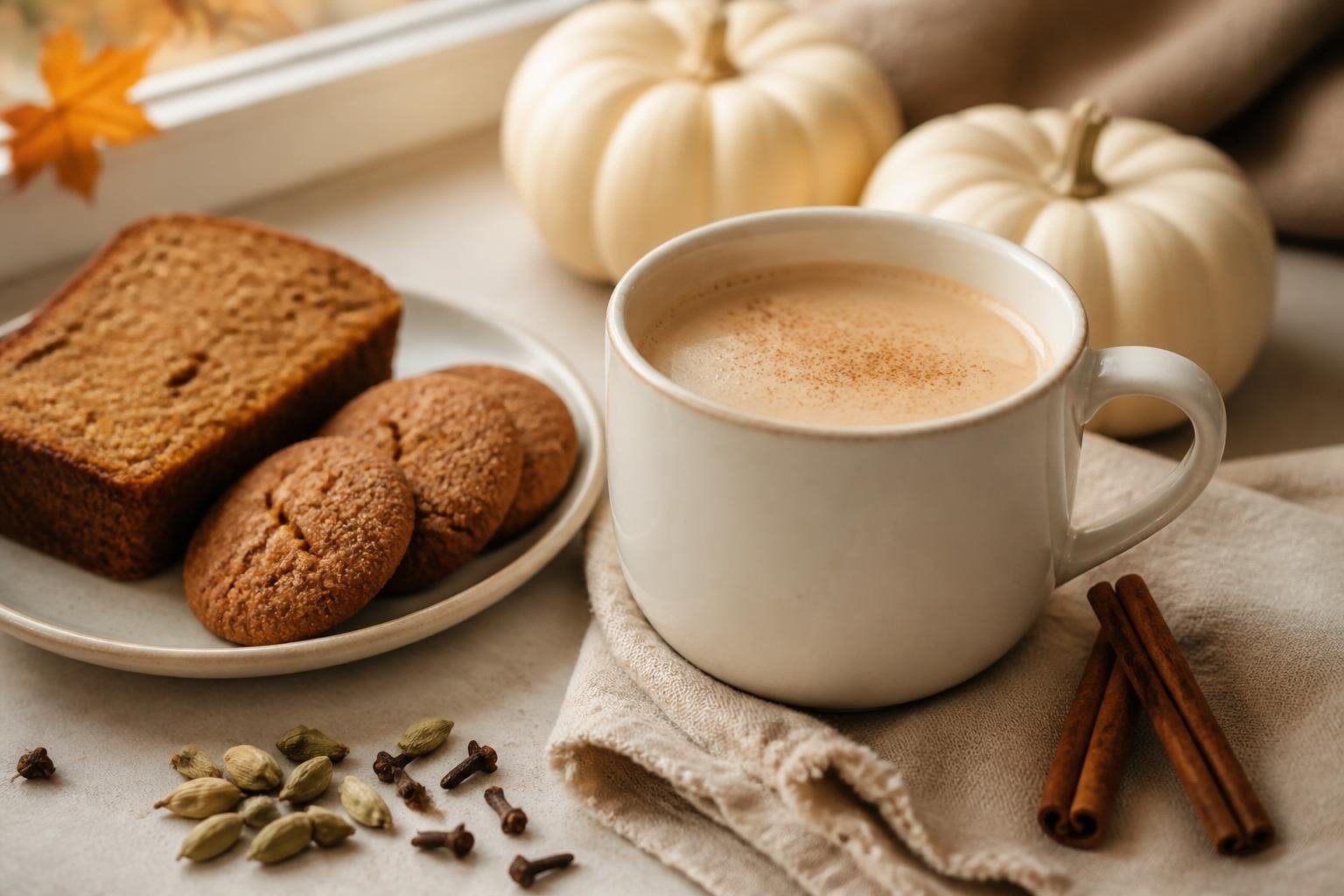
A creamy rooibos chai latte with gingersnaps, pumpkin bread and whole spices

2. Vanilla Rooibos: Dessert in a Mug

Vanilla Rooibos is top-grade rooibos with natural vanilla. It's smooth, mellow and creamy, and it's naturally sweet, so many people drink it without any sugar. Add a splash of milk for an evening treat, and pair it with vanilla cookies or a fruit tart.

How to brew: Use 1–2 teaspoons per 8 oz. of freshly boiled water (212°F) and steep 5–7 minutes.

3. Apricot Cinnamon: A Warm Fruit Blend for Pie Season

Apricot Cinnamon is a blend of cinnamon chips, diced apricot pieces and whole marigold petals. It's warm, sweet and a little floral, and it was made to go with dessert. Try it next to apple pie or oatmeal cookies. Leftovers make a nice iced tea the next day.

How to brew: Use 1–2 teaspoons per 8 oz. of freshly boiled water (212°F) and steep 5–7 minutes.

4. Sleep Well: For After the Trick-or-Treaters Go Home

When the porch light is off and the candy is put away, wind down with Sleep Well. It's our own blend of chamomile, peppermint, lemongrass and green rooibos. It tastes soft and floral, with a little mint and a gentle lemony lift. A few drops of honey are optional.

How to brew: Use 1–2 teaspoons per 8 oz. of freshly boiled water (212°F) and steep 5–7 minutes.


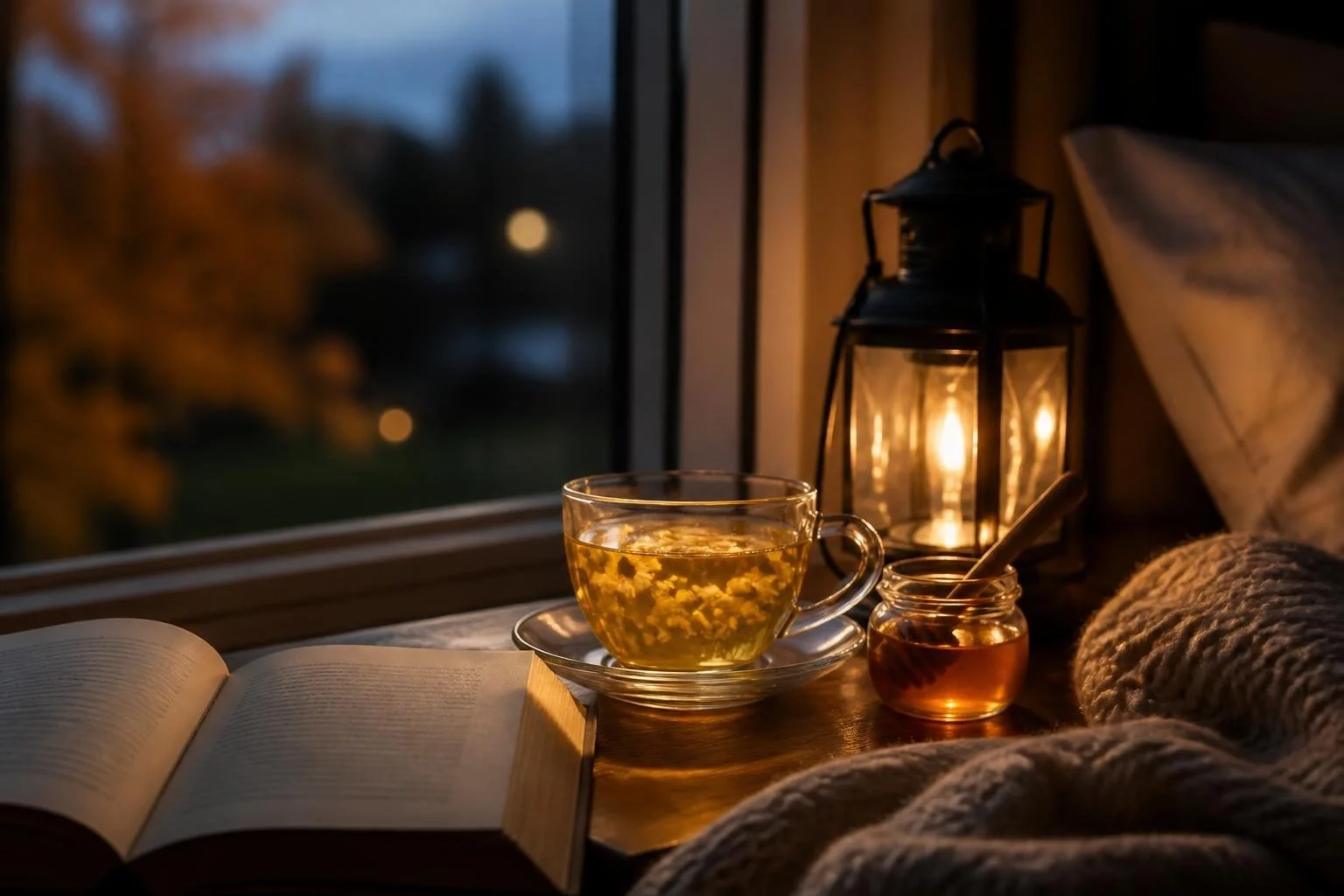
A cup of chamomile herbal tea with honey and a book by a lantern on an autumn night

5. Decaf Cream Earl Grey: For Real-Tea Lovers

If nothing beats the taste of black tea for you, try Decaf Cream Earl Grey. It's the same creamy, citrusy Ceylon black tea with bergamot and vanilla notes as our regular Cream Earl Grey, decaffeinated with a natural CO2 process. That process uses pressurized carbon dioxide to draw the caffeine out while the leaves keep their shape and flavor. Enjoy it with shortbread or lemon pound cake.

How to brew: Use 1 rounded teaspoon (about 2–3 g) per 8 oz. of freshly boiled water (205–212°F) and steep 3–5 minutes.

Quick Tips for Brewing Herbal Tea

  • Use boiling water. Unlike green tea, rooibos and herbal blends like water right off the boil.

  • Give it time. Most herbal blends need 5–7 minutes to bring out their full flavor. Rooibos doesn't turn bitter easily, so a longer steep is fine.

  • Go a little heavier. Fluffy blends with flowers and fruit pieces often need closer to 2 teaspoons per cup.

  • Skip the infuser hunt. Our fill-your-own Paper Filters make loose-leaf brewing quick, and cleanup is as easy as tossing the filter. You can find more brewing tools in our tea accessories.

Try Before You Stock Up

Every tea above comes in a sample size (about 5 cups) as well as larger bags, so it's easy to try a few and find your favorite fall nightcap. Browse our full Herbal & Fruit Tea collection and our Chai collection for even more ideas.

As tea enthusiasts, we have been sharing quality tea at affordable prices since 2006. Whatever you're doing this Halloween, we hope it ends with a warm mug and a good night's sleep.

Happy steeping!

Which Tea Goes With Your Halloween Candy?

Halloween candy is glorious, and a little overwhelming. After a night of chocolate bars, caramel chews, and whatever glow-in-the-dark mystery piece ended up in the bowl, a good cup of tea does more than warm your hands. It resets the palate, cuts the sweetness, and turns the candy pile into an actual tasting night instead of a sugar fog.

Here is how we pair our loose-leaf teas with common Halloween treats. No fancy equipment. Just a kettle, a mug, and whatever made it home in the bag.

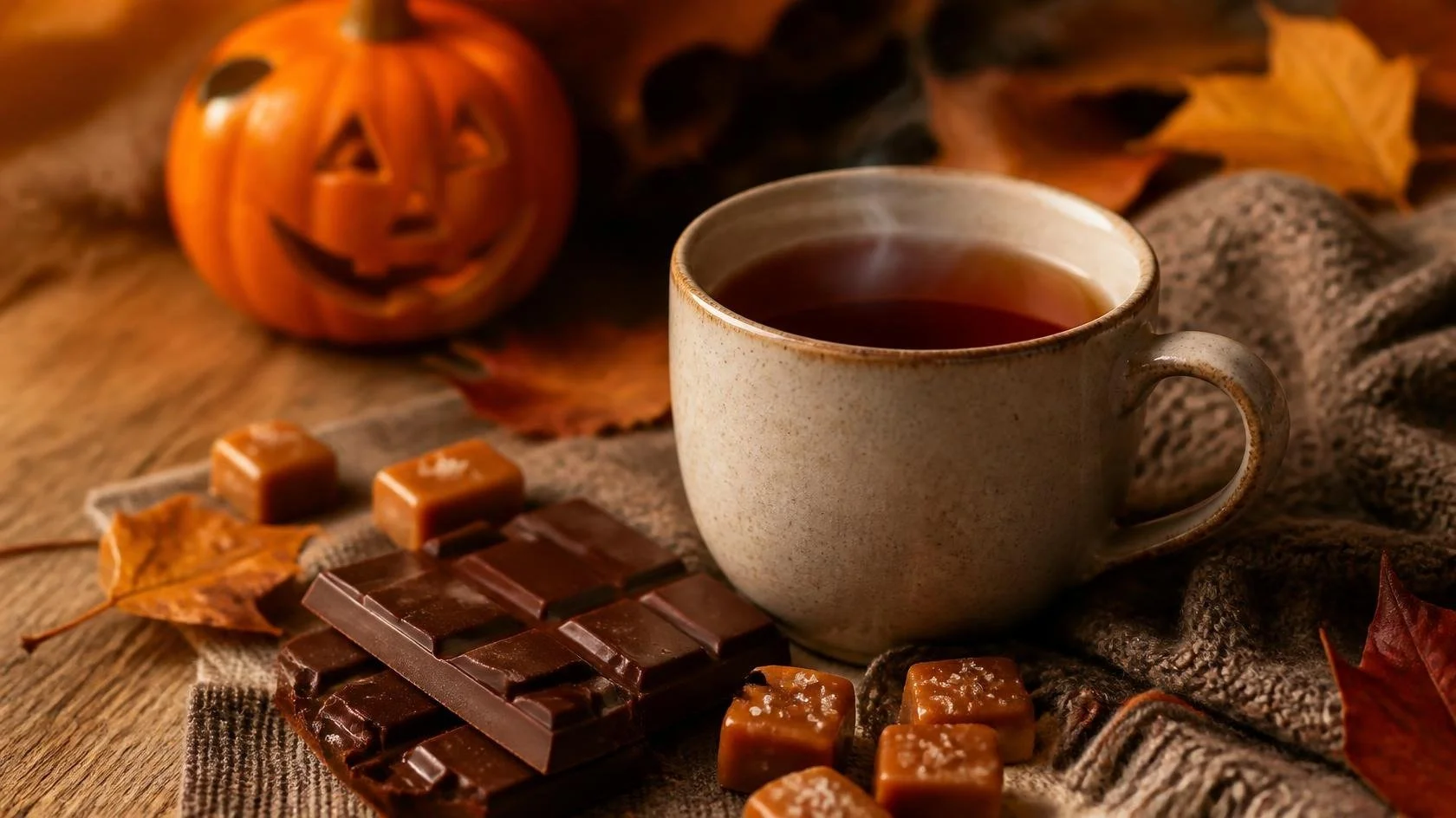
Mug of tea with Halloween chocolate and caramel

Chocolate bars and Cream Earl Grey

Milk chocolate and dark chocolate both love bergamot. Our Cream Earl Grey is Ceylon black tea with classic bergamot, rounded out by vanilla and a soft cream note, plus those blue cornflower petals. The citrus lifts the cocoa, and the vanilla echoes the sweetness without fighting it.

Brew it strong enough to stand up to the chocolate: 1 teaspoon per 8 oz of freshly boiled water, steeped 3–5 minutes. Sip between bites of a plain chocolate bar or a peanut-butter cup. Samples are available if you want to try it before you stock up.

Caramel, toffee, and Pumpkin Spiced Tea

Anything sticky and caramel-forward belongs with spice. Pumpkin Spiced Tea is premium Ceylon black tea blended with cinnamon, ginger, cloves, cardamom, marigold flowers, and natural pumpkin flavor. It tastes like October in a mug, and it handles candy corn, soft caramels, and toffee without tasting fake.

Use 1 heaping teaspoon per cup, boiling water, 3–5 minutes. Add a splash of milk if the candy was especially rich. Bags are available.

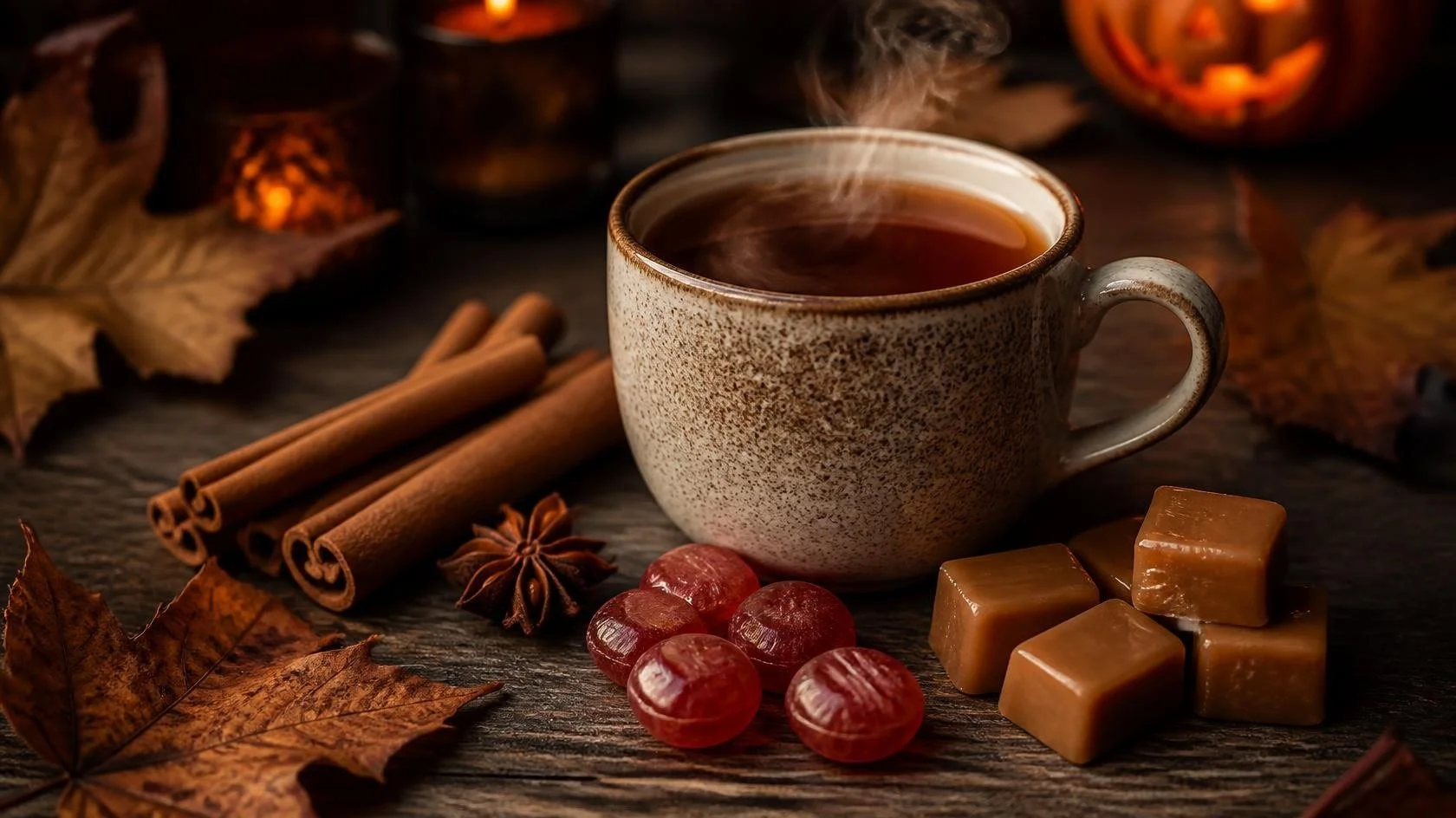
Spiced chai with cinnamon candies

Spicy cinnamon candy and Masala Chai

Hot cinnamon fireballs and red cinnamon chews need a partner that already speaks spice. Masala Chai is a full-bodied black tea with South Indian masala spices: ginger, cardamom, coriander, cinnamon, cloves, and black pepper. The ginger-cardamom finish matches that candy heat instead of getting steamrolled by it.

Turn the bag upside down a few times first (the powdered spices settle). Use 1 heaping teaspoon per cup, steep 5–10 minutes, then add warm milk and a touch of sugar. Samples are available.

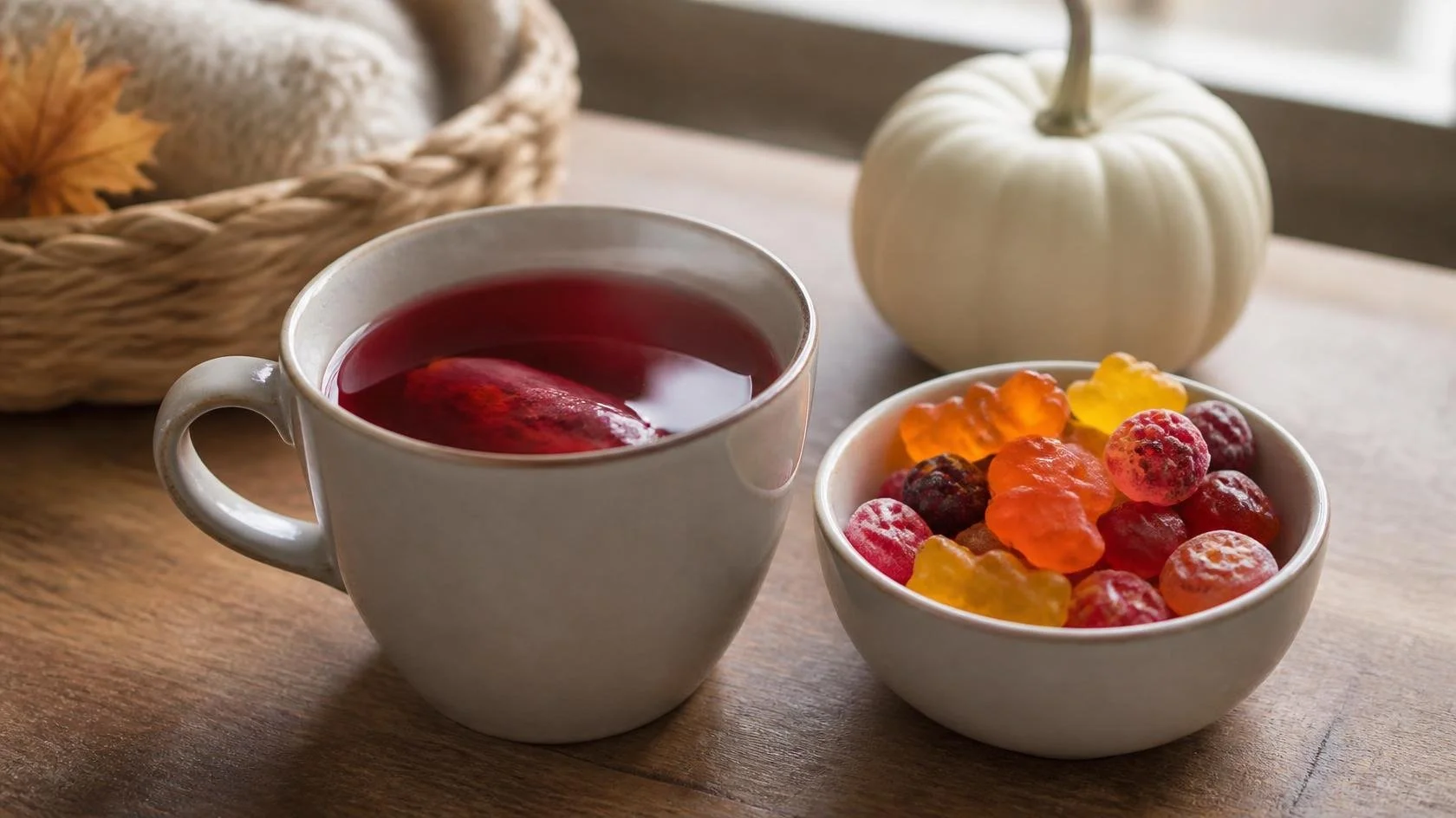
Berry tea with fruit candies

Fruity chews and Very Berry

Gummy bears, fruit snacks, and berry hard candies can taste thin next to black tea. Reach for Very Berry instead: rose hips, hibiscus, cranberries, blueberries, and natural forest-berry flavor. It is naturally caffeine-free, with no added sugar, and it brews into a deep red cup that tastes like fruit punch.

Use 2 teaspoons per cup, boiling water, steep 5–10 minutes. Kids can join this round. Samples are available, and it makes a great iced pitcher if you are hosting.

After the sugar rush: Sleep Well

When the porch light is off and the leftover candy is in a sealed container (yes, hide it from yourself), wind down with Sleep Well. It is our own caffeine-free blend of chamomile, peppermint, lemongrass, and green rooibos. Soft, floral, lightly minty, with a gentle lemon lift.

Use 1–2 teaspoons per 8 oz of boiling water, steep 5–7 minutes. A drop of honey is optional. Samples are available.

A few pairing tips that always help

  • Brew a little stronger than usual when you are eating sweet candy. Sugar softens the tea.

  • Alternate sip and bite. Let the tea clear the palate before the next piece.

  • Keep caffeine earlier in the evening if the kids (or you) still need to sleep.

  • Store opened candy airtight, and keep tea in an airtight tin away from light, air, moisture, and heat so both stay tasting like themselves.

Quality loose leaf at everyday prices has been our approach since 2006, from our Tea Zone days in Boston to our shop in Somerville. Whether your bowl is mostly chocolate or mostly mystery fruit, there is a cup that makes the haul more fun.

Happy Halloween, and happy steeping from all of us at Beantown Tea & Spices.