
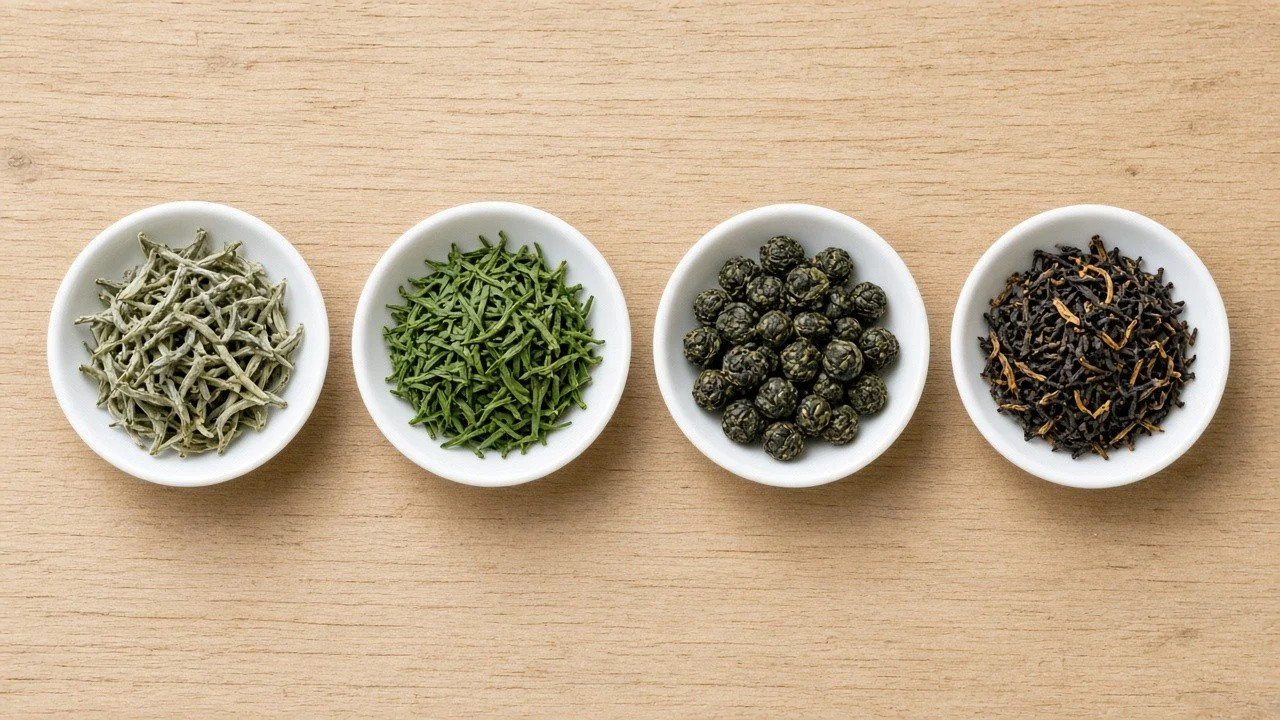
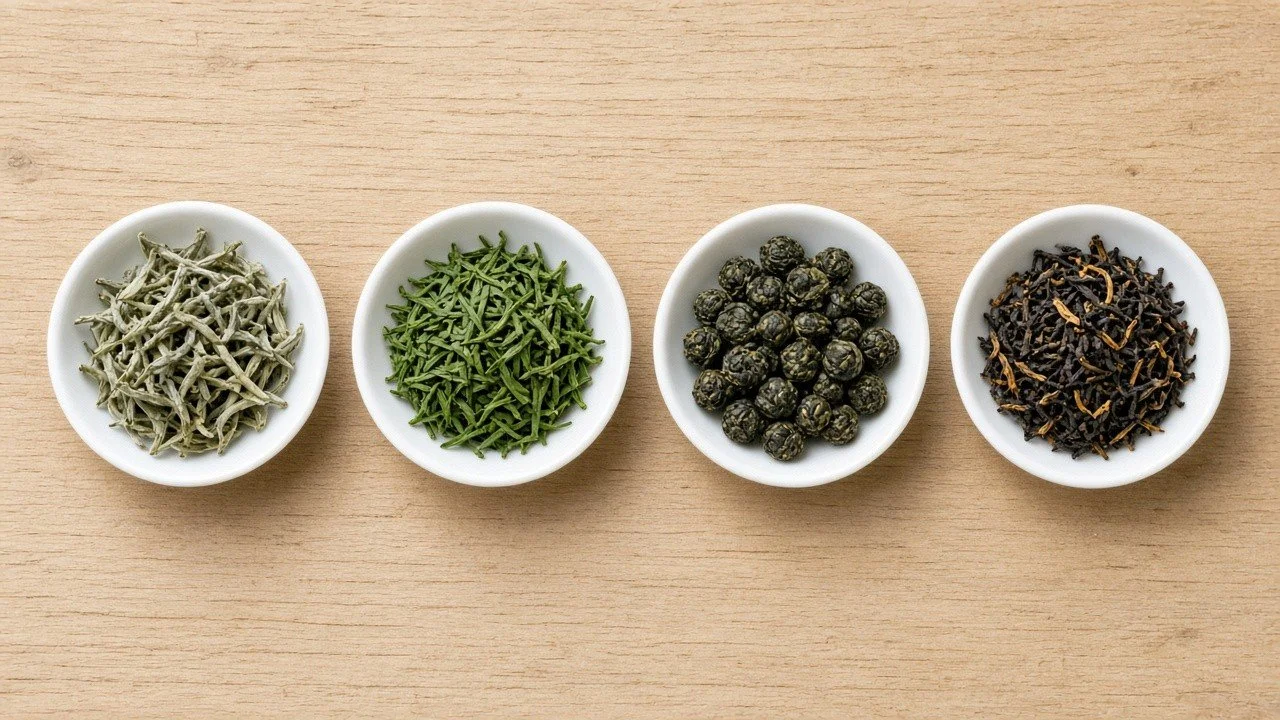
Here's a fact that surprises a lot of tea drinkers: white, green, oolong, and black tea all come from the very same plant. The difference between a pale, honeyed cup of white tea and a bold, malty black tea isn't the plant. It's what happens to the leaves after they're picked.
Let's walk through the four main kinds of tea, what makes each one unique, and how to brew them so they taste their best.
One Plant: Camellia sinensis
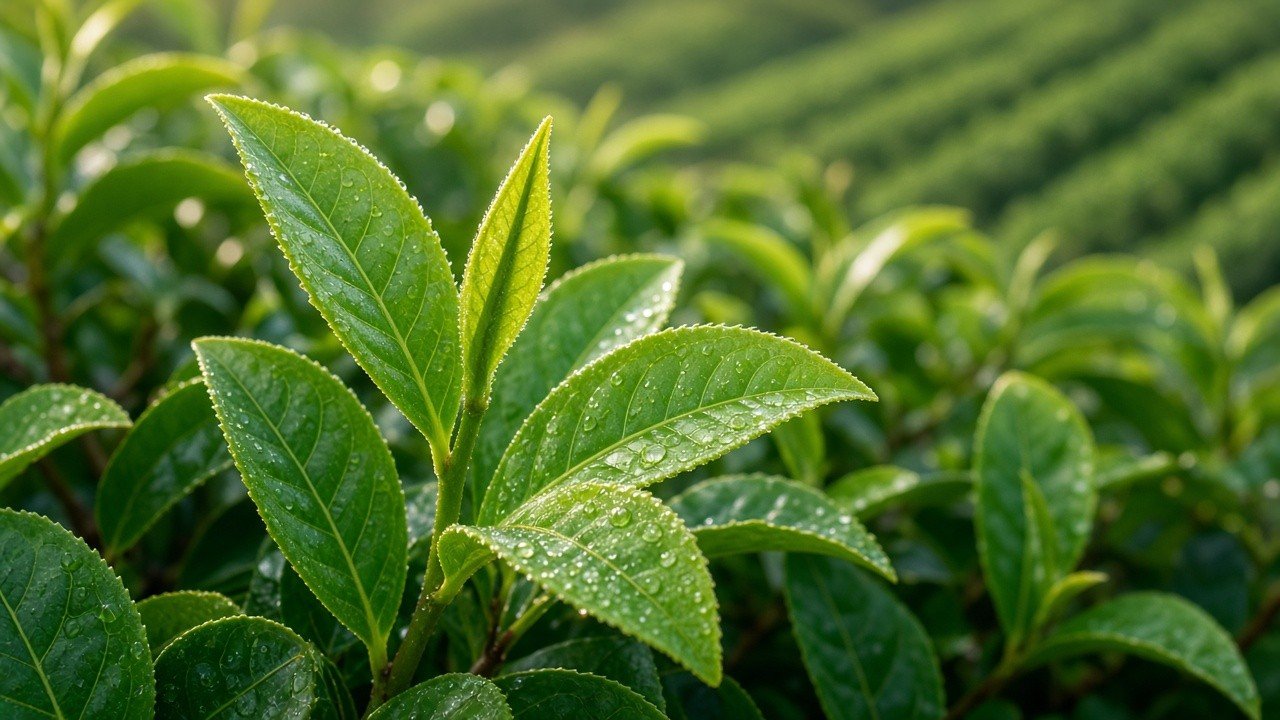
True tea comes from Camellia sinensis, an evergreen shrub grown in places like China, Japan, Taiwan, India, and Sri Lanka. Climate, soil, and altitude all shape the flavor, but the biggest factor is processing, and especially oxidation.
Oxidation is the same natural browning you see when a sliced apple sits out. Once a tea leaf is bruised or rolled, it starts to darken and its flavor changes from fresh and grassy toward fruity, malty, and rich. Tea makers decide how far to let that go, and that choice gives us the four main kinds of tea.
(Herbal "teas" like rooibos and peppermint are a different story. They're made from other plants, which is why they're naturally caffeine-free.)
White Tea: The Least Handled
White tea is the simplest of all. Young leaves and buds are picked and gently withered and dried, with very little rolling or shaping. The result is a soft, delicate cup with notes of honey, melon, or hay.
Try White Peony for a velvety, gently fruity cup, or Silver Needle, made only from downy buds. Brew white tea with 1 to 2 teaspoons of leaves in water at 170–185°F for 3 to 5 minutes.
Green Tea: Fresh and Bright
Green tea is heated soon after picking to stop oxidation, so the leaves stay green and the flavor stays fresh. Japanese green teas are usually steamed, which gives them a grassy, ocean-like sweetness. Chinese green teas are usually pan-fired, which gives them a toastier, nuttier edge.
For a Japanese style, try Sencha. For a classic Chinese green, try Dragonwell, with its flat, glossy leaves. Green tea likes cooler water: about 160–175°F for Sencha (1 to 2 minutes) and 160–180°F for Dragonwell (2 to 3 minutes). Boiling water can make green tea taste bitter.
Oolong Tea: The In-Between
Oolong sits between green and black. The leaves are tossed or rolled to bruise their edges, then allowed to oxidize partway before they're heated and shaped. Depending on the tea maker, an oolong can be light and floral or dark, roasted, and nutty.
Ali Shan Oolong from Taiwan is a lovely light, floral example, while Roasted Tung Ting Oolong shows the warm, toasty side. Brew oolong with 1 to 2 teaspoons of leaves in water at 185–205°F for 3 to 5 minutes. Rolled oolongs unfurl as they steep, and many can be brewed more than once.
Black Tea: Fully Oxidized
Black tea is rolled and left to oxidize fully, which turns the leaves dark and gives the cup its deep color, brisk body, and malty or fruity flavor. It's the base for classics like English Breakfast and Earl Grey, and it holds up beautifully to milk.
Try Golden Yunnan for a smooth, golden-tipped Chinese black tea, or Ceylon Lover's Leap for a bright, lively cup from Sri Lanka. Brew black tea with 1 rounded teaspoon per 8 oz of water at a full boil (205–212°F) for 3 to 5 minutes.
A Quick Brewing Cheat Sheet
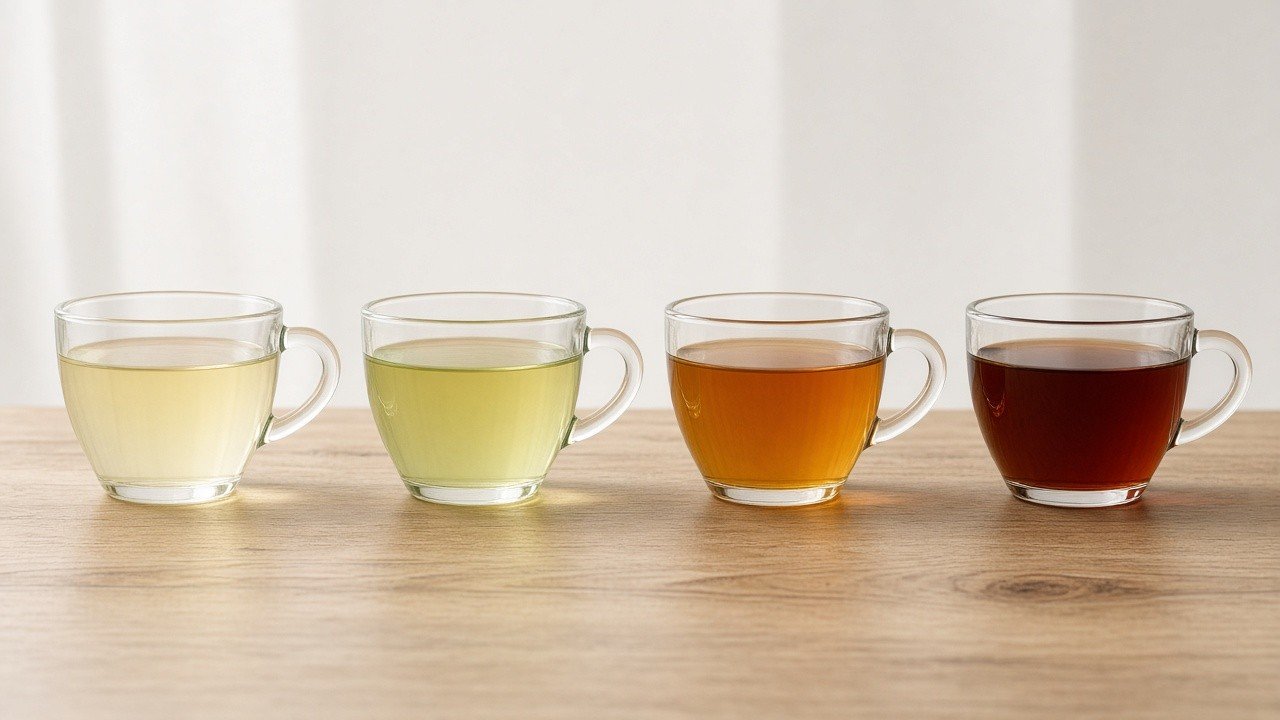
White tea: 170–185°F, 3 to 5 minutes
Green tea: 160–180°F, 1 to 3 minutes
Oolong tea: 185–205°F, 3 to 5 minutes
Black tea: 205–212°F, 3 to 5 minutes
The general rule is simple: the less oxidized the tea, the cooler the water and the gentler the brew. Each product page lists its own brewing guidelines, so check there for the details on your favorite. Our tea accessories include infusers and filters that make loose-leaf brewing easy.
Find Your Favorite
The best way to learn the difference is to taste it. Brew a white, a green, an oolong, and a black side by side, and you'll see how one plant can taste so many ways. Browse our White Tea, Green Tea, Oolong Tea, and Black Tea collections to start exploring. If you'd like a little fall flavor while it lasts, our Pumpkin Spiced Tea is a cozy, spiced black tea to add to the lineup.
We've been sharing quality tea at affordable prices since 2006, and we love helping tea lovers find the cup that's right for them.
Happy sipping!