
What Is a Tisane? Herbal Tea vs. True Tea, Explained
Walk down any tea aisle and you'll see the word "tea" on almost everything: peppermint, chamomile, rooibos, berry blends, chai. But to a tea lover, there's a simple dividing line. Some of these drinks are true tea, and some are tisanes, better known as herbal teas. Both are delicious, and knowing the difference makes it much easier to pick the right cup for the moment.
True Tea: One Plant, Many Styles
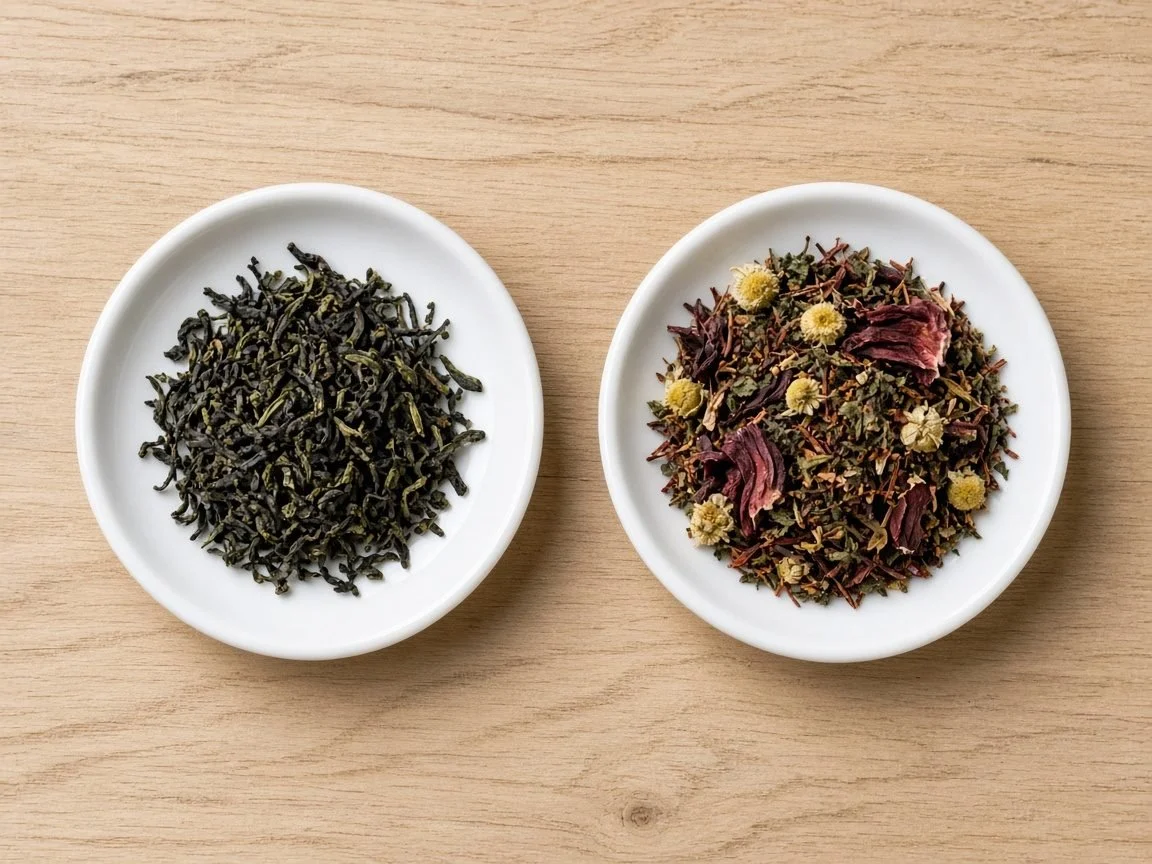
Every true tea comes from a single plant, Camellia sinensis. White, green, oolong and black teas are all made from its leaves. What makes them taste so different is how the leaves are handled after picking: how long they wither, whether they're heated early to keep them green, and how much they're allowed to oxidize. Our guide White, Green, Oolong, Black: How One Tea Plant Makes Four Kinds of Tea walks through each step.
If a drink is made from Camellia sinensis leaves, it's true tea. If it's made from anything else, it's a tisane.
What Is a Tisane?
A tisane is a drink made by steeping herbs, spices or other plant material in water, with no leaves from the tea plant. The word came into English from French, and "herbal tea" is simply the more common name for the same thing.
Tisanes can be made from almost any part of an edible plant:
Leaves: peppermint, spearmint, lemon balm and lemongrass.
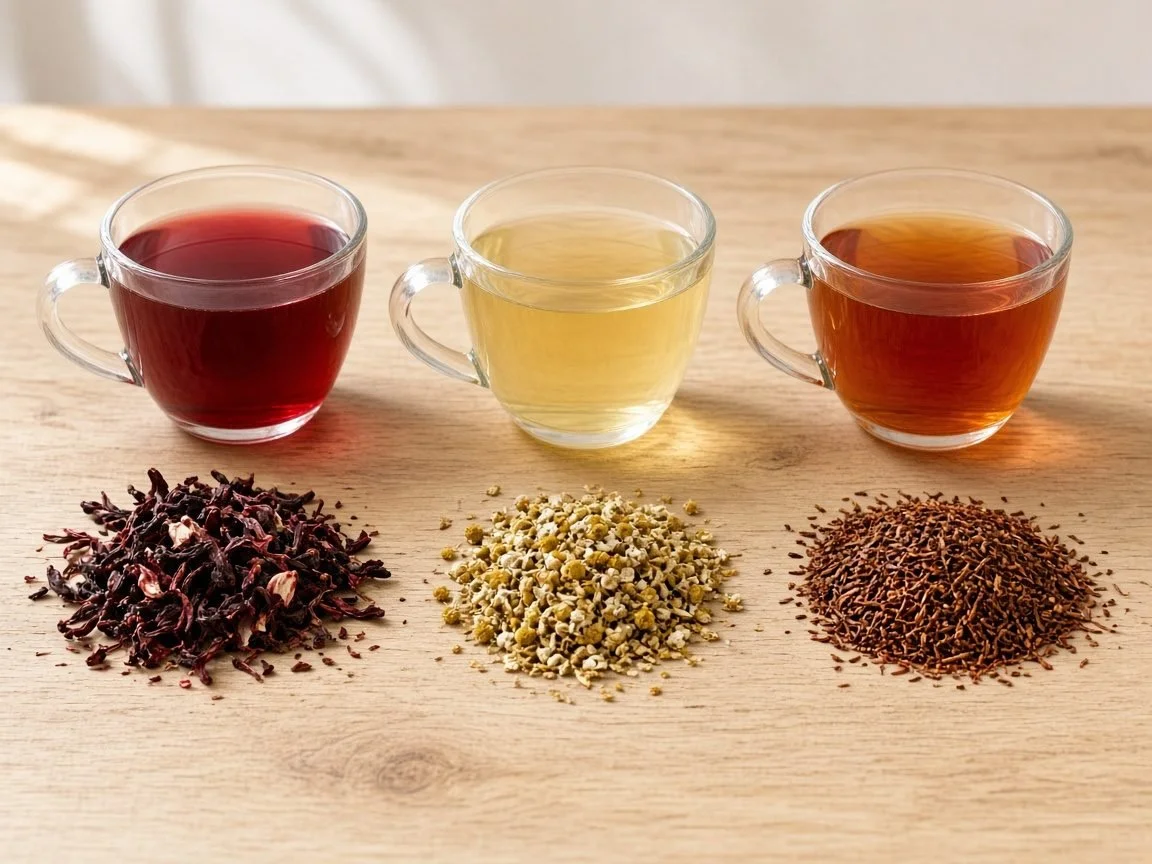
Flowers: chamomile and hibiscus.
Fruits and berries: apple, orange peel, rose hips, cranberries and blueberries.
Bark, roots and seeds: cinnamon, ginger, cardamom and black pepper.
Rooibos and honeybush: two South African shrubs that brew up smooth, naturally sweet cups.
Rooibos is a good example of how "tea" can fool you. It's often called red tea, but it isn't related to the tea plant at all. It comes from Aspalathus linearis, a plant from South Africa's Cederberg mountains. If you're curious about its story, read Red Bush, Big Story: The Real History of Rooibos.
The Caffeine Question
This is the difference most people care about. True tea naturally contains caffeine. A typical cup of black or green tea usually has roughly half the caffeine of a cup of brewed coffee, or less, as we explain in Caffeine in Tea vs. Coffee.
Most tisanes, on the other hand, are naturally caffeine free. Chamomile, peppermint, rooibos and hibiscus blends are all popular choices for an evening cup for exactly that reason.
There are a few exceptions. Yerba mate and guayusa are both made from the leaves of holly trees native to South America, and both contain caffeine. So "herbal" doesn't automatically mean "caffeine free." When in doubt, check the ingredient list.
Flavor Groups to Explore
Because tisanes can be made from so many plants, their flavors cover a lot of ground. Here's a simple way to sort them:
Floral and soft: chamomile-based blends are gentle and soothing. Our Sleep Well blend combines chamomile, peppermint, lemongrass and green rooibos for a soft, floral, lightly minty cup with a lemony lift.
Minty and cool: our Peppermint is bright and bold, with a cooling, sweet finish. It's traditionally enjoyed after meals and is delicious iced, too.
Fruity and tart: hibiscus gives many fruit blends their ruby color and tang. Very Berry mixes rose hips, hibiscus, cranberries and blueberries with natural forest berry flavor, with no added sugar or sweeteners.
Spicy and warming: our Indian Chai Spice Mix blends cinnamon, ginger, green cardamom, allspice, cloves and black pepper. There's no tea in it, so it makes a full-bodied, caffeine-free chai.
Earthy and sweet: Organic Rooibos is smooth, naturally sweet and gently woody, with hints of honey and a rich amber-red color. It's lovely plain, with milk and honey, or iced.
A quick note on wellness: people have enjoyed herbal infusions for centuries, and many find a warm, caffeine-free cup relaxing at the end of the day. If you'd like to know what science actually says about one popular herb, see Chamomile and Sleep: What the Research Really Says. Herbal tea is a pleasure to drink, not a substitute for medical advice.
How Brewing Differs
True tea and tisanes like different treatment in the kettle.
Delicate true teas, especially green and white teas, do best with water below boiling and shorter steeps. Boiling water and long steeps can pull out bitterness. Our Moroccan Mint, for example, is a green tea blend that we suggest brewing at 175–185°F for 2–3 minutes.
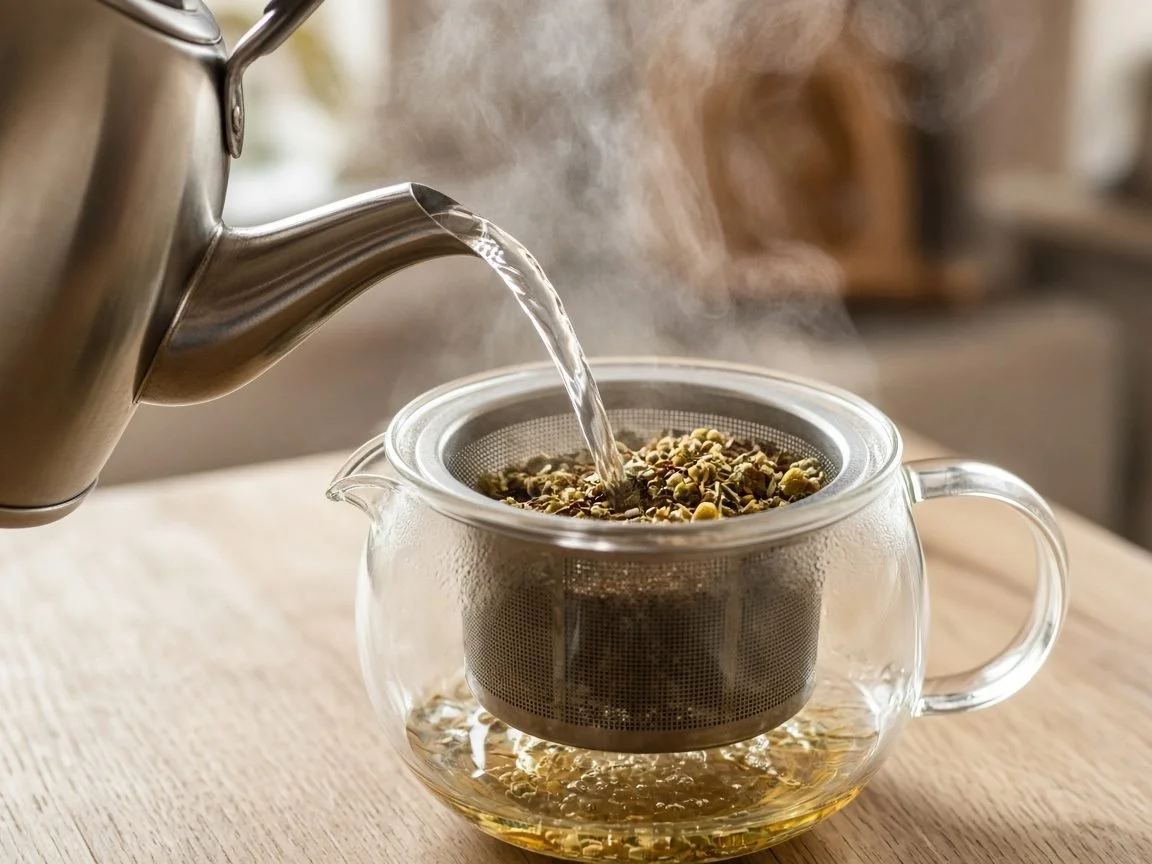
Tisanes are much more forgiving. Flowers, roots, bark and dried fruit are sturdy, and they generally need hotter water and more time to release their flavor:
Water: freshly boiled water, at 212°F, for most herbal blends.
Time: about 5–7 minutes for herbal blends like Sleep Well, Peppermint and Organic Rooibos.
Fruit blends: we suggest 2 teaspoons per cup and a 5–10 minute steep for Very Berry.
Chai spice mix: steep it for about 5 minutes in boiling water, or simmer it with milk.
Because herbal tea rarely turns bitter, you can steep a little longer for a stronger cup. Every product page lists our brewing guideline for that blend, so it's worth a quick look before you pour.
Blends That Mix Both
Some favorites sit in the middle. Moroccan Mint pairs Gunpowder and Chun Mee green teas with peppermint, so it has the cool sweetness of a tisane and the caffeine of true tea. Our Indian Chai Spice Mix works the other way: on its own it's caffeine free, but you can add your favorite black tea, green tea or even coffee to build your own chai.
When a blend includes tea leaves, treat it like true tea, both for caffeine and for brewing. When it's all herbs, fruit and spices, treat it like a tisane.
How to Pick the Right Cup
Not sure where to start? Ask yourself a few questions:
Do you want a lift? Reach for a true tea, such as black, green or oolong.
Winding down in the evening? Try a caffeine-free tisane like Sleep Well or Organic Rooibos.
Craving something bright and fruity? Very Berry is tart and juicy, and it makes an excellent iced tea.
Want something to sip after a meal? Peppermint is a classic.
Love warm spices? Start with Indian Chai Spice Mix, with or without tea.
As tea enthusiasts, we have been sharing quality tea at affordable prices since 2006, and herbal blends are a big part of that. Browse our Herbal Tea collection to find mint, fruit, rooibos and floral blends, each with sample and larger sizes so you can taste your way to a new favorite. True tea or tisane, the best cup is the one you'll enjoy.