Most of us choose a tea by mood and a snack by whatever is in the cupboard. Put the two together with a little thought, though, and both can taste better. Pairing tea with food doesn't take special training. A few simple ideas and a willingness to taste will get you most of the way there. Here's a beginner-friendly guide, organized by tea type, with easy pairings to try at home.
Three Simple Principles
1. Match intensity. This is the big one. Delicate teas go best with delicate foods, and bold teas can stand up to rich, strongly flavored foods. A soft white tea will get lost next to a spicy curry, and a strong breakfast blend can overpower a plain cucumber sandwich.
2. Complement or contrast. You can echo a flavor or play against it. A nutty, toasty tea next to toasted nuts is a complementary pairing. A bright, brisk black tea next to buttery shortbread is a contrasting one, where the tea cuts through the richness. Both work. Echoing tends to feel cozy and harmonious, and contrasting tends to feel lively.
3. Let the tea reset your palate. Many teas, especially brisk black teas and roasted oolongs, have a light dryness (astringency) that clears away fat and sweetness between bites. That's why tea and rich food have been friends for so long. Each sip makes the next bite taste fresh again.
One more tip: brew well before you pair. A tea that's over-steeped or brewed too hot turns harsh and won't play nicely with anything. Our tea brewing guide has times and temperatures by tea type, and if a cup ever turns sharp, see Why Is My Tea Bitter? 6 Common Causes and Easy Fixes.
White Tea: Keep It Gentle
White teas are the most lightly processed teas, with soft, subtle flavors. Silver Needle is made from downy buds and brews a clear, delicate cup, and White Peony (Bai Mu Dan) is a little fuller, with gentle fruity notes.
Good matches:
Fresh fruit: melon, pears or peaches.
Mild cheeses: fresh goat cheese or ricotta.
Light bites: plain rice crackers, cucumber sandwiches or a simple green salad.
Skip anything heavily spiced or very sweet. The goal is to let the tea's quiet fragrance come through.
Green Tea: Japanese vs. Chinese
Green teas split into two broad styles, and they pair a bit differently.
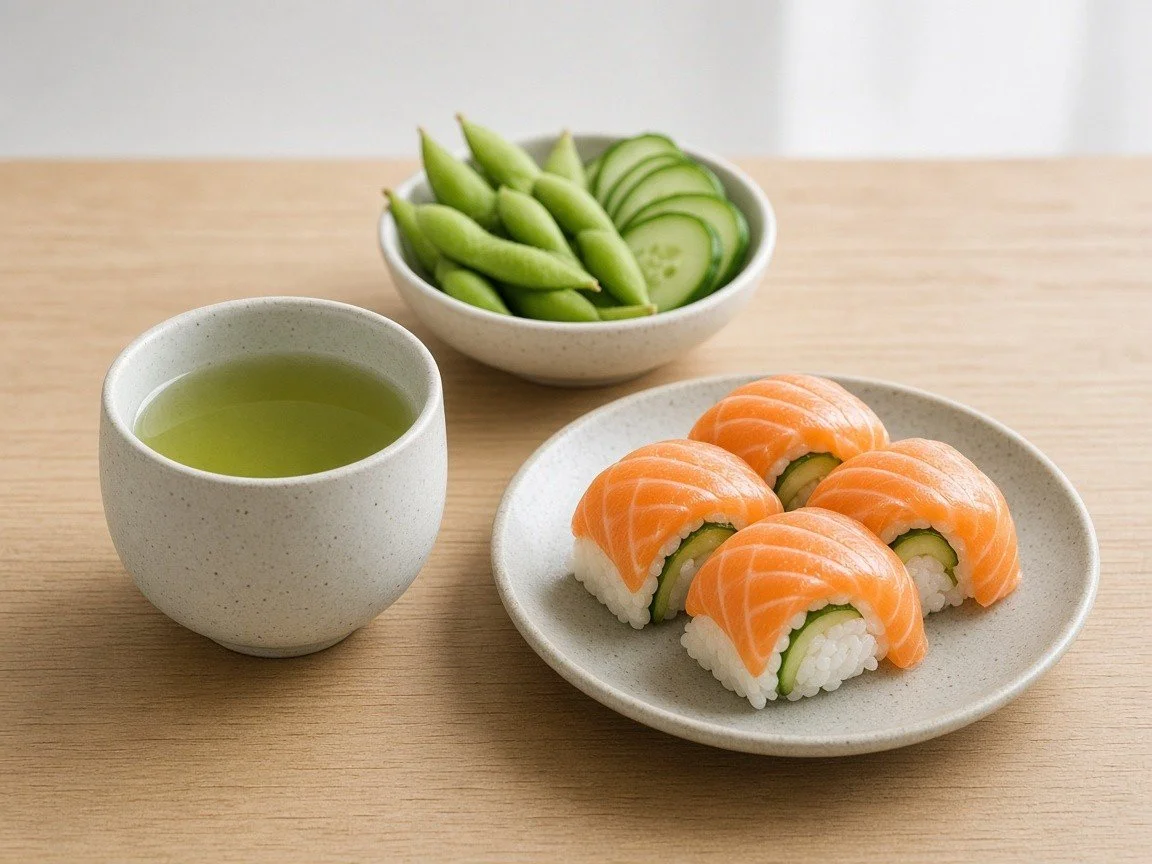
Japanese green teas are usually steamed, which gives them a fresh, grassy, sometimes savory taste. Sencha is bright, slightly sweet and vegetal, and it's a natural with:
Seafood: sushi, sashimi or simply grilled fish.
Vegetables: steamed greens, edamame or a light vegetable stir-fry.
Rice dishes: plain rice, rice balls or a light noodle bowl.
For a toastier option, Genmaicha blends green tea with toasted brown rice. Its nutty, comforting flavor goes well with savory snacks, rice crackers and even a grilled cheese sandwich. For a deeper look at the Japanese styles, see our simple guide to Japanese green tea.
Chinese green teas are usually pan-fired, which tends to bring out sweeter, nuttier notes. Dragonwell is gentle, sweet and nutty, and Bi Luo Chun is floral and slightly earthy. Try them with:
Steamed dumplings or lightly sauced vegetables.
Mild white fish or shrimp.
Lightly sweet treats: almond cookies or a plain sponge cake.
Oolong: Light vs. Roasted
Oolongs sit between green and black tea, so they're wonderfully flexible at the table. The easiest way to pair them is to think about how roasted they are.
Light, floral oolongs such as Ali Shan, with its orchid and honey notes, and the fragrant Jade Oolong pair with:
Shellfish: scallops, shrimp or crab.
Fresh fruit: pears, apples or stone fruit.
Mild, creamy cheeses and light pastries.
Roasted oolongs have warm, toasty depth. Roasted Tung Ting is nutty and gently sweet, and Wuyi Rock Oolong (Da Hong Pao) is full-bodied and earthy. They can handle heartier foods:
Roasted or grilled meats: pork, duck or chicken.
Mushroom dishes and other earthy, savory flavors.
Toasted nuts, caramel or a nutty dessert.
Black Tea: From Delicate to Bold
Black teas range widely, so match the tea's strength to the food.
Darjeeling is the lightest and most fragrant of the common black teas, often with a "muscatel" grape-like note. Darjeeling Margaret's Hope and Darjeeling Castleton are lovely with:
Scones with a little jam or cream.
Egg dishes such as quiche or an omelet.
Mild cheeses and fruit tarts.
Assam and breakfast blends are bold and malty, and they're made for hearty food. Assam Hunwal and our English Breakfast blend (great with milk) pair with:
A full breakfast: eggs, bacon or sausage, and toast.
Buttery baked goods: shortbread, croissants or pound cake.
Sharp cheddar or a hearty sandwich.
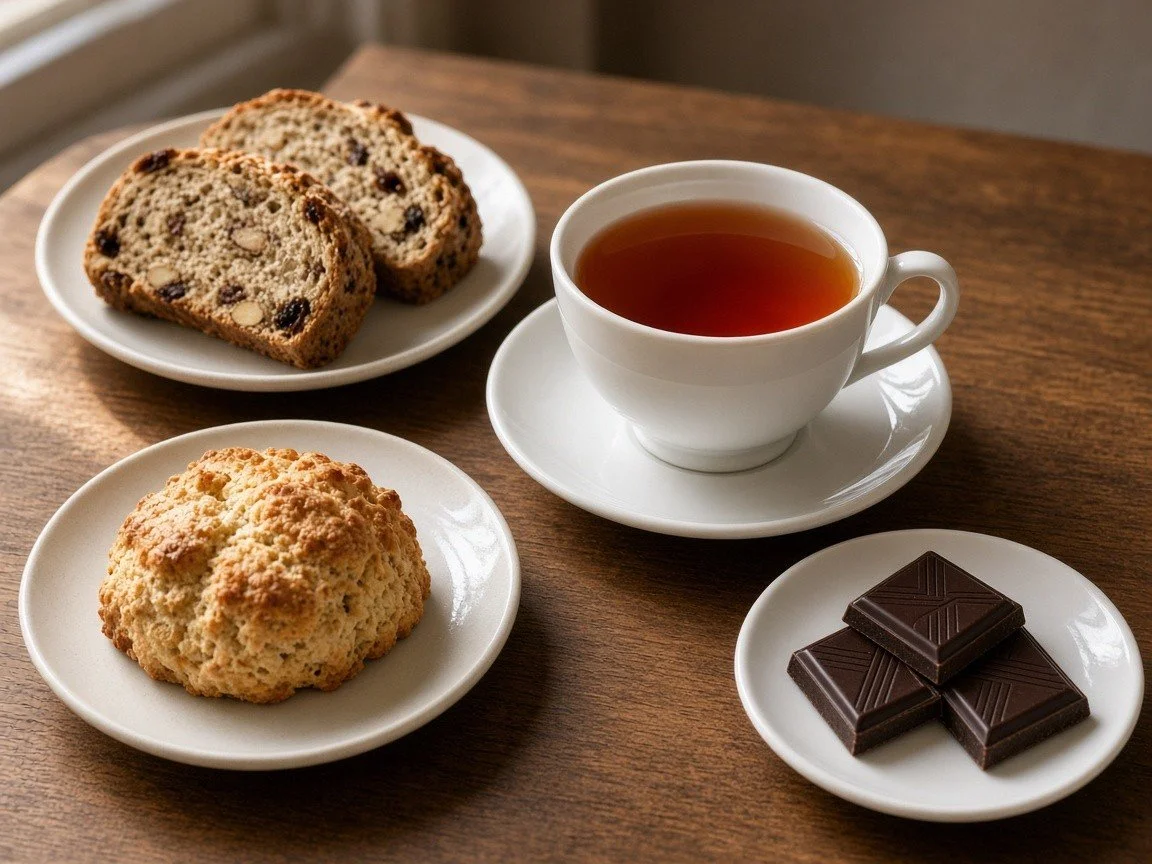
Chinese black teas tend to be smooth, with less bite. Keemun Mao Feng is gently winey and fragrant, and Golden Yunnan is smooth and rich. Both are wonderful with:
Dark chocolate: the tea's depth meets the chocolate's richness.
Fruit and nut breads or dried fruit.
Savory roasts and soy-glazed dishes.
Herbal and Caffeine-Free Pairings
Herbal teas don't come from the tea plant, but the same principles still apply.
Mint: Peppermint is cool and clean, a classic after a rich meal or next to chocolate desserts. Lemon Mint adds a crisp citrus lift that suits salads and lighter dishes.
Fruit blends: the bright, tart Very Berry pairs nicely with cheesecake, vanilla desserts or yogurt, and the tangy citrus of Red Orange goes well with almond cakes or a simple butter cookie.
Try a Simple Pairing Experiment at Home
The best way to learn is to taste side by side. Here's an easy experiment:
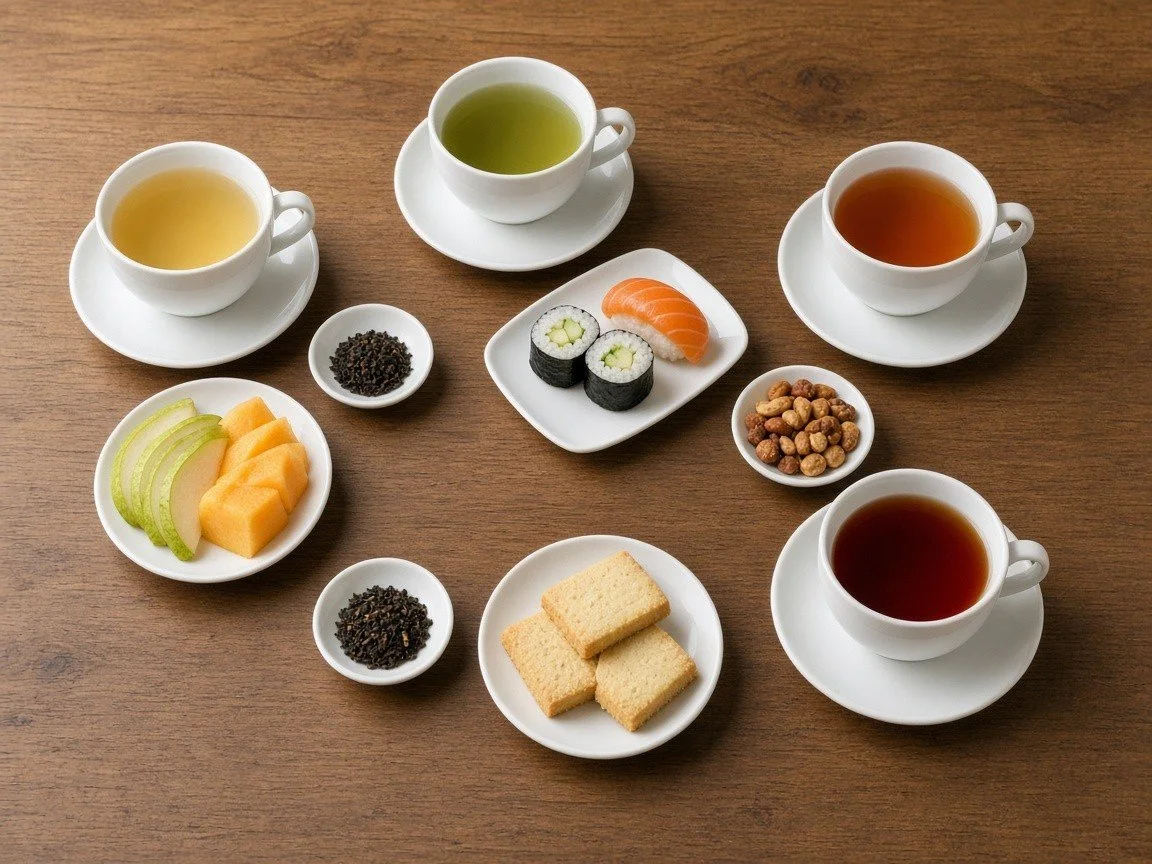
Pick three teas: one light (a white or green tea), one medium (an oolong) and one bold (a breakfast black tea).
Pick three foods: something light (cucumber or pear slices), something rich (a piece of shortbread or cheddar) and something sweet (a square of dark chocolate).
Brew each tea carefully using the brewing guide, and let the cups cool slightly so you can taste clearly.
Taste in order: sip the tea alone, take a bite of food, then sip again. Notice whether the tea tastes brighter, flatter, sweeter or more bitter after the bite.
Jot down your favorites. You'll quickly see the intensity rule in action, and you may discover a surprise match or two.
If you'd like to try several teas without committing to full bags, a variety sampler pack is a handy way to set up your tasting.
Find Your Own Favorite Pairings
There are no wrong answers in tea pairing, only discoveries. Start with the simple principles, trust your own taste, and have fun with it. When you're ready to explore, browse our white tea, green tea, oolong, black tea and herbal tea collections, or see everything in our full tea shop.
Happy sipping!