
Browse any tea shelf and you'll see words like "flavored," "scented" and "blend" used almost interchangeably. They're related, but they don't mean the same thing, and knowing the difference makes it much easier to find teas you'll love and to brew them well. Here's a simple guide to what each term means, how to read an ingredient list, and how to brew each style.
Double-click to edit...
Start with True Tea
"True tea" means tea made from the leaves of the tea plant, Camellia sinensis. White, green, oolong and black tea all come from that one plant; the differences come from how the leaves are processed. A plain single-origin tea is just that: tea leaves and nothing else.
Herbal "teas" such as peppermint or chamomile aren't made from the tea plant at all. They're tisanes, and we cover them in more detail in What Is a Tisane? Herbal Tea vs. True Tea, Explained. Flavored, scented and blended teas all start from one of these two bases and add something more.
Flavored Teas: A Tea Base Plus Added Flavor
A flavored tea is a true tea with flavoring added, usually natural flavors or essential oils. The tea leaves carry the flavor, so every cup has both the character of the base tea and the added taste.
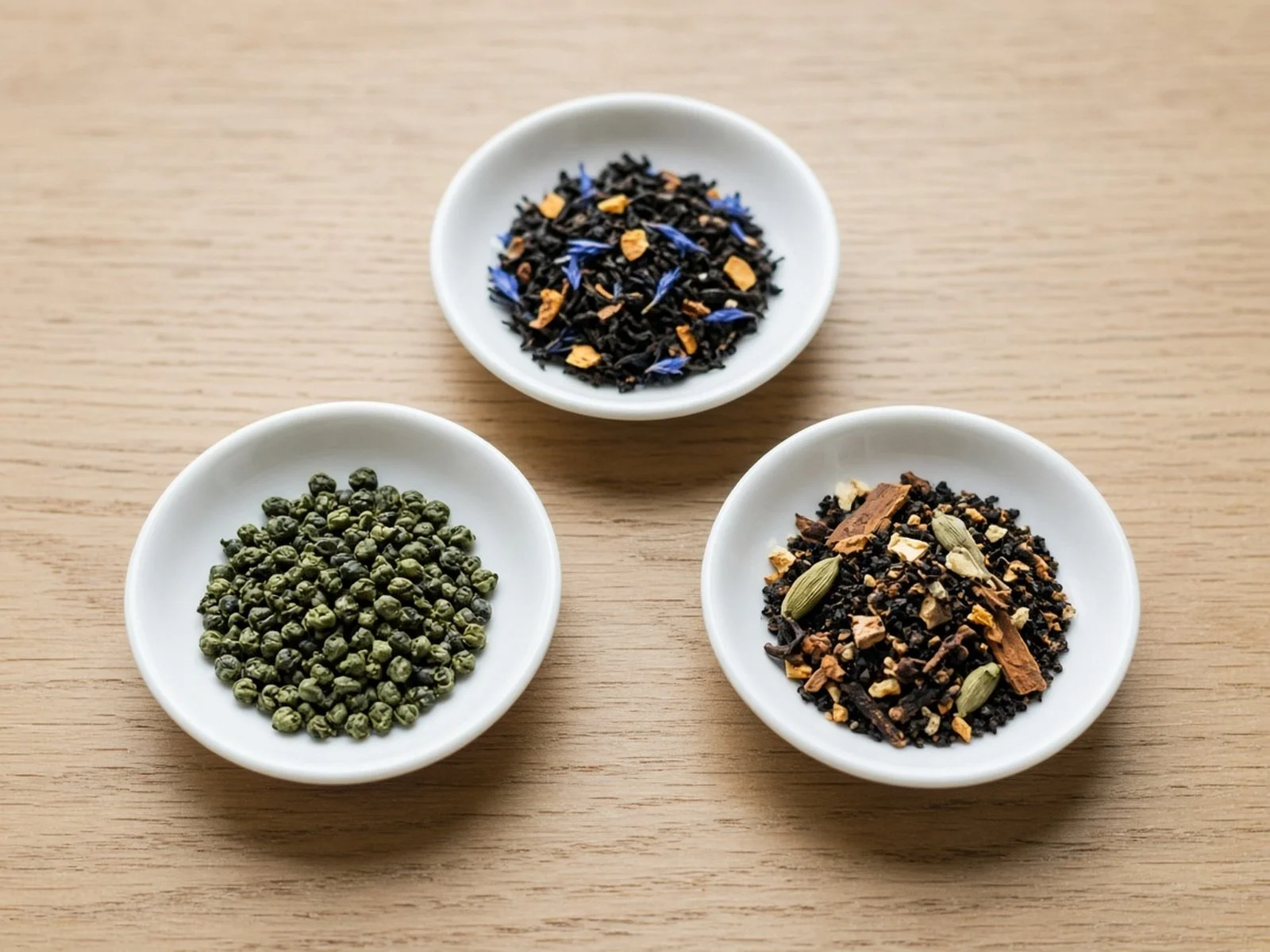
The best-known example is Earl Grey. Our Earl Grey is premium black tea flavored with bergamot oil, from a fragrant citrus fruit, along with blue cornflower petals and citrus peels. Its balance of flavoring gives it a piquant, refreshing taste. If you're curious how this classic got its name, our post on the history of Earl Grey tea tells the story.
Flavored teas also come in many variations. Cream Earl Grey uses Ceylon black tea with cornflower petals and natural flavors, so smooth vanilla overtones sit above the bergamot. Monk's Blend is a Ceylon black tea with natural flavor oils of vanilla and grenadine, plus calendula petals, white daisy and marigold petals. In each case, the tea leaves are the base and the flavoring defines the cup.
Scented Teas: Fragrance from Real Flowers
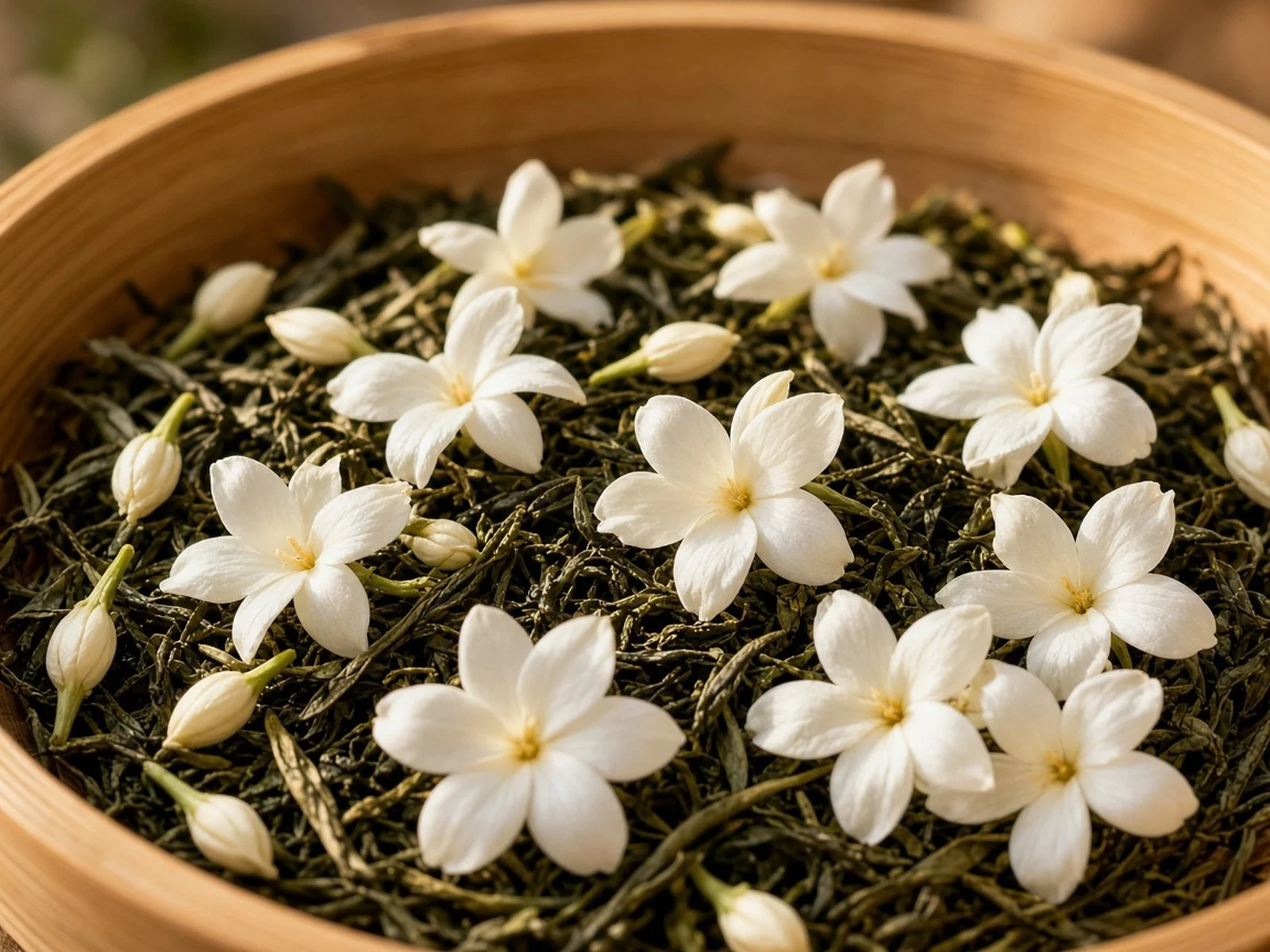
A scented tea gets its aroma from contact with real flowers rather than from added flavoring. Jasmine tea is the classic example, and the city of Fuzhou in Fujian, China, is especially famous for it, with scenting traditions recorded as far back as the Southern Song dynasty.
The craft depends on timing. Jasmine blossoms are gathered during the day while they're still closed, then layered with the tea in the evening as the flowers open and release their fragrance. After the tea and blossoms rest together, the spent flowers are removed and the tea is dried. The process is often repeated several times for a deeper scent.
You can taste this in our Jasmine Green Tea, a first-grade pan-fired green tea from China that's sweet, floral and smooth. Some jasmine blossoms stay in the mix, giving the dry tea real visual appeal. Jasmine Dragon Pearls take the idea further: the top two leaves and bud of new-season growth are scented with fresh spring jasmine blooms and hand-rolled into pearls that unfurl in your cup. Our post on Jasmine Dragon Pearls has the full story.
Blends: Two or More Ingredients Mixed Together
A blend combines a tea with other whole ingredients you can see, such as spices, herbs or a second tea. Instead of relying on a flavoring, the ingredients themselves make the flavor.
Masala Chai: black tea blended with chopped and powdered ginger, cardamom, coriander and cinnamon, chopped cloves and chopped black pepper. It's bold, warm and spicy, with cardamom notes peeking out from lively ginger.
Moroccan Mint: a blend of Gunpowder green tea, Chun Mee green tea and peppermint. The two green teas hold up well with the peppermint for a smooth, cooling cup. Read more in Moroccan Mint Tea: What Goes Into Our Gunpowder Green and Peppermint Blend.
The lines can overlap. A tea can be both flavored and blended, like Monk's Blend with its natural flavor oils and flower petals. That's why the ingredient list is your best guide.
Herbal and Fruit Blends: No Tea Leaves at All
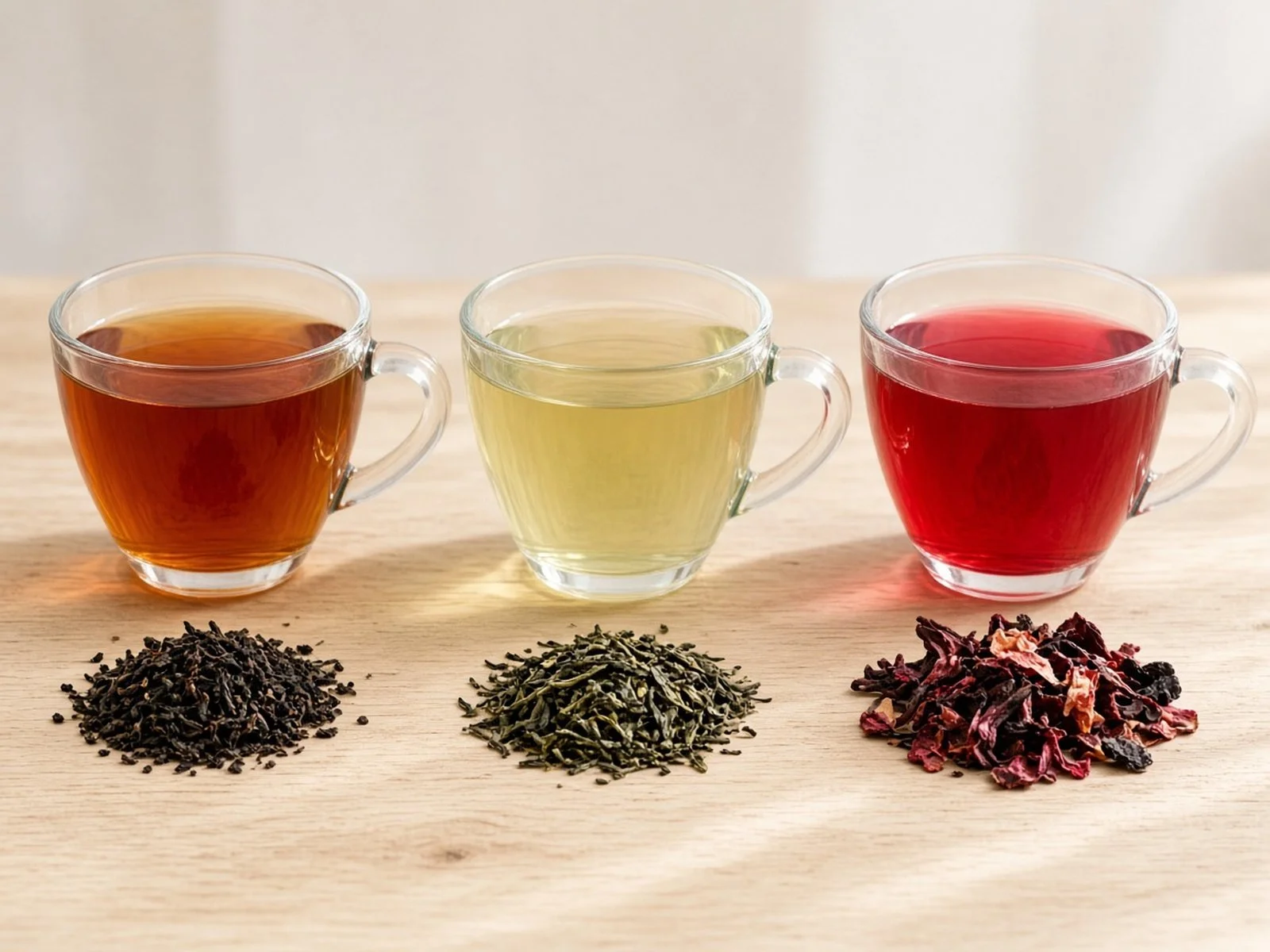
Herbal and fruit blends mix herbs, flowers, fruits or spices without any leaves from the tea plant. Our Very Berry fruit blend combines rose hips, hibiscus, cranberries, blueberries and natural forest berries flavor for a bright, tart and juicy cup. Sleep Well blends chamomile, peppermint, lemongrass and green rooibos. Both are naturally caffeine free. Single herbs like Peppermint can be enjoyed on their own, too.
How to Read an Ingredient List
The ingredient list tells you which category a tea belongs to. Here's what to look for:
The first ingredient: ingredients are generally listed from most to least by weight, so the first one is usually the base. "Black tea" or "green tea" first means a true tea; herbs or fruit first means a tisane.
"Natural flavors" or an oil like bergamot oil: the tea is flavored.
Whole spices, herbs or a second tea: it's a blend. Moroccan Mint, for example, lists simply "green tea and peppermint."
Petals such as cornflower, calendula or marigold: they're part of the mix and add color to the dry leaf.
No tea leaves listed: it's an herbal or fruit blend and naturally caffeine free.
A single tea and nothing else: it's a straight tea, like a single-origin green or black tea.
Scented teas can be harder to spot from the list alone, because the spent flowers are often removed. The product description, which explains how the tea is made, will tell you.
Brewing Tips for Each Style
The base tea sets the brewing rules. Our general guidelines, per 8 oz of water:
Flavored black teas (Earl Grey, Cream Earl Grey, Monk's Blend): 1 rounded teaspoon (about 2 to 3 grams) with freshly boiled water at 205 to 212°F for 3 to 5 minutes.
Scented green teas (Jasmine Green Tea): 1 teaspoon (about 2 to 3 grams) at 175 to 185°F for 2 to 3 minutes. Avoid boiling water, which can make green tea bitter. For Jasmine Dragon Pearls, use about 6 to 8 pearls; they can be infused several times.
Green tea blends (Moroccan Mint): 1 teaspoon at 175 to 185°F for 2 to 3 minutes. It also makes excellent iced tea.
Spiced chai (Masala Chai): turn the bag upside down a few times first, since powdered spices can settle. Use 1 heaping teaspoon with water at 212°F, steep 4 to 5 minutes, then add warm milk and sweetener to taste.
Herbal and fruit blends: 1 to 2 teaspoons of Sleep Well with water at 212°F for 5 to 7 minutes, or 2 teaspoons of Very Berry per cup of freshly boiled water for 5 to 10 minutes. Brew Very Berry strong and pour it over ice for iced tea.
Taste as you go and adjust. One more tip: store strongly flavored and scented teas in their own sealed containers so their aromas don't drift into your more delicate teas.
Find Your Style
Whether you love the clean taste of a straight tea, the bright citrus of Earl Grey, the floral perfume of jasmine or the warm spice of chai, there's a style for every cup. Explore our Chai collection and our Herbal Tea collection to see more blends. Like every tea at Beantown Tea & Spices, they're quality loose-leaf teas at an affordable price, with sample and larger sizes so you can find your favorite.