Posts tagged jasmine tea
Flavored, Scented and Blended Teas: What's the Difference?

Browse any tea shelf and you'll see words like "flavored," "scented" and "blend" used almost interchangeably. They're related, but they don't mean the same thing, and knowing the difference makes it much easier to find teas you'll love and to brew them well. Here's a simple guide to what each term means, how to read an ingredient list, and how to brew each style.
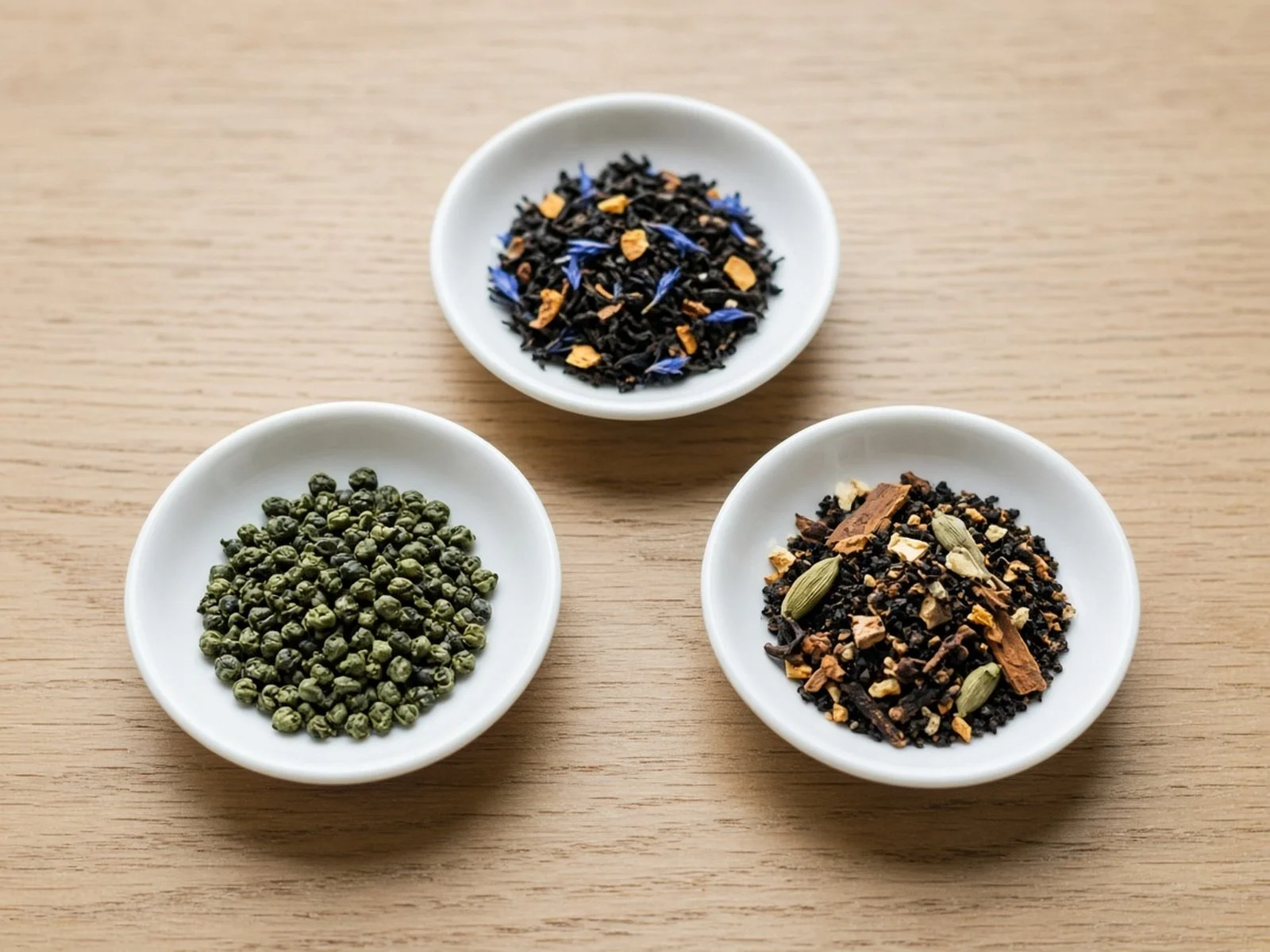
Earl Grey with blue petals, jasmine pearls and a spiced chai blend in three white dishes

Double-click to edit...

Start with True Tea

"True tea" means tea made from the leaves of the tea plant, Camellia sinensis. White, green, oolong and black tea all come from that one plant; the differences come from how the leaves are processed. A plain single-origin tea is just that: tea leaves and nothing else.

Herbal "teas" such as peppermint or chamomile aren't made from the tea plant at all. They're tisanes, and we cover them in more detail in What Is a Tisane? Herbal Tea vs. True Tea, Explained. Flavored, scented and blended teas all start from one of these two bases and add something more.

Flavored Teas: A Tea Base Plus Added Flavor

A flavored tea is a true tea with flavoring added, usually natural flavors or essential oils. The tea leaves carry the flavor, so every cup has both the character of the base tea and the added taste.

The best-known example is Earl Grey. Our Earl Grey is premium black tea flavored with bergamot oil, from a fragrant citrus fruit, along with blue cornflower petals and citrus peels. Its balance of flavoring gives it a piquant, refreshing taste. If you're curious how this classic got its name, our post on the history of Earl Grey tea tells the story.

Flavored teas also come in many variations. Cream Earl Grey uses Ceylon black tea with cornflower petals and natural flavors, so smooth vanilla overtones sit above the bergamot. Monk's Blend is a Ceylon black tea with natural flavor oils of vanilla and grenadine, plus calendula petals, white daisy and marigold petals. In each case, the tea leaves are the base and the flavoring defines the cup.
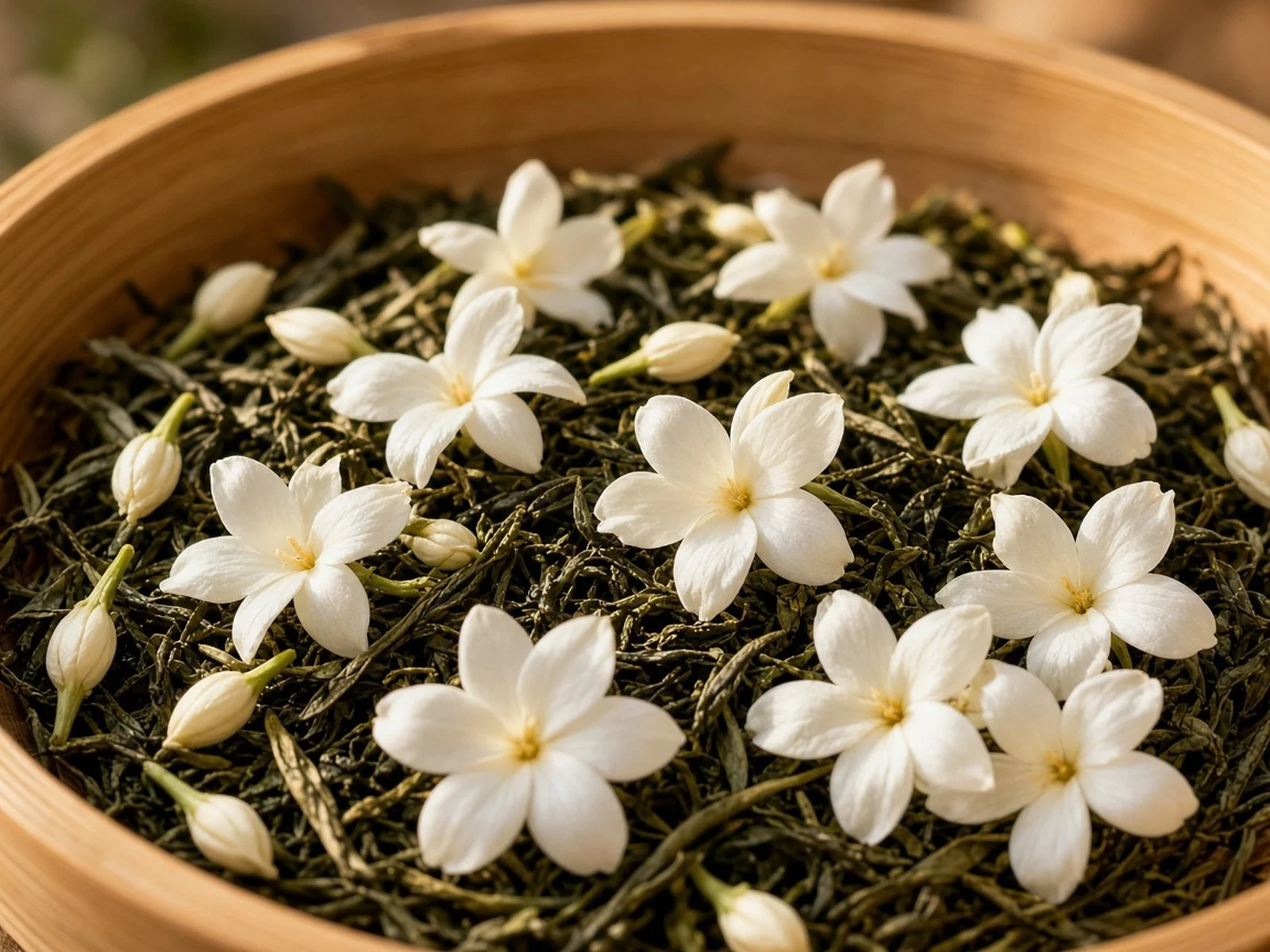
Fresh white jasmine blossoms layered on loose green tea leaves in a shallow bamboo tray

Scented Teas: Fragrance from Real Flowers

A scented tea gets its aroma from contact with real flowers rather than from added flavoring. Jasmine tea is the classic example, and the city of Fuzhou in Fujian, China, is especially famous for it, with scenting traditions recorded as far back as the Southern Song dynasty.

The craft depends on timing. Jasmine blossoms are gathered during the day while they're still closed, then layered with the tea in the evening as the flowers open and release their fragrance. After the tea and blossoms rest together, the spent flowers are removed and the tea is dried. The process is often repeated several times for a deeper scent.

You can taste this in our Jasmine Green Tea, a first-grade pan-fired green tea from China that's sweet, floral and smooth. Some jasmine blossoms stay in the mix, giving the dry tea real visual appeal. Jasmine Dragon Pearls take the idea further: the top two leaves and bud of new-season growth are scented with fresh spring jasmine blooms and hand-rolled into pearls that unfurl in your cup. Our post on Jasmine Dragon Pearls has the full story.

Blends: Two or More Ingredients Mixed Together

A blend combines a tea with other whole ingredients you can see, such as spices, herbs or a second tea. Instead of relying on a flavoring, the ingredients themselves make the flavor.

The lines can overlap. A tea can be both flavored and blended, like Monk's Blend with its natural flavor oils and flower petals. That's why the ingredient list is your best guide.

Herbal and Fruit Blends: No Tea Leaves at All

Herbal and fruit blends mix herbs, flowers, fruits or spices without any leaves from the tea plant. Our Very Berry fruit blend combines rose hips, hibiscus, cranberries, blueberries and natural forest berries flavor for a bright, tart and juicy cup. Sleep Well blends chamomile, peppermint, lemongrass and green rooibos. Both are naturally caffeine free. Single herbs like Peppermint can be enjoyed on their own, too.

How to Read an Ingredient List

The ingredient list tells you which category a tea belongs to. Here's what to look for:

  • The first ingredient: ingredients are generally listed from most to least by weight, so the first one is usually the base. "Black tea" or "green tea" first means a true tea; herbs or fruit first means a tisane.

  • "Natural flavors" or an oil like bergamot oil: the tea is flavored.

  • Whole spices, herbs or a second tea: it's a blend. Moroccan Mint, for example, lists simply "green tea and peppermint."

  • Petals such as cornflower, calendula or marigold: they're part of the mix and add color to the dry leaf.

  • No tea leaves listed: it's an herbal or fruit blend and naturally caffeine free.

  • A single tea and nothing else: it's a straight tea, like a single-origin green or black tea.

Scented teas can be harder to spot from the list alone, because the spent flowers are often removed. The product description, which explains how the tea is made, will tell you.
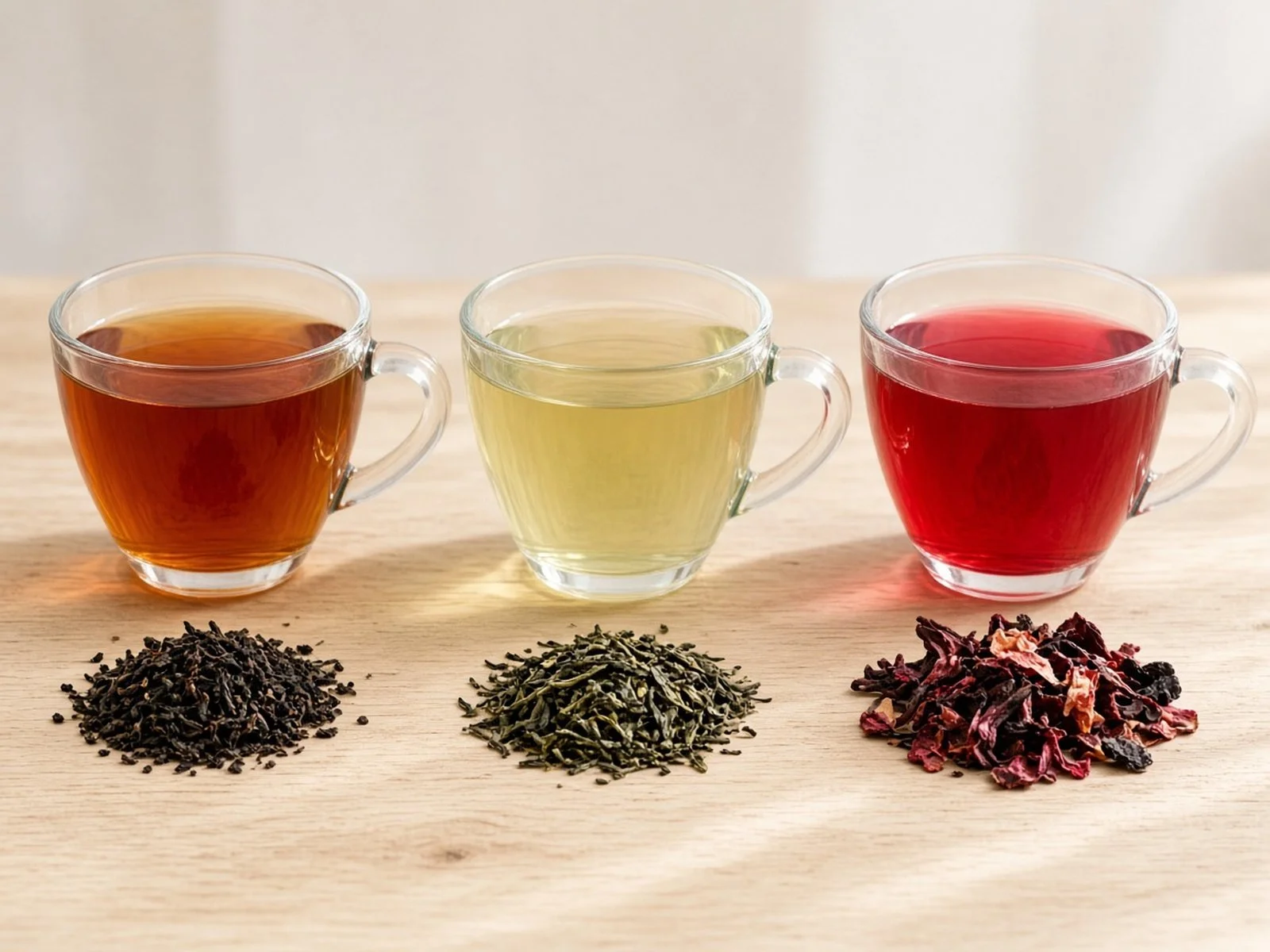
Glass cups of amber black tea, pale jasmine green tea and ruby berry herbal tea on wood

Brewing Tips for Each Style

The base tea sets the brewing rules. Our general guidelines, per 8 oz of water:

  • Flavored black teas (Earl Grey, Cream Earl Grey, Monk's Blend): 1 rounded teaspoon (about 2 to 3 grams) with freshly boiled water at 205 to 212°F for 3 to 5 minutes.

  • Scented green teas (Jasmine Green Tea): 1 teaspoon (about 2 to 3 grams) at 175 to 185°F for 2 to 3 minutes. Avoid boiling water, which can make green tea bitter. For Jasmine Dragon Pearls, use about 6 to 8 pearls; they can be infused several times.

  • Green tea blends (Moroccan Mint): 1 teaspoon at 175 to 185°F for 2 to 3 minutes. It also makes excellent iced tea.

  • Spiced chai (Masala Chai): turn the bag upside down a few times first, since powdered spices can settle. Use 1 heaping teaspoon with water at 212°F, steep 4 to 5 minutes, then add warm milk and sweetener to taste.

  • Herbal and fruit blends: 1 to 2 teaspoons of Sleep Well with water at 212°F for 5 to 7 minutes, or 2 teaspoons of Very Berry per cup of freshly boiled water for 5 to 10 minutes. Brew Very Berry strong and pour it over ice for iced tea.

Taste as you go and adjust. One more tip: store strongly flavored and scented teas in their own sealed containers so their aromas don't drift into your more delicate teas.

Find Your Style

Whether you love the clean taste of a straight tea, the bright citrus of Earl Grey, the floral perfume of jasmine or the warm spice of chai, there's a style for every cup. Explore our Chai collection and our Herbal Tea collection to see more blends. Like every tea at Beantown Tea & Spices, they're quality loose-leaf teas at an affordable price, with sample and larger sizes so you can find your favorite.
Jasmine Dragon Pearls: Hand-Rolled Green Tea Scented with Flowers

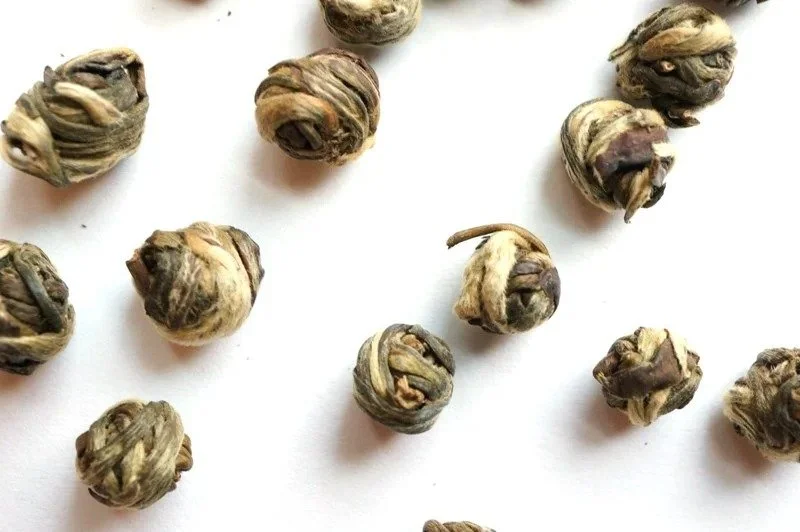
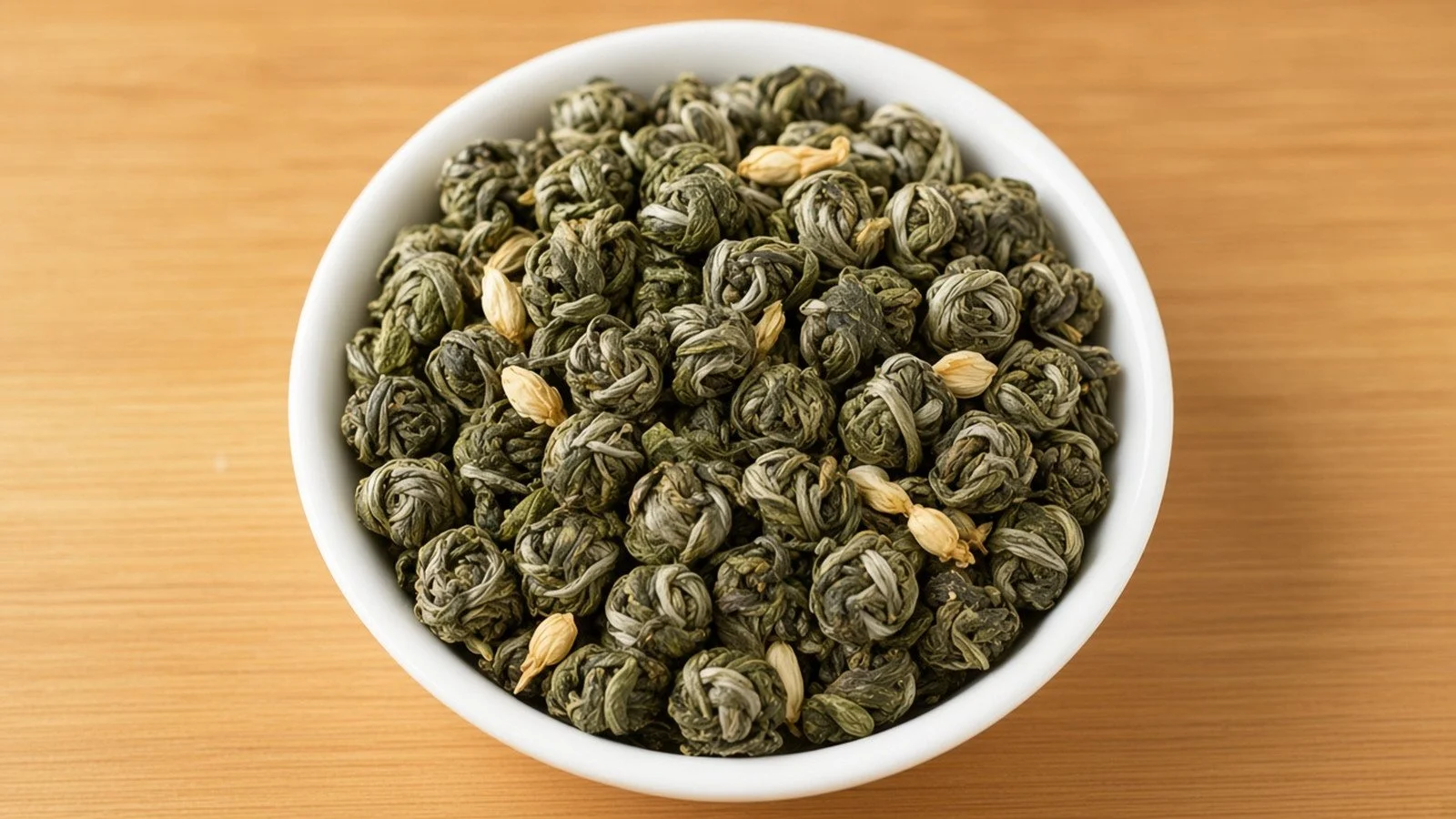
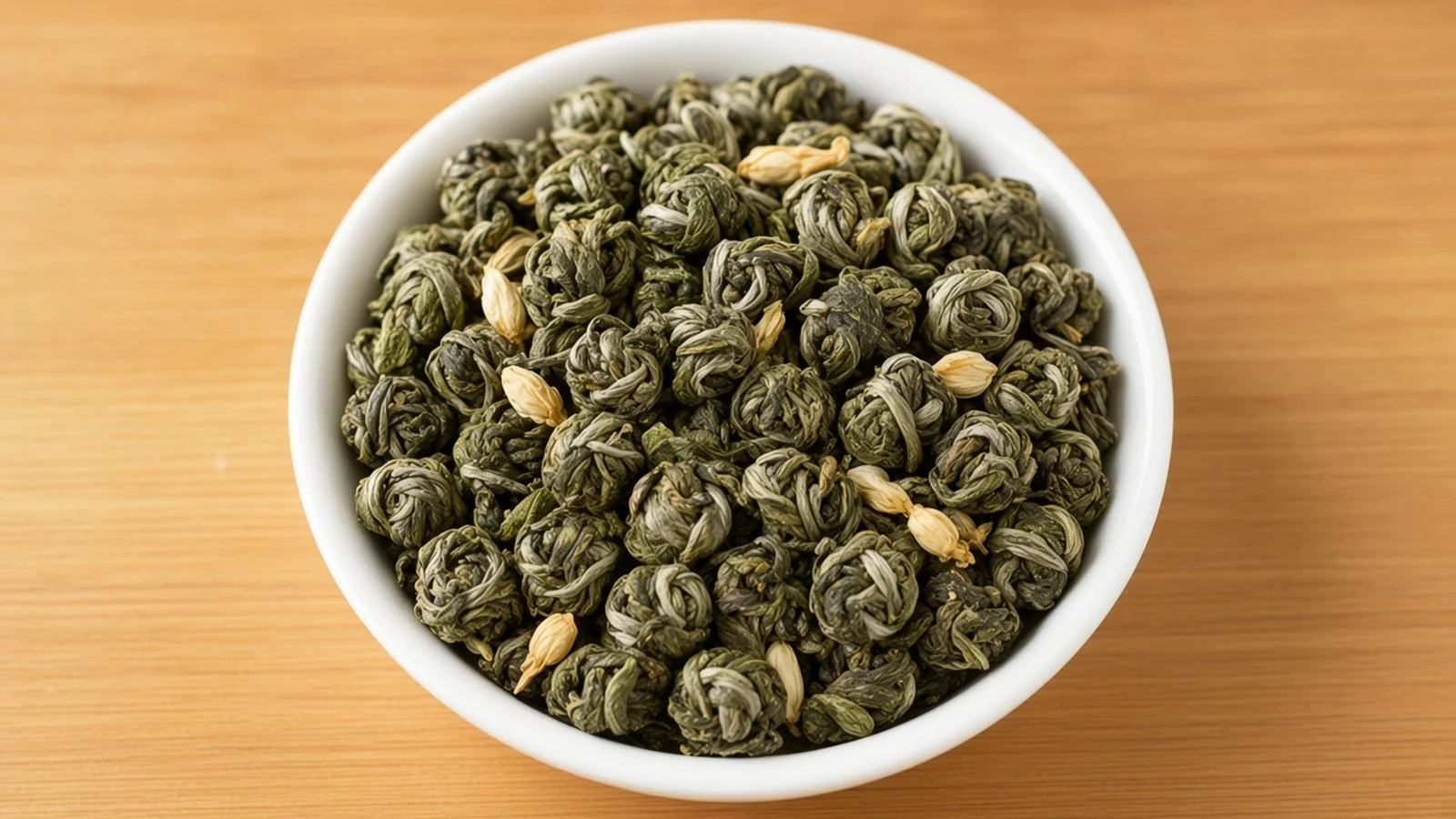
If you've never watched a tightly rolled tea pearl open in the cup, Jasmine Dragon Pearls is a lovely place to start. Each small, hand-rolled ball is made from young green tea leaves and a bud, then scented with fresh jasmine blossoms. In the tin, the pearls look like little olive-green and silver knots. In the water, they slowly unfurl into whole leaves, and the cup fills with a sweet floral perfume over a clean green tea base.

White ceramic bowl of tightly rolled Jasmine Dragon Pearls, olive-green and silver, with a few dried jasmine buds, on a light wooden table

Where Jasmine Dragon Pearls Come From

Jasmine tea has a long history in China, and the city of Fuzhou, in Fujian Province, is especially famous for it. Scenting tea with jasmine blossoms there is recorded as far back as the Southern Song dynasty. The craft depends on timing. Jasmine bushes bloom in late spring, and the flowers are gathered during the day while the blossoms are still closed. In the evening, as the flowers open and release their fragrance, they are layered with the tea. After the leaves and blossoms rest together, the spent flowers are removed and the tea is dried. Tea makers often repeat the process over several nights, so the scent settles deeply into the leaf instead of sitting on the surface.

That tradition is what gives Jasmine Dragon Pearls their character. The tea itself is made from the top two leaves and the bud of new-season growth, usually plucked in late March and early April. Those tender leaves are hand-rolled into tight pearls before the jasmine work begins. The rolling isn't just for looks. It helps the leaves stay whole, and it makes the unfurling in the cup part of the pleasure of brewing.

How It Tastes

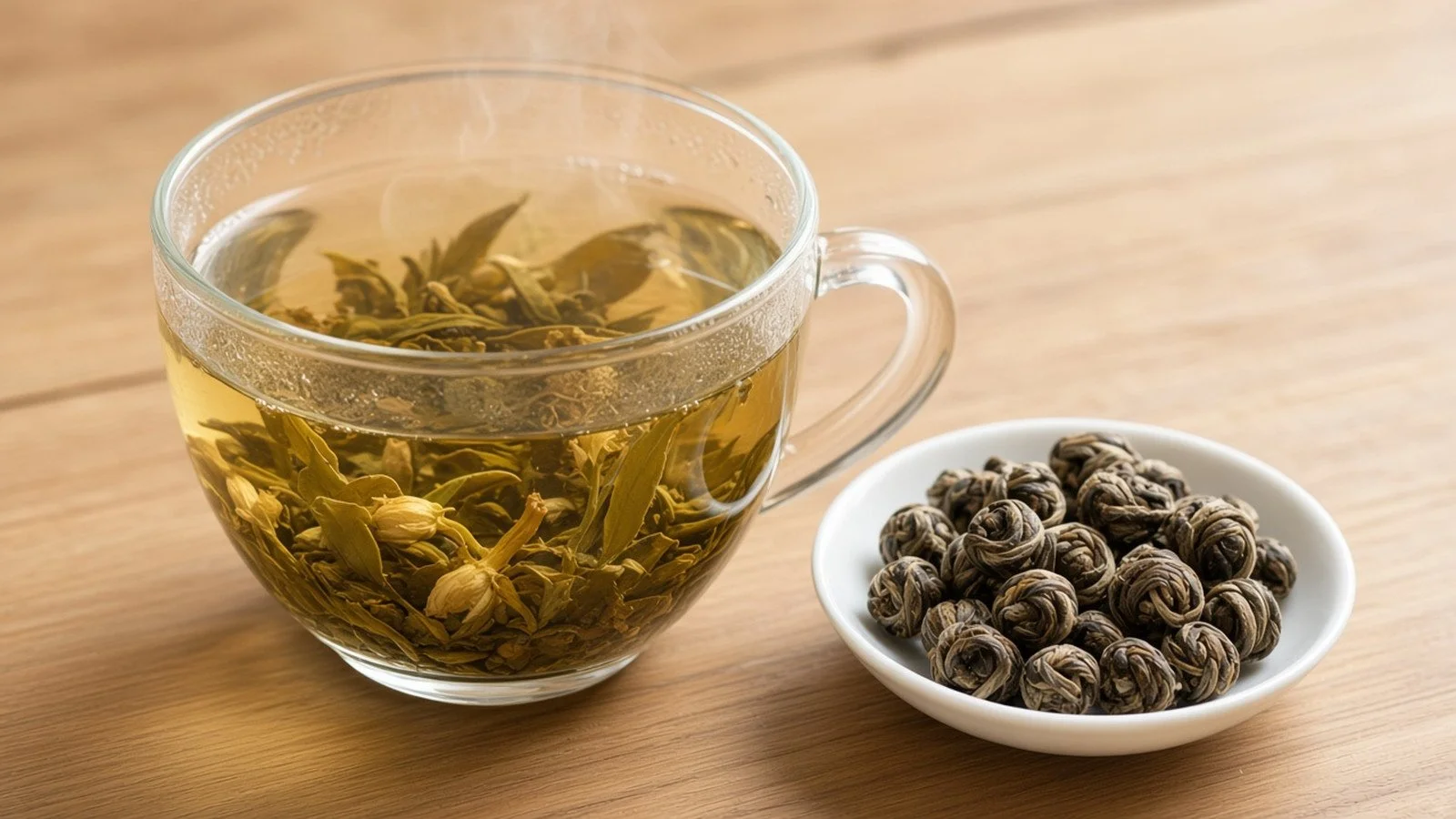
The dry pearls already smell of sweet jasmine, with a fresh green tea note underneath. Brewed, the liquor is pale gold to light green, silky and smooth, with a delicate, pleasing flavor. The jasmine is present and fragrant, but it doesn't shout over the tea. You still taste a clean, lightly sweet green tea base, then a lingering floral finish.

Look closely as the pearls open and you may see a little silvery down on the bud, a fine fuzz that is a sign of careful plucking and handling. It's one of the prettiest teas to watch brew, which is why a glass cup or teapot is such a good match.

Glass cup of pale gold jasmine tea with unfurled green leaves and jasmine buds, beside a small dish of dry rolled pearls

How to Brew Jasmine Dragon Pearls

Green tea likes water that is hot, but not boiling. Start here, then adjust to your taste:

  • Tea: about 6 to 8 pearls (about 2 to 3 grams) per 8 oz of water

  • Water: 175 to 185°F. If you don't have a thermometer, bring the water to a boil and let it rest a few minutes before pouring.

  • Time: 2 to 3 minutes. Taste at 2 minutes, then steep a little longer if you'd like more body.

The pearls can be infused several times. For later cups, add a little time and notice how the jasmine stays with you while the green tea flavor deepens. A glass teapot is the best way to watch them open. For more on water temperature and steeping times, see our tea brewing guide.

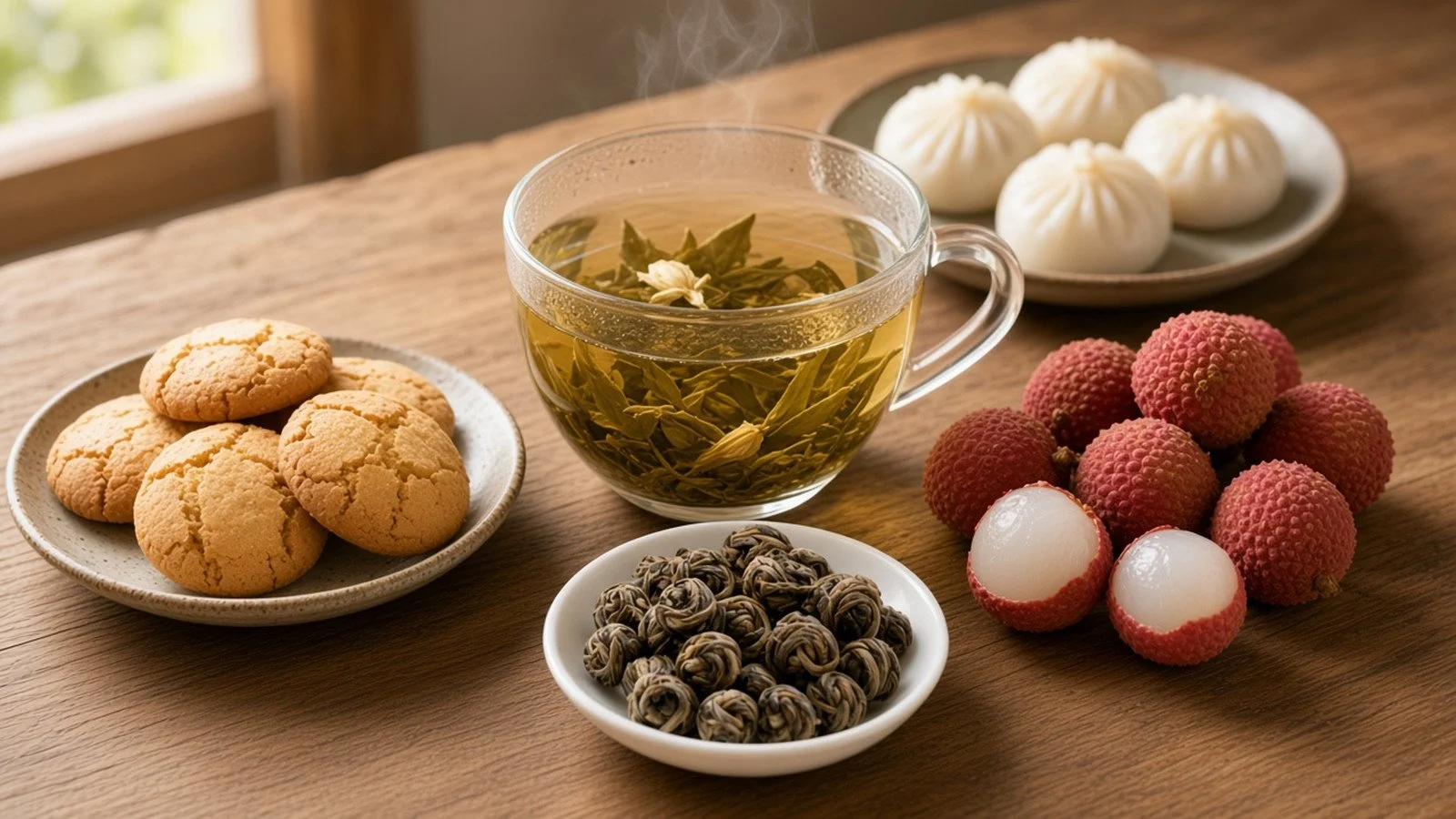
Glass cup of jasmine tea with almond cookies, fresh lychees, steamed buns, and a dish of dry Jasmine Dragon Pearls on a wooden table

What to Pair It With

Jasmine Dragon Pearls are lovely on their own, especially as a quiet afternoon cup. They also sit nicely next to light foods that won't overpower the floral aroma:

  • Dim sum and steamed dumplings

  • Steamed fish or other delicate seafood

  • Almond cookies or a simple butter cookie

  • Fresh lychees, pears or other mild fruit

Skip very spicy dishes and heavy, sugary desserts, which can drown out the jasmine. If you want a broader set of pairing ideas by tea type, see our beginner's guide to tea and food pairing.

More Jasmine Teas to Explore

If you enjoy the floral style but want a slightly different leaf, we carry a few other jasmine greens. Jasmine Needle is made from slender first-flush leaves and buds. It's smooth and subtle, with a gentle jasmine aroma that is present but never overpowering, a good choice if you're new to jasmine tea. Organic Jasmine Green has an abundant jasmine character and is produced without chemical fertilizers, pesticides or herbicides. And Jasmine Green Tea is a pleasant everyday first-grade jasmine, floral and surprisingly full-bodied, with blossoms in the blend and a pale green cup.

You can browse all of them in our Green Tea collection.

Like every tea at Beantown Tea & Spices, Jasmine Dragon Pearls is a quality loose-leaf tea at an affordable price, with sample and larger sizes so you can find your favorite. If you've been meaning to try it, the Thankful Cup Sale is on through Monday, November 30, with 20% off sitewide. The discount applies automatically at checkout. Scoop a few pearls into a glass cup, watch them open, and enjoy one of the most fragrant green teas we carry.
Jasmine Dragon Pearls: The Hand-Rolled Tea That Blooms in Your Cup

Some teas you simply drink. Jasmine Dragon Pearls is one you watch. Each small, hand-rolled pearl slowly opens in hot water, and the room fills with the sweet scent of jasmine. It is one of our favorite teas for a quiet afternoon, any time of year.

Loose Jasmine Dragon Pearls, small hand-rolled balls of green tea leaves, on a white surface

Where Jasmine Dragon Pearls Come From

Jasmine tea has a long history in China. The city of Fuzhou, in Fujian province, is especially famous for it, and its scenting traditions go back to the Southern Song dynasty.

The pearls are made from the top two leaves and the bud of new spring growth, picked in late March and early April. Each pearl is then rolled by hand.

The jasmine scent comes from real flowers. The blossoms are gathered during the day while they are still closed. In the evening, as the flowers open and release their fragrance, they are layered with the tea. After resting together, the spent flowers are removed and the tea is dried. This process is often repeated several times to give the tea a deeper scent.

What It Tastes Like

Jasmine Dragon Pearls is smooth and silky, with a clean green tea base under a sweet jasmine perfume. It is gentle, never bitter when brewed well, and pleasantly floral.

When the pearls open, look for the two leaves and the bud coming back to life. You may see a little soft "hairy down" on the bud. That is a sign of high quality and careful handling.

It pairs nicely with dim sum, steamed fish, almond cookies or fresh lychees. It is also lovely on its own.

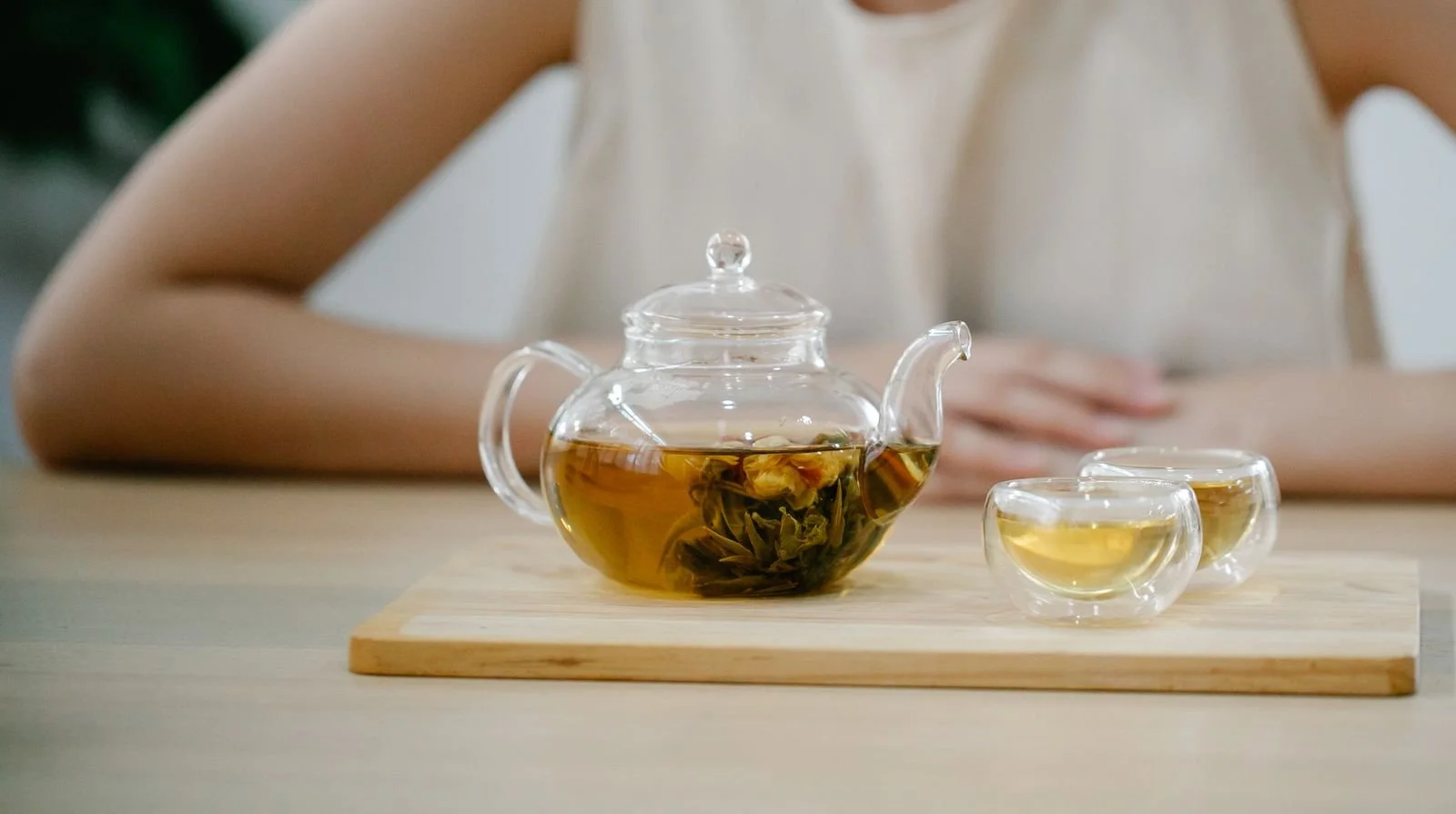
Glass teapot of golden green tea with opened leaves, beside two small glass cups on a wooden tray

How to Brew Jasmine Dragon Pearls

These are the brewing instructions from our product page, per 8 oz. of water:

  • Water temperature: 195°F / 90°C

  • Amount: 2 teaspoons

  • Steep time: 2–3 minutes

Tip: brew it in a glass teapot or a clear mug so you can watch the pearls open. You can steep the same pearls several times.

Sizes

See sizes on the product page

New to this tea? The sample size is an easy way to try it first.

Shop Jasmine Dragon Pearls from our tea shop in Boston, and explore the rest of our green tea collection.