
Lu Yu and The Classic of Tea: The Story Behind the Oldest Known Book on Tea
Long before tea blogs, brewing charts or tea shops, one man sat down and wrote an entire book about tea. His name was Lu Yu, and his Cha Jing, usually translated as The Classic of Tea, is the oldest known book devoted entirely to tea. Written in China more than 1,200 years ago, it covers where tea grows, how it was made, which water to use and even which bowl to drink from. Many of his ideas still make sense in the cup today, especially with Chinese green teas like our Dragonwell and Bi Luo Chun. Here's the story of the man known as the "Sage of Tea."
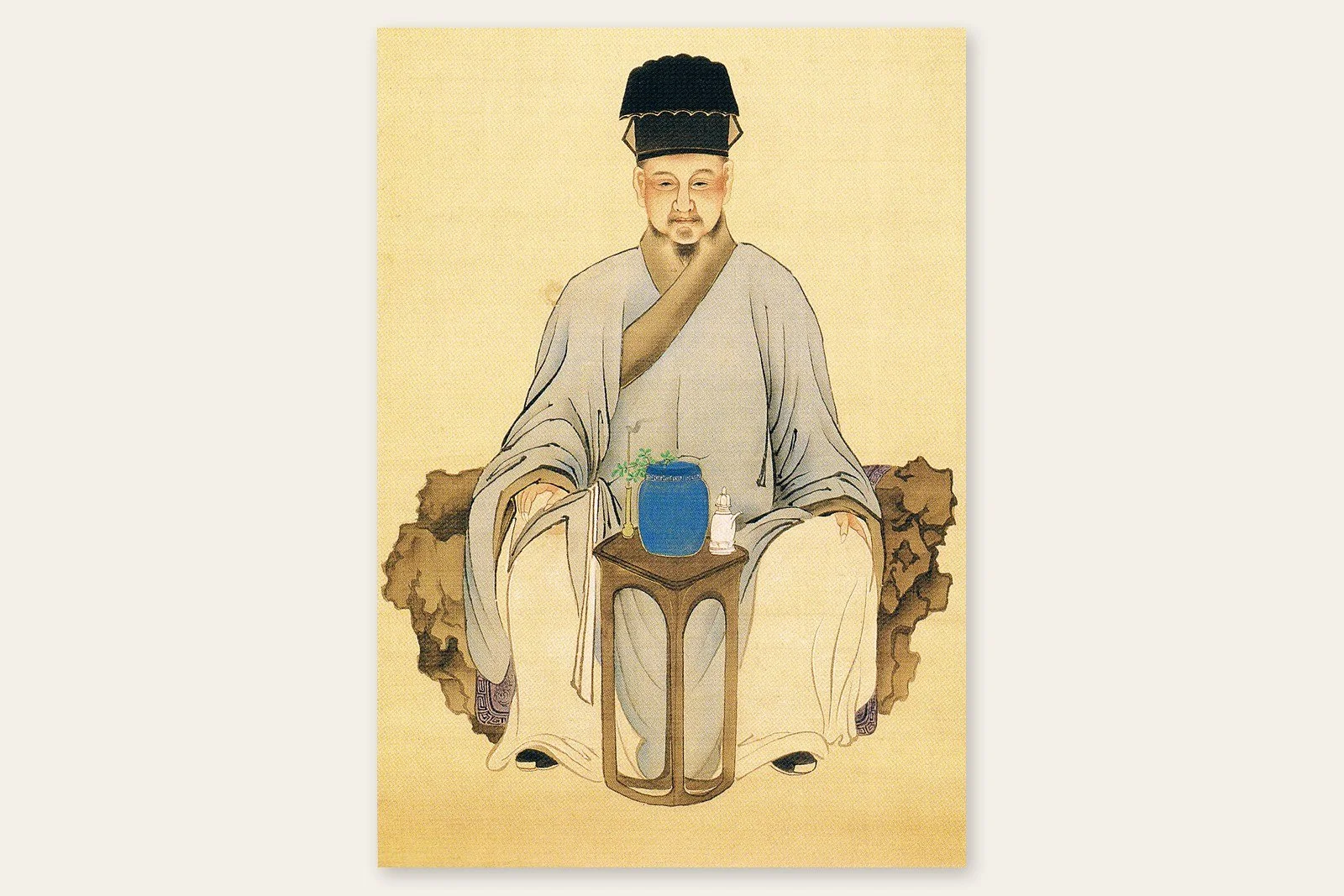
A Foundling Raised in a Monastery
Lu Yu was born in 733, during the Tang dynasty, near Jingling (today's Tianmen, in Hubei Province). Much of what we know about his early years comes from a short autobiography he wrote in 761 and from later Tang histories, so some details have the color of legend. As the story goes, he was an abandoned child raised by a Buddhist monk named Zhiji at the Dragon Cloud Monastery, where one of his chores was preparing tea for the monks.
The boy wanted to study the Confucian classics rather than become a monk, and the monastery put him to work at hard, humble jobs. By his own account, he eventually ran away and joined a troupe of traveling performers, writing comic sketches and playing the clown. A local official, Li Qiwu, noticed the talented young man and helped him get an education.
In 755, the An Lushan Rebellion threw much of northern China into chaos, and Lu Yu moved south to the tea country of Zhejiang. He settled near Huzhou and made friends with poets, monks and scholars, including the poet-monk Jiaoran and the famous calligrapher Yan Zhenqing. Later he was offered posts at the imperial court and turned them down. He began writing his tea book around 760 and kept refining it for years. By about 780, it was circulating widely.
What Is in The Classic of Tea?
The book is short, about 7,000 Chinese characters in three scrolls and ten chapters. It covers tea's origins, how tea was made and with which tools, brewing utensils, boiling and drinking, tea stories from earlier times, the regions where tea grew, and even how to copy the text onto silk scrolls to hang on the wall.
It opens with a line tea lovers still quote: "Tea is a fine tree of the south." Lu Yu then gives growing advice that still sounds familiar. He wrote that the best tea grows in broken, rocky soil, the next best in gravelly soil and the poorest in yellow clay. Wild tea, in his view, beat garden tea, and young leaves that were still curled beat fully opened ones.
How Tea Was Made and Brewed in Lu Yu's Day
Tea in the Tang dynasty didn't look like the loose leaves in your pouch. Lu Yu describes seven steps: pick the leaves, steam them, pound them, pat them into molds, dry them over a fire, string the cakes together and seal them for storage. The result was a pressed tea cake.
To brew it, you toasted a piece of the cake over a fire, ground it into a fine powder and boiled it in a cauldron. Lu Yu was very particular about the water. Mountain water was best, especially from slow-flowing springs and stone pools, river water came next, and well water was the lowest choice. He watched the boil closely, too:
First boil: bubbles like fish eyes, with a faint sound. This was when a little salt was added.
Second boil: bubbles along the edge like a gushing spring or strings of pearls. This was when the powdered tea went in.
Third boil: bubbles that roll like breaking waves. Boil any longer, he warned, and the water becomes "old" and is no longer good for tea.
He also had firm opinions about add-ins. Some people of his day boiled tea with scallions, ginger, jujubes, orange peel, dogwood or mint. Lu Yu called the result no better than water poured into a ditch, though he admitted the custom carried on anyway.
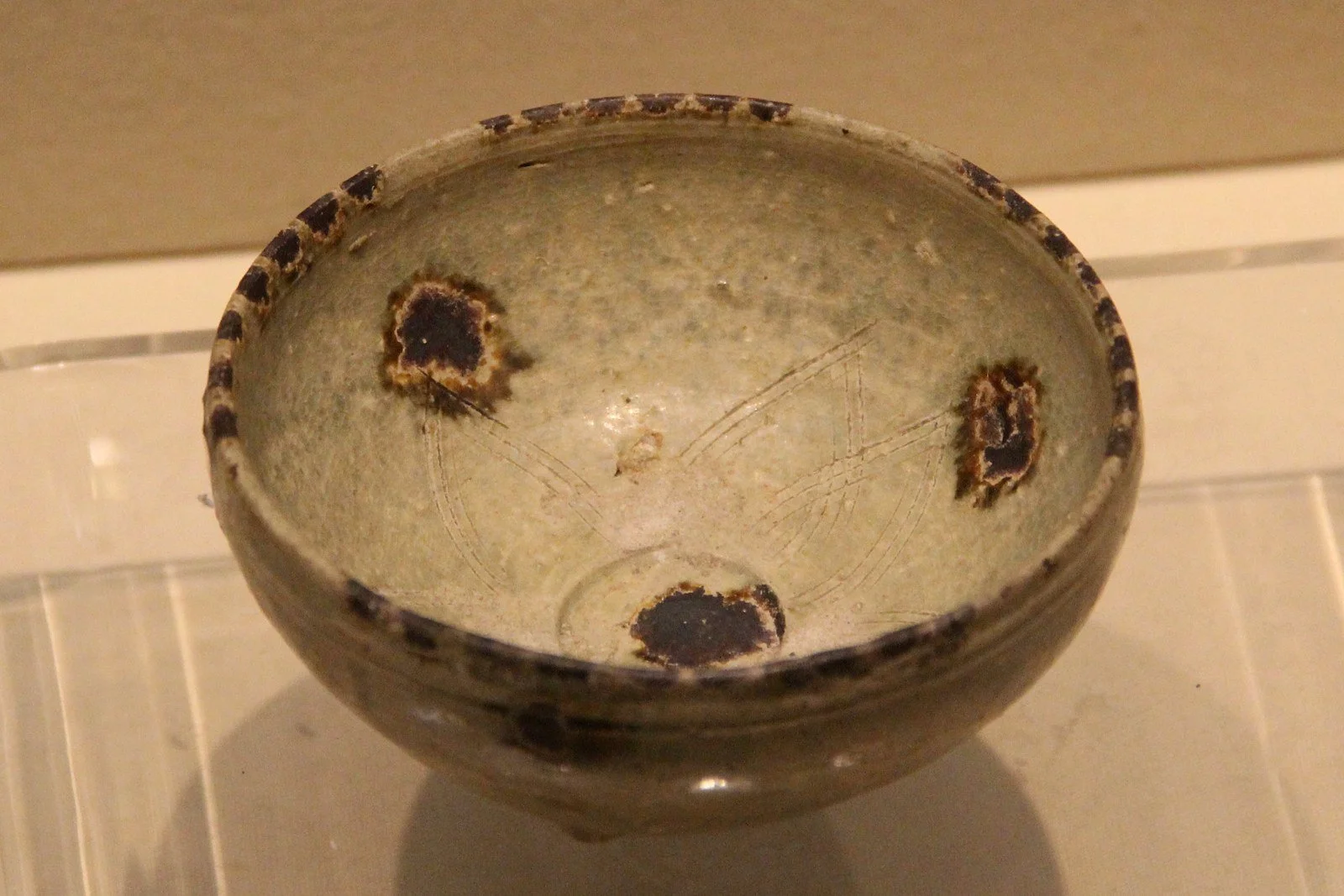
Choosing the Right Bowl
Lu Yu even ranked tea bowls by where they were made. His favorite came from the Yue kilns in today's Zhejiang, known for glossy celadon glazes in soft shades of green. Some people preferred the white porcelain of the Xing kilns in the north, but Lu Yu disagreed. If Xing ware was like silver, he wrote, Yue ware was like jade. If Xing was like snow, Yue was like ice. And Xing's white made the tea look reddish, while Yue's green glaze made the tea look green, which is exactly how he wanted it to look.
A Map of Tang Dynasty Tea Country
The eighth chapter is a guide to the tea regions of his time, ranked from best to lesser. His own corner of Zhejiang, around Huzhou, earned top marks. In the same chapter he notes tea from the Tianzhu and Lingyin temples in the hills of Hangzhou, the West Lake area where Dragonwell is grown today. He also mentions tea from the Dongting hills near Suzhou, the home of today's Bi Luo Chun. Lu Yu ranked both of those areas below his favorites, and the famous names Dragonwell and Bi Luo Chun came centuries later. Still, tea was already growing in those very hills when he wrote.
From Tea Cakes to Loose Leaf
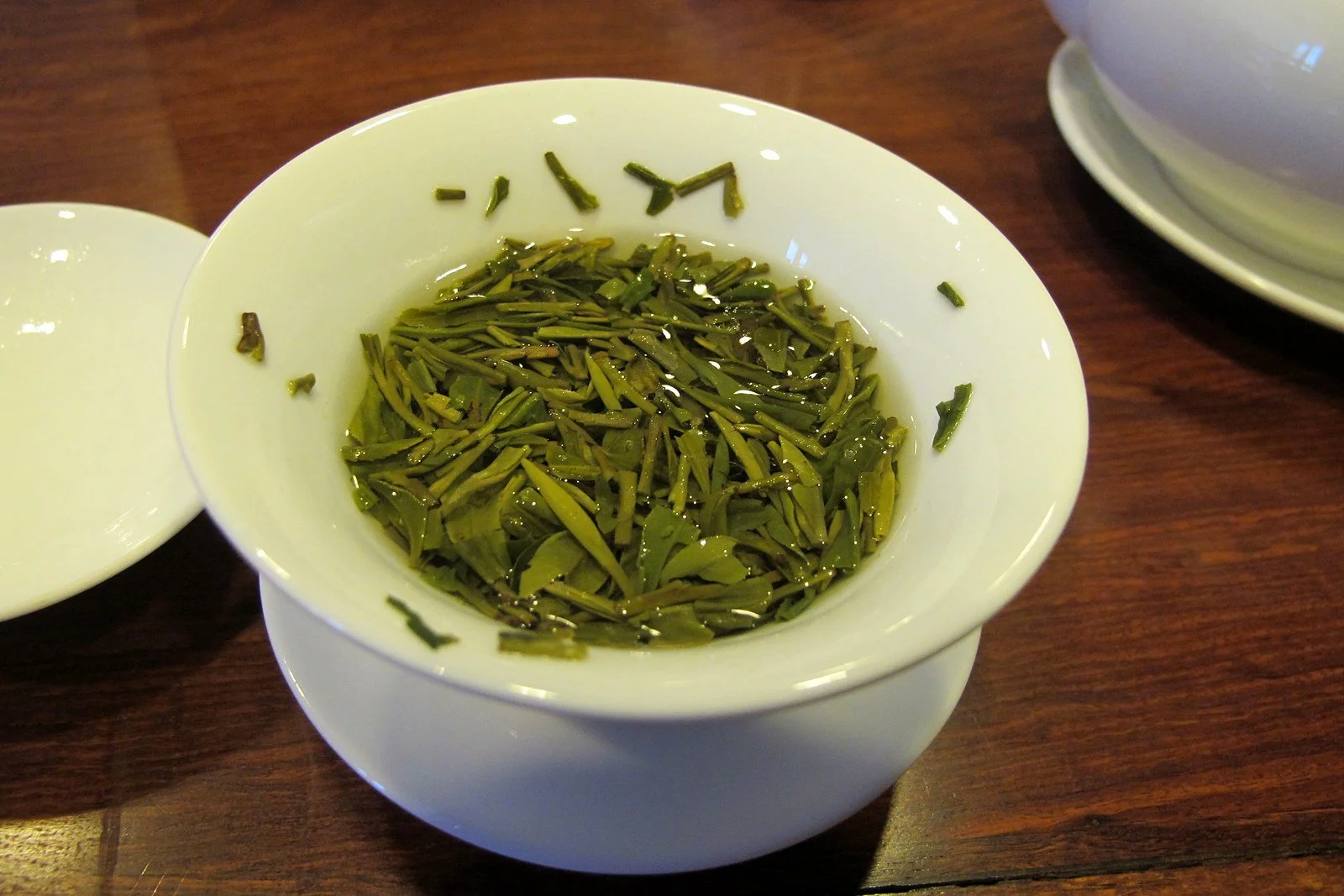
Tea kept changing after Lu Yu. In the Song dynasty (960–1279), the fashion shifted to whisking finely powdered tea in a bowl, a style that traveled to Japan and is the ancestor of today's matcha. Then, in 1391, the founding emperor of the Ming dynasty ordered that the elaborate pressed "dragon cake" tribute tea from Fujian be replaced with loose tea buds, partly to ease the heavy work it took to make them. Older habits faded slowly, but over the next two centuries steeping loose leaves became the everyday way to drink tea in China. That's the style behind the pan-fired green teas we enjoy today.
The Sage of Tea
Lu Yu died in 804, and his reputation only grew. According to the New Book of Tang, tea merchants of the time made small pottery figures of him and honored him as a god of tea. Today he is often called Cha Sheng, the "Sage of Tea," and statues of him stand in tea towns across China.
Bring a Little Lu Yu to Your Cup
You don't need a cauldron or a charcoal brazier to put his ideas to work:
Start with good water. Lu Yu was right that water matters. Fresh, filtered or spring water makes a cleaner, sweeter cup.
Watch the boil. Delicate green teas don't want a full rolling boil. Brew our Dragonwell with water at 160–180°F for 2 to 3 minutes, and our Bi Luo Chun at 175–185°F for 2 to 3 minutes. Our Tea Brewing Guide has temperatures for every type of tea.
Pick a pale cup. A white or light green cup, or a clear glass, shows off the color of a green tea the way Lu Yu's beloved Yue bowls did.
Skip the salt. Some Tang customs are best left in the history books.
As tea enthusiasts, we have been sharing quality tea at affordable prices since 2006. Dragonwell and Bi Luo Chun both come in sample and larger sizes, and you'll find more classic Chinese greens in our Green Tea collection. Brew a cup and raise it to the Sage of Tea. For another chapter in tea's long story, read about Robert Fortune, the plant hunter who carried tea from China to India.
Images via Wikimedia Commons: portrait of Lu Yu by Haruki Nanmei, 1841 (public domain); "Tang Celadon Bowl, Yue Kiln" by Gary Todd (CC0); "Longjing tea 2" by Gary Stevens (CC BY 2.0). Cropped and lightly adjusted.