
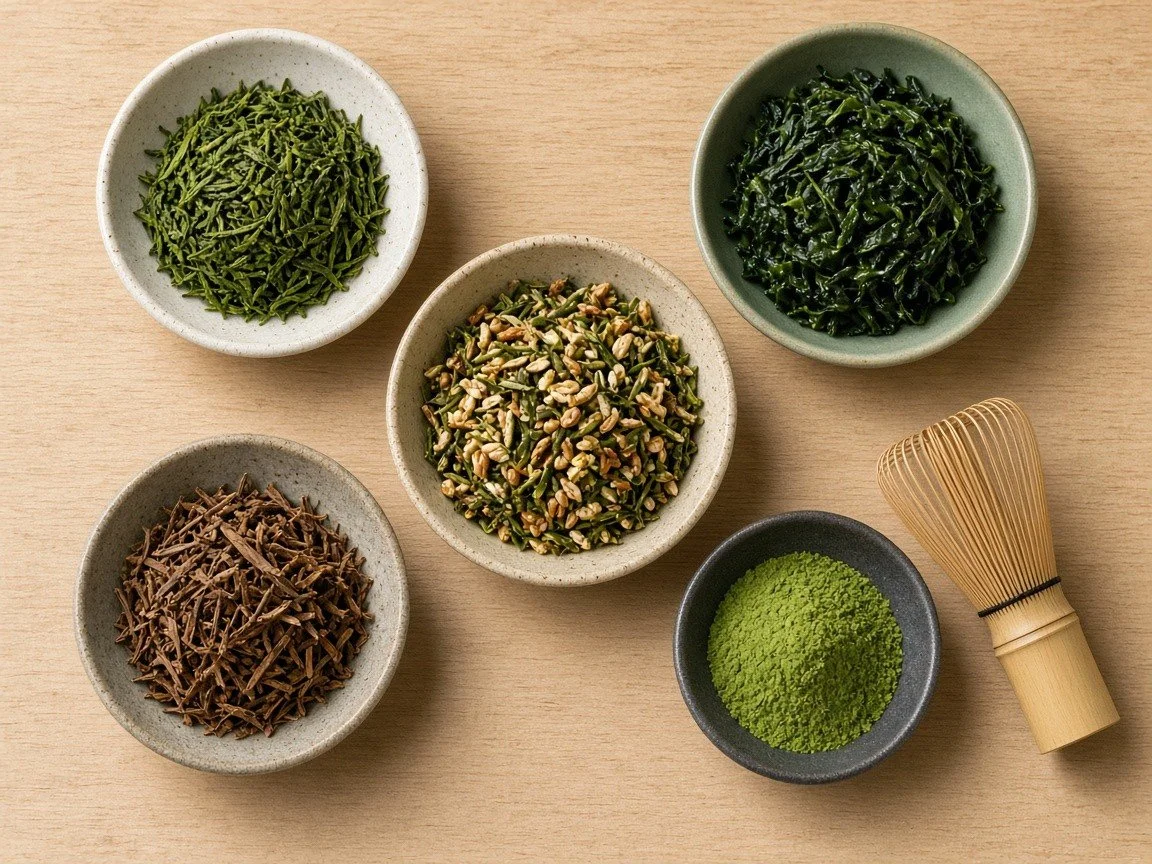
If you've ever stood in front of a list of Japanese green teas and wondered what makes sencha different from gyokuro, or why hojicha is brown, you're not alone. Japan makes some of the most distinctive green teas in the world, and once you know a little about how each one is grown and processed, picking your favorite gets a lot easier.
Here's a friendly guide to five classics: Sencha, Gyokuro, Genmaicha, Hojicha and Matcha.
What Makes Japanese Green Tea Different
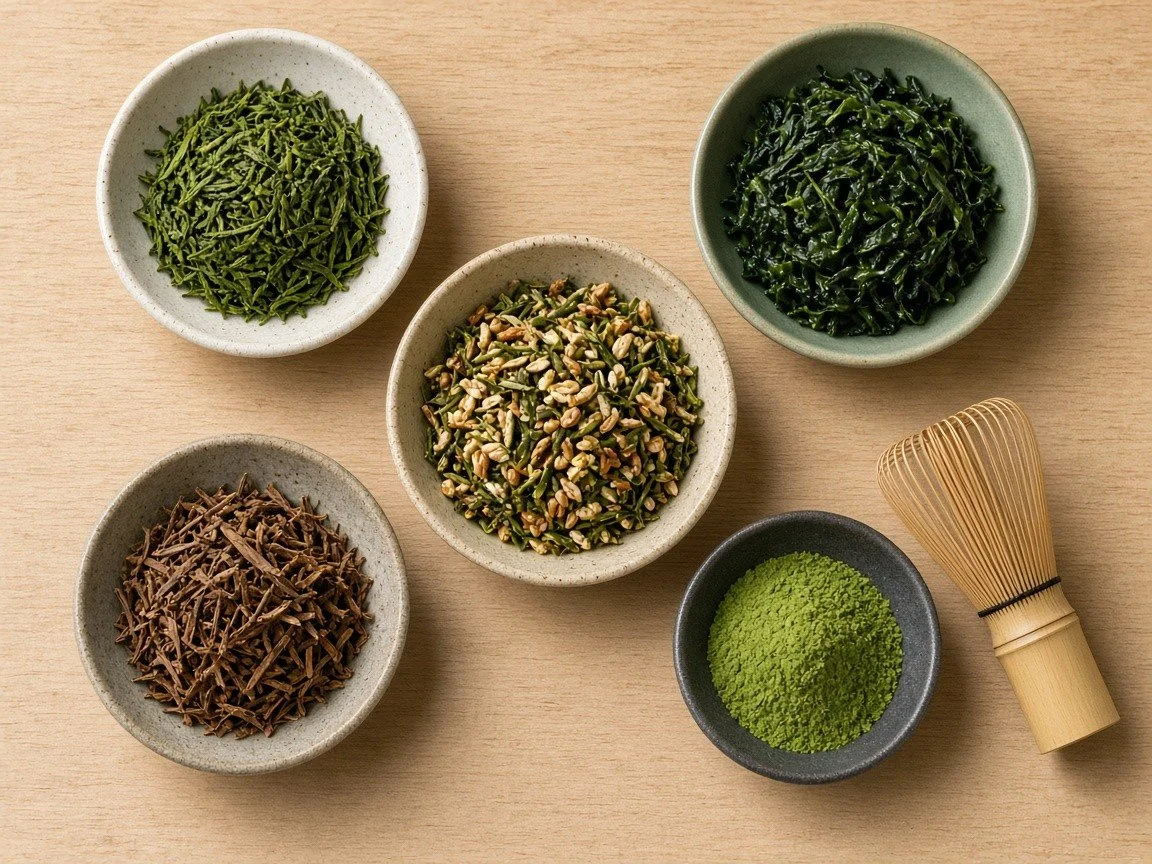
All green tea comes from the same plant, Camellia sinensis, and all of it is heated soon after picking to stop the leaves from oxidizing. The big difference is how that heat is applied. In China, most green tea is pan-fired, which tends to give a toasty, nutty flavor. In Japan, the leaves are usually steamed.
Steaming locks in a bright green color and a fresh, vegetal flavor that many people describe as grassy, sweet or even a little like the sea. The modern steaming method dates to 1738, when Nagatani Soen, a tea farmer in Ujitawara near Kyoto, developed a way to steam fresh leaves and then roll and dry them in stages. Nearly every Japanese green tea you'll meet today grows out of that idea.
Sencha: Japan's Everyday Green Tea
Sencha is the tea most people in Japan drink day to day. The leaves are grown in full sun, steamed, then rolled into thin, needle-like strands. Our Sencha comes from Kagoshima Prefecture on the southern island of Kyushu, one of Japan's largest tea-growing regions.
It brews a cup that's slightly sweet and vegetal, mildly astringent, with a clean finish. It's an easy tea to drink all day, and it makes a very refreshing iced tea, too.
How to brew: 1 heaping teaspoon (about 2 to 3 g) per 8 oz of water at 160 to 175°F, steeped 1 to 2 minutes. Don't over-brew; that's when sencha turns bitter.
Gyokuro: The Shaded "Jade Dew"
Gyokuro means "jade dew," and it's one of Japan's most prized teas. It was created in 1835 in Uji, near Kyoto. About three weeks before harvest, the tea plants are covered with shades of black cloth or bamboo and straw. With less sunlight, the leaves build up more chlorophyll and less of the compounds that cause bitterness, so they turn a deep, dark green and taste sweeter and more savory.
Our Gyokuro is rich and sweet with a smooth, almost brothy texture and a hint of seaweed. It's a tea to sip slowly from a small cup.
How to brew: use cooler water to bring out its sweetness, about 2 teaspoons (4 to 5 g) per 4 to 6 oz of water at 120 to 140°F, steeped about 2 minutes. The leaves can be steeped again.
Genmaicha: Green Tea with Toasted Rice
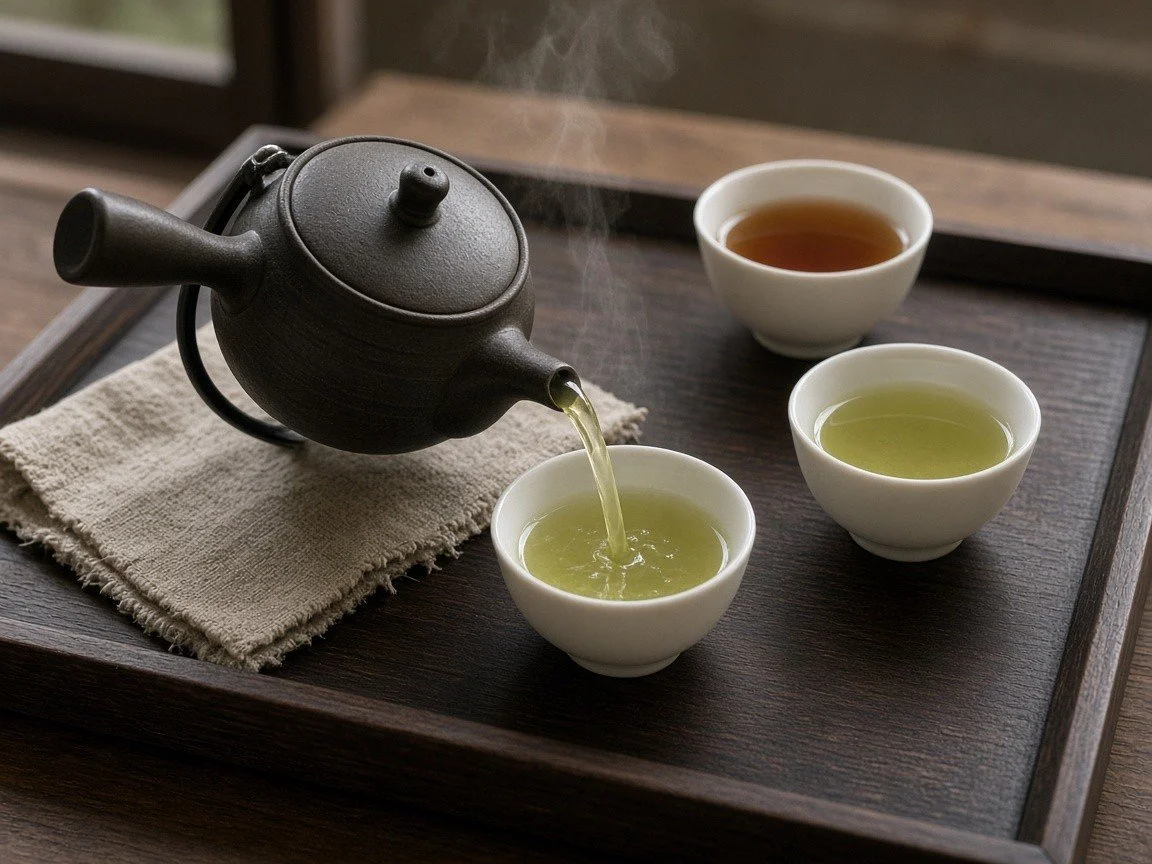
Genmaicha blends green tea with fire-toasted brown rice. A widely told story says Japanese households added the rice to stretch their tea when tea was expensive, and the combination became a favorite in its own right in the early 20th century. Some of the rice pops during toasting, which is why genmaicha is nicknamed "popcorn tea."
Our Genmaicha uses a high-grade sencha and gyokuro base, so you get a fresh green flavor softened by the warm, bakery-like taste of the rice. It's a great first Japanese tea for anyone who prefers a mellow, savory cup over a grassy one.
How to brew: 1 heaping teaspoon (about 3 g) per 8 oz of water at 175 to 185°F, steeped 2 to 3 minutes.
Hojicha: Roasted Green Tea
Hojicha is the one that surprises people, because it isn't green at all in the cup. It's green tea that has been roasted, which turns the leaves reddish brown and gives them a toasty, caramel-like aroma. The most widely repeated account says it was first made in Kyoto around the 1920s, when a tea merchant began roasting leftover leaves so they wouldn't go to waste.
Our Hojicha is made from roasted bancha, a later-harvest green tea. Roasting removes almost all the astringency and lowers the caffeine a lot, so it's a popular evening tea in Japan. It tastes toasty, nutty and lightly sweet, and it's lovely with dessert.
How to brew: unlike most green teas, hojicha likes hot water. Use 1 to 2 heaping teaspoons (about 3 g) per 8 oz of water at 195 to 212°F, steeped 30 seconds to 2 minutes.
Matcha: Shaded Tea, Ground to a Powder
Matcha starts like gyokuro, with tea plants shaded for weeks before harvest. The leaves are then dried and stone-ground into a fine, bright green powder. Because you whisk the powder right into the water, you drink the whole leaf, which gives matcha its rich body and full flavor. Powdered tea was carried from China to Japan around 1191, traditionally credited to the Zen monk Eisai, and matcha later became the heart of the Japanese tea ceremony.
Our Matcha Samidori is a first-harvest spring matcha from Uji with a vivid color and a sweet, smooth, lingering taste. For lattes, smoothies and baking, our Culinary Matcha is made for mixing.
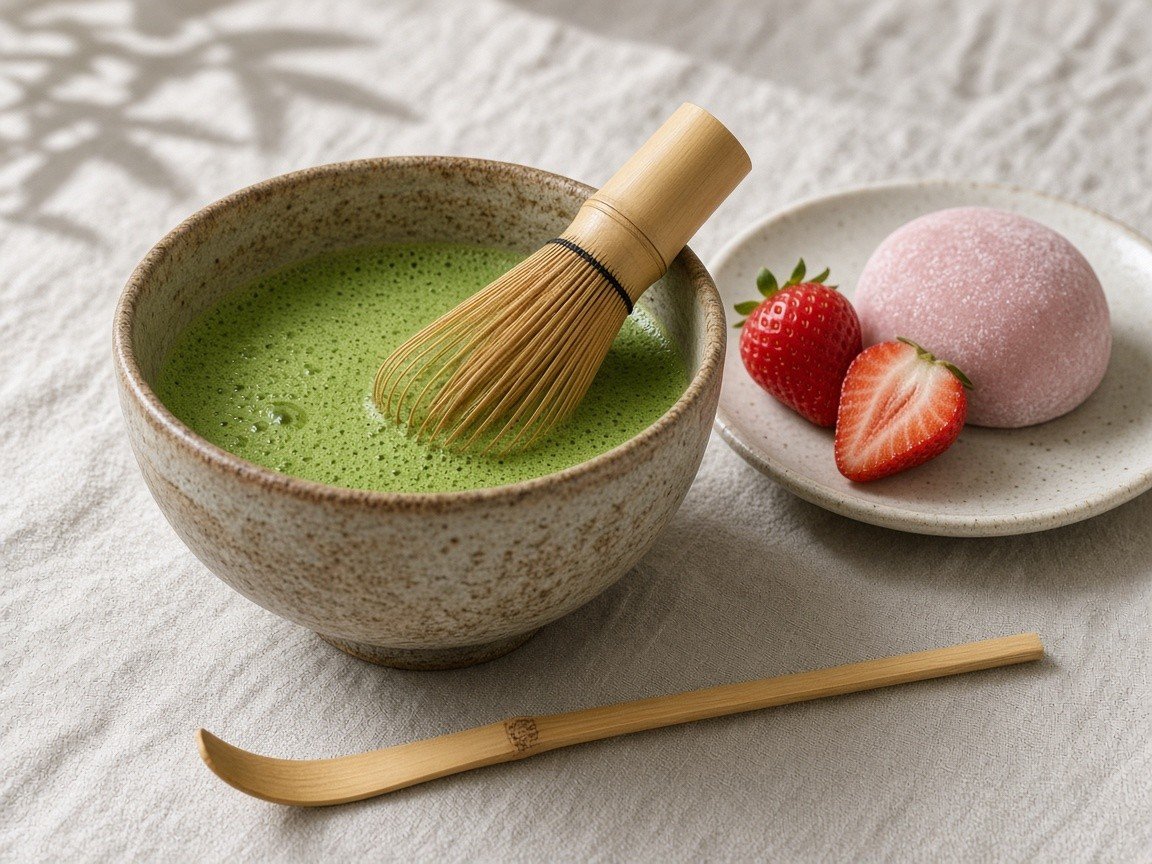
How to prepare: sift about 1 teaspoon (1 to 2 g) into a bowl, add a few drops of hot water and whisk into a paste. Add 6 to 8 oz of water at 160 to 175°F and whisk briskly in a zigzag motion until frothy. A bamboo whisk makes the froth much easier to get.
Which One Should You Try First?
For an everyday cup: start with Sencha.
For something sweet, rich and special: try Gyokuro.
If grassy flavors aren't your thing: Genmaicha or Hojicha.
For a low-caffeine evening cup: Hojicha.
For lattes or a bold, creamy tea: Matcha.
One tip that applies to almost all of them: go easy on the water temperature. Boiling water is the most common reason Japanese green tea tastes bitter. Hojicha is the happy exception.
And if you've got a bowl of Halloween candy within reach tonight, a cup of toasty Genmaicha or Hojicha is a surprisingly good match for chocolate.
You'll find all of these in our Green Tea and Matcha collections, most with sample sizes so you can taste a few side by side. Quality tea at affordable prices is what we're all about, and Japanese green tea is a wonderful place to explore.
Happy sipping!