
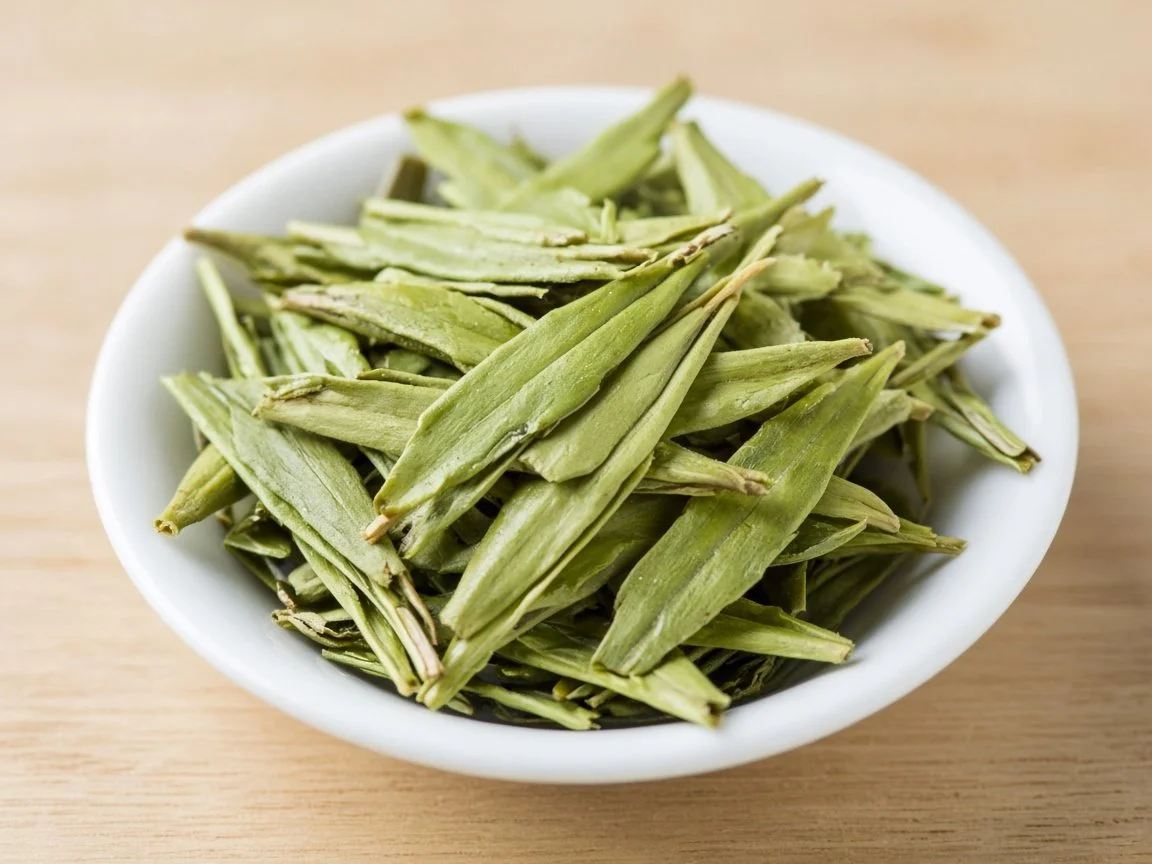
Some teas announce themselves before the water even hits the leaf. Open a pouch of Dragonwell and you'll see flat, glossy, emerald blades, each one pressed smooth by hand. It's one of China's most famous green teas, also known as Lung Ching or Longjing, and it's admired as much for its beauty as for its gentle, sweet flavor. If you've been curious about Chinese green tea, or you just want a calm, satisfying everyday cup, our Dragonwell Green Tea is a wonderful place to start.
Where Dragonwell Comes From
Dragonwell takes its name from a village and a spring in the hills near West Lake in Hangzhou, in China's Zhejiang Province. Tea has been grown there for many centuries, and the tea's fame grew under imperial patronage. Emperors even wrote poems in its praise.
The name matters in China, too. Only tea grown in a small protected zone around West Lake can be sold there as "Xihu (West Lake) Longjing." Our Dragonwell is grown on the side of West Lake and produced by hand through a 10-part process.
Timing is part of the story as well. The finest Dragonwell is picked in early spring, before the Qingming festival in early April, when the new leaves are young and tender.
How Dragonwell Gets Its Flat Shape
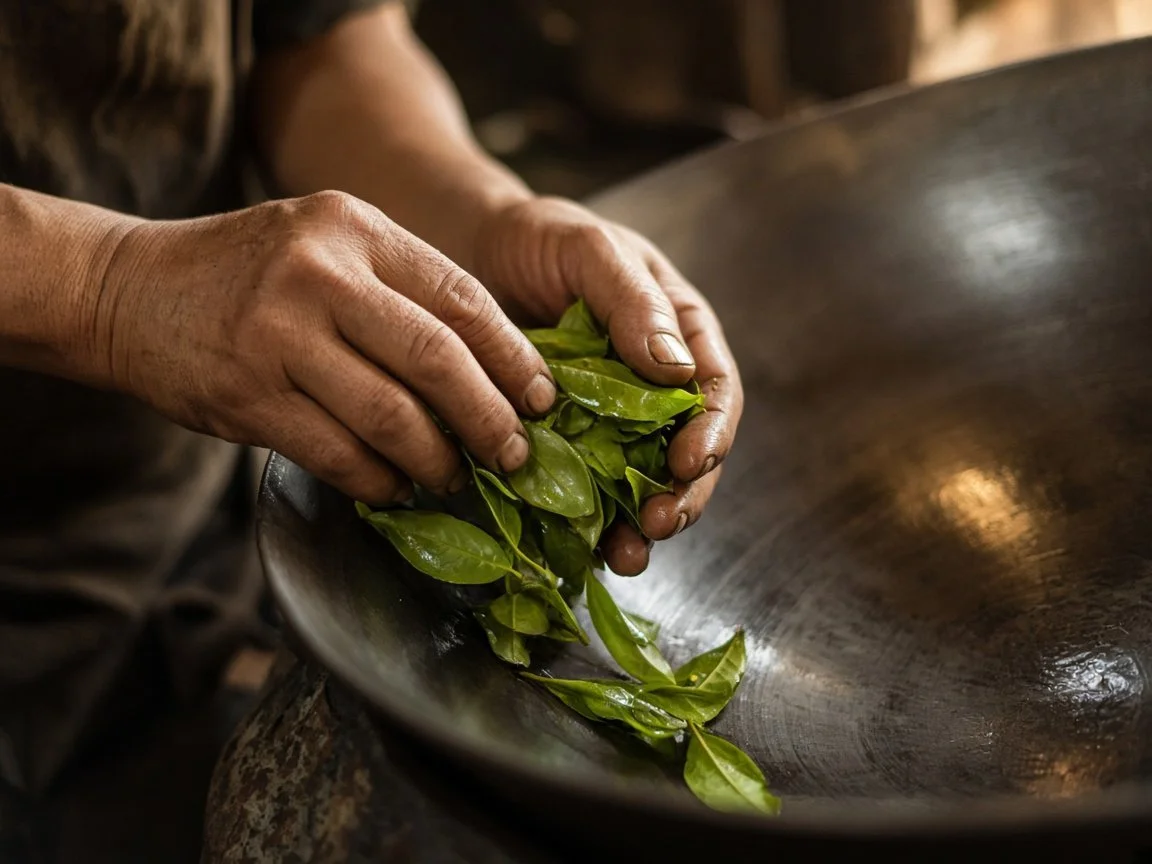
Most green teas are heated soon after picking to stop oxidation, the natural browning that turns leaves into oolong or black tea. Japanese green teas such as sencha are usually steamed. Dragonwell, like all classic Dragonwell, is pan-fired instead.
Tea makers press the leaves against a hot wok by hand. That heat stops oxidation and keeps the leaves green, and the pressing shapes them into their signature flat blades. It also draws out a lightly toasty aroma that you'll taste in the cup. Skilled makers work the leaves by hand, adjusting their movements as the leaf changes in the hot wok. It takes real skill, and it's a big part of why Dragonwell tastes the way it does.
If you'd like to compare the two styles, our guide to Japanese green teas is a good companion read. Steamed Japanese greens tend to lean grassy and marine, while pan-fired Dragonwell leans nutty and sweet.
What Dragonwell Tastes Like
The brewed tea is very bright, full-bodied, sweet and slightly nutty, with a floral character. Many drinkers compare Dragonwell's toasty sweetness to roasted chestnuts, and it finishes clean and fresh.
That balance is what makes it so easy to love. It has enough body and sweetness to satisfy, but it never feels heavy. If you've found some green teas too grassy, Dragonwell's mellow, nutty side may surprise you. It also makes an exceptional, relaxing afternoon tea, the kind of cup you can sip slowly while you read or catch up with a friend.
How to Brew Dragonwell
Dragonwell is gentle, so it likes gentle treatment. Here's our general guideline:
Tea: 1 teaspoon (about 2 grams) per 8 oz of water. The flat leaves are light and fluffy, so a level teaspoon goes a long way.
Water: 160 to 180°F. Avoid boiling water, which can make green tea taste bitter. If you don't have a variable-temperature kettle, let just-boiled water sit for a few minutes before pouring.
Time: 2 to 3 minutes, then taste and adjust.
Re-steep: Dragonwell is good for multiple infusions. Steep the same leaves again, adding a little time to each new cup, and notice how the flavor shifts. Our re-steeping guide has more on getting the most from your leaves.
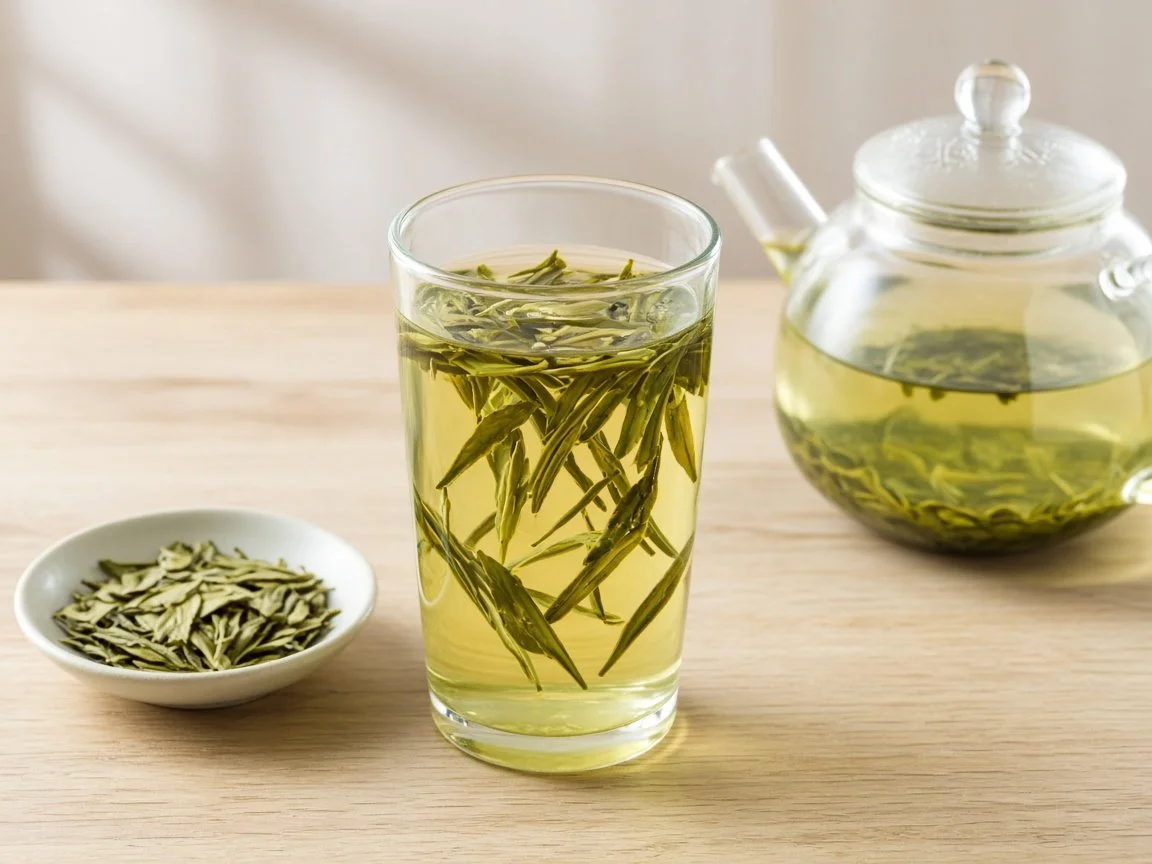
For a little everyday ceremony, brew it in a clear glass. You can watch the flat blades soak up water, turn soft green and drift slowly through the cup.
If a cup ever tastes sharp or harsh, the fix is usually cooler water or a shorter steep. Our posts on tea brewing temperatures and why tea turns bitter walk you through it.
Want it iced? Brew it a little stronger than usual, using the same cooler water, then pour it over a full glass of ice. You can also cold brew it by steeping the leaves in cold water in the refrigerator for several hours, then straining. Cold brewing is very forgiving and brings out Dragonwell's soft, sweet side.
What to Eat with Dragonwell
Because it's sweet and delicate rather than bold, Dragonwell shines next to lighter food that won't drown it out. Try it with:
Steamed dumplings
Light seafood, such as steamed fish or shrimp
Vegetable stir-fries
Mild cheeses
For more ideas, see our Tea and Food Pairing for Beginners guide.
Who Will Love Dragonwell
Green tea newcomers: its nutty sweetness is a friendly introduction to green tea, with no harsh grassiness.
Anyone who loves toasty flavors: if you enjoy the roasty side of genmaicha or hojicha, Dragonwell's chestnut-like warmth will feel familiar, in a fresher, greener way.
Afternoon tea drinkers: it's calm, satisfying and easy to sip slowly.
Curious explorers: it's one of China's most celebrated teas, and a classic every tea lover should taste at least once.
If You Like Dragonwell, Try These Next
Bi Luo Chun is another famous Chinese green tea, hand-rolled into tiny spirals, with a floral, slightly earthy cup and nutty notes. Tasting it next to Dragonwell is a fun way to see how leaf shape and region change a tea.
Green Curls is a crisp, easygoing green tea from the mountains of Fujian with a gentle hint of smoke.
You'll find these and many more in our Green Tea collection. Like every tea at Beantown Tea & Spices, Dragonwell is a quality loose-leaf tea at an affordable price, with sample and larger sizes so you can find your favorite. Put the kettle on, keep the water gentle, and let those flat green leaves show you why Dragonwell has been treasured for centuries.