
Tea Info › Oolong Tea
What Is Oolong Tea?
Oolong is the in-between tea. Its leaves are only partly oxidized, so an oolong can sit close to a fresh green tea or close to a rich black tea, and anywhere in between. That's why oolongs range from light, floral and creamy to toasty, roasted and honeyed, and why so many tea lovers never stop exploring them.
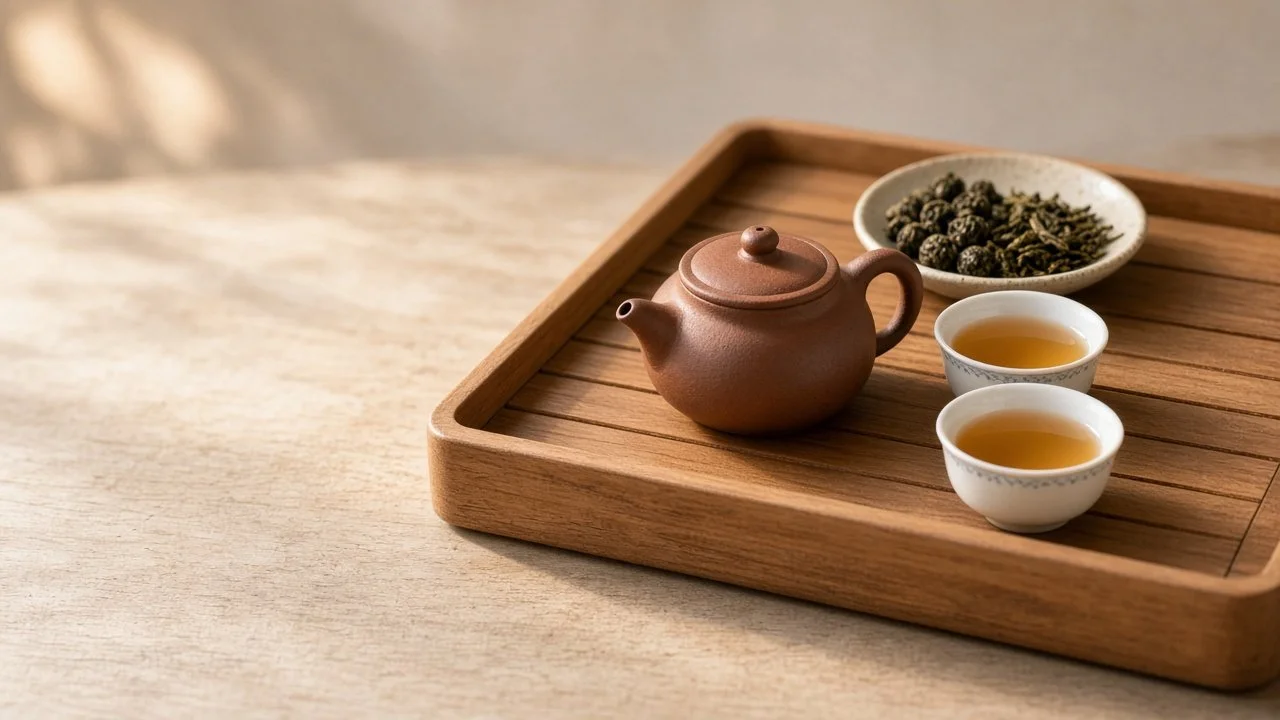
Partly Oxidized, Fully Fascinating
Like every true tea, oolong comes from Camellia sinensis. Green tea is heated right away so it doesn't oxidize. Black tea is oxidized all the way. Oolong stops somewhere in the middle. Some oolongs are very green, at only about 10–15% oxidation, while others are dark, at around 85%.
The level of oxidation, together with how the leaves are shaped and whether they're roasted, gives each oolong its character. If you look closely at brewed oolong leaves, you'll often see that the edges are slightly brown while the centers stay green. That's the signature of how oolong is made.
Swipe the graphic sideways to see it in full →
How Oolong Is Made
Oolong takes skill and patience. The leaves must be processed as soon as they're picked, and the tea maker watches them closely at every step.
- PluckOolong leaves are picked a little more mature than leaves for green tea, not at their most tender stage.
- WitherThe leaves wilt in the sun, then rest indoors to soften.
- BruiseThe leaves are shaken in bamboo baskets or tumbled, which lightly bruises their edges. The bruised edges oxidize faster than the centers.
- FireWhen the tea maker judges the oxidation is just right, the leaves are heated to stop it and lock in the flavor.
- Shape, dry & roastThe leaves are rolled into tight balls or long twists and dried. Some oolongs are then roasted for a warmer, toastier cup.
What Does Oolong Taste Like?
Lighter oolongs taste floral and fresh, with notes of orchid, lilac and honey, and sometimes a creamy, buttery texture. Darker and roasted oolongs are toasty, nutty and honeyed, with stone fruit and a warm, mineral finish. Because the leaves open a little more with each steep, one pot of oolong can change from cup to cup.
Light & floral
Lightly oxidized, usually rolled into tight balls. Fragrant, fresh and smooth.
Try: Jade Oolong, Ali Shan, Milk Oolong, Iron Goddess (Ti Kuan Yin)
Dark & roasted
More oxidized or charcoal-roasted, often in long twisted leaves. Toasty, earthy and honey-sweet.
Try: Wuyi Oolong, Shui Xian, Formosa Oolong, Roasted Tung Ting
Where Oolong Comes From
Fujian, China is oolong's homeland. The rocky Wuyi Mountains in the north produce dark, mineral "rock teas" like Wuyi Oolong (Da Hong Pao, "Big Red Robe") and Shui Xian. Anxi, in the south, is home to the floral, mineral Iron Goddess (Ti Kuan Yin).
Taiwan, once known to the West as Formosa, learned oolong from Fujian, with tea plants and know-how coming across the strait. Today Taiwan is famous for its oolongs: Tung Ting ("frozen summit") from a mountain in Nantou County, high-mountain Ali Shan, and Milk Oolong, made from the Jin Xuan tea cultivar.
How to Brew Oolong
Oolong is forgiving and rewards re-steeping. These numbers come from the brewing tips on each of our oolong pages. Adjust to your taste.
Swipe the graphics sideways to see them in full →
| Tea | Amount | Water | Time | Tips |
|---|---|---|---|---|
| All our oolongs | 1–2 teaspoons per 8 oz | 185–205°F | 3–5 minutes | Use the larger amount for big, open leaves. The same leaves can be infused several times. |
| Iced | Twice the usual amount | Same as hot | Same as hot | Pour the hot tea through a strainer into a glass about 3/4 full of ice. |
| Cold brew (rolled oolongs) | About 1 part tea to 50 parts water by weight | Cold or room-temperature water | 6–12 hours in the fridge | Tightly rolled oolongs like Jade Oolong and Iron Goddess need longer to open up. |
Give the leaves room
Rolled oolongs look small in the spoon but open up to many times their size. Use a roomy pot or infuser so they can unfurl.
Steep it again (and again)
Keep your leaves after the first cup. Each new infusion brings out different notes. Add a little time with each round.
What to Eat With Oolong
Oolong's range makes it one of the most food-friendly teas. Match light oolongs with light food, and roasted oolongs with richer flavors.
- Jade Oolong, Ali Shan & Milk Oolong: seafood, steamed dumplings, fresh fruit and lightly sweet pastries
- Iron Goddess (Ti Kuan Yin): dim sum, roasted nuts and mild cheeses
- Wuyi Oolong & Shui Xian: roasted meats, mushrooms and dark chocolate
- Formosa & Roasted Tung Ting: grilled dishes, toasted breads and honey cakes
Our Oolong Teas
From light and floral to dark and roasted. Each tea links to its own page with tasting notes and brewing tips.
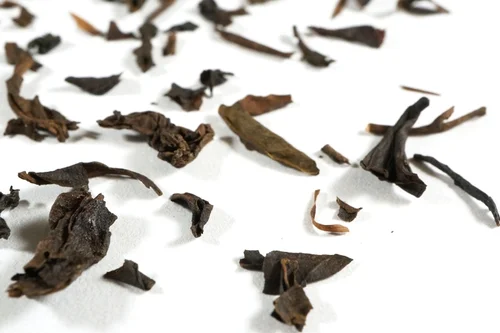
Formosa Oolong
Smooth, lightly sweet and toasty with nutty notes. A very good introduction to oolong.
View tea →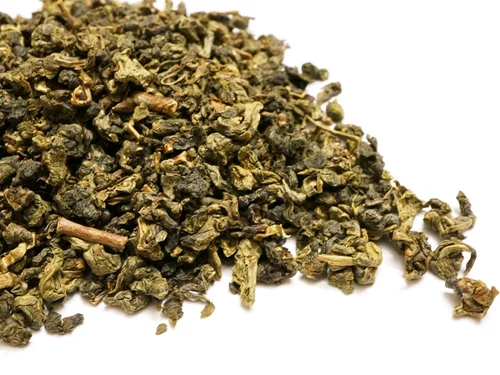
Jade Oolong
Handmade in Taiwan, with a fragrant cup and a balance between green and black tea.
View tea →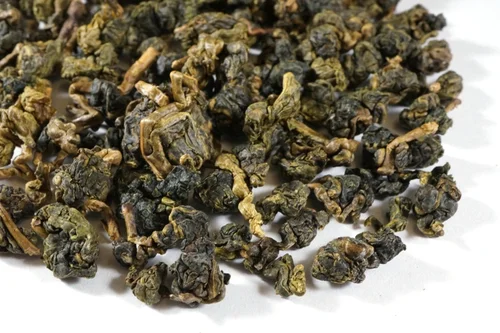
Ali Shan Oolong
Light, floral and softly sweet, with notes of orchid and honey.
View tea →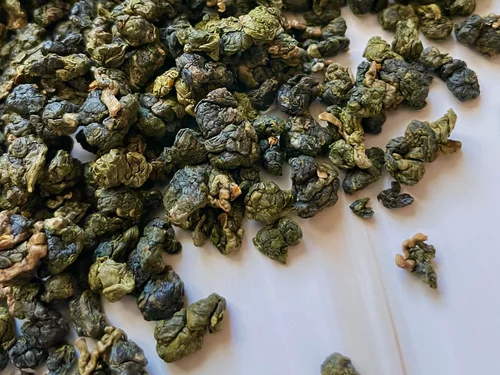
Milk Oolong
Creamy, buttery and floral. Despite the name, there's no milk or dairy in it.
View tea →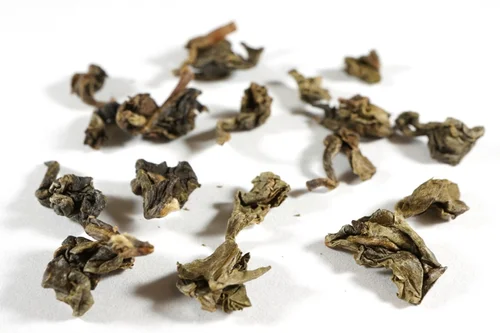
Iron Goddess (Ti Kuan Yin)
A classic from Anxi: nutty and mineral, with a lingering orchid finish.
View tea →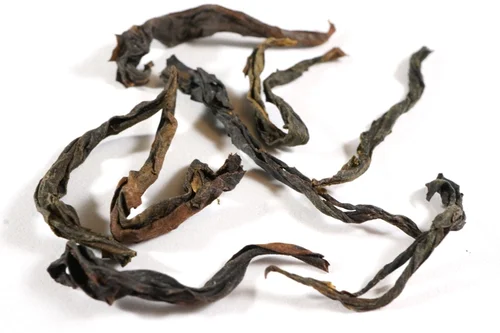
Wuyi Oolong
Toasty, earthy and layered with honey, with a floral aftertaste.
View tea →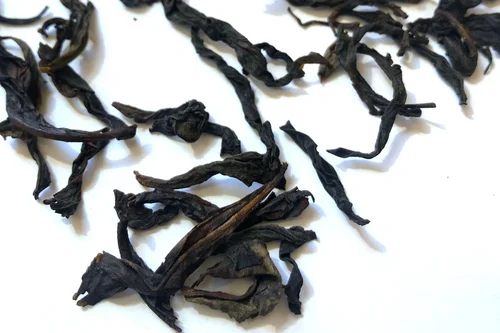
Shui Xian (Water Spirit)
A traditional Wuyi oolong: smooth, toasty and honeyed, with hints of peach.
View tea →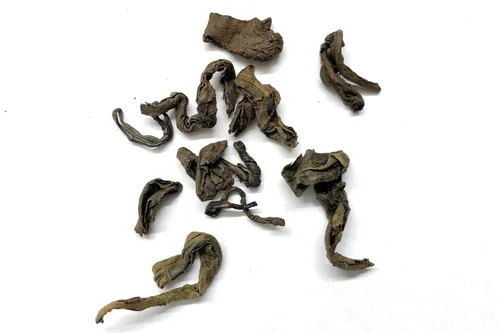
Roasted Tung Ting
Charcoal-roasted Taiwanese oolong: warm, nutty and gently sweet.
View tea →Oolong Questions
Have a question we didn't answer? Get in touch. We're always happy to talk tea.
Is oolong "semi-fermented"?
You'll often see oolong called semi-fermented. In tea, "fermentation" is the traditional word for oxidation, the natural browning of the leaf. No actual fermenting takes place. "Partly oxidized" is the more accurate term.
How many times can I re-steep oolong?
Usually several times. Many oolongs keep giving flavor for three or more infusions. Add a little steeping time with each round and taste as you go.
Does oolong have caffeine?
Yes. Contains caffeine; the amount varies. Oolong comes from the tea plant. For a caffeine-free cup, try our herbal, fruit and rooibos teas.
Does Milk Oolong contain milk?
No. Milk Oolong gets its creamy, buttery character from the tea itself, made from the Jin Xuan cultivar in Taiwan. There's no milk or dairy in it.
How should I store oolong?
In an airtight container, away from light, heat, moisture and strong smells. More on tea storage →