
Tea Info › White Tea
What Is White Tea?
White tea is the least processed of all teas. Tender buds and young leaves are simply withered and dried, with no rolling, steaming or pan-firing. The result is a pale golden cup with a delicate, fresh, softly sweet flavor that rewards a slow sip.
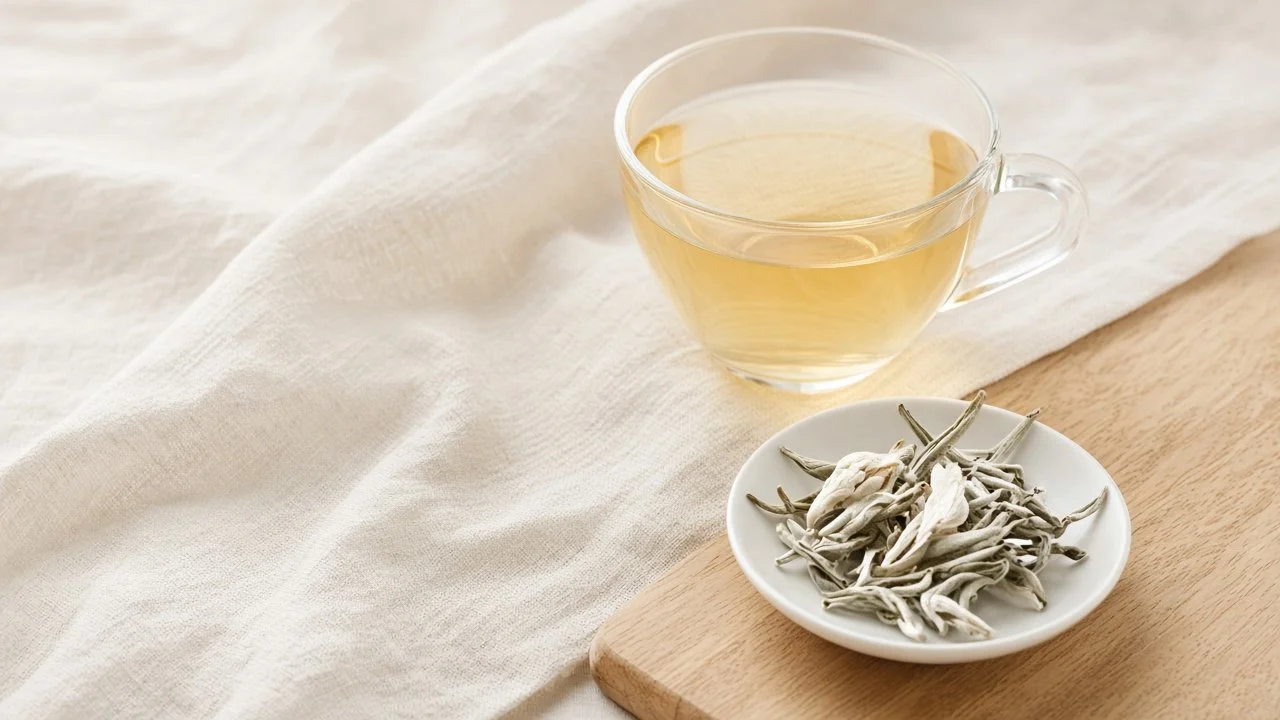
Simply Withered and Dried
White tea comes from the same plant as every true tea, Camellia sinensis. What makes it different is how little is done to it. Green tea leaves are heated to stop oxidation, and black tea leaves are rolled and fully oxidized. White tea leaves are simply left to wither and dry, so only a little natural oxidation happens along the way.
The best white teas are made from buds and young leaves covered in fine, silvery down, which gives the tea its name. When brewed, white tea makes a pale yellow cup with a delicate, fresh flavor.
Swipe the graphic sideways to see it in full →
How White Tea Is Made
Take the most common white tea, White Peony (Bai Mu Dan), as an example. It's simple in theory, but it takes great care.
- PluckOnly "two leaves and a bud" are selected. They should be very light green, almost gray-white, and covered in velvety down.
- WitherThe leaves are not steamed or pan-fired. They're spread out to wither naturally, often in the sun.
- Watch the weatherConditions matter: leaves withered when it's too hot turn reddish, and when it's too cold they turn blackish.
- DryThe leaves are dried in the sun. If machine drying is needed, it's a gentle bake below about 104°F.
Types of White Tea
Silver Needle
Bai Hao Yin Zhen, "white hair silver needle." Made only from slender, downy buds. It first appeared in Fuding, in Fujian Province. The cup is clear and glowing, with a delicate fragrance.
White Peony
Bai Mu Dan. Buds plus young leaves from the Narcissus (chaicha) bush, first made around Shuiji in Jianyang and later in Zhenghe. Soft, velvety and gently fruity.
Aged white tea
White tea can be aged, much like some darker oolongs. Stored well, it keeps oxidizing slowly and turns richer and mellower. An old Fujian saying calls white tea "tea in the first year, treasure after seven."
What Does White Tea Taste Like?
White tea is gentle and subtle: sweet, smooth and lightly floral, with soft notes of honey, melon or hay. Silver Needle is the most delicate. White Peony has a little more body and fruitiness. Aged whites turn mellow and honeyed, sometimes with a hint of walnut.
Flavored White Teas
White tea's soft flavor makes a lovely base for fruit. Our Peach White Tea is White Peony with the natural flavoring oil of peach, and Blueberry White Tea brings a bright berry sweetness.
Where White Tea Comes From
Fujian Province, China is the traditional home of white tea. Silver Needle first appeared in Fuding, and growers in Fuding and Zhenghe later chose bush varieties with especially large, downy buds. White Peony began around Shuiji, in Jianyang, and its production spread to nearby Zhenghe. Our aged white teas come from Fujian too.
How to Brew White Tea
Treat white tea gently: water below boiling and a little patience. These numbers come from the brewing tips on each of our white tea pages. Adjust to your taste.
Swipe the graphics sideways to see them in full →
| Tea | Amount | Water | Time | Tips |
|---|---|---|---|---|
| Silver Needle, White Peony, Snowbud | 1–2 teaspoons per 8 oz | 170–185°F | 3–5 minutes | Also Peach White and Blueberry White. Fluffy leaves take up room, so use the larger amount for buds. |
| Aged white teas | 1–2 teaspoons per 8 oz | 185–200°F | 3–5 minutes | Aged Silver Needle and Aged Snowbud take slightly hotter water and can be re-steeped several times. |
| Iced | Twice the usual amount | Same as hot | Same as hot | Pour the hot tea through a strainer into a glass about 3/4 full of ice. |
| Cold brew | About 1 part tea to 50 parts water by weight | Cold or room-temperature water | 4–12 hours in the fridge | Strain, and keep the tea refrigerated. |
Don't use boiling water
Very hot water can make delicate white tea taste flat or bitter. Let the kettle cool for a few minutes after boiling, or use a thermometer.
Pale doesn't mean weak
White tea brews a light-colored cup even when it's full of flavor. Taste it rather than judging by color, and steep longer if you'd like more depth.
Our White Teas
Each tea links to its own page with tasting notes and brewing tips.
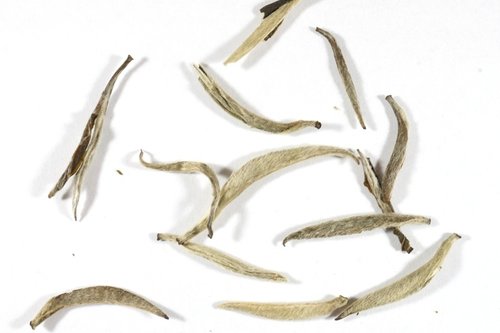
Silver Needle
Slender, downy buds that brew a clear, glowing cup with a lingering, delicate fragrance.
View tea →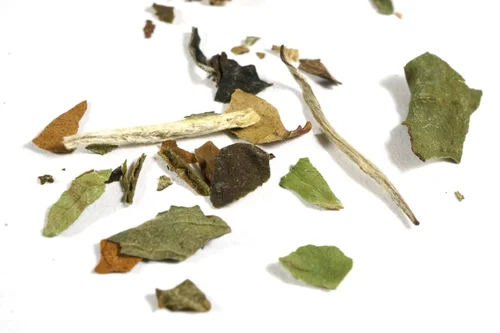
White Peony
Soft, velvety and gently fruity, with delicate jammy notes.
View tea →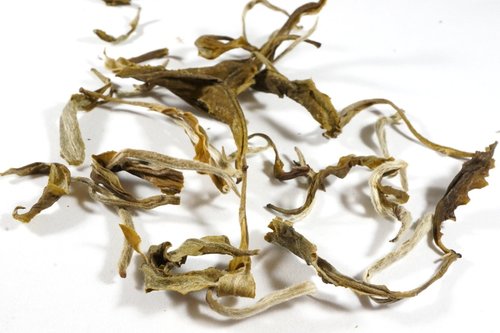
Snowbud
A bright, crisp cup with a mellow flavor and floral hints.
View tea →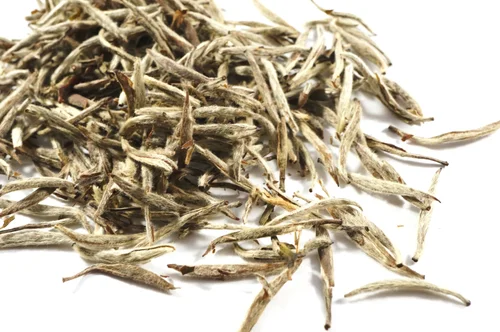
Aged Silver Needle
Mellow, honeyed and quietly luxurious, aged for more than five years.
View tea →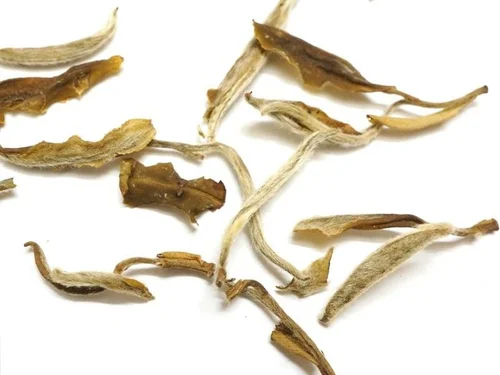
Aged Snowbud
Deeply mellow, with light floral notes and hints of walnut.
View tea →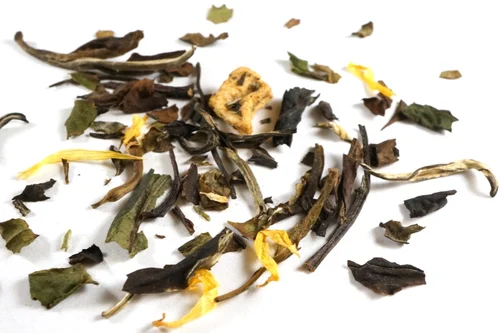
Peach White Tea
White Peony with natural peach: crisp, smooth and naturally sweet.
View tea →White Tea Questions
Have a question we didn't answer? Get in touch. We're always happy to talk tea.
Why is it called white tea?
The name comes from the fine, silvery-white down on the buds and young leaves, not from the color of the cup, which is pale yellow to golden.
What water temperature should I use?
Below boiling: 170–185°F for Silver Needle, White Peony and Snowbud, and 185–200°F for aged white teas.
Does white tea have caffeine?
Yes. Contains caffeine; the amount varies. White tea comes from the tea plant. For a caffeine-free cup, try our herbal, fruit and rooibos teas.
Can white tea really be aged?
Yes. Stored well, white tea keeps oxidizing slowly and develops a richer, more mellow taste. Our Aged Silver Needle and Aged Snowbud have been aged for more than five years.
How should I store white tea?
In an airtight container, away from light, heat, moisture and strong smells. More on tea storage →