
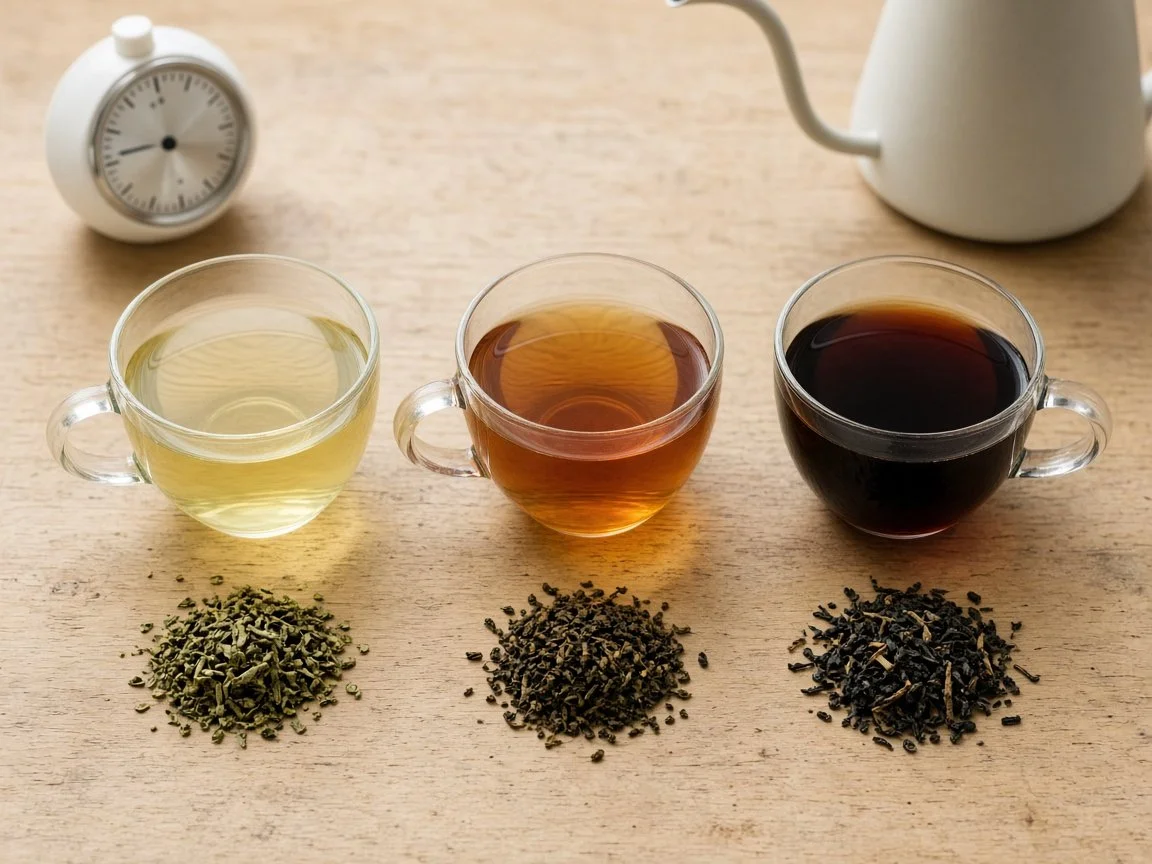
You bought a good tea, you were looking forward to it, and the first sip made you wince. It happens to everyone. The good news is that bitterness is almost never the tea's fault. It's usually a brewing detail, and most of them take seconds to fix.
Tea leaves contain natural compounds called catechins and tannins. In the right amount, they give tea its body and a pleasant, lively edge. When too much of them ends up in your cup, you taste harsh bitterness and that dry, puckery feeling on your tongue. Every fix below is really about the same thing: pulling the good flavors out of the leaf without pulling out too much of the rest.
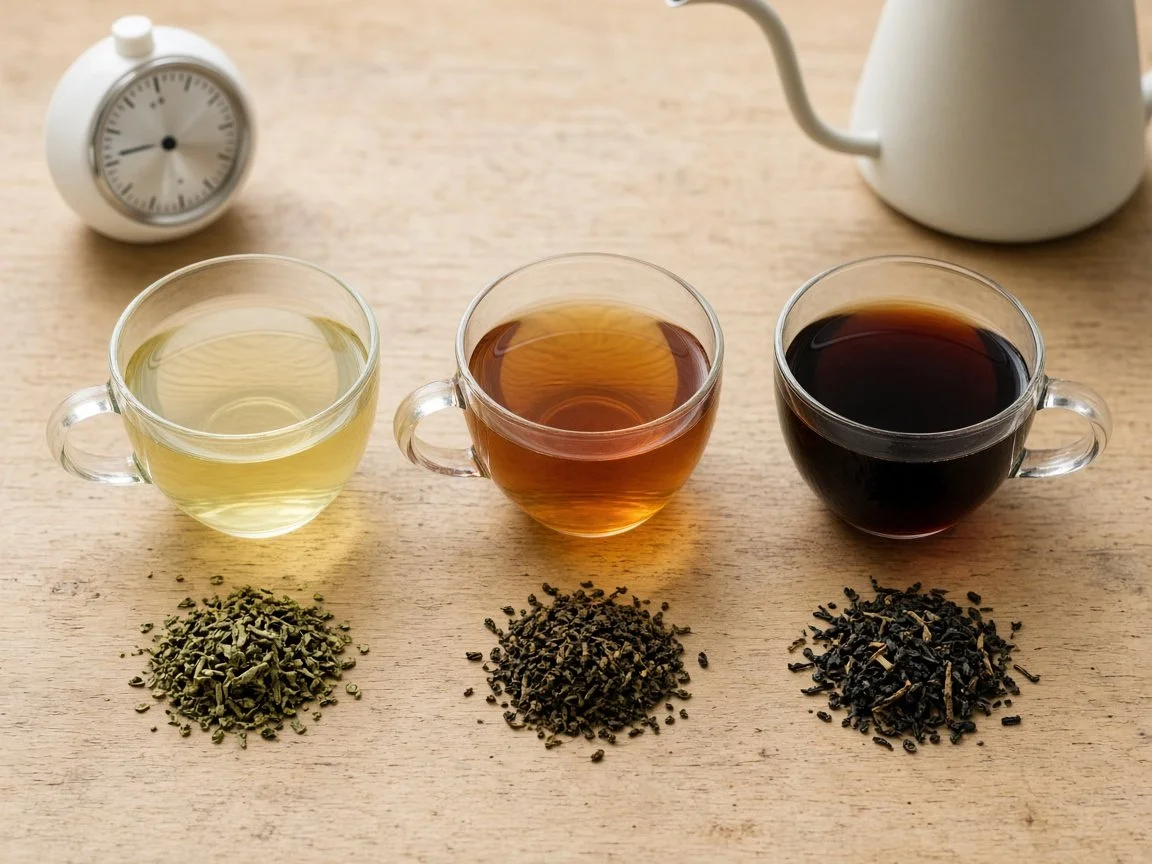
1. The Water Is Too Hot
This is the most common cause by far, especially with green and white teas. Boiling water is great for black tea, but it scalds delicate leaves and pulls out bitterness fast.
Here are good starting points:
Green tea: about 160 to 180°F. Shade-grown teas like Gyokuro like it even cooler.
White tea: about 170 to 185°F.
Oolong: about 185 to 205°F.
Black tea: about 200 to 212°F.
The fix: No thermometer? Let boiled water sit with the lid off for 3 to 5 minutes before brewing green or white tea. A kettle with temperature settings makes this even easier.
2. It Steeped Too Long
Steeping time matters as much as temperature. The sweet, aromatic flavors come out first, and the bitter compounds keep building the longer the leaves sit. A green tea that's lovely at 2 minutes can be harsh at 6.
The fix: Set a timer. Start around 2 to 3 minutes for green tea, 3 to 5 minutes for black tea, and 3 to 5 minutes for oolong. Taste, then adjust by 30 seconds next time. If you want a stronger cup, add more leaf rather than steeping longer. You'll get more flavor without the extra bite.
3. Too Much Leaf for the Water
More tea doesn't always mean better tea. Packing a small cup with leaves gives you a concentrated, astringent brew.
The fix: A good starting point is about 1 teaspoon of loose-leaf tea per 8 ounces of water. Large, fluffy leaves like Silver Needle take up more room, so use a heaping spoonful. Small, dense leaves like a Sencha need a little less.
4. The Leaves Stayed in the Cup
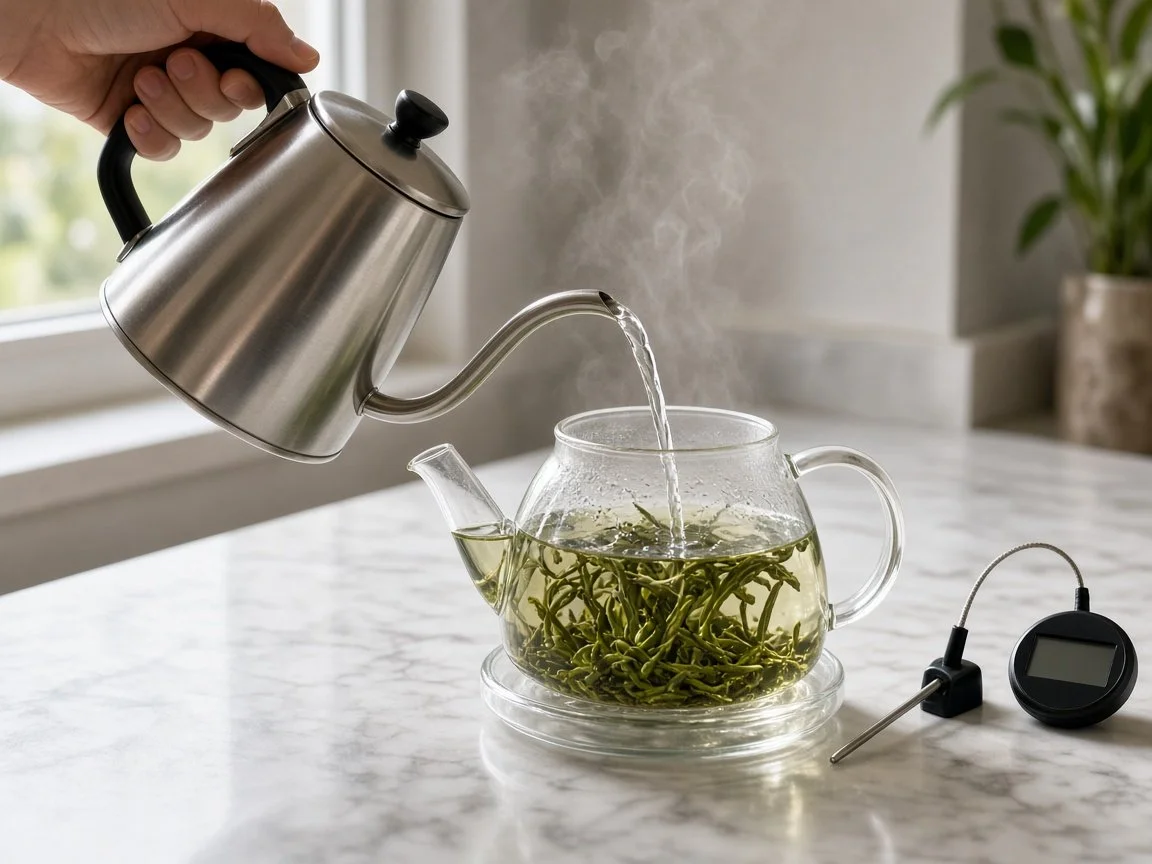
If the leaves keep sitting in the water after your steep is done, they keep brewing. That last half of the mug or pot is where the bitterness sneaks in.
The fix: Remove the leaves when the timer goes off. A fill-your-own paper filter makes this easy: just lift it out. If you brew in a teapot, pour all of the tea into cups or a second pot so none of it sits on the leaves. And don't squeeze or press the leaves to get the last drops, since that pushes out the most bitter part of the brew.
5. The Water Itself
Tea is about 99% water, so the water you use makes a real difference. Heavily chlorinated tap water can taste flat or harsh, and very hard water can dull flavor and leave a film on top of the cup.
The fix: Use fresh, cold, filtered water, and don't reboil water that's been sitting in the kettle. Fresh water has more oxygen in it, which helps the tea taste brighter.
6. The Tea Itself Is Low Quality or Past Its Prime
Tea bags from the grocery store are often filled with dust and small broken pieces called fannings. All that surface area means they release bitterness very quickly. Old tea that's been sitting open near heat, light or moisture also loses its sweetness and can taste stale and harsh.
The fix: Whole-leaf loose tea is much more forgiving because the leaves open up gradually. A smooth Chinese green tea like Dragonwell or a rolled oolong like Ali Shan Oolong can even be steeped several times. Store your tea in an airtight container away from light, heat and strong smells.
A Note on Bold Black Teas
Some teas are meant to be brisk. A strong breakfast tea like Irish Breakfast or a malty Assam Behora has a natural, pleasant bite, and that's part of its charm. If it still feels too strong, a splash of milk softens the edges nicely. If you'd like a black tea that's naturally smooth on its own, try Keemun Mao Feng.
Quick Checklist for a Smoother Cup
Match the water temperature to the type of tea.
Use a timer and start on the short side.
Start with about 1 teaspoon of leaf per 8 ounces of water.
Take the leaves out as soon as the steep is done.
Use fresh, filtered water.
Choose whole-leaf tea and store it airtight.
Most of the time, changing just one of these turns a bitter cup into a sweet, smooth one. Browse our green teas, black teas and oolongs to find your next favorite, and brew it your way.