
Organic Black Tea
Organic Green Tea
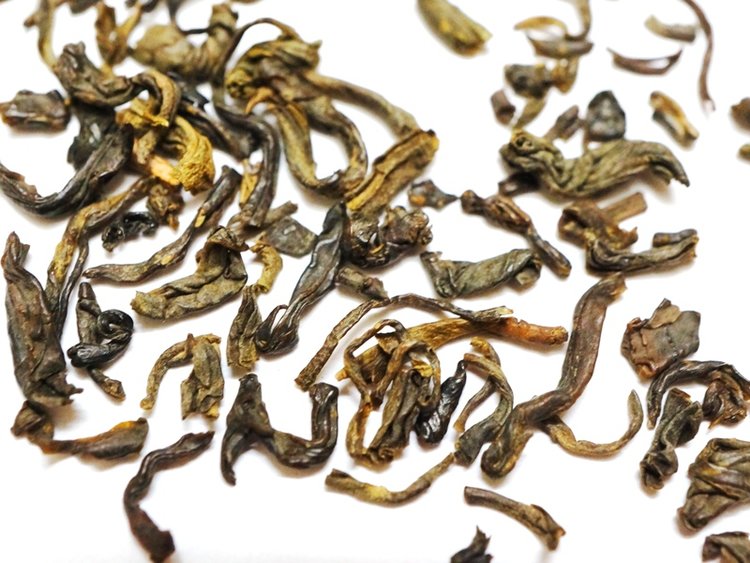
Our Organic Jasmine tea has an exquisite, abundant jasmine character. It is produced without chemical fertilizers, pesticides or herbicides.
History & Heritage
Jasmine tea has a long history in China, and the city of Fuzhou in Fujian is especially famous for it, with scenting traditions recorded as far back as the Southern Song dynasty. The craft relies on timing. Jasmine blossoms are gathered during the day while still closed, then layered with the tea in the evening as the flowers open and release their fragrance. After resting together, the spent flowers are removed and the tea is dried, and the process is often repeated several times for a deeper scent.
Interesting Facts
The jasmine comes into bloom only in May and June. Each blossom lasts only about 12 hours and opens at night after sunset.
About halfway through the night, the fragrance peaks. That is when the blossoms are picked and layered into the tea.
By morning most of the fragrance has left the blossom, but if the tea maker has done the job correctly, that heavenly scent has been captured in the tea. The process is repeated on 5 successive evenings.
Tasting Notes & Pairings
Sweetly floral and smooth, with a refreshing green tea base. It is wonderful on its own and pairs nicely with Chinese dishes, steamed fish, fruit salads, and almond cookies.
Brewing tips (general guideline): use 1 teaspoon (about 2–3 g) per 8 oz of water at 175–185°F, steeped 2–3 minutes. Avoid boiling water, which can make green tea bitter. Adjust to taste.
Like every tea at Beantown Tea & Spices, Organic Jasmine Green is a quality loose-leaf tea offered at an affordable price, with sample and larger sizes so you can find your favorite. Explore more in our Organic collection, or pair it with our tea accessories.
Organic Matcha
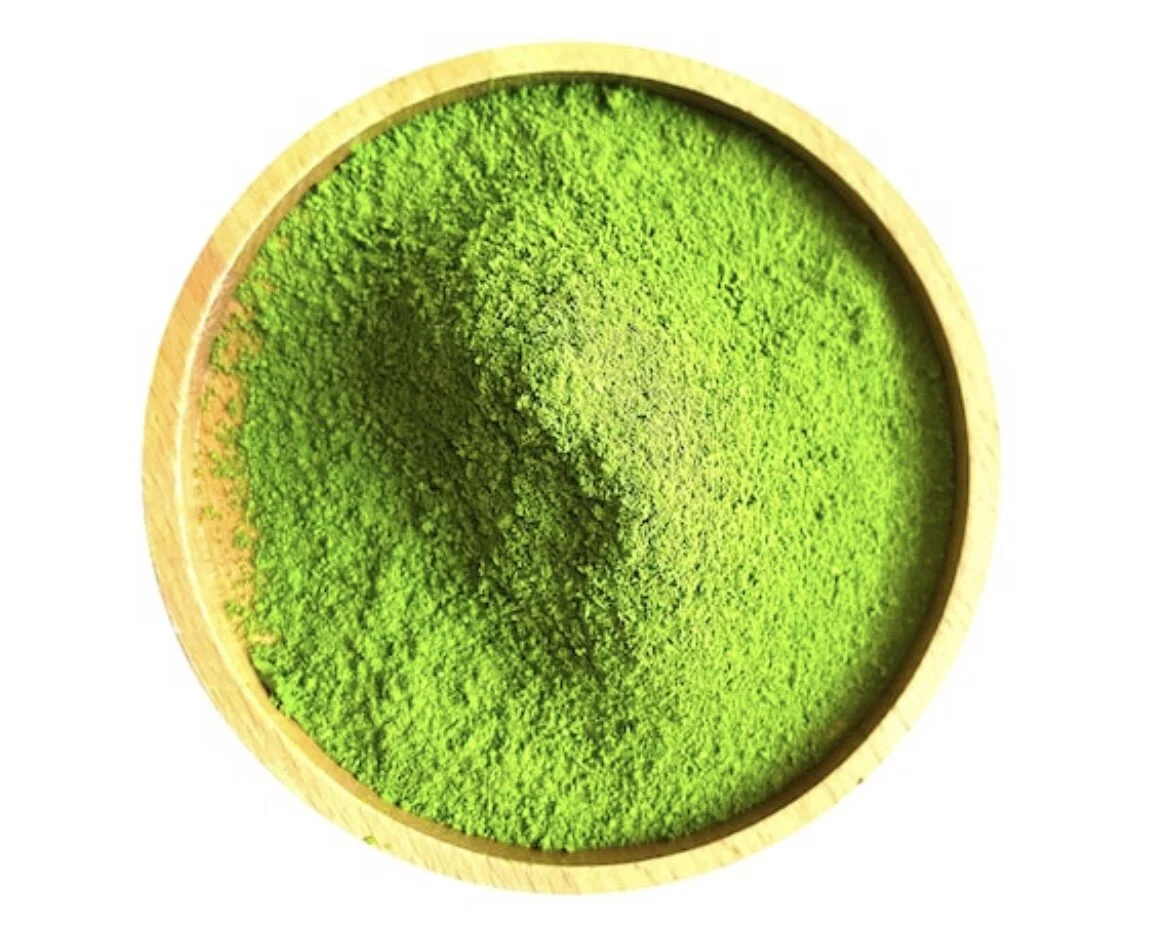
Bright, smooth and pure, this is an organic premium matcha powder green tea from Japan, steamed and stone-ground.
History & Heritage
Matcha's roots reach back to Song dynasty China, where tea was ground to powder and whisked in bowls. The Zen monk Eisai is traditionally credited with bringing tea seeds and the practice of powdered tea to Japan around 1191. Over the following centuries, matcha became the heart of the Japanese tea ceremony, which was refined in the 16th century by the tea master Sen no Rikyu. Growers in Uji, near Kyoto, developed the technique of shading tea plants before harvest, which produces the vivid green, sweet and savory leaves ground into fine matcha.
Interesting Facts
The traditional method is to make a paste first: add matcha to a bowl, whisk it with a few drops of hot water, then add the rest of the water.
Grade: Gyokuro. Production method: steamed green tea, stone-ground.
Matcha is now also enjoyed cold and in ice creams and baked goods.
Tasting Notes & Pairings
Fresh, sweet and gently vegetal, with a creamy froth when whisked. Enjoy it straight, as a latte, or blended into smoothies. Pair it with Japanese sweets, white chocolate, or fresh berries. For the most traditional experience, whisk it in a wide bowl and sip it slowly.
Brewing tips (general guideline): sift about 1 teaspoon (1–2 g) of matcha into a bowl, add a few drops of hot water and whisk into a paste, then add 6–8 oz of water at 160–175°F and whisk briskly in a zigzag motion until frothy. Adjust to taste.
Like every tea at Beantown Tea & Spices, Organic Matcha is a quality loose-leaf tea offered at an affordable price, with sample and larger sizes so you can find your favorite. Explore more in our Matcha collection, or pair it with our Bamboo Matcha Whisk.
Organic Herbal Tea

Naturally sweet, smooth and caffeine free, our top-grade Organic Rooibos is a delicious alternative to tea at any time of day.
History & Heritage
Rooibos, meaning "red bush," grows in the Cederberg mountains of South Africa's Western Cape, where the indigenous Khoisan people have long known the plant. In 1904, a merchant named Benjamin Ginsberg began selling it as "Mountain Tea," and in the 1930s Dr. Le Fras Nortier helped develop methods for cultivating it as a crop. Today rooibos is enjoyed around the world. Its name comes from Afrikaans, and the plant thrives in the dry, rugged mountain landscape of the Cederberg.
Interesting Facts
Rooibos is not related to the tea plant. It is an herbal plant (Aspalathus linearis) from South Africa.
To make it, cut rooibos is bound and milled to a uniform length, then bruised between rollers to trigger the fermentation process. That fermentation creates its characteristic flavor, sweet aroma and red color.
Because it has no caffeine, rooibos is a popular evening drink and is easy to share with the whole family.
Tasting Notes & Pairings
Smooth, naturally sweet and gently woody, with hints of honey and a rich amber-red color. It is delicious plain, with milk and honey, or as an iced tea. In South Africa it is often enjoyed with milk, and it also makes a lovely "red latte." Pair it with honey cake, scones, rusks, or fruit.
Brewing tips (general guideline): use 1–2 teaspoons per 8 oz of freshly boiled water (212°F), steeped 5–7 minutes. Steep a little longer for a stronger cup.
Like everything at Beantown Tea & Spices, Organic Rooibos is a quality blend offered at an affordable price, with sample and larger sizes so you can find your favorite. Explore more in our Organic collection, or pair it with our tea accessories.

Delightfully aromatic and more delicate than a traditional rooibos, Organic Green Rooibos brews a light cup with a hearty herbal flavor and grassy overtones reminiscent of a quality Sencha.
History & Heritage
Rooibos, meaning "red bush," grows in the Cederberg mountains of South Africa's Western Cape, where the indigenous Khoisan people have long known the plant. In 1904, a merchant named Benjamin Ginsberg began selling it as "Mountain Tea," and in the 1930s Dr. Le Fras Nortier helped develop methods for cultivating it as a crop. As demand for organic produce grew, organic rooibos plots overseen by third-party certification authorities were planted, and then came the development of green, unfermented organic rooibos. The leaves are harvested, bruised and immediately fired, skipping the traditional fermentation. A popular and delicious tea was born.
Interesting Facts
Like all rooibos, organic green rooibos is naturally caffeine free.
Tasting Notes & Pairings
Light, fresh and herbal, with a gentle sweetness. Lovely hot or iced, with salads, light lunches, or fresh fruit.
Brewing tips (general guideline): use 1–2 teaspoons per 8 oz of freshly boiled water (212°F), steeped 5–7 minutes. Adjust to taste.
Like everything at Beantown Tea & Spices, Organic Green Rooibos is a quality blend offered at an affordable price, with sample and larger sizes so you can find your favorite. Explore more in our Herbal & Fruit Tea collection, or pair it with our tea accessories.
Light, bright and gently floral, this is a classic Ceylon tea. It has light liquoring with hints of delicate floral notes, and dashes of astringency reminiscent of plum run throughout the cup.
History & Heritage
Ceylon tea was born from disaster. In the 1870s, coffee rust destroyed the coffee plantations that had been the island's main crop, and planters switched to tea. The pioneer was a Scottish planter named James Taylor, who planted the island's first tea field, about 19 acres known as Field No. 7, on the Loolecondera estate near Kandy in 1867. Today Sri Lanka recognizes seven distinct tea-growing regions, each with its own character. Taylor's first shipment of Ceylon tea to reach London, in 1873, was only about 23 pounds, a humble beginning for what became one of the world's great tea origins.
Interesting Facts
The country is now called Sri Lanka, but its tea is still sold around the world as "Ceylon tea."
Our Organic Ceylon is a Pekoe grade grown above 6,000 feet and certified organic by Pro-Cert Organic Systems Ltd.
Sri Lanka's seven tea regions are Nuwara Eliya, Dimbula, Uda Pussellawa, Uva, Kandy, Sabaragamuwa and Ruhuna.
Tasting Notes & Pairings
The infusion is bright tending yellow, with a clean, floral flavor and a touch of plum. It is lovely plain or with lemon, and it also makes a refreshing iced tea. Pair it with lemon bars, fruit salad, or light sandwiches.
Brewing tips (general guideline): use 1 rounded teaspoon (about 2–3 g) per 8 oz of freshly boiled water (205–212°F), steeped 3–5 minutes. Adjust to taste.
Like every tea at Beantown Tea & Spices, Organic Ceylon Black Tea is a quality loose-leaf tea offered at an affordable price, with sample and larger sizes so you can find your favorite. Explore more in our Black Tea collection, or pair it with our tea accessories.