
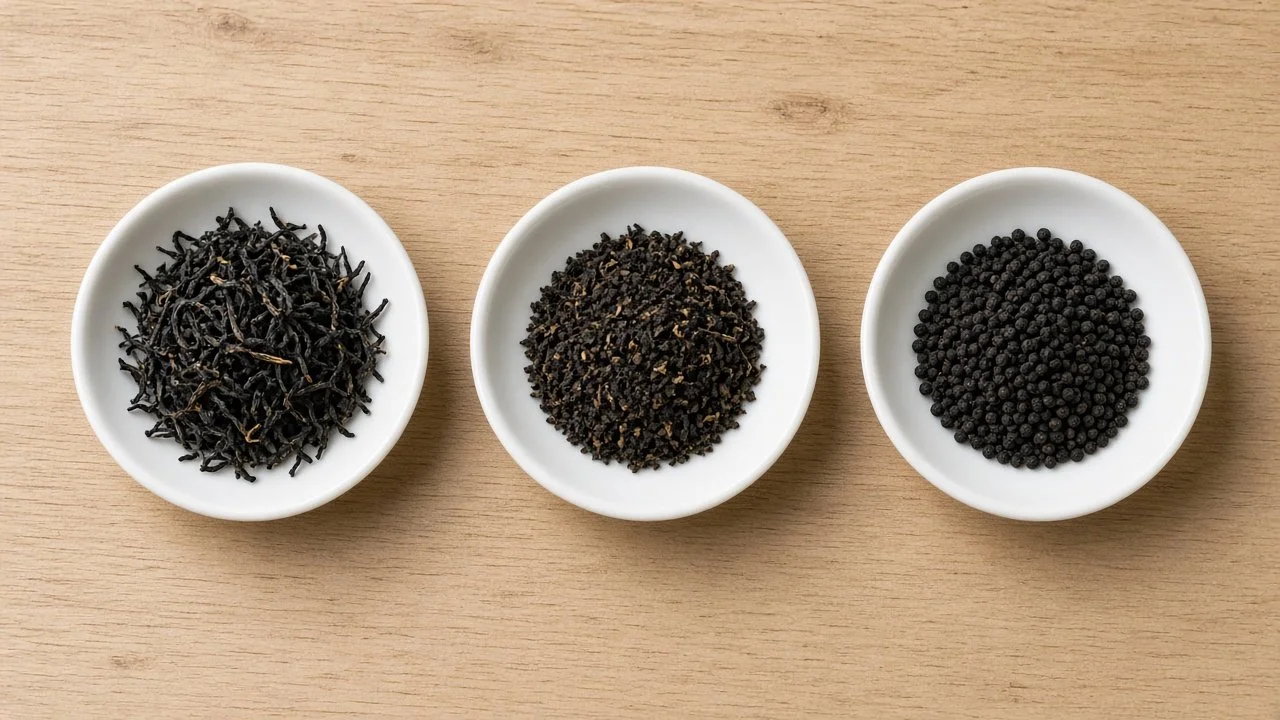
Browse black teas for long enough and you'll run into a little alphabet soup: OP, FBOP, TGFOP, even FTGFOP. These letters aren't secret codes or flavor notes. They're a grading system that describes the tea leaf itself: how whole it is, and how many young buds, or "tips," it contains.
Once you know how to read them, those letters tell you a lot about how a tea will look in the scoop and behave in the pot. Here's a simple guide.
First, "Orange Pekoe" Has Nothing to Do with Oranges
This is the most common mix-up in tea. Orange Pekoe isn't a flavor, and there's no orange in it. It's a grade name for a whole-leaf black tea. Nobody knows for certain where the "orange" part came from. A popular theory links it to the Dutch royal House of Orange, since Dutch traders were among the first to bring tea to Europe. "Pekoe" is usually traced to a Chinese word for the fine white down on young tea buds.
Grades are used mostly for orthodox black teas from India, Sri Lanka and Kenya. "Orthodox" means the leaves are rolled in the traditional way, rather than chopped by machine. Chinese black teas often use their own naming systems instead, which we'll come back to below.
Whole-Leaf Grades: Reading the Ladder
Whole-leaf grades start with OP and add a letter for each step up in appearance. Think of each new letter as a word added to the front:
OP (Orange Pekoe): long, wiry whole leaves. Our Ceylon Lover's Leap, grown at 6,000 to 8,500 feet, and Ceylon Kenilworth are both OP grade.
FOP (Flowery Orange Pekoe): "Flowery" means the tea includes more young leaves and some tips.
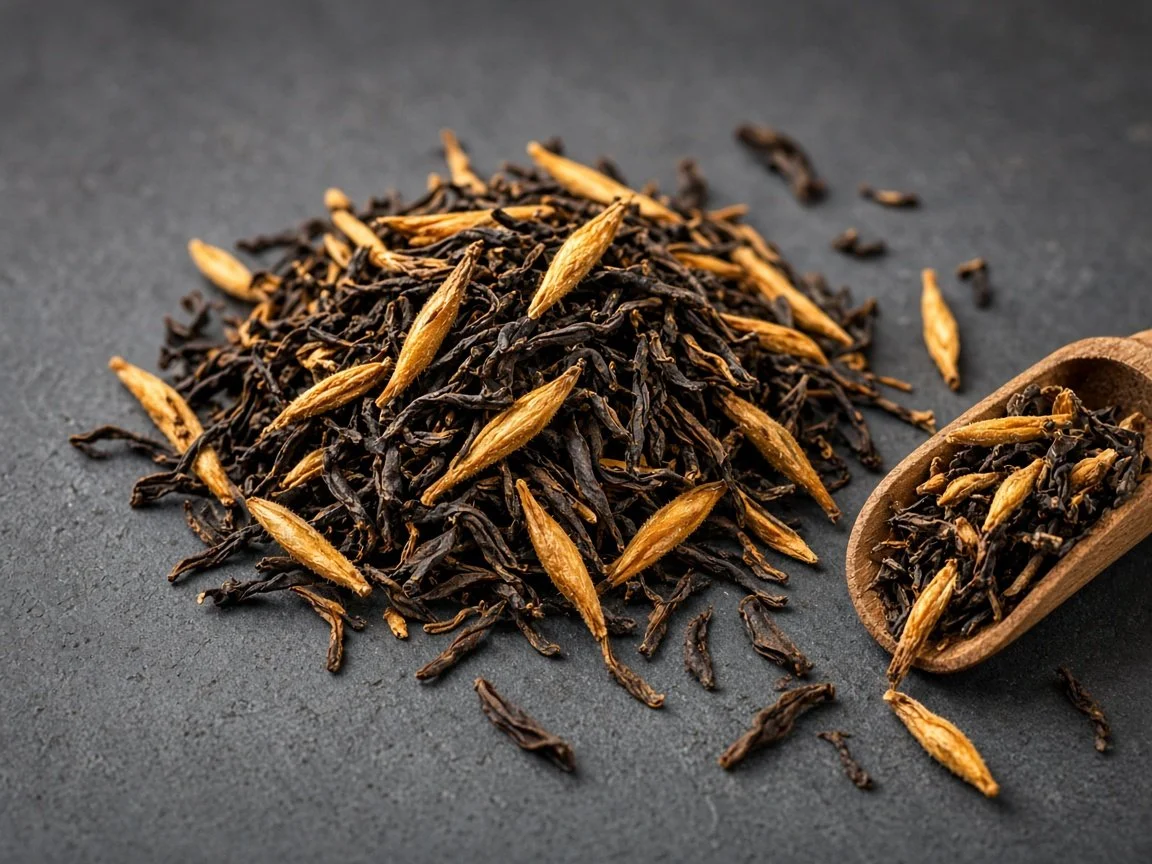
GFOP (Golden Flowery Orange Pekoe): "Golden" means you'll see golden-colored tips. These are buds that turn gold, rather than black, during processing.
TGFOP (Tippy Golden Flowery Orange Pekoe): "Tippy" means a high share of those golden tips. Our Assam Behora is a TGFOP grade.
FTGFOP (Finest Tippy Golden Flowery Orange Pekoe): the finest of the tippy teas. Our Darjeeling Castleton is graded FTGFOP, and this batch is in the upper 10 percent of Castleton's quality.
You'll sometimes see an "S" for "Special" at the very front, or a "1" at the end, marking an even finer selection within the same grade.
Broken-Leaf Grades: Smaller Pieces, Bolder Cups
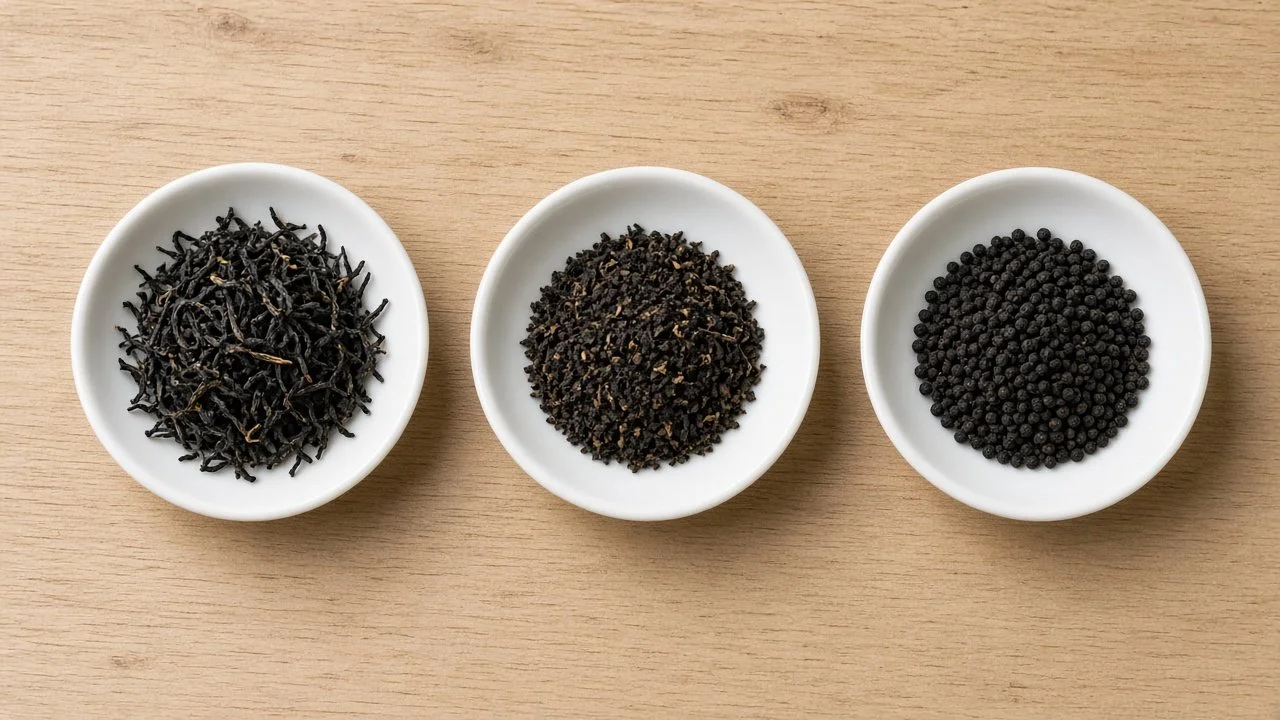
When the leaf is broken into smaller pieces during processing, a "B" for "Broken" joins the name. Broken leaves aren't a flaw. More cut edges mean the tea gives up its flavor and color faster, so broken grades usually brew a stronger, fuller cup in less time.
BOP (Broken Orange Pekoe): the classic broken grade, and a breakfast-tea staple.
FBOP (Flowery Broken Orange Pekoe): broken leaf with some tips. Our Assam Hunwal is an FBOP, and those tippy leaves make it a little less astringent than a typical Assam.
GFBOP (Golden Flowery Broken Orange Pekoe): broken leaf with golden tips. Our Kenya Milima is GFBOP, the best grade the estate produces.
Below the broken grades come fannings and dust, the very smallest particles. They brew very quickly and are mostly used in tea bags.
What About CTC?
CTC stands for "cut, tear and curl." It's a different way of making black tea, first used in Assam in 1930. Machines cut and roll the leaves into tiny round pellets that brew a strong, deeply colored cup in a hurry. Our Irish Breakfast is a CTC blend of Assam and Kenya teas, graded BOP and BP1 (Broken Pekoe #1), and it's made for a splash of milk.
When Teas Use Their Own Names
Many Chinese black teas don't follow the letter system at all, or use their own version of it. Our Golden Yunnan is graded Special Golden Tippy Orange Pekoe, and Golden Monkey is an S.T.O.P. (Special Tippy Orange Pekoe) grade. Keemun Mao Feng follows Keemun's own grading: it's the third-highest grade of Keemun available, made only in March and April.
Does a Higher Grade Mean a Better Tea?
Not exactly. A grade describes the size and look of the leaf, not the flavor, and it doesn't tell you where a tea was grown or how carefully it was made. A beautifully made BOP can be a better breakfast cup than a so-so whole-leaf tea. Tippy, whole-leaf grades tend to be smoother and more nuanced, while broken grades are bolder and quicker to brew. Which is "better" depends on how you like your cup.
How Grade Changes the Way You Brew
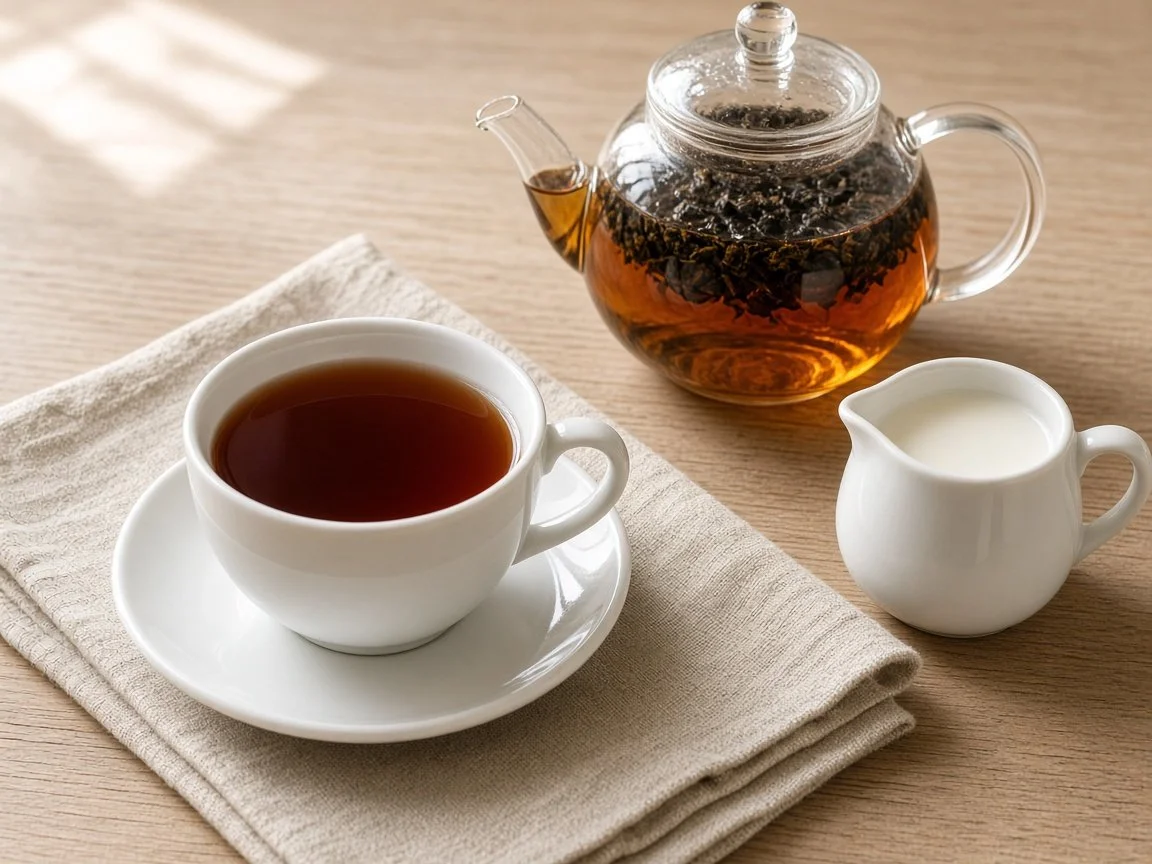
Most of our black teas share the same general guideline: 1 rounded teaspoon (about 2 to 3 g) per 8 oz of freshly boiled water (205–212°F), steeped 3 to 5 minutes. Within that range, let the grade guide you:
For broken grades and CTC teas, start tasting around 3 minutes. They brew strong fast.
For long, tippy whole-leaf teas, go toward 4 to 5 minutes to let the leaves fully open.
If a tea tastes bitter, shorten the steep instead of using less tea.
Planning to add milk? A strong broken grade like Irish Breakfast stands up to it best.
Each product page lists its own brewing guidelines, so check there for the details on your favorite.
Taste the Difference
The easiest way to learn grades is to brew two side by side. Try a bold broken Assam like Assam Hunwal next to a tippy whole-leaf tea like Golden Yunnan, and you'll see and taste the difference right away. Most of our black teas come in a sample size (about 5 cups), so it's easy to try a few. As the mornings get chillier this week, it's a nice excuse to put the kettle on twice.
You'll find all of these and more in our Black Tea collection. We've been sharing quality tea at affordable prices since 2006, and we love helping tea lovers find the cup that's right for them.
Happy steeping!