
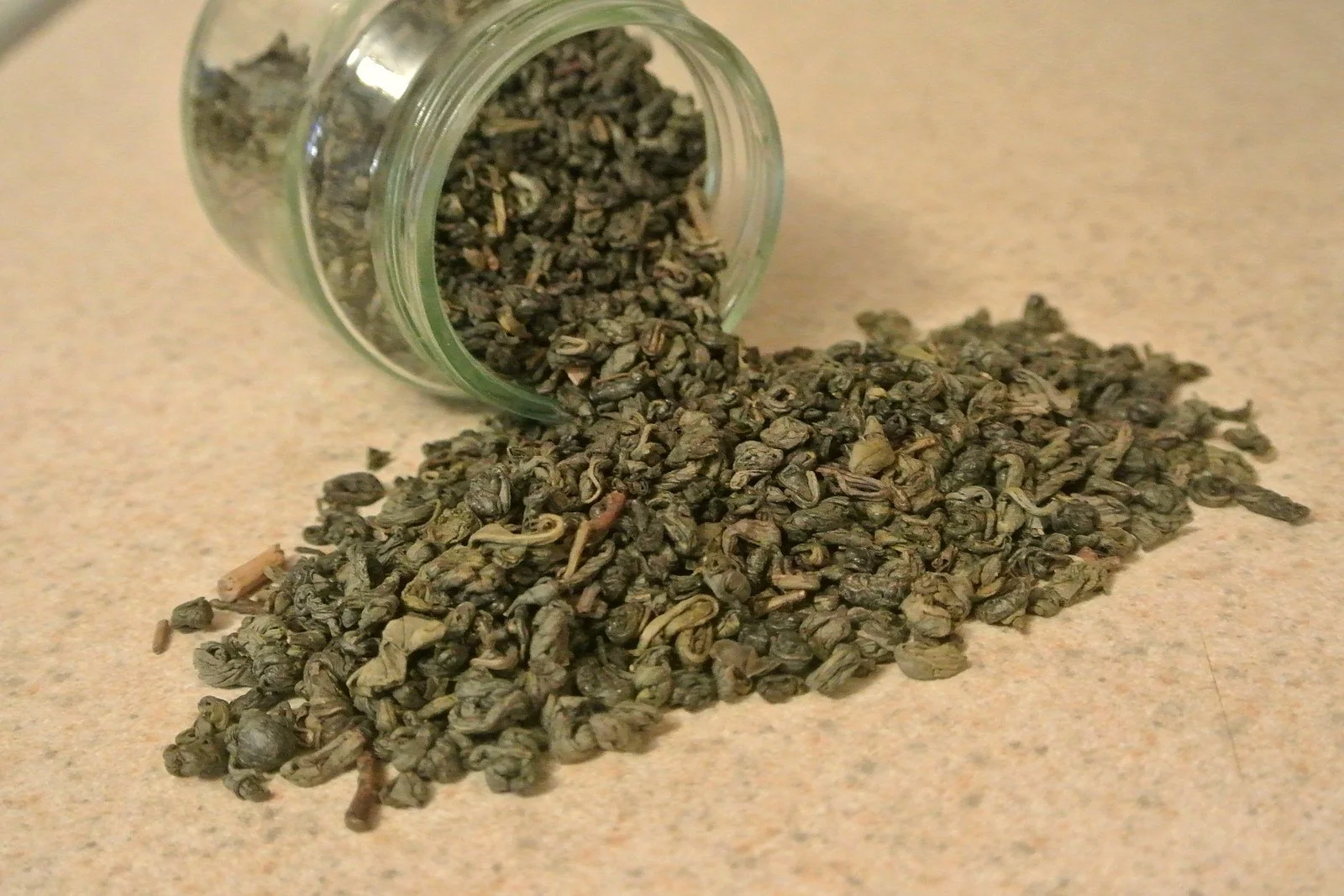
Pour a spoonful of Gunpowder green tea into your hand and it looks nothing like a leaf. You'll see a pile of tiny, tightly rolled pellets, dark gray-green with a faint sheen, rattling like little beads. Add hot water and something lovely happens: each pellet slowly opens back into a whole leaf. Gunpowder is one of the most recognizable green teas in the world, and our classic Gunpowder Green Tea brews a smooth, full-bodied cup with a hint of oakiness. Here's where it comes from, how it's made, and how to brew it well.
Why Is It Called "Gunpowder"?
Don't worry, the name has nothing to do with what's in the cup. In China, this tea is called zhū chá (珠茶), which means "pearl tea" or "bead tea." The English name is usually traced to early Western traders, who thought the small, dark, shiny pellets looked like grains of gunpowder. Another explanation points to the way the pellets "burst" open into long leaves when steeped.
Where Gunpowder Comes From
Gunpowder is produced mainly in the mountainous areas of Zhejiang Province, on China's east coast. The classic origin is Pingshui in Zhejiang, and "Pingshui gunpowder" is still the name for the original style. Zhejiang is also home to West Lake and its famous flat-pressed green tea, which we covered in our post on Dragonwell.
The practice of rolling tea leaves tightly is said to date back to the Tang dynasty (618 to 907). The rolled shape had a practical benefit: compact pellets are less easily crushed than loose, open leaves, which helped the tea stay fresh during long sea voyages. That durability helped make Gunpowder one of China's great export teas, and it became the traditional base of the famous mint tea of North Africa.
How Gunpowder Is Made
Like all true teas, Gunpowder comes from the Camellia sinensis plant. As a green tea, it is heated soon after picking to keep the leaves from oxidizing, which is what keeps the color green and the flavor fresh.
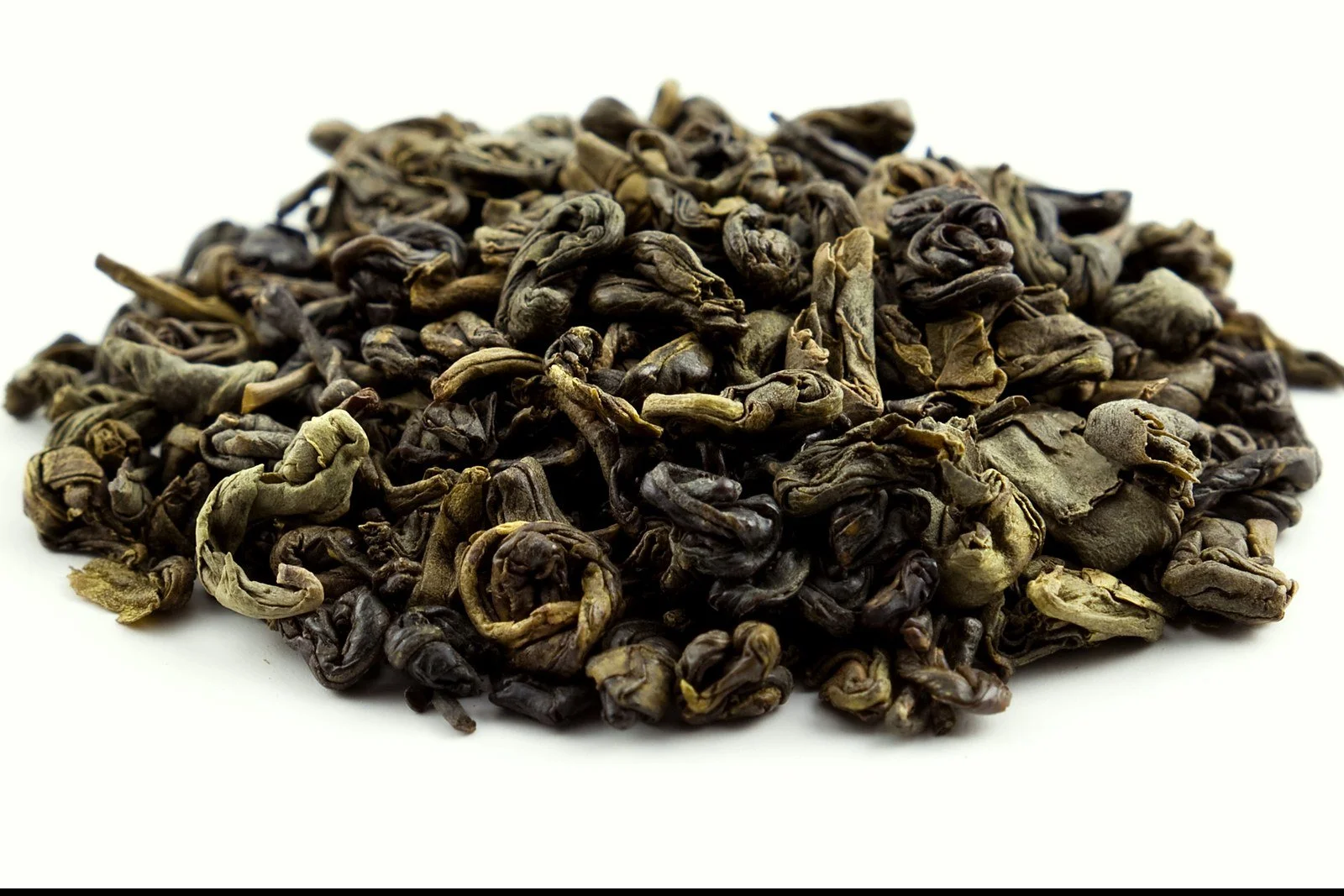
What sets Gunpowder apart is the rolling. After plucking, each leaf is rubbed and twisted into a small pellet and then dried by stir-frying in a large pan, sometimes in up to 4 rounds. Today, most Gunpowder is rolled by machine, while the very highest grades may still be rolled by hand. The repeated pan-drying is a big part of the tea's gentle toasty, oaky character.
A few things to look for in the dry leaf:
Tight, small pellets: tightly rolled pellets are generally considered a sign of good quality, while large, loose pellets suggest a lower grade.
A slight sheen: a little shine on the pellets is often taken as a sign of fresh tea.
Even color: expect a dark gray-green, sometimes with lighter olive tones where the leaf edges show.
What Gunpowder Tastes Like
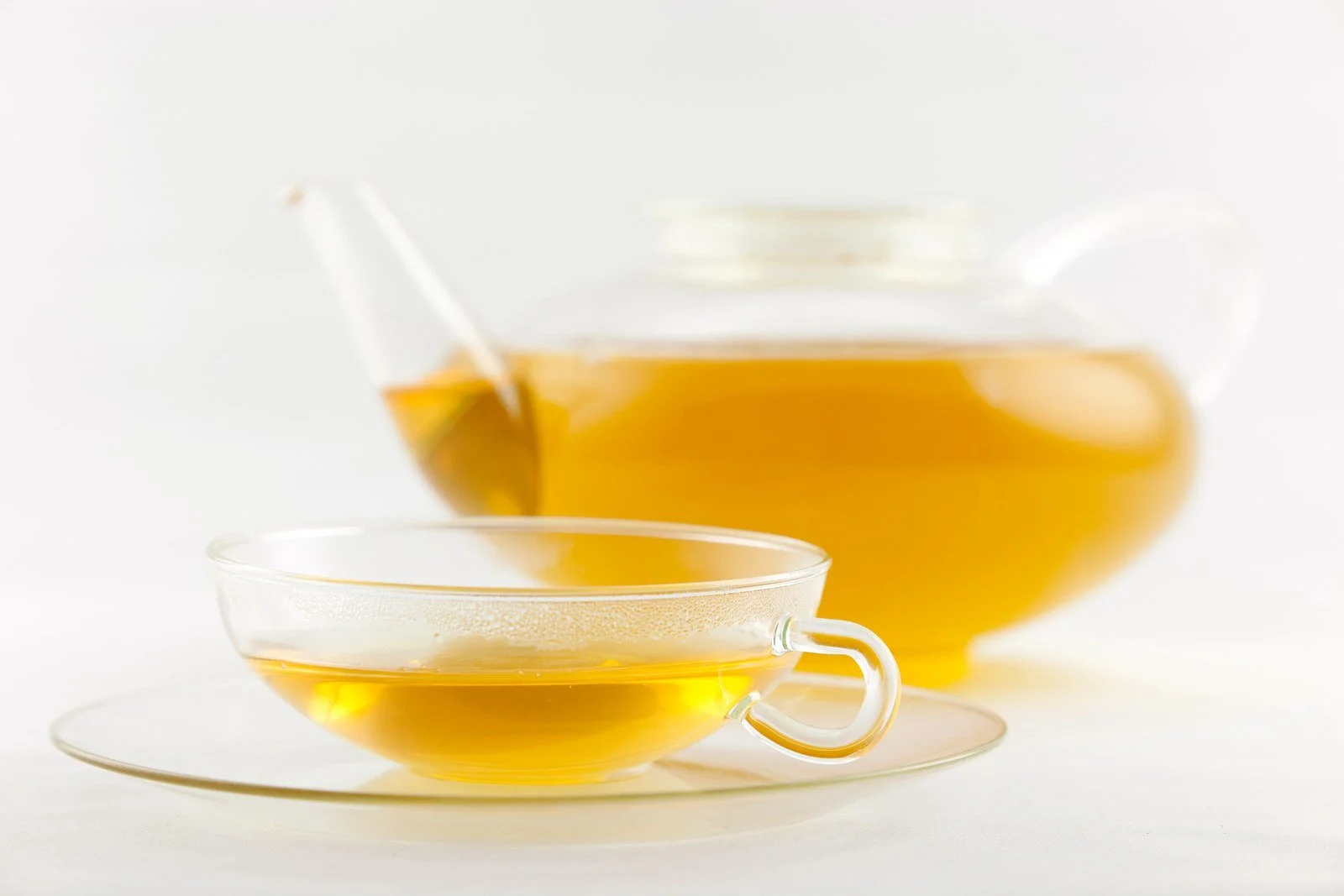
Our Gunpowder is smooth and full-bodied, with a gentle oaky, toasty note. It's sturdier and rounder than delicate, grassy green teas, so it's a nice choice for black tea drinkers exploring green. The infusion is medium green with golden notes, and it's a very nice tea to pick you up in the afternoon. Like all true green teas, it contains natural caffeine, along with the amino acid L-theanine. If you're curious how the two work together, our post on L-theanine and caffeine in tea looks at what the research says.
Double-click to edit...
How to Brew Gunpowder Green Tea
Because the pellets are so dense, a little Gunpowder goes a long way. Here's our general guideline:
Tea: 1 teaspoon (about 2 to 3 grams) per 8 oz of water.
Water: 175 to 185°F. Hot, but not boiling. If you don't have a variable-temperature kettle, let boiled water rest for a few minutes before pouring.
Time: 2 to 3 minutes, then taste and adjust.
Re-steep: the pellets keep opening over several infusions, so steep the same leaves again for more cups, adding a little time to each one. Our re-steeping guide has more tips.
Give the leaves plenty of room. A roomy infuser basket, a teapot or one of our paper filters lets the pellets expand fully, and a glass teapot or cup lets you watch them unfold. If a cup ever turns harsh, the usual causes are water that's too hot or a steep that's too long. Our post on why tea turns bitter covers easy fixes.
Gunpowder Iced Tea
Gunpowder also makes a very good iced tea. Brew it double strength (2 teaspoons per 8 oz of water at 175 to 185°F for about 3 minutes), then strain it over a tall glass of ice. A sprig of fresh mint is a natural addition.
Make a North African Style Mint Tea
Gunpowder is the classic base for the mint tea served across North Africa, where it's a well-known symbol of hospitality. Here's a simple version to try at home:
Add 2 teaspoons of Gunpowder to a teapot that holds about 16 oz.
Pour in a splash of hot water, swirl and pour it out. This quick rinse is a traditional step that wakes up the leaves.
Fill the pot with water at 175 to 185°F and add a generous handful of fresh spearmint leaves, the mint traditionally used.
Steep 2 to 3 minutes, then sweeten to taste with sugar, as is traditional, or leave it unsweetened.
Pour into small glasses. Pouring from a little height creates a light foam on top.
Prefer to skip the fresh mint? Our Moroccan Mint is a ready-made blend of Gunpowder green tea, Chun Mee green tea and peppermint, and our earlier post on Moroccan Mint tea has more on how to enjoy it.
What to Eat with Gunpowder
Gunpowder's toasty, full-bodied character stands up well to savory food. Try it with:
Grilled vegetables
Couscous
Nutty pastries, such as almond cookies or baklava
For more ideas by tea type, see our Tea and Food Pairing for Beginners guide.
Who Will Love Gunpowder
Black tea drinkers trying green tea: its body and toasty notes make it an easy first step.
Mint tea lovers: it's the traditional base for North African mint tea.
Iced tea fans: it holds its flavor beautifully over ice.
If You Like Gunpowder, Try These Next
Chun Mee, meaning "precious eyebrows," is named for its curved leaves. It's full-bodied, nutty and lightly smoky, and it's often used alongside Gunpowder in North African mint tea.
Dragonwell is Zhejiang's famous flat, pan-fired green tea, with a sweet, nutty flavor. Tasting it next to Gunpowder is a fun way to see how shaping changes a tea from the same province.
Moroccan Mint blends Gunpowder and Chun Mee with peppermint for a smooth, cooling cup.
You'll find these and many more in our Green Tea collection. As tea enthusiasts, we have been sharing quality tea at affordable prices since 2006, and our Gunpowder Green Tea comes in sample and larger sizes so you can find your favorite. Measure a teaspoon of those little pearls, pour the water, and watch them open into a smooth, satisfying cup.
Photos: "Gunpowder Green Tea" by Veganlover1993, and "Grüner Tee Gunpowder" and "Frisch aufgebrühter Grüner Tee Gunpowder in Wagenfeld Service" by soultea.de/André Helbig, via Wikimedia Commons, licensed CC BY-SA 3.0. Cropped and color-adjusted; our edited versions are shared under the same license.