
How Much Loose-Leaf Tea per Cup? Teaspoons, Grams and Why Leaf Shape Matters
Ask a few tea drinkers how much loose-leaf tea to use and you'll hear "a teaspoon," "a heaping spoonful," or simply "enough." They're all partly right, because the answer depends on the tea in front of you. A spoonful of airy White Peony and a spoonful of tightly rolled Gunpowder Green Tea can look the same in the spoon but hold very different amounts of tea. Here's a simple guide to measuring loose-leaf tea: how teaspoons and grams compare, why leaf shape matters, how much to use for each type of tea, and how to scale up for a teapot, iced tea or cold brew.
The Short Answer
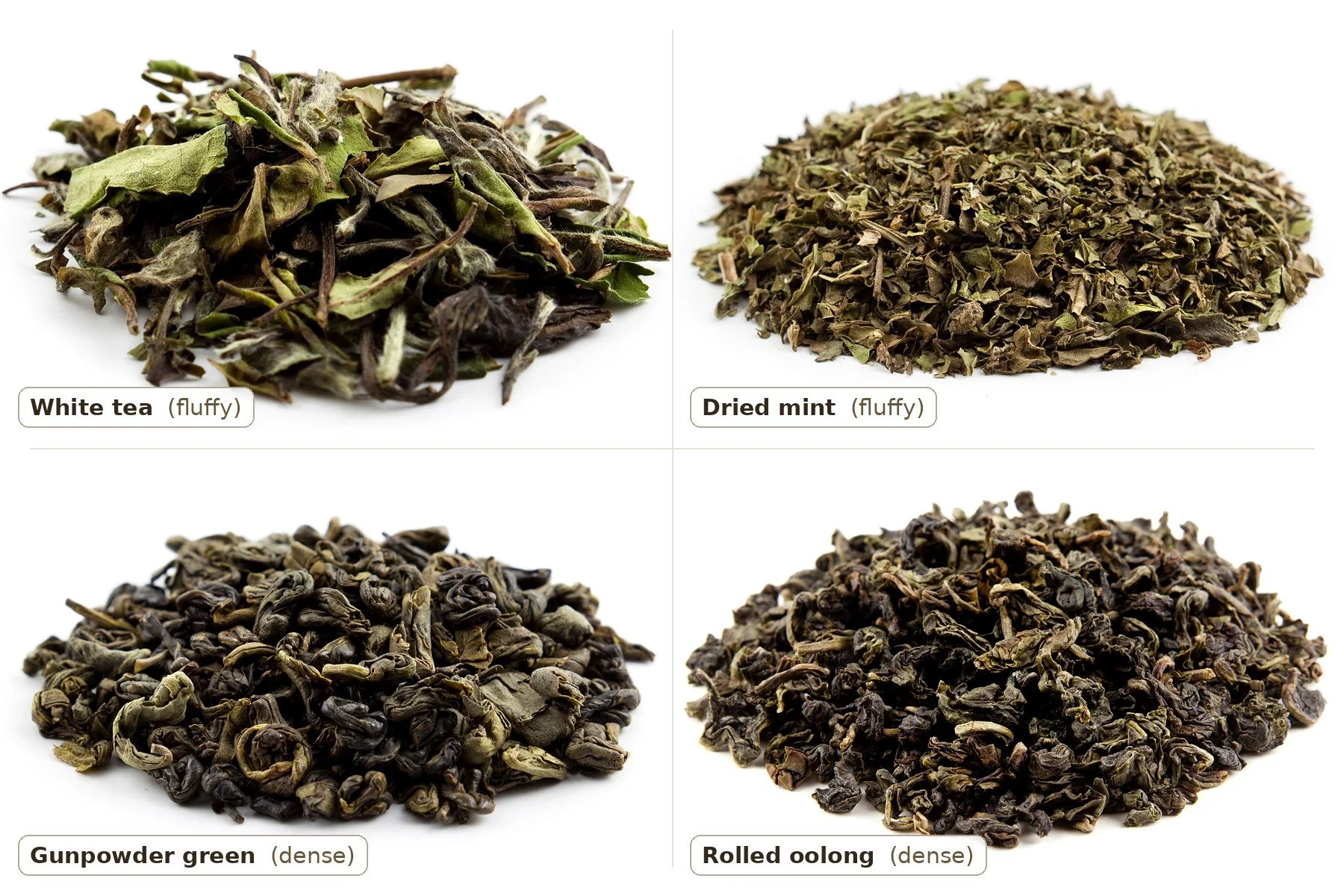
For most teas, start with about 3 grams of leaf per 8 oz of water. For many teas, that's about 1 teaspoon. Fluffy, open leaves such as white teas, some oolongs and many herbal blends can take 2 teaspoons to reach the same weight. Tightly rolled or small, broken leaves may need a little less than 1 teaspoon. Treat these as starting points, not rules, and adjust to your taste.
Teaspoons Measure Space, Grams Measure Tea
A teaspoon measures volume. A US teaspoon holds about 5 milliliters, so it tells you how much room the leaves take up, not how much tea you actually have. A gram measures weight. Three grams of white tea and three grams of black tea give you about the same amount of leaf, even if one fills twice as much space in the spoon.
You can see this on our own tea pages. Silver Needle suggests 1 to 2 teaspoons (about 2 to 3 grams) per 8 oz, while Gunpowder suggests 1 teaspoon for that same 2 to 3 grams. The weight is the same, but the spoonfuls are not.
Why Leaf Shape Matters
How a tea is made decides how much air sits between the leaves in your spoon.
Fluffy, open leaves take up more room. White teas lke White Peony are withered and dried without rolling, so the buds and leaves stayloose and airy. Long, twisted oolong leaves, such as Wuyi Oolong, and herbal blends full of leaves and flowers, such as Sleep Well (chamomile, peppermint, lemongrass and green rooibos), also pack loosely. Use a generous spoonful.
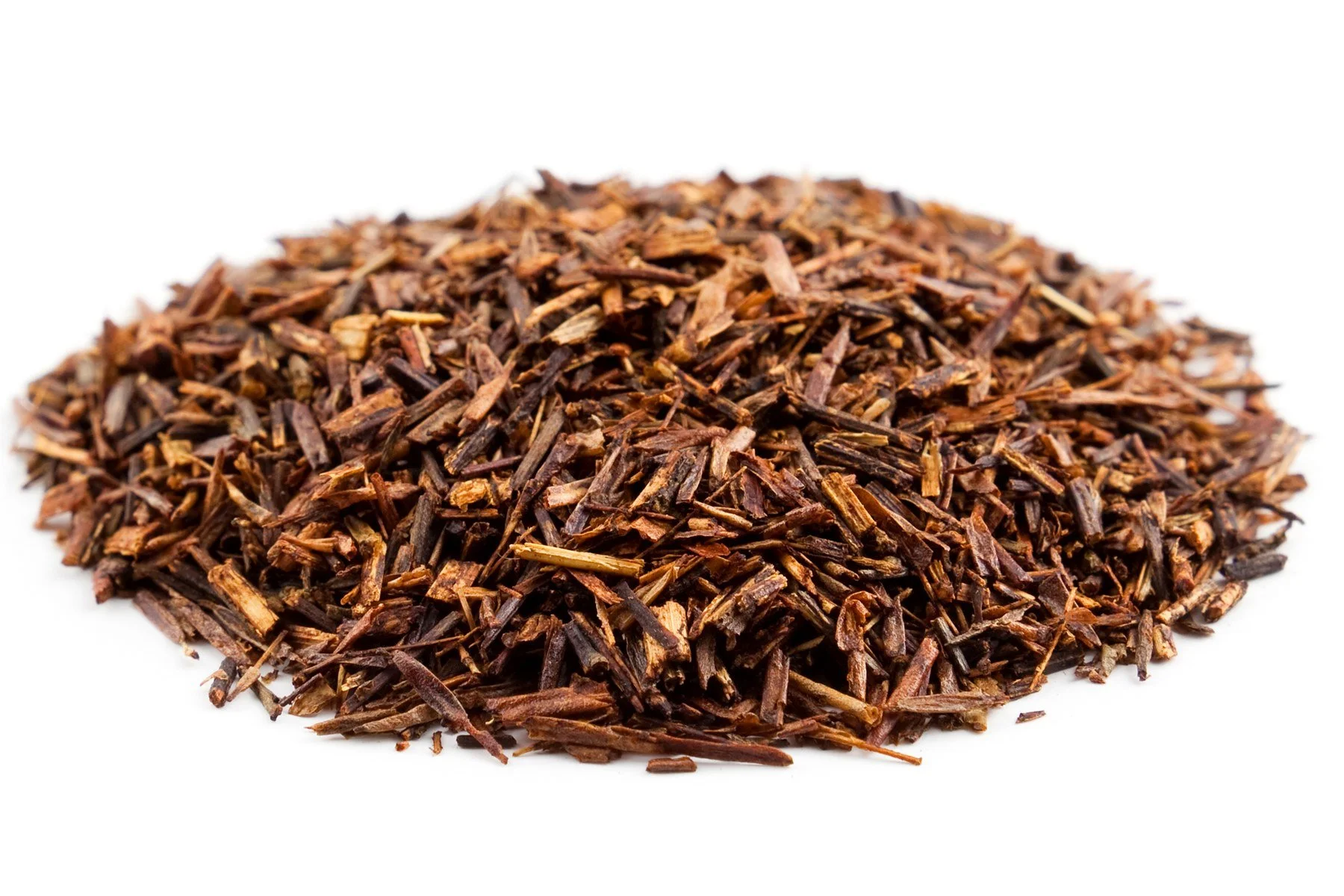
Dense, compact leaves take up less room. Gunpowder green tea is rolled into small pellets, and oolongs like Iron Goddess (Ti Kuan Yin) and Milk Oolong are tightly rolled too. Broken-leaf black teas, like the FBOP grade of Assam Hunwal, settle closely together, and so do the fine, needle-like pieces of Organic Rooibos. A level spoonful goes a long way.
Rolled teas also grow a lot once they're wet. Small pellets unfurl into full leaves, so give them room in your infuser or pot. Our post on loose-leaf tea vs. tea bags explains why that room matters.
How Much Tea per 8 oz Cup: A Simple Chart
Here are starting amounts for one 8 oz cup of water, taken from the brewing tips on our tea pages. If a tea's page gives its own instructions, follow those first.
White tea (Silver Needle, White Peony): 1 to 2 teaspoons (about 2 to 3 grams). The leaves are fluffy, so 2 teaspoons is normal. Water at 170 to 185°F, 3 to 5 minutes.
Japanese green tea (Sencha): 1 heaping teaspoon (about 2 to 3 grams). Water at 160 to 175°F, 1 to 2 minutes.
Rolled green tea (Gunpowder Green Tea): 1 teaspoon (about 2 to 3 grams). Water at 175 to 185°F, 2 to 3 minutes. For Jasmine Dragon Pearls, count out about 6 to 8 pearls instead.
Oolong (Iron Goddess, Milk Oolong, Wuyi Oolong and our other oolongs): 1 to 2 teaspoons (about 3 grams). Water at 185 to 205°F, 3 to 5 minutes. Use closer to 1 teaspoon for tightly rolled oolongs and closer to 2 for long, twisted leaves.
Black tea (English Breakfast, Assam Hunwal): 1 rounded teaspoon (about 2 to 3 grams). Freshly boiled water at 205 to 212°F, 3 to 5 minutes. Downy, twisted Golden Monkey also uses 1 rounded teaspoon, with water at 195 to 205°F for 3 to 4 minutes.
Rooibos (Organic Rooibos): 1 to 2 teaspoons. Freshly boiled water (212°F), 5 to 7 minutes. The fine pieces are dense, so start with 1 teaspoon.
Herbal blends (Sleep Well, Peppermint): 1 to 2 teaspoons. Freshly boiled water (212°F), 5 to 7 minutes. Leafy, flowery blends are light, so 2 teaspoons is a good place to start.
Fruit blends (Very Berry): 2 teaspoons of the fruit mix. Freshly boiled water, 5 to 10 minutes.
For more on water temperature, see our guide to tea brewing temperatures.
Want a Stronger Cup? Add Leaf, Not Time
If your tea tastes weak, the fix is usually more leaf, not a longer steep. Steeping well past the suggested time mostly draws out more tannins, which can make the cup harsh or bitter without adding much flavor. Next time, add about half a teaspoon more leaf and keep the time the same.
If a cup tastes too strong or bitter, go the other way: use a little less leaf or a shorter steep, and check your water temperature. Our post on why tea turns bitter covers the most common causes. Many loose-leaf teas can also be steeped more than once, and our re-steeping guide shows how many times by tea type.
Teapots and Pitchers
For a teapot, multiply the single-cup amount by the number of 8 oz servings. A 32 oz teapot holds four 8 oz servings, so it needs about 4 teaspoons (roughly 12 grams) of most teas, or up to about 8 teaspoons of a fluffy white tea.
One tip: teapots are often sold by the "cup," and those cups are usually smaller than 8 oz. Fill your pot once with a measuring cup and note its real size in ounces, and your measurements will stay consistent. Give the leaves room to open, too. A roomy infuser basket, the teapot itself or one of our paper filters all work well.
Iced Tea and Cold Brew
Hot-brewed iced tea: brew it double strength, then pour it over ice. To make 32 oz of iced tea, brew 16 oz of hot tea with about 5 to 6 teaspoons of leaf, then pour it through a strainer into a heat-resistant pitcher about three-quarters full of ice. Top up with ice or cold water if needed. Our iced tea guide walks through each step.
Cold brew: use about 1 part tea to 50 parts water by weight. For 32 oz of cold water, that's roughly 19 grams of leaf. Refrigerate it for 4 to 12 hours for open leaves, or 6 to 12 hours for tightly rolled oolongs, then strain. Always brew it in the refrigerator, never in the freezer. Because fluffy and dense teas differ so much in the spoon, cold brew is where weighing really pays off. Our cold brew guide has more tips.
A Simple Kitchen Scale Trick
You don't need a scale to make good tea, but one quick test can make your teaspoon much more reliable. A small digital scale that reads to 0.1 gram works best, since many kitchen scales only show whole grams.
Set a small bowl on the scale and press tare (zero).
Add 5 level teaspoons of one tea.
Divide the weight by 5. That's how much one of your teaspoons holds of that tea.
Try it with two very different teas, such as White Peony and Gunpowder, and you'll see the difference for yourself. Once you know your numbers, you can go back to measuring by the spoon with confidence. If your scale only reads whole grams, use it for bigger batches, like a full teapot or a cold brew pitcher, where a gram either way matters less. Fresh leaves measure and brew best, so keep your tea stored well between cups.
Find Your Perfect Scoop
As tea enthusiasts, we have been sharing quality tea at affordable prices since 2006, and every tea page on our site includes its own brewing tips to get you started. Sample sizes are an easy way to practice your scoop with a new tea before you settle on a favorite. Browse our teas, measure a spoonful, and adjust until the cup tastes just right to you.
Photos: "Weißer Tee Pai Mu Tan," "Nanaminze geschnitten und getrocknet," "Grüner Tee Gunpowder" and "Rooibos geschnitten" (licensed CC BY-SA 3.0), and "Dung-ti-oolong-gross" and "Dung-ti-oolong-kanne-gross" (licensed CC BY 3.0), all by soultea.de/André Helbig, via Wikimedia Commons. Combined, cropped, resized, color-adjusted and labeled; our edited versions of the CC BY-SA photos are shared under the same license.