
Light to Dark: A Simple Guide to the Many Styles of Oolong Tea
Oolong might be the most varied family of tea in the world. One oolong pours a pale, flowery cup that's almost like a green tea. Another brews deep amber and tastes toasty, honeyed and mineral, closer to a black tea. Both are oolong. If you've ever wondered why, or which oolong to try first, this guide walks you through the styles from light to dark so you can find the cup that suits you.
Double-click to edit...
What Makes Oolong Oolong?
All true tea, whether white, green, oolong or black, comes from the same plant, Camellia sinensis. The difference is in how the leaves are made. (For the full picture, see White, Green, Oolong, Black: How One Tea Plant Makes Four Kinds of Tea.)
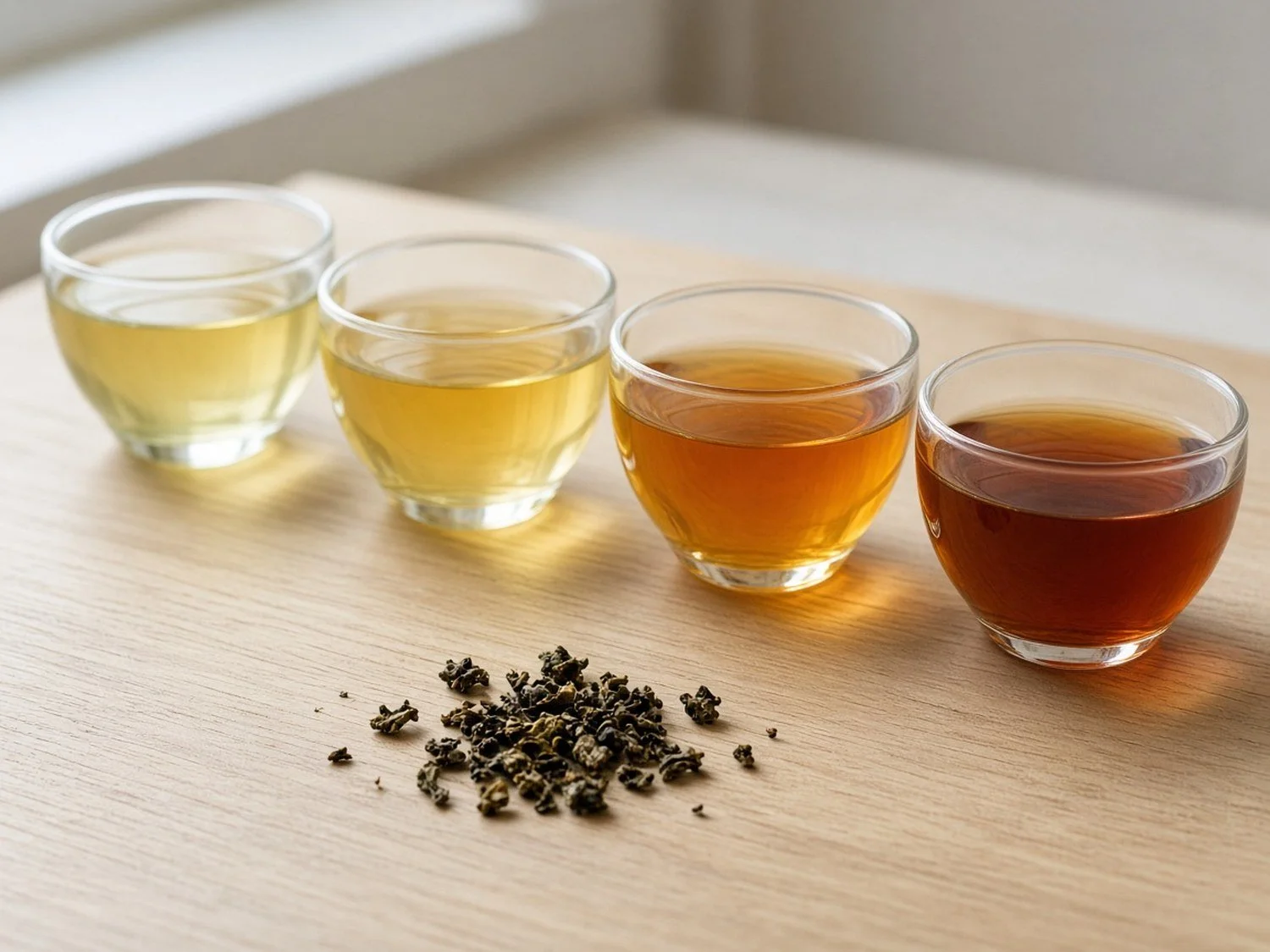
Oolong is partly oxidized. Tea makers wither the fresh leaves, then gently toss or shake them to bruise the edges, which starts oxidation, the same natural browning you see on a cut apple. Partway through, the leaves are heated to stop it. Green tea is stopped almost right away, and black tea is fully oxidized. Oolong sits in between, and where it lands in that wide middle shapes its color and flavor.
Two more choices add to the variety:
Roasting: after the leaves are made, many oolongs are roasted, lightly or deeply. Roasting brings out toasty, nutty and caramel notes.
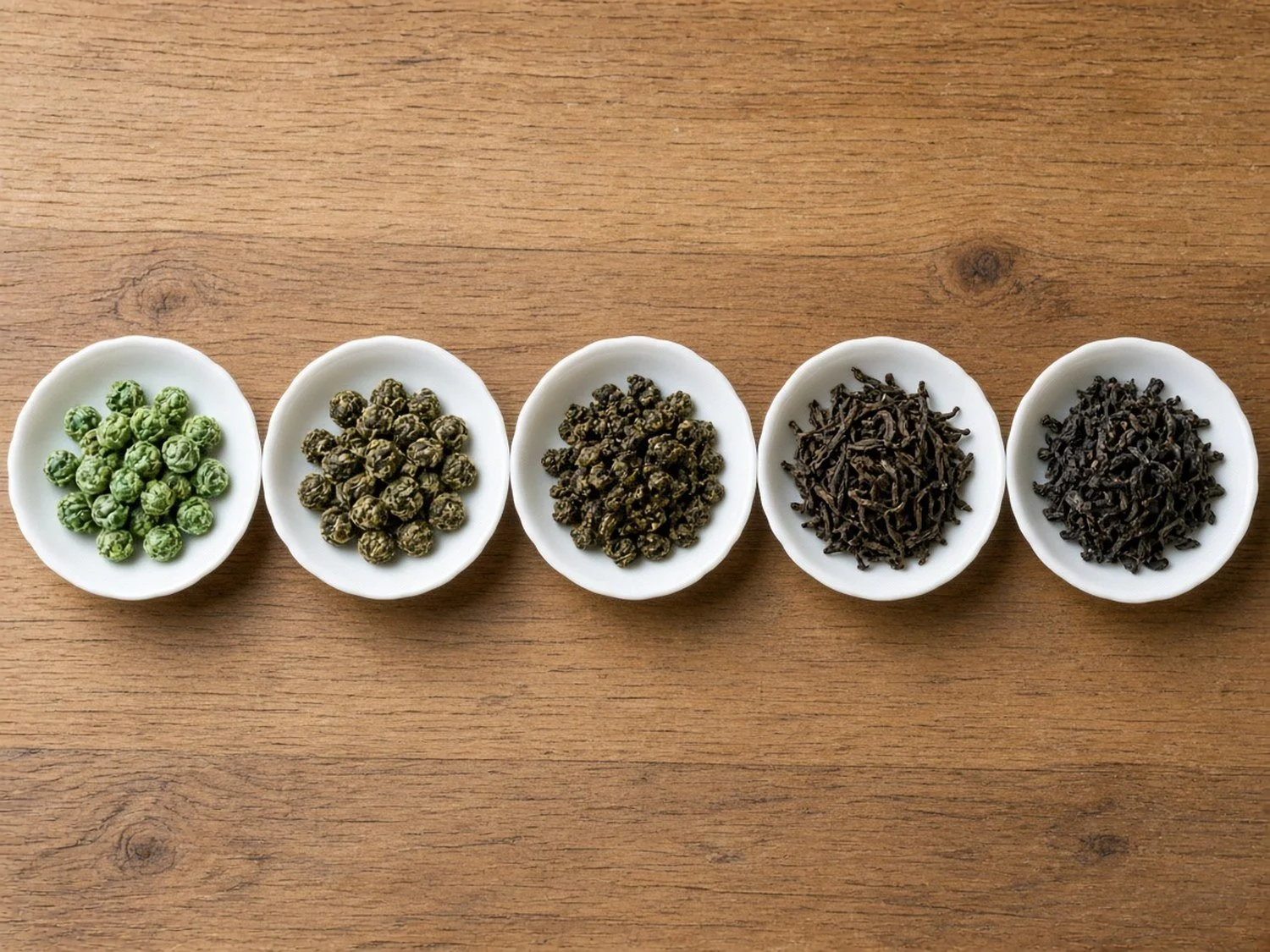
Leaf shape: some oolongs are rolled into tight little balls, and others are twisted into long, dark strips. Rolled oolongs slowly open up in hot water into whole leaves.
A simple way to think about it: less oxidation and roast means a lighter, greener, more floral cup, and more of both means a darker, toastier, richer one.
Light and Floral Oolongs
These are the greenest oolongs, lightly oxidized and usually rolled into jade-colored balls. Expect a fresh, smooth, flowery cup with a soft, creamy feel.
Jade Oolong from Taiwan is lightly oxidized, about 20 to 25 percent, and balances the best of green and black tea: smoother than black tea, less grassy than green tea, with an almost orchid-like harmony.
Ali Shan Oolong is a handmade high-mountain oolong from Taiwan's Ali Shan, where fog and cloud cover the tea slopes. It's lightly oxidized, very green in appearance and beautifully smooth.
Light oolongs are lovely on their own and pair well with fresh fruit, steamed seafood and delicate pastries. If you like them creamy, our Milk Oolong post is worth a read too.
Medium Oolongs: Toasty, Nutty and Balanced
In the middle of the range, oolongs pick up more color, more body and often a gentle roast, while keeping some of their floral side.
Iron Goddess (Ti Kuan Yin) Oolong is nutty and mineral, with a lingering orchid fragrance.
Roasted Tung Ting Oolong from Taiwan is medium-bodied, nutty and mellowly sweet with light floral notes. It's a great starter tea for anyone new to oolong.
Formosa Oolong is mellow and toasty with a gentle sweetness and a nutty finish. It's forgiving to brew, which makes it an easy everyday oolong.
These pair nicely with dim sum, roasted nuts, mushrooms and simple cookies.
Dark and Roasted Oolongs
At the dark end are the "rock teas" of the Wuyi Mountains in Fujian, China, grown in rocky mountain terrain. They're made with long, twisted leaves and roasted for deep, warming flavor.
Wuyi Oolong, also known as Da Hong Pao or "Big Red Robe," is toasty, earthy and full-bodied, layered with honey and a floral aftertaste.
Shui Xian Oolong, whose name means "water sprite," is mellow and full with a smooth toasty character, an earthy mineral taste and a sweet finish.
Dark oolongs stand up to richer food: roast duck, grilled meats, mushrooms, nuts and a square of dark chocolate.
How to Brew Oolong by Style
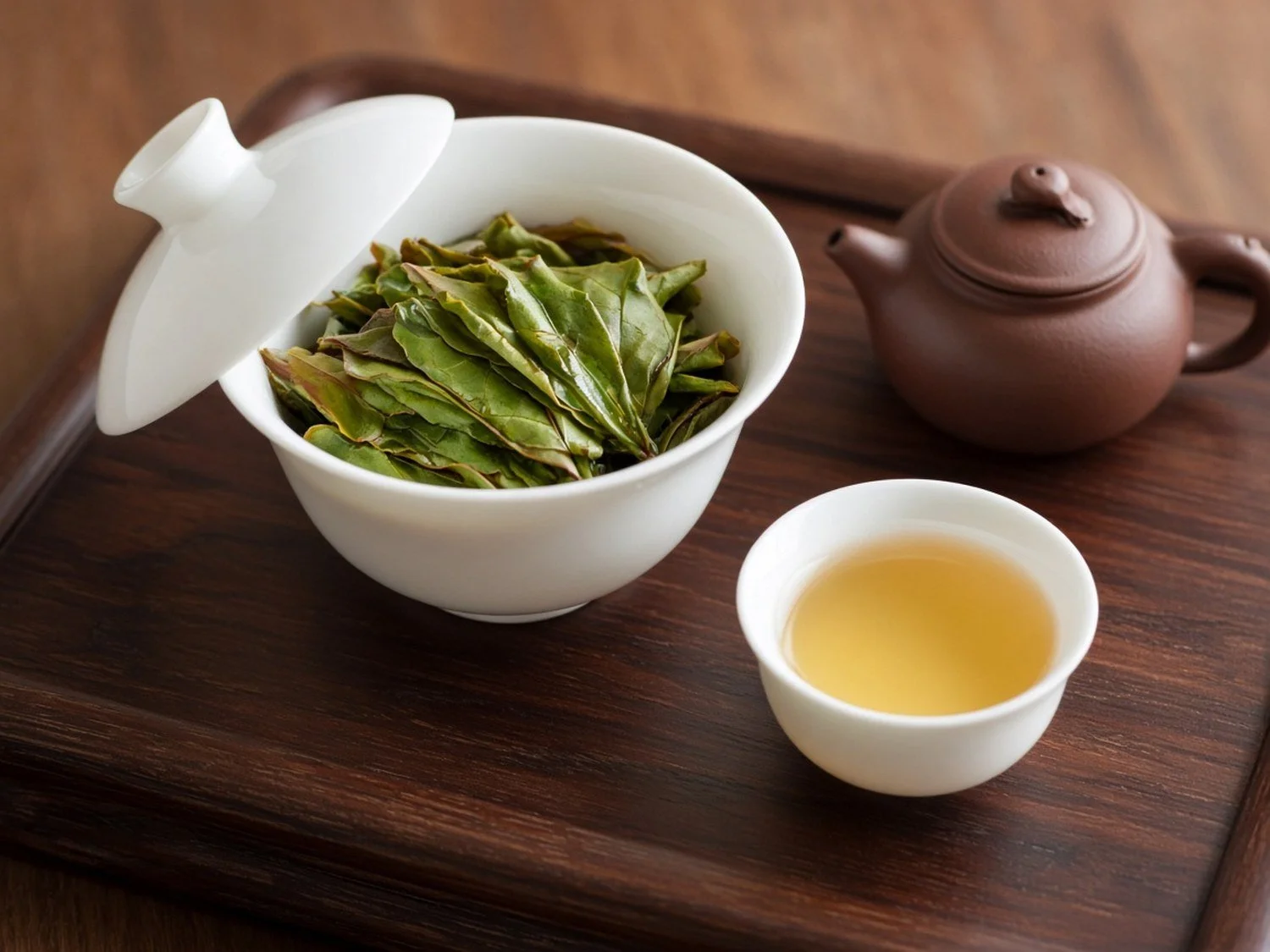
A good starting point for any oolong is 1 to 2 teaspoons (about 3 grams) per 8 oz of water, steeped 3 to 5 minutes. Then fine-tune by style:
Light, green oolongs: use water toward the lower end of the range, around 185 to 195°F, so the floral notes stay bright and sweet.
Medium and dark oolongs: hotter water, around 195 to 205°F, helps bring out the roasted, honeyed depth.
Rolled oolongs: give them room. The little balls open into full leaves, so use a roomy infuser or brew them loose in the pot.
Re-steep: oolong is made for multiple infusions. Add a little time to each new cup and notice how the flavor shifts. Our re-steeping guide has more detail.
If a cup tastes harsh, try slightly cooler water or a shorter steep. Our post Why Is My Tea Bitter? covers more easy fixes, and our tea brewing guide lists times and temperatures for every kind of tea.
Which Oolong Should You Try First?
If you love green tea or floral flavors: start with Jade Oolong or Ali Shan Oolong.
If you want something easygoing and in between: try Roasted Tung Ting Oolong or Formosa Oolong.
If you usually drink black tea or love toasty, deep flavors: reach for Wuyi Oolong or Shui Xian Oolong.
Better yet, taste one from each end side by side and see how far a single tea family can travel. You'll find all of these in our Oolong Tea collection, each a quality loose-leaf tea at an affordable price, with sample sizes that make exploring easy.