Posts in Tea Information
Spooky Season Sipping: Our Autumn Harvest Tea Box Is Here

The porch pumpkins are carved, the candy bowl is filling up, and the evenings are getting darker earlier. This is the time of year when a warm mug matters most. So we packed our favorite fall teas into one box, ready for Halloween and every cozy night after it.

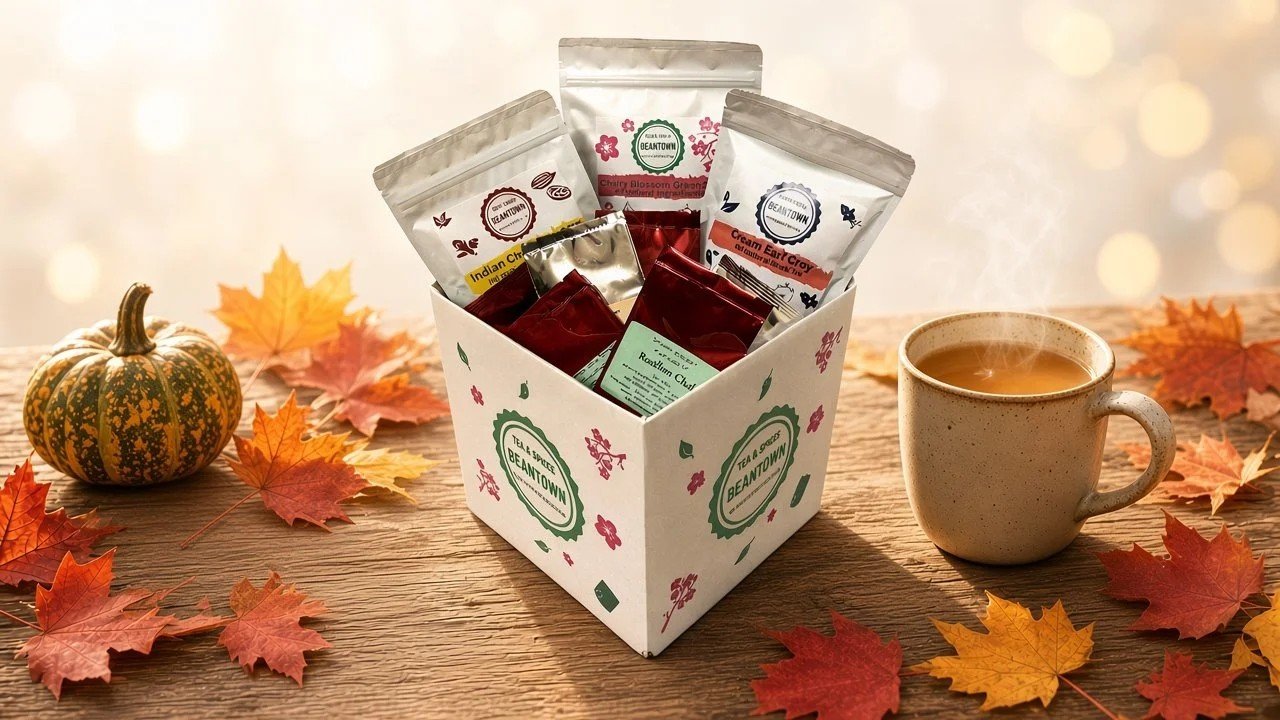
Meet the Autumn Harvest Tea Box. It holds about 225 cups of tea, and it has everything you need to start brewing the day it arrives.

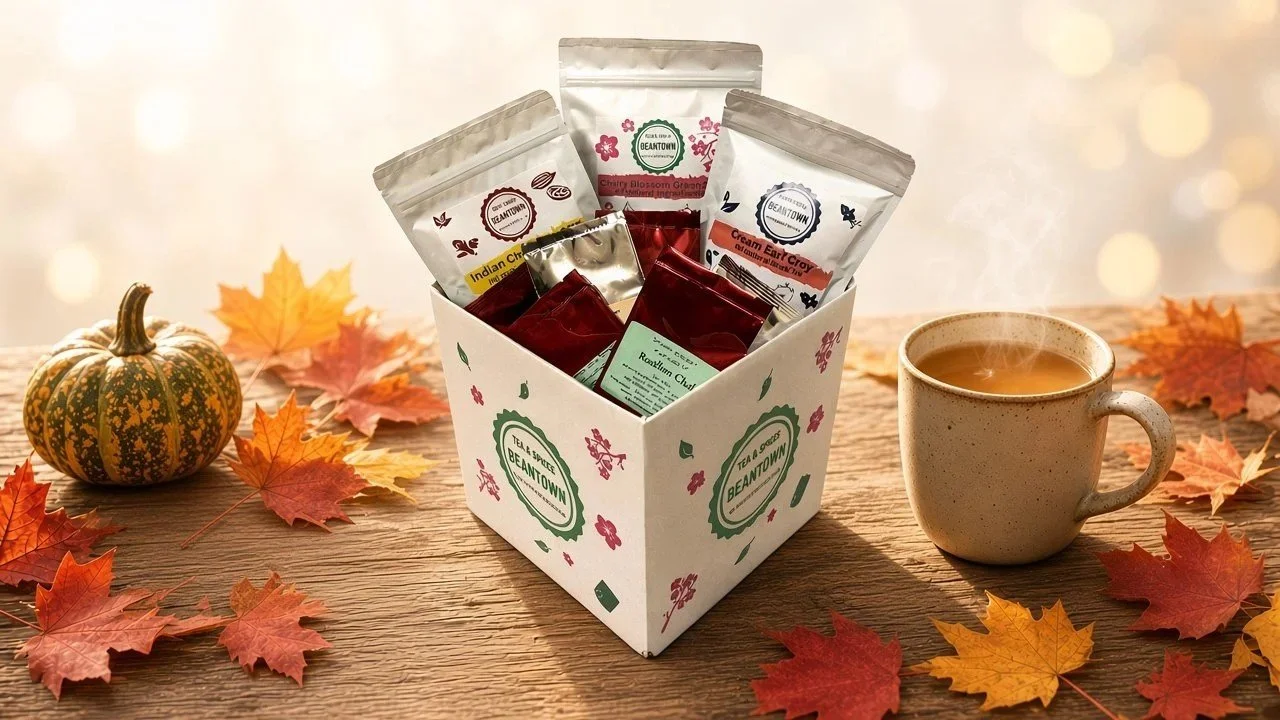
The Autumn Harvest Tea Box from Beantown Tea and Spices with three bags of fall tea, samplers and paper filters

What's Inside the Box

  • Three full 4 oz. bags (about 50 cups each) of our favorite autumn teas: Indian Chai Spice Mix, Cream Earl Grey and Cherry Blossom Green Tea.

  • 15 gourmet tea samplers (about 5 cups each), so you can try new flavors and find your next favorite.

  • 100 paper tea filters, so there's no infuser to hunt for and no mess to clean up.

Indian Chai Spice Mix: Your Halloween Night Mug

Our Indian Chai Spice Mix is a blend of cinnamon, ginger, green cardamom pods, allspice, cloves and black pepper. There is no tea in it, so it's naturally caffeine free. That makes it a great pick after the trick-or-treaters are home and everyone still needs to sleep.

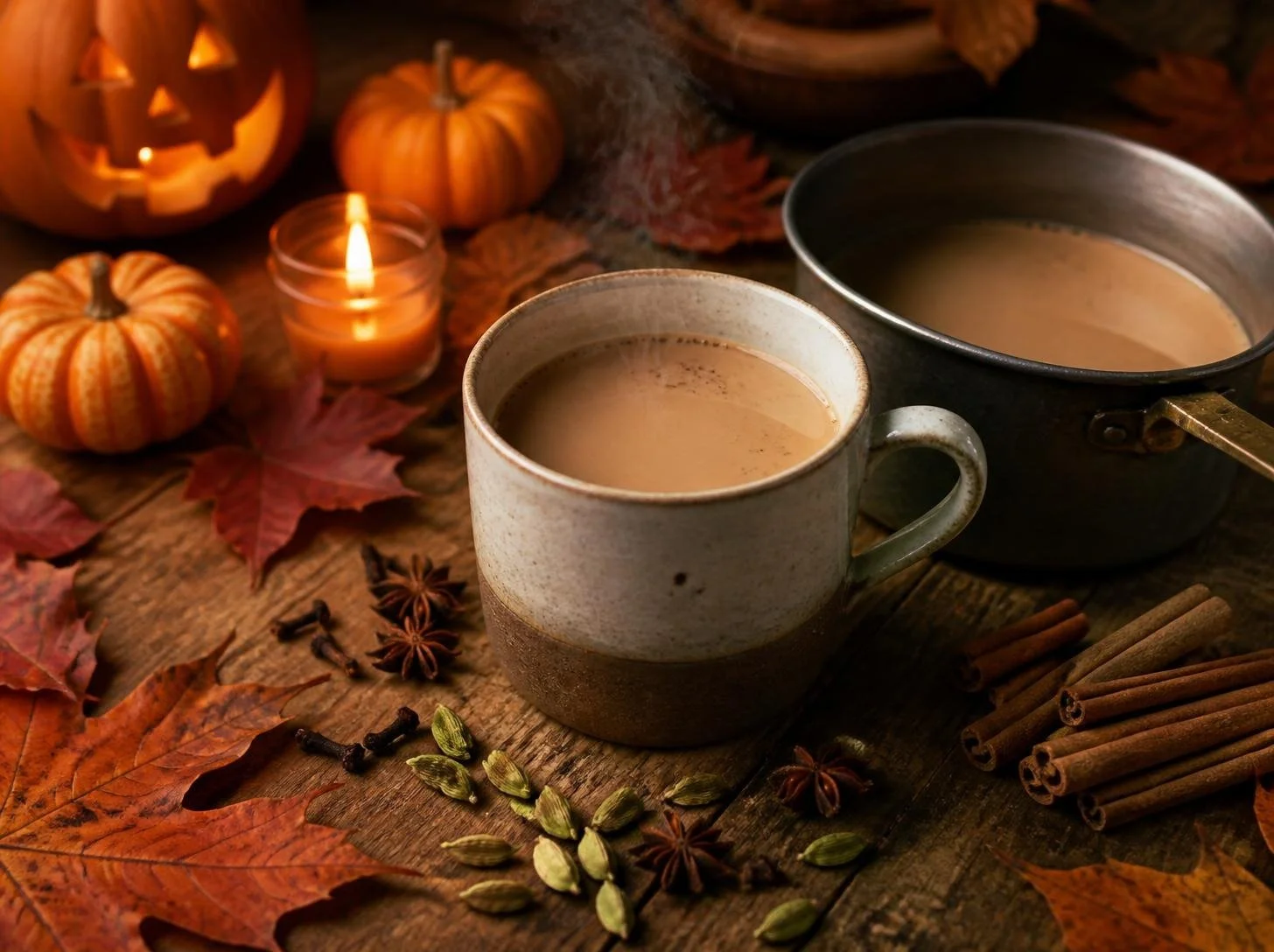
For a rich, homemade chai, put 3 teaspoons in a pot with 1 cup of water and 2 cups of milk. Bring it to a boil, then simmer for 3–5 minutes (watch it, because it can foam up fast). Stir in sugar or honey, strain, and pour. Want a little caffeine? Add your favorite black tea while it simmers.

Mug of milky homemade chai beside a small saucepan, whole spices, fall leaves and glowing jack-o'-lanterns


Cream Earl Grey: For Rainy Afternoons

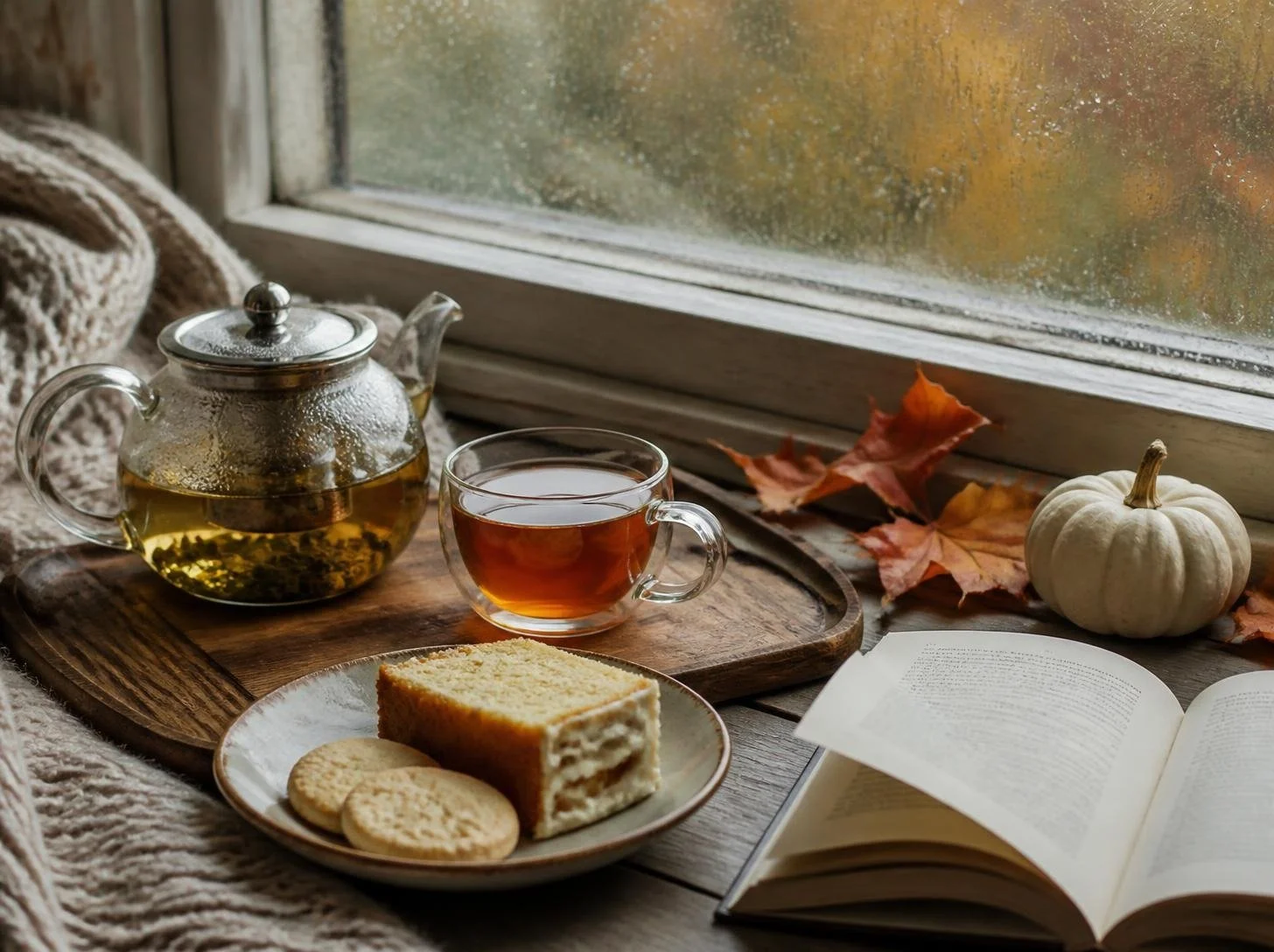
Cream Earl Grey starts with Ceylon black tea grown at 4,800 to 7,600 feet, then adds bergamot, a smooth vanilla note and blue cornflower petals. It brews a bright, coppery cup that's creamy and mellow. Try it with vanilla cake or madeleines, or make a London Fog latte with steamed milk.

Use 1 rounded teaspoon per 8 oz. of freshly boiled water and steep 3–5 minutes.

Cherry Blossom Green Tea: A Gentle Pick-Me-Up

Cherry Blossom Green Tea is a steamed Chinese green tea blended with cherries and rose petals. It's fresh and smooth, light enough for any time of day, and a nice break from heavier fall flavors. It pairs well with shortbread and fresh berries.

Use 1 teaspoon per 8 oz. of water at 175–185°F and steep 2–3 minutes. Skip the boiling water, which can make green tea bitter.

Glass teapot of green tea and a cup of black tea with vanilla cake and shortbread on a tray by a rainy autumn window


A Halloween Host Gift (or a Treat for You)

Heading to a Halloween party or a fall dinner? The Autumn Harvest Tea Box makes an easy host gift. It's also a thoughtful thank-you for teachers and coworkers, and a fun surprise for the tea lover who has everything. The 15 samplers make it a good fit for someone just getting into loose-leaf tea, too.

Of course, you can keep it for yourself. We won't tell.

Every box is packed by fellow tea enthusiasts at Beantown Tea & Spices. We've been sharing quality tea at affordable prices since 2006, and this is our favorite way to bring fall to your kitchen: fall in a tea box, ready for spooky season and beyond.

Shop the Autumn Harvest Tea Box, or browse more tea sets and gifts.

Happy Halloween, and happy steeping!

What New Research Says About Tea and Your Health (2025–2026)

Here in Boston, we drink tea mostly because it tastes good and slows the day down. Researchers keep studying what else it might do. Below are four studies published between July 2025 and October 2026, explained in plain language. Each one shows a link between tea and a health result. None of them proves that tea causes that result, and we point out the limits of each one.

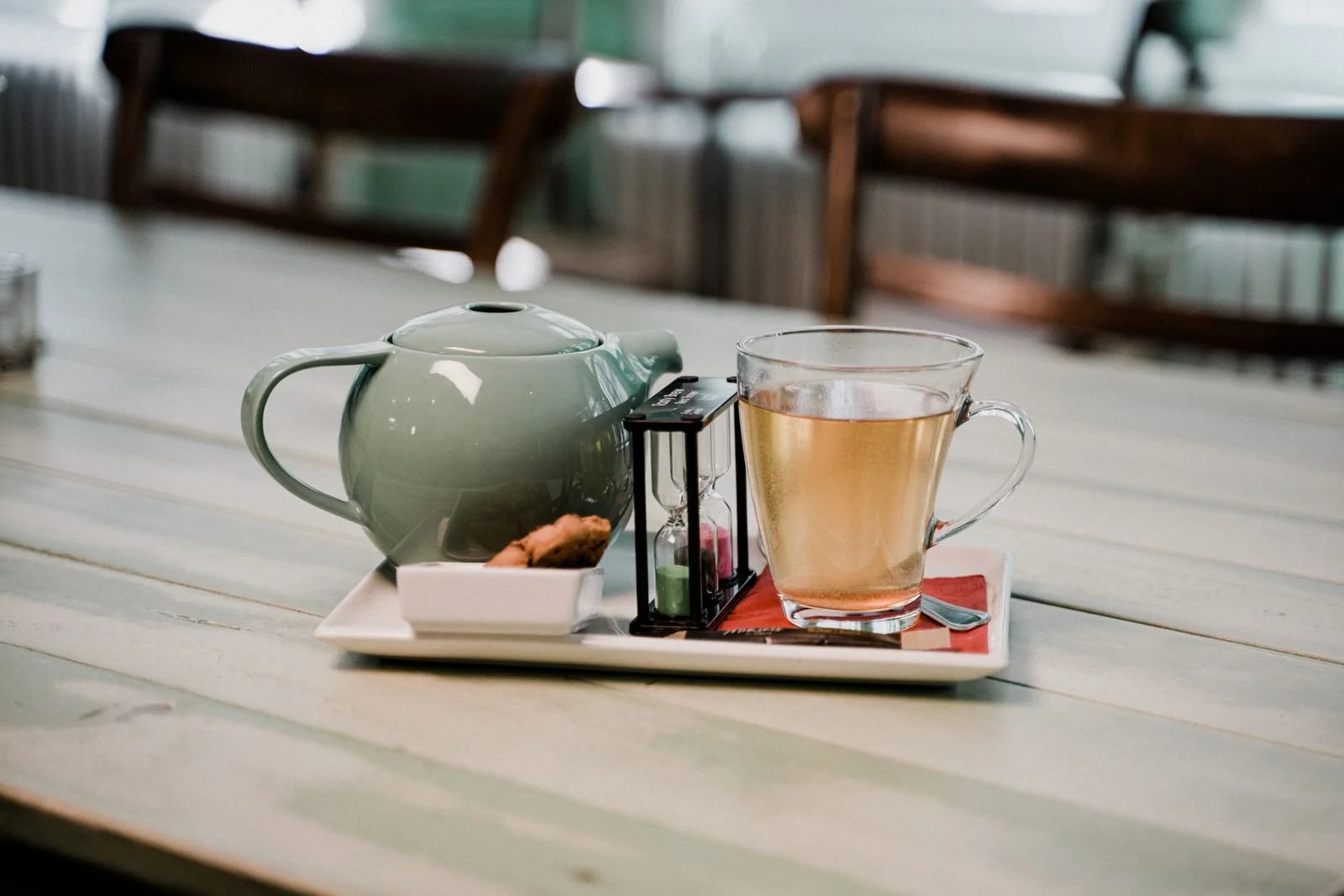
A green ceramic teapot next to a glass cup of tea on a wooden table.

Photo: Bert Christiaens / Pexels


1. Tea and blood pressure

Journal: Frontiers in Nutrition, August 2026 (systematic review and meta-analysis)

Researchers combined 20 observational studies with about 320,000 adults in total. In the four studies that followed people over time, regular tea drinkers were about 13% less likely to develop high blood pressure than people who did not drink tea. The link was strongest at lower intakes and leveled off at higher intakes, so more cups did not keep adding benefit. In the subgroup analyses, the link was stronger among black tea drinkers.

Limits: All of the studies were observational, and their results varied a lot. The authors write that a clear protective effect "cannot be confirmed."

Read the study

2. Tea and bone strength over 13 years

Journal: The American Journal of Clinical Nutrition, October 2026 (prospective cohort study)

A team in Guangzhou, China, measured bone mineral density in 1,708 adults four times over 13 years. People who drank tea at a moderate frequency generally had the highest bone density scores across the whole body, lower spine and hip. People with higher blood levels of certain tea catechins (EGCG and ECG) also tended to have better bone measurements.

Limits: The differences were small, and the blood-marker results did not rise in a straight line. The study was done in one region of China, and as an observational study it cannot show cause and effect.

Read the study

3. Unsweetened tea and longer life

Journal: Frontiers in Nutrition, July 2025 (prospective cohort study)

Using data from 195,361 UK Biobank participants followed for a median of 13.6 years, researchers compared people who drank no tea with people who drank tea unsweetened, with sugar, or with artificial sweeteners. People who drank about 3.5 to 4.5 cups of unsweetened tea a day had a 20% lower risk of dying from any cause during the study, plus lower risks of dying from heart disease and cancer. Tea with sugar or artificial sweeteners showed no consistent link with lower risk.

Limits: Tea intake came from short dietary recalls, and tea drinkers may differ from non-drinkers in other ways. The link was U-shaped, so the lowest risk sat at a moderate intake, not at the highest one.

Read the study

4. Green tea catechins, exercise and leg strength

Journal: Archives of Gerontology and Geriatrics, August 2026 (randomized, placebo-controlled trial)

In Japan, 78 adults aged 60 and older who felt they were getting weaker or slower all took part in group exercise classes for 24 weeks. Half also drank a catechin-enriched green tea each day (613 mg of catechins), and the rest drank a placebo drink. The green tea group gained more knee-extension (thigh) strength.

Limits: There was no difference between the groups in overall physical performance tests or muscle mass. Only 51 people completed the trial. The tea used was specially enriched with catechins, more than a typical cup provides, and the study was partly funded by a tea company whose employees were co-authors.

Read the study

What this means for your cup

  • Moderate and regular seems to be the pattern. In three of these studies, the best results came at moderate intake, not the highest.

  • Try it plain. The UK Biobank study linked lower risk with unsweetened tea only. A naturally flavorful tea makes skipping the sugar easy.

  • Tea works alongside a healthy lifestyle. In the strength trial, everyone exercised, and the tea was an addition.

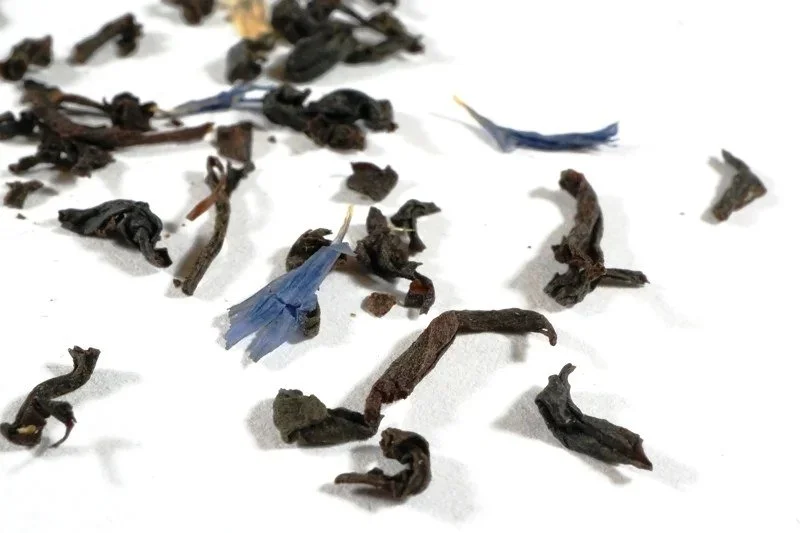
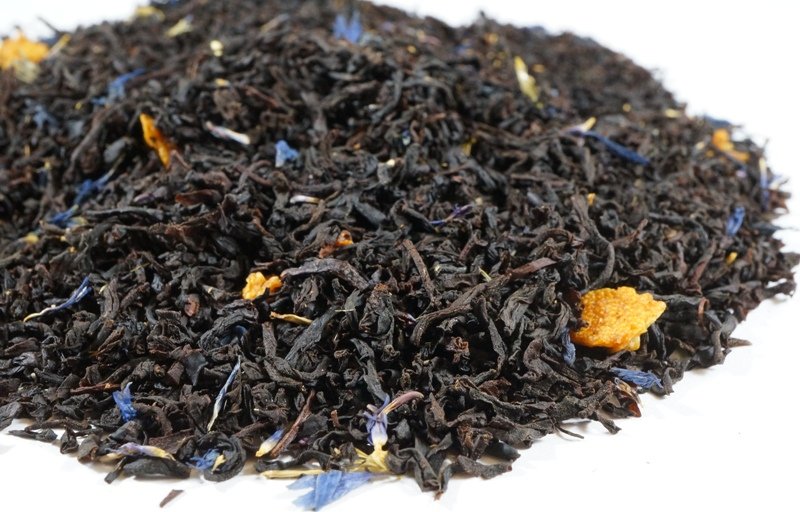
Loose-leaf Earl Grey black tea from Beantown Tea & Spices.


A few teas from our shop to brew this week:

  • Earl Grey: a classic black tea with bergamot, bright enough to enjoy without sugar.

  • Jasmine Dragon Pearls: hand-rolled green tea with a natural floral sweetness.

  • Matcha Samidori: powdered green tea, where you drink the whole leaf.

This post is for general information only and is not medical advice. Please talk with your doctor before making changes to your diet or health routine, especially if you take medication or are sensitive to caffeine.

Jasmine Dragon Pearls: The Hand-Rolled Tea That Blooms in Your Cup

Some teas you simply drink. Jasmine Dragon Pearls is one you watch. Each small, hand-rolled pearl slowly opens in hot water, and the room fills with the sweet scent of jasmine. It is one of our favorite teas for a quiet afternoon, any time of year.

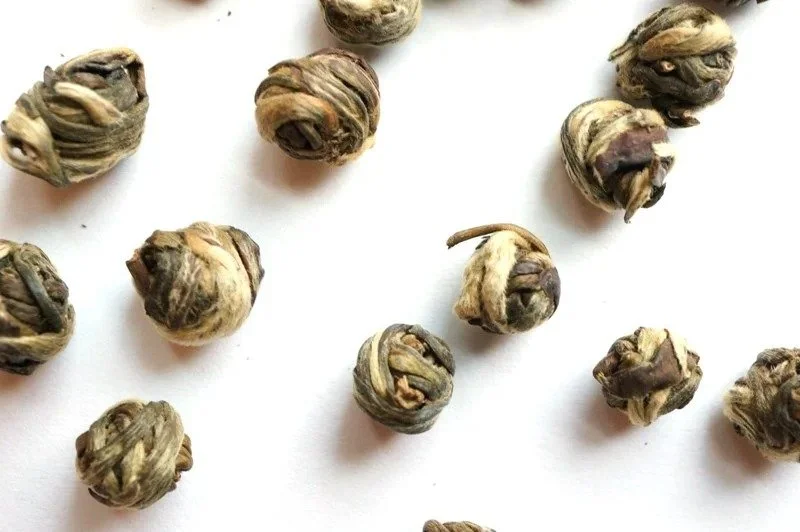
Loose Jasmine Dragon Pearls, small hand-rolled balls of green tea leaves, on a white surface

Where Jasmine Dragon Pearls Come From

Jasmine tea has a long history in China. The city of Fuzhou, in Fujian province, is especially famous for it, and its scenting traditions go back to the Southern Song dynasty.

The pearls are made from the top two leaves and the bud of new spring growth, picked in late March and early April. Each pearl is then rolled by hand.

The jasmine scent comes from real flowers. The blossoms are gathered during the day while they are still closed. In the evening, as the flowers open and release their fragrance, they are layered with the tea. After resting together, the spent flowers are removed and the tea is dried. This process is often repeated several times to give the tea a deeper scent.

What It Tastes Like

Jasmine Dragon Pearls is smooth and silky, with a clean green tea base under a sweet jasmine perfume. It is gentle, never bitter when brewed well, and pleasantly floral.

When the pearls open, look for the two leaves and the bud coming back to life. You may see a little soft "hairy down" on the bud. That is a sign of high quality and careful handling.

It pairs nicely with dim sum, steamed fish, almond cookies or fresh lychees. It is also lovely on its own.

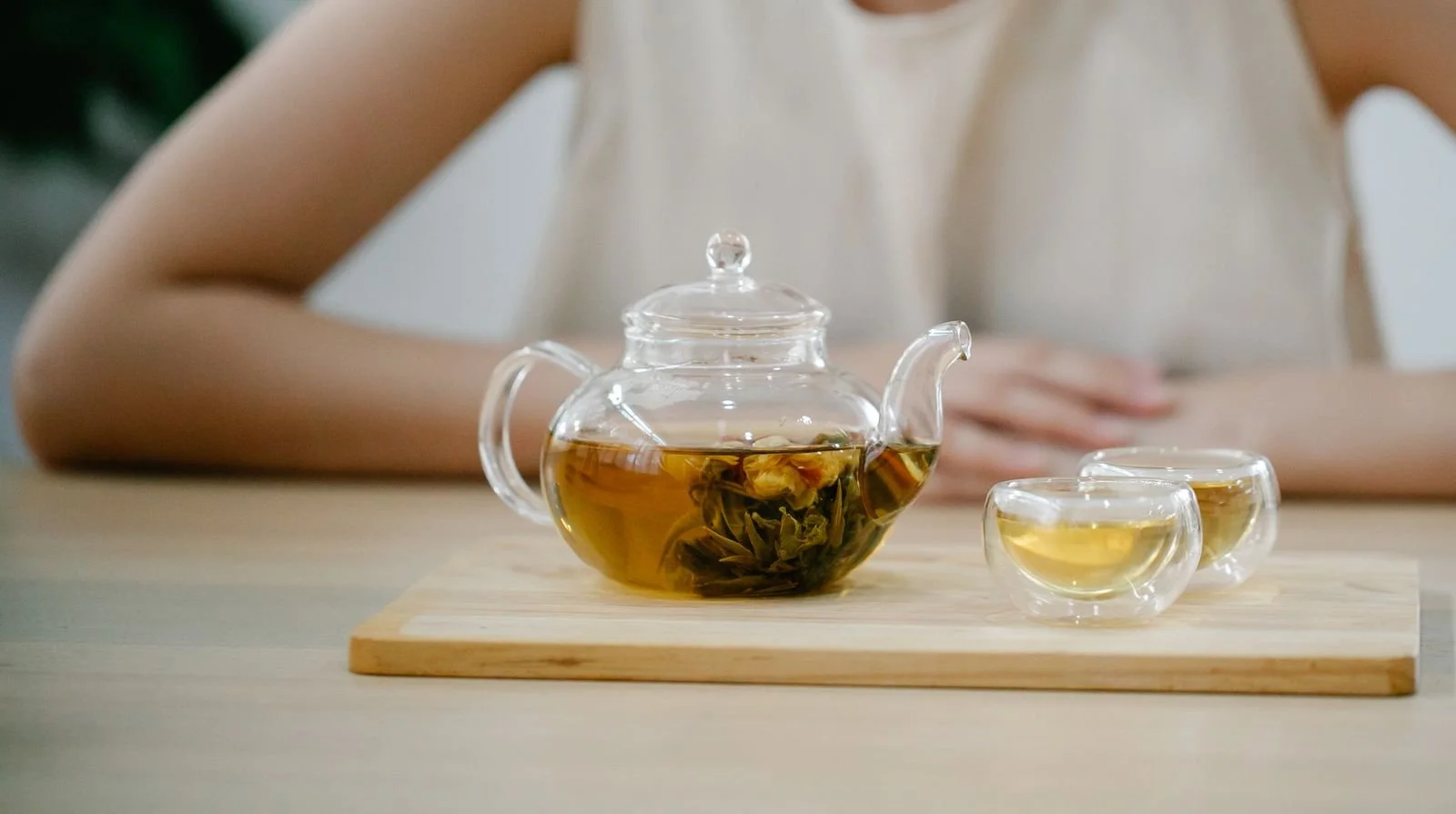
Glass teapot of golden green tea with opened leaves, beside two small glass cups on a wooden tray

How to Brew Jasmine Dragon Pearls

These are the brewing instructions from our product page, per 8 oz. of water:

  • Water temperature: 195°F / 90°C

  • Amount: 2 teaspoons

  • Steep time: 2–3 minutes

Tip: brew it in a glass teapot or a clear mug so you can watch the pearls open. You can steep the same pearls several times.

Sizes

See sizes on the product page

New to this tea? The sample size is an easy way to try it first.

Shop Jasmine Dragon Pearls from our tea shop in Boston, and explore the rest of our green tea collection.

Which Tea Goes With Your Halloween Candy?

Halloween candy is glorious, and a little overwhelming. After a night of chocolate bars, caramel chews, and whatever glow-in-the-dark mystery piece ended up in the bowl, a good cup of tea does more than warm your hands. It resets the palate, cuts the sweetness, and turns the candy pile into an actual tasting night instead of a sugar fog.

Here is how we pair our loose-leaf teas with common Halloween treats. No fancy equipment. Just a kettle, a mug, and whatever made it home in the bag.

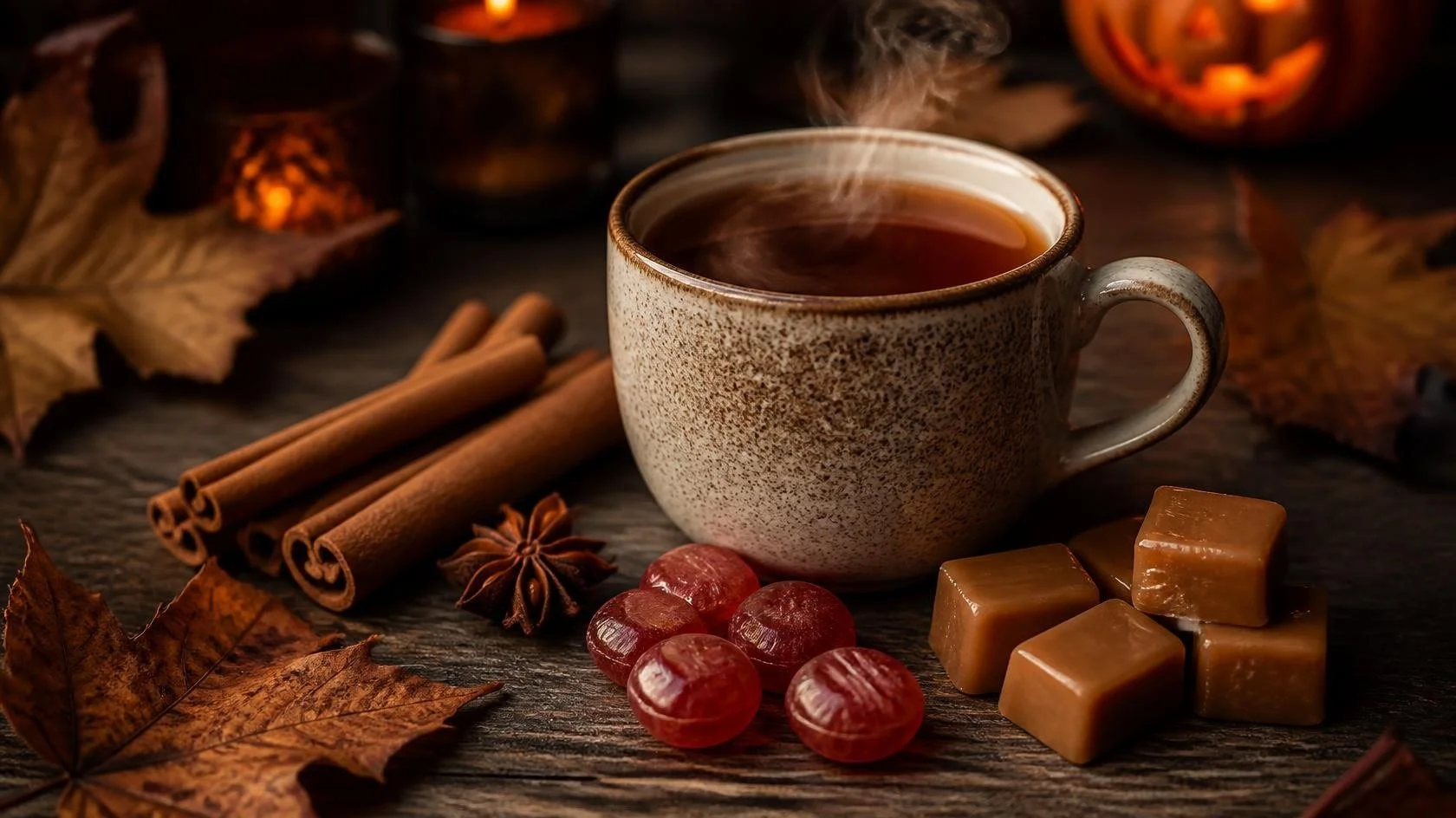
Mug of tea with Halloween chocolate and caramel

Chocolate bars and Cream Earl Grey

Milk chocolate and dark chocolate both love bergamot. Our Cream Earl Grey is Ceylon black tea with classic bergamot, rounded out by vanilla and a soft cream note, plus those blue cornflower petals. The citrus lifts the cocoa, and the vanilla echoes the sweetness without fighting it.

Brew it strong enough to stand up to the chocolate: 1 teaspoon per 8 oz of freshly boiled water, steeped 3–5 minutes. Sip between bites of a plain chocolate bar or a peanut-butter cup. Samples are available if you want to try it before you stock up.

Caramel, toffee, and Pumpkin Spiced Tea

Anything sticky and caramel-forward belongs with spice. Pumpkin Spiced Tea is premium Ceylon black tea blended with cinnamon, ginger, cloves, cardamom, marigold flowers, and natural pumpkin flavor. It tastes like October in a mug, and it handles candy corn, soft caramels, and toffee without tasting fake.

Use 1 heaping teaspoon per cup, boiling water, 3–5 minutes. Add a splash of milk if the candy was especially rich. Bags are available.

Spiced chai with cinnamon candies

Spicy cinnamon candy and Masala Chai

Hot cinnamon fireballs and red cinnamon chews need a partner that already speaks spice. Masala Chai is a full-bodied black tea with South Indian masala spices: ginger, cardamom, coriander, cinnamon, cloves, and black pepper. The ginger-cardamom finish matches that candy heat instead of getting steamrolled by it.

Turn the bag upside down a few times first (the powdered spices settle). Use 1 heaping teaspoon per cup, steep 5–10 minutes, then add warm milk and a touch of sugar. Samples are available.

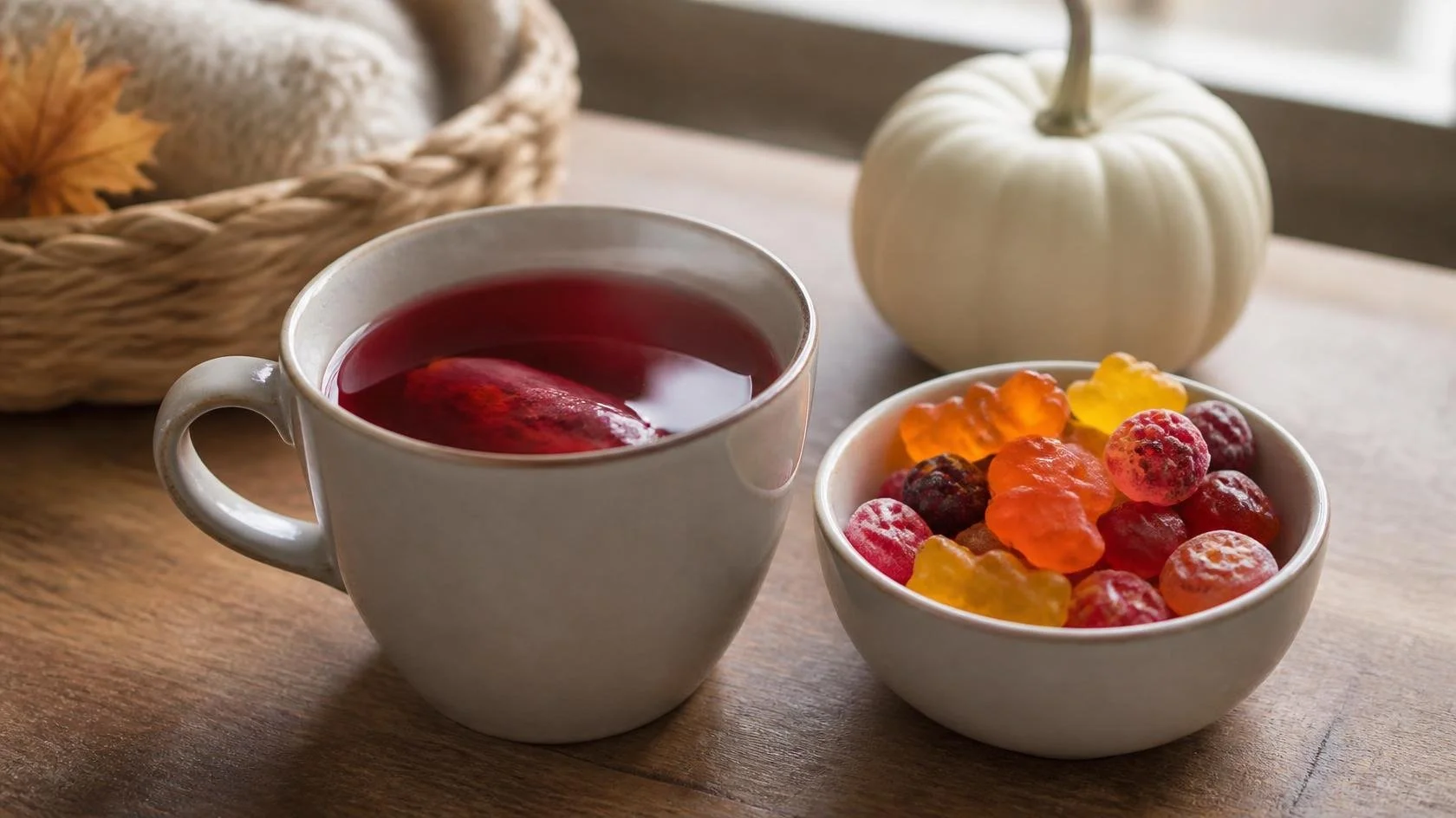
Berry tea with fruit candies

Fruity chews and Very Berry

Gummy bears, fruit snacks, and berry hard candies can taste thin next to black tea. Reach for Very Berry instead: rose hips, hibiscus, cranberries, blueberries, and natural forest-berry flavor. It is naturally caffeine-free, with no added sugar, and it brews into a deep red cup that tastes like fruit punch.

Use 2 teaspoons per cup, boiling water, steep 5–10 minutes. Kids can join this round. Samples are available, and it makes a great iced pitcher if you are hosting.

After the sugar rush: Sleep Well

When the porch light is off and the leftover candy is in a sealed container (yes, hide it from yourself), wind down with Sleep Well. It is our own caffeine-free blend of chamomile, peppermint, lemongrass, and green rooibos. Soft, floral, lightly minty, with a gentle lemon lift.

Use 1–2 teaspoons per 8 oz of boiling water, steep 5–7 minutes. A drop of honey is optional. Samples are available.

A few pairing tips that always help

  • Brew a little stronger than usual when you are eating sweet candy. Sugar softens the tea.

  • Alternate sip and bite. Let the tea clear the palate before the next piece.

  • Keep caffeine earlier in the evening if the kids (or you) still need to sleep.

  • Store opened candy airtight, and keep tea in an airtight tin away from light, air, moisture, and heat so both stay tasting like themselves.

Quality loose leaf at everyday prices has been our approach since 2006, from our Tea Zone days in Boston to our shop in Somerville. Whether your bowl is mostly chocolate or mostly mystery fruit, there is a cup that makes the haul more fun.

Happy Halloween, and happy steeping from all of us at Beantown Tea & Spices.

Tea Leaves and Barmbrack: How Tea Became Part of Halloween Fortune-Telling

Long before trick-or-treating caught on, Halloween was a night for parties, autumn treats, and trying to peek into the future. And in many homes across Ireland, Britain, and America, the most important prop for that fortune-telling was something already on the table: a pot of tea.

This week, as the leaves turn and jack-o'-lanterns start appearing on Boston stoops, we're looking back at three old traditions that tie tea to Halloween night.

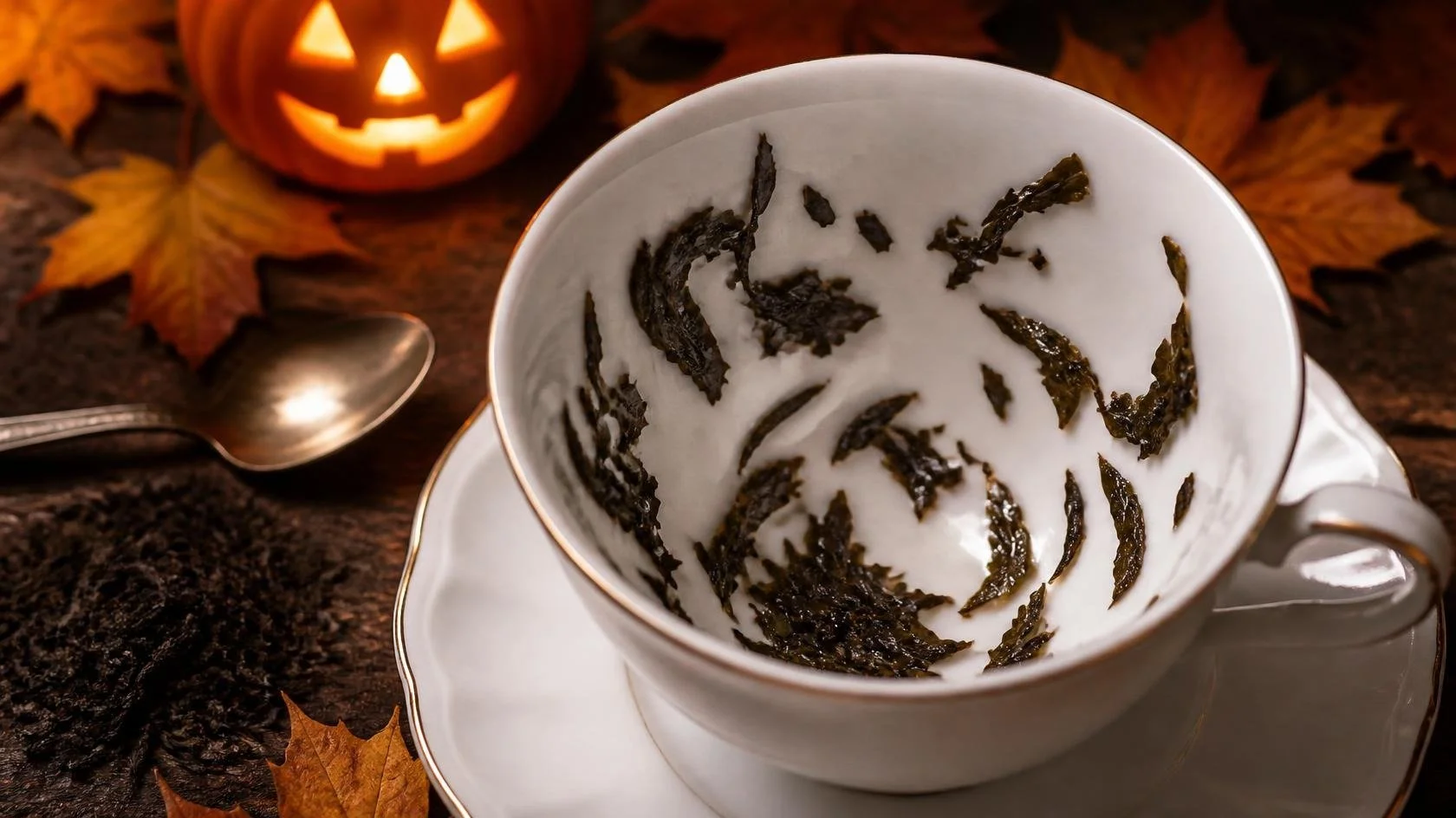
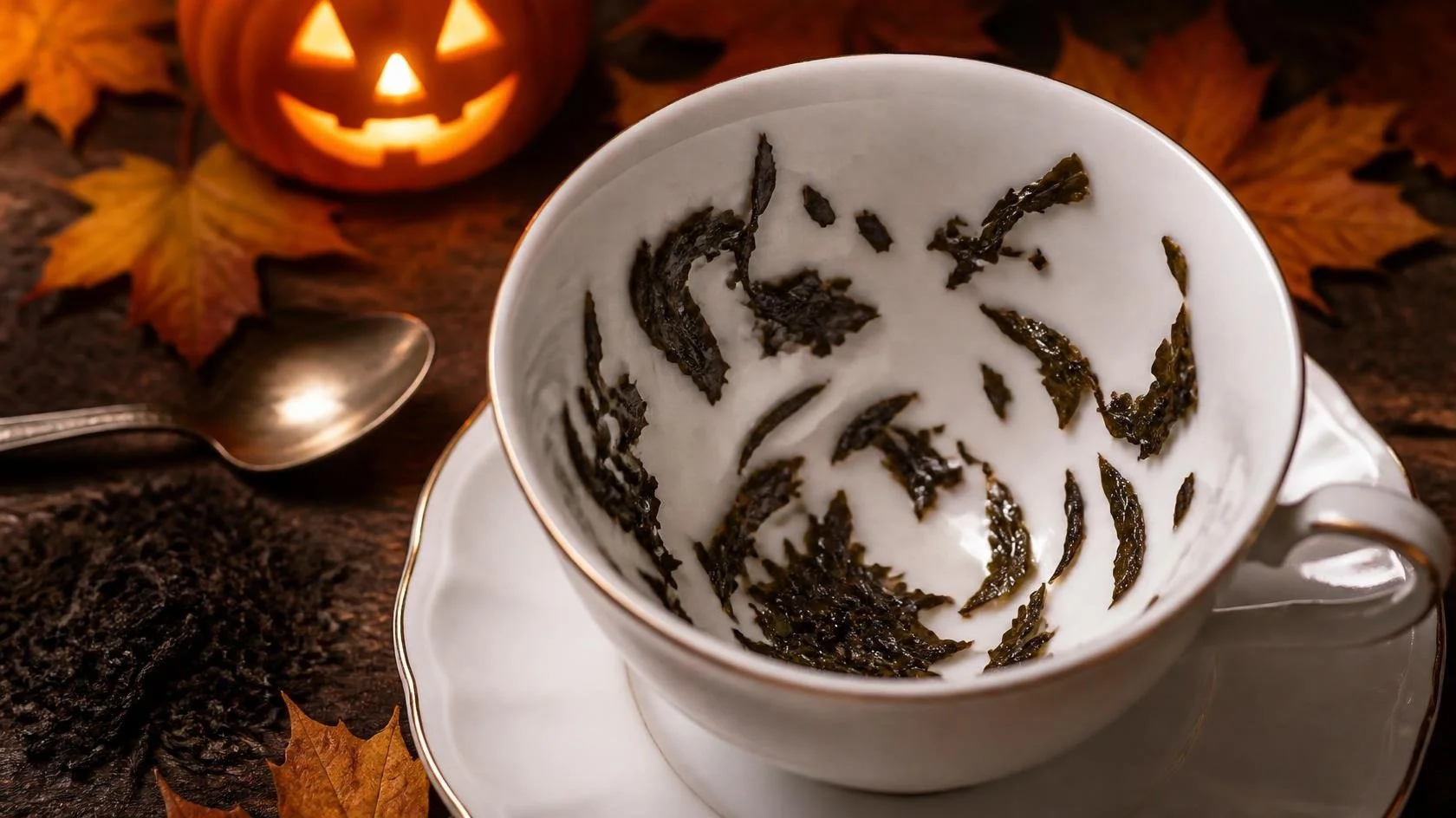
Teacup with loose tea leaves left inside for tea-leaf reading, beside a glowing jack-o'-lantern


Reading the leaves: a brief history of tasseography

Tea arrived in Britain from China in the mid-1600s as an expensive luxury. As trade grew and prices fell, it became an everyday drink for ordinary households, and the leftover leaves at the bottom of the cup took on a new life. Reading the shapes those leaves formed, a practice called tasseography, became a popular way to tell fortunes. According to NPR's history of the practice, it offered a much simpler alternative to older divination methods that involved molten lead or hot wax.

The oldest English-language book on the subject, Reading Tea Leaves by a writer calling themselves "a Highland Seer," described generations of Scottish "spae wives" (from an old Norse word for prophecy) peering into teacups to see what was coming. The Victorian era was the practice's real heyday. A reader would have the drinker swirl the last bit of tea three times, turn the cup upside down on the saucer to drain, and then study the leaves left clinging inside. Leaves near the rim were said to point to the near future, and those near the bottom to events further off.

By the early 1900s, porcelain makers in England and the United States were even selling "fortune-telling cups," painted inside with zodiac signs, playing cards, or symbols, so that anyone could read a fortune by noting where the leaves landed. Atlas Obscura notes that in the 1920s, fortune-telling tearooms offering leaf readings sprang up in cities.

The Halloween tea party

In the late 1800s, Halloween in America was mostly a holiday for parties, often for adults, filled with fall foods and games meant to forecast the future, especially romance. The New-York Historical Society notes that reading tea leaves was a favorite at Halloween parties of that era, alongside games like peeling apples and dropping melted lead into water (a game we strongly suggest you skip).

Some hostesses built a whole evening around it. In 1898, the Western Mail described a "candlelight tea" for sixteen young women, with a parlor decorated in autumn leaves, fruit, nuts, ears of corn, and jack-o'-lanterns lined along the mantel. Guests found hand-painted fortune cards at each place setting. One popular tea game of the time: balance a dry spoon on the rim of your cup, then drip tea into it from a second spoon until it tips. Each drop was said to stand for one year until your wedding.

Barmbrack: Ireland's tea-soaked Halloween bread

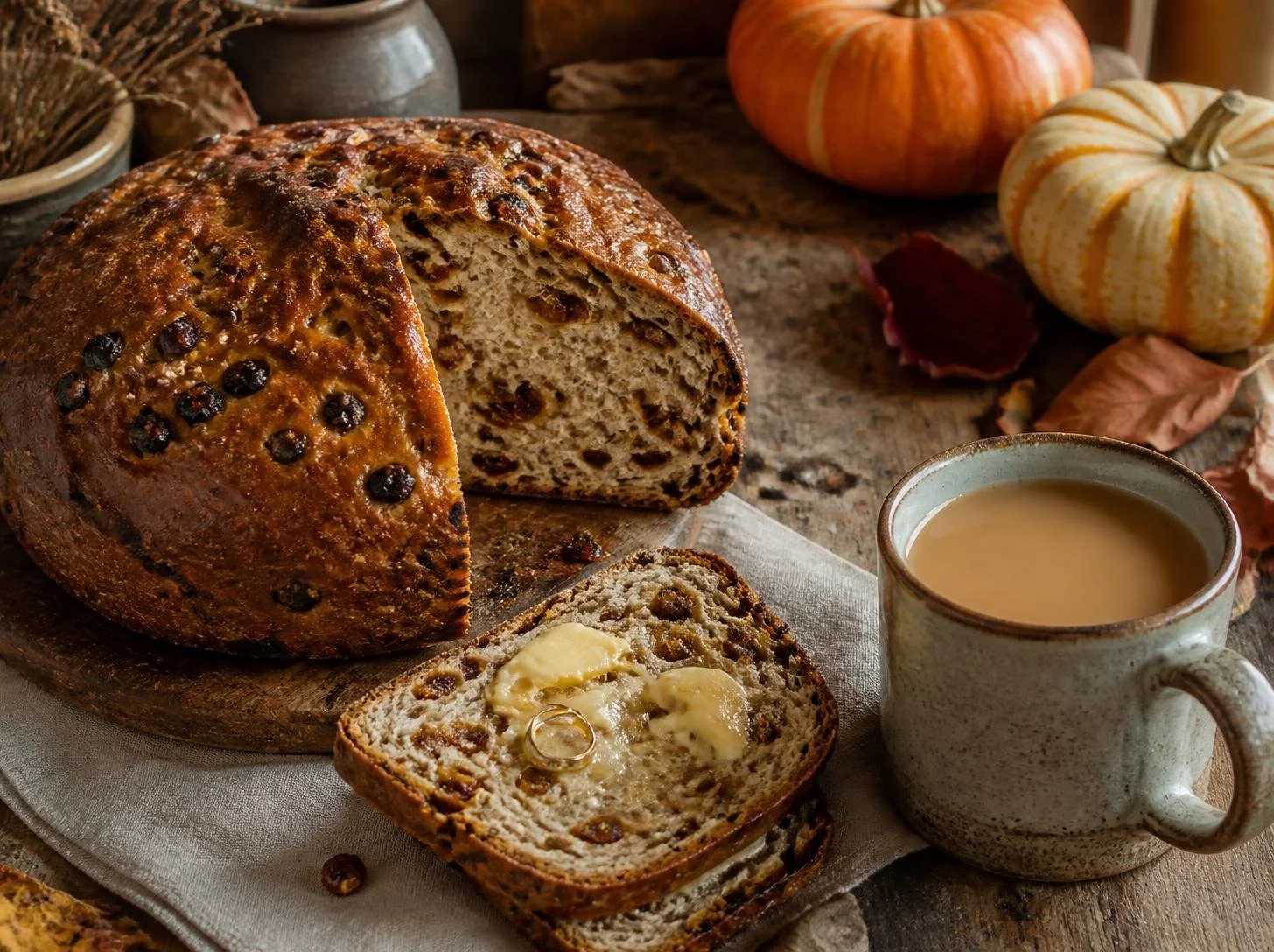
In Ireland, the fortune-telling happened in a slice of bread. Báirín breac, usually called barmbrack, is a sweet loaf studded with dried fruit; the name means "speckled loaf." Irish families have baked it on the eve of Samhain, October 31, for generations, and the fruit is traditionally soaked in strong tea (and sometimes a splash of whiskey) before baking.

The fun was in what was hidden inside. According to the National Museum of Ireland and Ireland's official tourism sites, a barmbrack might hold several small charms, each with a meaning for whoever found it in their slice:

  • A ring meant you would marry within the year.

  • A coin meant wealth and good fortune.

  • A pea meant no wedding that year.

  • A bean meant good fortune, but without riches.

  • A rag meant hard times or bad luck.

  • A stick meant a quarrelsome marriage.

Today, most shop-bought barmbracks hold just a ring, but plenty of families still bake the full set at home. And if you've ever had a slice, you know it's best served toasted, buttered, and with a strong cup of tea alongside.

Brew your own Halloween traditions

You don't need a crystal ball to bring a little of this history to your table this October. A few of our teas fit right in:

  • Irish Breakfast: Our robust blend of Assam and Kenya black teas is strong enough to stand up to milk and sugar, which makes it a natural partner for a buttered slice of barmbrack. Brew a strong pot and use the leftovers to soak your dried fruit, the way Irish home bakers have done for generations.

  • China Black Tea: Want to try reading the leaves? Brew a loose-leaf tea right in the cup without a strainer, then leave a little liquid at the bottom, swirl, and turn the cup over. This smooth, slightly malty classic is a pleasant cup to linger over while you wait to see what shapes appear.

  • Pumpkin Spiced Tea: Ceylon black tea with cinnamon, ginger, cloves, and cardamom tastes just like the autumn parlors those Victorian hostesses decorated.

  • Apricot Cinnamon: A caffeine-free choice so the whole family can join in on Halloween night.

Hosting friends this month? Our Autumn Harvest Tea Box brings together a selection of fall favorites, perfect for setting out at your own candlelight tea.

Whatever you find at the bottom of your cup this Halloween, we hope it's a cozy evening and a good brew. Happy Halloween from all of us at Beantown Tea & Spices!

Sources

Spiced Chai for Crisp October Nights

Halloween week always sneaks up on me. One minute the leaves are just starting to turn, and the next I'm looking for a mug that feels a little warmer, a little spicier, and still easy on the wallet.

That's when I reach for our Spiced Chai.

Steaming mug of spiced chai with autumn leaves

What makes this blend different

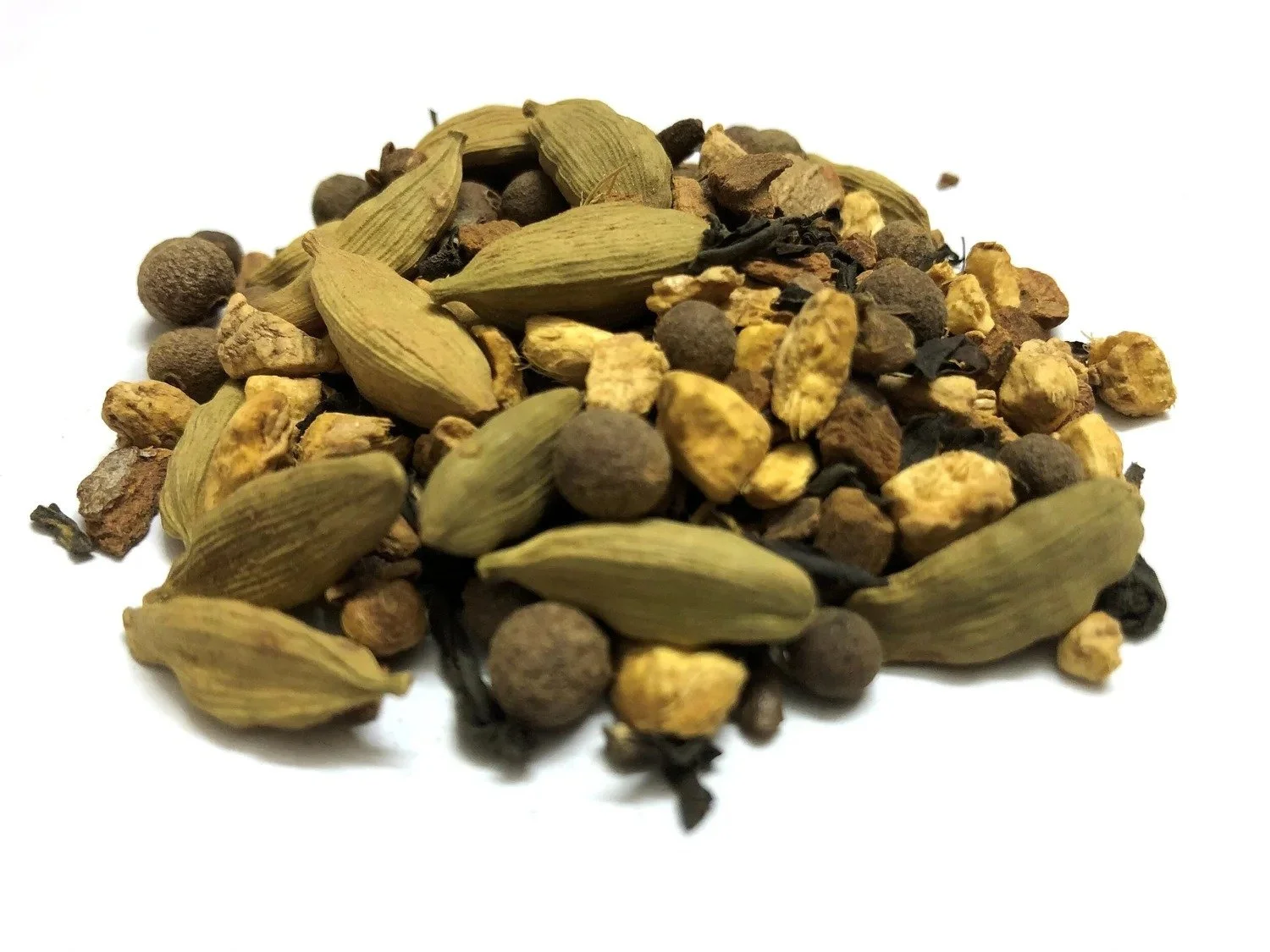
This is a full-bodied black tea blended with seven classic spices: cinnamon, ginger, green cardamom pods, allspice, cloves, and black pepper. It brews into a warm cup with a gentle peppery kick, aromatic without tasting artificial.

If Masala Chai is the one you already know from our shop, Spiced Chai sits right beside it with a little more allspice and that black-pepper finish. Excellent hot, and it holds up iced if a warm October afternoon shows up again.

Samples start at $2.95, so you can try it before you commit to a bigger bag. Same idea we've always had: quality loose leaf at prices that make sense for everyday drinking.

Spiced Chai loose leaf blend of cardamom pods, black tea, cinnamon, ginger, and allspice

How we brew it at home

Turn the bag upside down a few times first. The powdered spices like to settle at the bottom.

For each 8 oz cup:

  • Use 1 heaping teaspoon of Spiced Chai

  • Pour freshly boiled water (212°F / 100°C) over the leaves

  • Steep 4–5 minutes (go longer if you want more spice)

  • Add warm milk and a touch of honey or sugar to taste

Pair it with oatmeal cookies, apple pie, or just a quiet porch minute while the kids are out trick-or-treating. Around here that counts as a solid October plan.

Masala Chai loose leaf black tea blend with warming spices

More cozy chai if you want options

Browse the full chai selection for Masala Chai, Vanilla Chai, and the rest of the lineup. Grab Spiced Chai when you want that peppery fall cup ready for the kettle.

Happy steeping from all of us at Beantown Tea & Spices.

Genmaicha: Japanese Green Tea with Toasted Rice

If you want a green tea that does not taste like every other green tea on the shelf, start with Genmaicha. It is a traditional Japanese blend of green tea leaves and fire-toasted brown rice, and the cup comes out nutty, aromatic, and genuinely satisfying.

At Beantown Tea & Spices, Genmaicha is one of those everyday greens people finish faster than they expect. Here is what it is, where it comes from, and how we like to brew it.

What Genmaicha is

Genmaicha (玄米茶) pairs Japanese green tea with roasted brown rice (genmai). Scoop it and you will see the story in the tin: green leaves mixed with small pieces of toasted rice, some of which pop during firing like tiny popcorn kernels — which is why you will sometimes hear it nicknamed "popcorn tea."

Our Genmaicha uses a high-grade Sencha and Gyokuro green tea base from Shizuoka Prefecture. The leaf keeps the fresh, vegetal character of Japanese green tea; the rice softens the edges and adds warmth.

A thrifty blend that earned its place

Genmaicha is often described as the tea of thrifty households. A widely told account says Japanese families added toasted rice to stretch their tea further when leaf was expensive, and the combination became a beloved drink in its own right — especially through the early twentieth century.

A popular folk legend tells a different story: a servant named Genmai accidentally dropped rice into his master's tea and gave the drink its name. The legend is charming but undocumented. Either way, what began as a practical blend is now enjoyed on its own merits, not as a compromise.

What it tastes like

The roasted rice does a lot of the personality work. It brings a nutty flavor, a bakey warmth, and a hint of natural sweetness. That is why Genmaicha works so well for people who find plain green tea a little sharp or grassy.

In the cup you should get a light golden liquor with:

  • Toasty, nutty aroma

  • Soft green-tea freshness underneath

  • A gentle, almost chewy finish from the rice

  • A little umami complexity from the Gyokuro in our blend

It is a natural partner for Japanese meals — miso soup, onigiri, tempura, or ramen — and a mellow after-dinner tea. It is also a friendly introduction to Japanese green tea if you prefer a warm, savory cup to a bright grassy one.

How to brew Genmaicha

Keep the water below a full boil so the leaf stays sweet instead of bitter.

Per 8 oz of water:

  • Amount: 1 heaping teaspoon (about 3 g)

  • Temperature: about 180°F (175–185°F / 80–85°C)

  • Steep time: 2–3 minutes

Adjust to taste. If the cup feels sharp, cool the water a little or shorten the steep. If you want more body, add a touch more leaf.

Shop Genmaicha

Ready to try it? Visit our Genmaicha product page, or browse the full green tea selection if you want to compare Japanese greens side by side.

Whether you drink it with dinner or as a quiet afternoon cup, Genmaicha is one of those teas that earns a permanent spot by the kettle. Happy steeping from all of us at Beantown Tea & Spices.

Very Berry Fruit Tea

If fruit teas are your thing, you're going to like this one. Our Very Berry Fruit Tea is naturally caffeine free, and it's built from real berries, hibiscus, and other fruits. Open the bag and you'll smell it right away.

What I love most is the balance. Plenty of fruit teas go all sugar or all sour. This one gets it right: the berries bring a natural sweetness, the tartness comes in just behind it, and the cup ends up satisfying without getting heavy.

It also works hot or iced, so it never really goes out of season around here. A mug of it on a cold afternoon is lovely, and a pitcher in the fridge in July is even better. Since it's made from all-natural ingredients, it's a nice swap for the sugary drinks a lot of us grab without thinking.

So if you've been looking for a fruit tea that actually tastes like fruit, give our Very Berry a try. It has a way of becoming the tin you reach for first.

Why Cold Brew Tea?

Cold brew tea has been showing up everywhere lately, and I get why. It tastes clean and refreshing, and there's a health angle too. So let's talk about what's actually in the glass: the health benefits of cold brew tea, how it's different from a regular hot-brewed cup, and why the brewing process and temperature matter so much.

Most of the good stuff in tea comes from its antioxidants and phytonutrients. The big three are catechins, theaflavins, and thearubigens. These compounds are behind benefits like better cognitive function and help with weight management.

Polyphenols are one of the most important antioxidants in tea, and they carry a lot of health benefits. Here's where cold brew gets interesting. It ends up with more polyphenols than hot tea, simply because of how it's made. Cold brew steeps at low temperatures with little to no heat. Hot tea steeps in hot water, and that heat can bring the polyphenol level down. Polyphenols have been found to have some real potential benefits, like reducing inflammation, preventing damage to DNA, and lowering the risk of cancer and cardiovascular disease.

Catechins are another antioxidant in tea with plenty of benefits, but they're a little fragile. Heat them and they can break down, which means you get less out of them. That's the catch with hot-brewed tea. Cold brew stays at a low temperature, so the catechins stay intact. Studies have shown the catechins in cold brew tea can reduce the risk of heart disease, improve cholesterol levels, and lower blood pressure.

Then there are theaflavins, a third antioxidant tied to a whole range of health benefits. Studies have shown they can reduce inflammation and oxidative stress, both of which can lead to chronic disease. They've also been found to reduce the risk of cancer and improve liver health. Because cold brew is made at a lower temperature, you get more theaflavins than you would from hot tea, and more of the benefits that come with them.

Thearubigens round out the list. Like theaflavins, they've been shown in studies to reduce inflammation and oxidative stress. They also have antiviral activity and can improve blood pressure. And once again, there are more of them in cold brewed tea than in hot, thanks to that lower brewing temperature.

So that's the case for cold brew. It's an excellent source of polyphenols, catechins, theaflavins, and thearubigens, all antioxidants linked to a long list of health benefits. Since the water never gets hot, those compounds are less likely to break down, and more of the good stuff makes it into your glass. Honestly, it's one of the best ways I know to get the health benefits of tea.

How Oolong Tea Is Made: From Fresh Leaf to Your Cup

Oolong sits right between green tea and black tea. It's made from the same plant, Camellia sinensis, but the leaves are only partially oxidized. That in-between step is what gives oolong its huge range, from light, floral, almost green-tasting cups to dark, toasty, roasted ones.

Oolong comes from China's Fujian Province, where tea makers perfected the craft centuries ago, and from Taiwan, which became famous for its oolongs in the 1800s. Here's how a fresh tea leaf becomes oolong, and how to brew it at home.

How oolong tea is made

Every tea maker has their own touch, and oolong is one of the most hands-on teas there is. Most oolongs go through the same basic steps.

1. Plucking

Oolong is usually made from more mature leaves than many green teas. Pickers typically take a bud with two or three leaves, or a few open leaves, which hold up well to the handling that comes next.

2. Withering in the sun

The fresh leaves are spread out on bamboo trays or cloths, often in the sun and then indoors, so they lose some moisture and soften. Soft leaves can be handled without breaking.

3. Bruising and partial oxidation

This is the step that makes oolong, oolong. The leaves are gently tossed or shaken in bamboo baskets, which bruises their edges. The bruised edges react with air and oxidize faster than the center of the leaf. Tea makers repeat this tossing and resting several times, watching and smelling the leaves until they reach the right level of oxidation. Some oolongs are lightly oxidized, around 15–30%, while darker styles go much further.

4. Firing to stop oxidation

Once the leaves are where the tea maker wants them, they're heated in a hot pan or drum. This "kill green" step stops oxidation and locks in the flavor.

5. Rolling and shaping

Next the leaves are rolled. Some oolongs, like many from Taiwan and Iron Goddess from Anxi, are rolled into tight little balls that slowly unfurl in hot water. Others, like Wuyi rock oolongs, are twisted into long, dark strips.

6. Drying and roasting

Finally the leaves are dried. Many oolongs are also roasted, sometimes over charcoal, which adds warm, toasty, nutty notes. A lightly roasted oolong stays fresh and floral; a heavily roasted one tastes deeper and more caramel-like.

What oolong tastes like

Because oxidation and roasting can be dialed up or down, oolong covers a lot of ground:

  • Light and floral: our Ali Shan Oolong is clean, with notes of orchid and honey, and our Milk Oolong is naturally creamy (no dairy involved).

  • Balanced and nutty: Iron Goddess (Ti Kuan Yin) brews a nutty, mineral cup with a lingering orchid finish, and Formosa Oolong is a smooth, easy introduction to oolong.

  • Dark and toasty: Wuyi Oolong is full-bodied and earthy with a honeyed, floral aftertaste.

How to brew oolong tea

Oolong likes water that's hot but not quite boiling. As a general guideline:

  • Use 1–2 teaspoons of loose leaf (about 3 grams) per 8 ounces of water.

  • Heat the water to 185–205°F. Use the lower end for light, floral oolongs and the higher end for darker, roasted ones.

  • Steep for 3–5 minutes, then taste and adjust.

  • Don't throw the leaves out after one cup. Good oolong can be steeped several times, and each cup brings out new notes.

A teapot, a gaiwan, or a simple infuser all work well. Just give tightly rolled leaves room to open up.

Is oolong good for you?

Like green and black tea, oolong contains natural antioxidants called polyphenols, and it has a moderate amount of caffeine, usually somewhere between green and black tea. Researchers have studied tea's polyphenols for their possible effects on metabolism and heart health, but the research is still developing, so we think of oolong first as a delicious, calorie-free cup rather than a cure for anything.

The bottom line

Oolong is a tea of craft. Plucking, withering, bruising, partial oxidation, firing, rolling, and roasting each shape the final cup, which is why no two oolongs taste quite the same. The best way to find your favorite is to try a few, from light and floral to dark and toasty. You can explore them all in our oolong tea selection.

A Short History of Japanese Tea: From Zen Monks to Sencha

Green tea is woven into daily life in Japan, from a quick cup of sencha at the office to the slow, careful ritual of the tea ceremony. But tea isn't native to Japan. It arrived from China more than 1,200 years ago, and Japanese growers and tea masters spent centuries turning it into something all their own.

Here's a short history of how that happened, and what it means for the tea in your cup today.

Tea arrives from China (800s)

Tea first came to Japan with Buddhist monks who had studied in Tang-dynasty China. The earliest written record dates to 815, when the monk Eichū is said to have served tea to Emperor Saga. For a while tea was enjoyed at court and in temples, but it was rare and expensive, and interest faded once official ties with China cooled.

Eisai and the Zen connection (1100s)

Tea made its real comeback in 1191, when the Zen monk Eisai returned from Song-dynasty China with tea seeds and a new way of drinking it: leaves ground to a fine powder and whisked with hot water. That's the ancestor of today's matcha. Eisai also wrote one of Japan's first books on tea, Kissa Yōjōki ("Drinking Tea for Health"), and Zen monks drank tea to stay alert through long hours of meditation.

Tea gardens soon spread around Kyoto, and the nearby town of Uji became famous for high-quality tea, a reputation it still holds.

The tea ceremony takes shape (1400s–1500s)

Over the next few centuries, drinking powdered tea grew from a temple habit into an art. Tea masters such as Murata Jukō and, most famously, Sen no Rikyū shaped what we now call the Japanese tea ceremony, known as chanoyu or chadō ("the way of tea"). Rikyū favored simple, rustic tea rooms and humble utensils, and his ideas of harmony, respect, purity, and tranquility still guide the ceremony today.

In a traditional ceremony, the host heats water in an iron kettle called a kama, measures matcha into a bowl with a bamboo scoop, and whisks it with a bamboo whisk (chasen) before serving each guest. A formal gathering may also include a light meal and sweets. Every movement is deliberate, and the point is less about the tea itself than about being fully present with your guests.

Sencha becomes the everyday tea (1700s)

Matcha was the tea of temples and the elite, but most people wanted something simpler. In 1738, a tea farmer named Nagatani Sōen in Ujitawara, near Kyoto, developed a method of steaming fresh leaves and then rolling and drying them. The result was a bright green, fresh-tasting tea that you could simply steep in a pot. That tea was sencha, and it soon became the everyday tea of Japan. Steaming, instead of the pan-firing common in China, is still the hallmark of Japanese green tea.

In the 1800s, growers near Uji also began shading their tea plants for several weeks before harvest. The extra shade makes the leaves sweeter and richer in umami, and it gave rise to gyokuro, one of Japan's most prized teas.

Japanese tea today

Today sencha is by far the most popular tea in Japan, and the biggest growing regions are Shizuoka and Kagoshima, on the southern island of Kyushu. Japan also produces a whole family of green teas, each with its own character:

  • Sencha: the classic steamed green tea, slightly sweet and vegetal. Ours comes from Kagoshima.

  • Gyokuro: shade-grown, smooth, and deeply savory.

  • Matcha: shade-grown leaves stone-ground into a fine powder and whisked, the tea of the tea ceremony.

  • Genmaicha: green tea blended with toasted brown rice for a warm, nutty cup.

  • Hojicha: green tea roasted to a toasty brown, naturally low in bitterness.

  • Kukicha: a mellow "twig tea" made from the stems of the tea plant.

Bringing a bit of that history home

You don't need a tea room or a full ceremony to enjoy Japanese tea. Most Japanese green teas like water that's hot but not boiling, so let your kettle cool for a few minutes after it boils and keep steeps short. Each product page has the exact brewing steps for that tea. If you're new to Japanese tea, sencha is a great place to start, and our green tea selection has the rest of the family when you're ready to explore.Tea arrives from China (800s)

Tea first came to Japan with Buddhist monks who had studied in Tang-dynasty China. The earliest written record dates to 815, when the monk Eichū is said to have served tea to Emperor Saga. For a while tea was enjoyed at court and in temples, but it was rare and expensive, and interest faded once official ties with China cooled.

Eisai and the Zen connection (1100s)

Tea made its real comeback in 1191, when the Zen monk Eisai returned from Song-dynasty China with tea seeds and a new way of drinking it: leaves ground to a fine powder and whisked with hot water. That's the ancestor of today's matcha. Eisai also wrote one of Japan's first books on tea, Kissa Yōjōki ("Drinking Tea for Health"), and Zen monks drank tea to stay alert through long hours of meditation.

Tea gardens soon spread around Kyoto, and the nearby town of Uji became famous for high-quality tea, a reputation it still holds.

The tea ceremony takes shape (1400s–1500s)

Over the next few centuries, drinking powdered tea grew from a temple habit into an art. Tea masters such as Murata Jukō and, most famously, Sen no Rikyū shaped what we now call the Japanese tea ceremony, known as chanoyu or chadō ("the way of tea"). Rikyū favored simple, rustic tea rooms and humble utensils, and his ideas of harmony, respect, purity, and tranquility still guide the ceremony today.

In a traditional ceremony, the host heats water in an iron kettle called a kama, measures matcha into a bowl with a bamboo scoop, and whisks it with a bamboo whisk (chasen) before serving each guest. A formal gathering may also include a light meal and sweets. Every movement is deliberate, and the point is less about the tea itself than about being fully present with your guests.

Sencha becomes the everyday tea (1700s)

Matcha was the tea of temples and the elite, but most people wanted something simpler. In 1738, a tea farmer named Nagatani Sōen in Ujitawara, near Kyoto, developed a method of steaming fresh leaves and then rolling and drying them. The result was a bright green, fresh-tasting tea that you could simply steep in a pot. That tea was sencha, and it soon became the everyday tea of Japan. Steaming, instead of the pan-firing common in China, is still the hallmark of Japanese green tea.

In the 1800s, growers near Uji also began shading their tea plants for several weeks before harvest. The extra shade makes the leaves sweeter and richer in umami, and it gave rise to gyokuro, one of Japan's most prized teas.

Japanese tea today

Today sencha is by far the most popular tea in Japan, and the biggest growing regions are Shizuoka and Kagoshima, on the southern island of Kyushu. Japan also produces a whole family of green teas, each with its own character:

  • Sencha: the classic steamed green tea, slightly sweet and vegetal. Ours comes from Kagoshima.

  • Gyokuro: shade-grown, smooth, and deeply savory.

  • Matcha: shade-grown leaves stone-ground into a fine powder and whisked, the tea of the tea ceremony.

  • Genmaicha: green tea blended with toasted brown rice for a warm, nutty cup.

  • Hojicha: green tea roasted to a toasty brown, naturally low in bitterness.

  • Kukicha: a mellow "twig tea" made from the stems of the tea plant.

Bringing a bit of that history home

You don't need a tea room or a full ceremony to enjoy Japanese tea. Most Japanese green teas like water that's hot but not boiling, so let your kettle cool for a few minutes after it boils and keep steeps short. Each product page has the exact brewing steps for that tea. If you're new to Japanese tea, sencha is a great place to start, and our green tea selection has the rest of the family when you're ready to explore.

The History of Earl Grey Tea: The Prime Minister, the Legends, and the Bergamot

Earl Grey is one of the most recognizable teas in the world. One sip and you know it: a black tea scented with oil of bergamot, a citrus fruit that tastes somewhere between a lemon, an orange, and a grapefruit, with a bright, floral edge.

It's also one of the most-searched teas on our site, so it seemed right to tell its story. The short version: the name comes from a real British prime minister, but much of the rest is legend.

Who was Earl Grey?

The tea is named after Charles Grey, the 2nd Earl Grey, who served as Britain's prime minister from 1830 to 1834. He's best remembered for the Reform Act of 1832, which overhauled Britain's voting system, and for the abolition of slavery across most of the British Empire during his time in office.

The legends

There are a few popular stories about how a prime minister ended up with a tea named after him.

  • The grateful mandarin. The most famous tale says a Chinese official sent the earl a gift of bergamot-scented tea after one of Grey's men saved the official's son. It's a nice story, but there's no evidence for it, and Grey never traveled to China.

  • The hard water. Another story says a Chinese tea master blended the tea for the Grey family home, Howick Hall in Northumberland, using bergamot to balance the taste of the local water. The family's guests loved it, and Lady Grey served it in London society.

Several British tea merchants have claimed to have the original recipe over the years, and nobody has been able to prove it.

What the record actually shows

Tea flavored with bergamot was already being sold in Britain by the 1820s, sometimes to make lower-grade tea taste like a more expensive one. But the name "Earl Grey" doesn't show up in print until the 1880s, decades after the earl's death in 1845. So the honest answer is that bergamot tea came first, and the famous name got attached to it later, probably as clever marketing.

What is bergamot?

Bergamot is a small, fragrant citrus fruit grown mostly along the coast of Calabria, in southern Italy. The fruit is too sour to eat out of hand, but the oil pressed from its peel is wonderfully aromatic. It's used in perfume as well as in tea, which is why a good Earl Grey smells so lovely the moment you open the bag.

Earl Grey today

Modern Earl Grey is almost always made with black tea, though you'll also find green tea and rooibos versions. Our classic Earl Grey blends premium black tea with bergamot oil, citrus peels, and blue cornflower petals. It's bright and refreshing, and it's lovely with pastries and cake. It comes in a sample size (about 5 cups) as well as 4 oz, 8 oz, and 1 lb bags.

If you like the classic, try one of its cousins:

How to brew Earl Grey

  • Use 1 rounded teaspoon of loose leaf (about 2–3 grams) per 8 ounces of water.

  • Pour freshly boiled water (205–212°F) over the leaves.

  • Steep for 3–5 minutes, then taste and adjust.

Earl Grey is great on its own, with a slice of lemon, or with a splash of milk. For iced Earl Grey and a homemade London Fog latte, see our guide on how to brew Earl Grey three ways.

Two centuries after Charles Grey left office, nobody can say for sure how his name ended up on a tin of tea. But it's easy to see why the tea itself stuck around.

Caffeine in Tea vs. Coffee: How Much Is in Your Cup?

Tea and coffee are the world's two favorite ways to get a gentle lift, and both owe it to the same natural stimulant: caffeine. Caffeine is the same molecule whether it comes from a tea leaf or a coffee bean, but the amount that ends up in your cup, and how it feels, can be quite different.

Here's how the two compare, and how to pick a tea that matches the kind of energy you want.

Caffein found in tea is different than that in coffee.

How much caffeine is in a cup?

According to the Mayo Clinic's caffeine chart, typical amounts per 8-ounce cup look like this:

  • Brewed coffee: about 95 mg

  • Black tea: about 47 mg

  • Green tea: about 28 mg

These are averages, and real cups vary a lot. Still, a cup of tea usually has roughly half the caffeine of a cup of coffee, or less.

Wait, don't tea leaves have more caffeine?

By weight, dry tea leaves can actually contain more caffeine than coffee beans. The difference is how much you use. A cup of tea takes about 2–3 grams of leaf, while a cup of coffee takes roughly twice that or more in ground beans. Coffee is also brewed in a way that pulls out more of its caffeine, so the cup ends up stronger.

What changes the caffeine in your tea

  • Steep time. The longer the leaves sit, the more caffeine comes out.

  • Water temperature. Hotter water extracts caffeine faster, which is one reason green tea, brewed cooler, often ends up lower.

  • Amount of leaf. More tea means more caffeine.

  • Leaf size. Broken leaves release caffeine faster than whole leaves.

  • Re-steeping. The first infusion carries the most caffeine, and each one after that carries less.

  • Matcha. Because you whisk and drink the whole powdered leaf, matcha tends to be on the higher end for tea.

The color of the tea isn't a reliable guide on its own. Some green and white teas made from young buds can be fairly high in caffeine, while some black teas are mild.

Why tea feels different

Tea also contains L-theanine, an amino acid found almost only in the tea plant. Research suggests that L-theanine and caffeine together support a calm, focused kind of alertness, which may be why many people find tea gives them a smoother lift than coffee. We dig into that research in calm focus in a cup.

Teas for every energy level

How much is too much?

The U.S. Food and Drug Administration says up to 400 mg of caffeine a day is generally fine for most healthy adults. That's several cups of tea. If you're pregnant, sensitive to caffeine, or taking medication, check with your doctor about what's right for you.

Coffee and tea both have their place. If you'd like a gentler, steadier lift with a lot of flavor to explore, tea is a wonderful choice.

What Is White Tea? How It's Made, How It Tastes, and How to Brew It

White tea is the most lightly handled of all teas. It comes from the same plant as green, oolong, and black tea, Camellia sinensis, but the leaves are simply withered and dried. There's no rolling, no pan-firing, and no steaming, which is why the cup tastes so soft, clean, and naturally sweet.

Here's what makes white tea different, the main styles to know, and how to brew it well.

How white tea is made

White tea traditionally comes from Fujian Province in China. Growers pick the unopened buds, sometimes with one or two young leaves, in early spring. The fresh leaves are then spread out to wither slowly, losing moisture and oxidizing just a little, before they're dried. Because the leaves are never rolled or broken, they stay whole, and many of the buds keep the fine silvery down that gives white tea its name.

The main styles of white tea

  • Silver Needle (Bai Hao Yin Zhen). Made only from downy buds, this is the most celebrated white tea. Our Silver Needle brews a clear, glowing cup with a delicate fragrance.

  • White Peony (Bai Mu Dan). Made from a bud and two young leaves, it's a little fuller and fruitier. Our White Peony is soft and velvety with gentle jammy notes.

  • Bud-and-leaf teas like Snowbud. Snowbud is bright, crisp, and mellow with floral hints.

  • Aged white teas. Some white teas are stored for years and grow deeper and honeyed. Try Aged Silver Needle.

  • Flavored white teas. White tea's light base pairs well with fruit, as in Peach White Tea and Blueberry White Tea.

What does white tea taste like?

Expect a pale gold cup that's light, smooth, and lightly sweet, with notes that can run from fresh hay and melon to honey and flowers. It's rarely bitter, which makes it a lovely tea for people who usually find green tea too grassy.

Does white tea have caffeine?

Yes. All true teas contain caffeine, white tea included. It's often said to be the lowest, but that isn't always so. Bud-heavy teas like Silver Needle can hold about as much as some green teas. How you brew matters more: cooler water and shorter steeps keep the caffeine on the gentle side. If you want no caffeine at all, an herbal or fruit tea is the way to go.

White tea and your health

Because it's so lightly processed, white tea keeps plenty of the plant's natural polyphenols, including catechins, the same antioxidant family found in green tea. Researchers are interested in these compounds, but most of the evidence so far comes from lab and animal studies, so it's best to enjoy white tea for its flavor and treat any health perks as a bonus, not a treatment.

How to brew white tea

Our product pages suggest this general guideline for Silver Needle and White Peony:

  • Use 1–2 teaspoons (about 2–3 g) of leaf per 8 oz of water.

  • Heat the water to 170–185°F, well below boiling.

  • Steep 3–5 minutes, then adjust to taste.

The fluffy leaves are bulky, so don't be shy with the scoop. Good white tea can be steeped two or three times. It also makes a beautiful iced tea, and you can try it cold brewed. For water temperatures across every tea type, see our brewing temperature guide.

Find your white tea

Every white tea we carry comes in a sample size plus larger sizes, so it's easy to taste a few before you pick a favorite. Browse them all in our white tea collection, or start with the White Tea Sampler Pack.

Tea Brewing Temperatures: The Right Water for Green, White, Oolong, and Black Tea
Water temperature is very crucial in making the perfect cup of tea.

Water temperature is the easiest way to make your tea taste better. Too hot, and delicate greens and whites turn bitter. Too cool, and a black tea or oolong comes out thin and flat. Match the water to the leaf and the same tea suddenly tastes the way it should.

Here's a quick guide to water temperature for each type of tea, based on the brewing tips on our product pages. Treat these as starting points and adjust to taste.

Water temperature at a glance

  • Japanese green tea (like Sencha): 160–175°F, 1–2 minutes

  • Gyokuro: 120–140°F, about 2 minutes

  • Most other green teas: 175–185°F, 2–3 minutes

  • White tea: 170–185°F, 3–5 minutes

  • Oolong tea: 185–205°F, 3–5 minutes

  • Black tea: freshly boiled, 205–212°F, 3–5 minutes

  • Herbal and fruit teas: freshly boiled water, 5–10 minutes

Green tea: keep it cool

Green tea is heated soon after picking to stop oxidation, so it keeps a fresh, vegetal flavor. Very hot water pulls out its bitter compounds quickly. Steamed Japanese greens like Sencha do best around 160–175°F for just a minute or two. Shaded Gyokuro goes even cooler, 120–140°F, which brings out its sweetness and savory umami. Most other green teas are happy at 175–185°F.

White tea: warm, not hot

White tea is only withered and dried, so the leaves are delicate. Water at 170–185°F and a 3–5 minute steep bring out its soft, honeyed sweetness without any harshness. Try it with Silver Needle or White Peony, and learn more in what is white tea.

Oolong tea: hotter water, many steeps

Oolongs are partly oxidized and often tightly rolled, so they need hotter water, 185–205°F, to open up. Lighter, greener oolongs like Iron Goddess (Ti Kuan Yin) sit at the lower end, while darker, roasted styles can take the top of the range. The same leaves can be steeped several times, and each cup tastes a little different. Read more in how oolong tea is made.

Black tea: just off the boil

Black tea is fully oxidized and sturdy, so it wants freshly boiled water, 205–212°F, to draw out its full body. A classic like English Breakfast takes 3–5 minutes. Some lighter black teas are nicer at 195–205°F with a shorter steep. For more, see our tips for brewing black tea.

Herbal and fruit teas: boiling is fine

Herbal and fruit blends aren't made from the tea plant, so there's no bitterness to worry about. Use freshly boiled water and give them time. A fruit blend like Red Orange takes 5–10 minutes to get its full flavor.

How to get the temperature right without a thermometer

  • Use a variable-temperature kettle if you have one. It takes all the guesswork out.

  • Bring water to a boil, then let it rest with the lid off. After a few minutes it drops into green and white tea range.

  • Add a splash of cool water to boiled water to bring the temperature down quickly.

  • Watch the bubbles. Tiny bubbles on the bottom of the pot mean the water is still well below boiling, and a rolling boil means it's ready for black or herbal tea.

Every tea page on our site lists its own brewing tips, so check there for the best starting point. Find your next favorite in our green, white, oolong, black, and herbal and fruit tea collections.

Green Tea for Energy: Why It Gives a Calmer Lift Than Coffee

If coffee feels like too much and you still want a lift, green tea is worth a try. It comes from the same plant as black and oolong tea, Camellia sinensis, and people in China and Japan have been drinking it to stay alert for well over a thousand years.

Green tea doesn't contain any special energy ingredient. What makes it feel different is the mix of a moderate amount of caffeine with an amino acid called L-theanine. Here's how that works, and how to brew a cup that keeps you going.

How much caffeine is in green tea?

According to the Mayo Clinic, an 8 oz cup of brewed green tea has about 28 mg of caffeine, while the same amount of brewed coffee has about 95 mg. The exact number depends on the tea, how much leaf you use, the water temperature, and how long you steep it. So green tea gives you a real lift, just a smaller one than coffee.

Why the lift feels calmer

Tea leaves contain L-theanine, an amino acid that's found in very few other foods. Several small studies have found that L-theanine and caffeine taken together can improve attention and focus on lab tasks more than caffeine alone, and many people describe the feeling as alert but relaxed. The research is still limited, so think of it as a likely reason tea feels gentler, not a guarantee.

Green tea is also rich in catechins, a type of polyphenol antioxidant, with EGCG the best known. They're a big part of green tea's grassy, slightly bitter taste. They don't give you energy the way caffeine does, but they're one more reason green tea makes a good everyday habit.

Green teas to try for a steady boost

  • Sencha is Japan's everyday green tea. It's fresh, slightly sweet, and vegetal, a classic morning cup.

  • Dragonwell is a pan-fired Chinese green tea with a sweet, slightly nutty taste. It holds up well to several infusions, so one spoonful can carry you through the morning.

  • Genmaicha blends green tea with toasted brown rice for a toasty, comforting cup that's a little lighter on caffeine.

  • Matcha is powdered green tea that you whisk and drink whole, so it usually gives a stronger lift than steeped leaves.

Want to keep things easy in the evening? Hojicha, a roasted Japanese green tea, is low in caffeine and has a warm, toasty flavor.

How to brew green tea for the best cup

The biggest mistake with green tea is water that's too hot. Boiling water and long steeps pull out extra bitterness, so keep it gentle. As a general guideline from our product pages:

  • Sencha: 1 heaping teaspoon (about 2 to 3 g) per 8 oz of water at 160 to 175°F, steeped 1 to 2 minutes.

  • Dragonwell: 1 teaspoon (about 2 g) per 8 oz of water at 160 to 180°F, steeped 2 to 3 minutes, and good for multiple infusions.

  • Genmaicha: 1 heaping teaspoon (about 3 g) per 8 oz of water at 175 to 185°F, steeped 2 to 3 minutes.

No thermometer? Let boiled water sit for a few minutes before you pour. Adjust to taste, and try it iced on warm days.

The bottom line

Green tea gives a gentle, steady lift thanks to its moderate caffeine and L-theanine. It won't hit as hard as a big mug of coffee, and for many people that's the point. If you're sensitive to caffeine, pregnant, or taking medication, check with your doctor about how much is right for you. Then pick a tea, brew it a little cooler than you think, and enjoy. Browse our full green tea selection to find your favorite.

Matcha and Focus: What Caffeine and L-Theanine Do for Your Brain

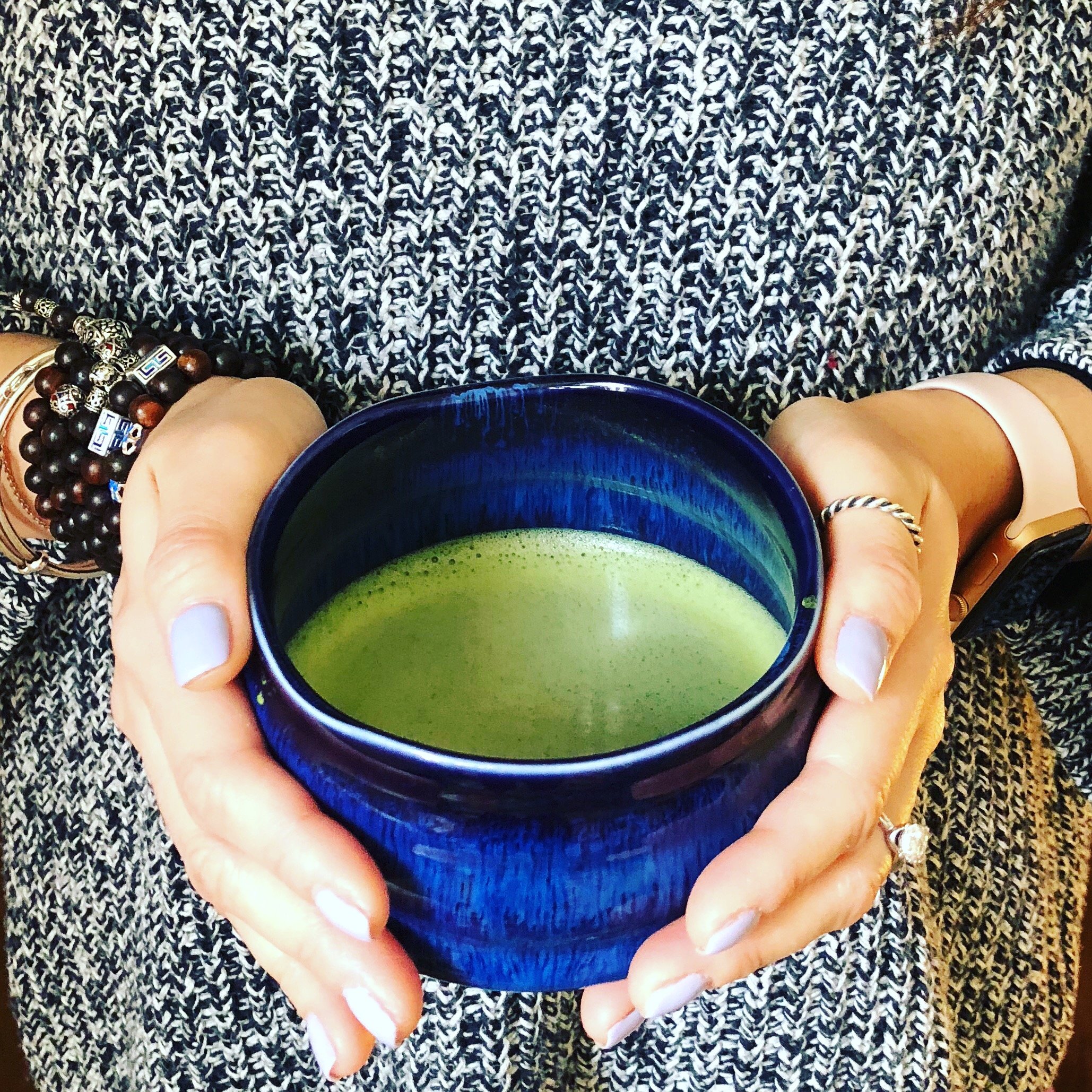
Matcha is finely stone-ground green tea that you whisk into water and drink whole. It's been part of Japanese tea culture for centuries, and many people now reach for it as a calmer alternative to coffee when they need to concentrate.

So can matcha actually help your brain? Here's what's in it, what the research does and doesn't show, and how to make a good bowl at home.

What makes matcha different

Matcha comes from tea plants that are shaded for several weeks before harvest. Shading boosts chlorophyll, which gives matcha its vivid green color, and L-theanine, the amino acid behind its smooth, savory taste. The leaves are then steamed, dried, and ground into powder.

Because you drink the whole leaf instead of steeping and removing it, a bowl of matcha usually delivers more caffeine, L-theanine, and catechins than a cup of regular steeped green tea. How much depends on how much powder you use.

Caffeine and L-theanine: the focus pair

Caffeine is the main reason matcha makes you feel more alert. It blocks adenosine, a brain chemical that builds up during the day and makes you feel tired.

L-theanine is the other half of the story. Several small human studies have found that L-theanine and caffeine taken together improve attention and accuracy on demanding tasks more than caffeine alone. A few studies of matcha itself have found modest improvements in attention, too. Many people describe the effect as calm focus, without the jittery peak some feel from coffee. Keep in mind that most of these studies are short and small, so the effects are real but modest.

What about long-term brain health?

You may have read that matcha prevents memory loss or diseases like Alzheimer's. The honest answer is that this hasn't been shown. Some studies of large groups of people link regular green tea drinking with better brain health as people age, and the catechins in tea, especially EGCG, are being studied in the lab. But that research can't prove matcha protects the brain. Enjoy matcha for its flavor and its gentle lift, not as a treatment.

How to whisk matcha

As a general guideline from our product pages:

  1. Sift about 1 teaspoon (1 to 2 g) of matcha into a bowl.

  2. Add a few drops of hot water and whisk into a smooth paste.

  3. Add 6 to 8 oz of water at 160 to 175°F.

  4. Whisk briskly in a zigzag motion until frothy, then adjust to taste.

Start with about a teaspoon and see how you feel before using more. A bamboo matcha whisk makes the froth much easier, and a matcha bowl gives you room to work.

Which matcha to choose

  • Matcha Samidori is a premium first-harvest matcha from Uji, Kyoto, rich and sweet enough to drink on its own.

  • Organic Matcha is smooth and pure, a great everyday bowl.

  • Matcha Green is a versatile all-purpose matcha for drinking straight or in lattes.

  • Culinary Matcha is made for lattes, smoothies, and baking.

The bottom line

Matcha's mix of caffeine and L-theanine can give you a calm, focused lift, and that's backed by a modest amount of research. Claims that it prevents brain disease go beyond the evidence. If you're sensitive to caffeine, pregnant, or taking medication, check with your doctor. Otherwise, whisk up a bowl and enjoy one of the most rewarding ways to drink tea. Explore our full matcha selection.

How to Make Tea Espresso and a Tea Cappuccino with Your Espresso Machine

If you love espresso drinks, here's a fun experiment: run tea through your espresso machine instead of coffee. The method is almost the same as pulling a coffee shot, and the result is a strong, concentrated tea you can sip straight, stretch with hot water, or turn into a tea cappuccino or latte. A few simple choices make the difference between a harsh shot and a delicious one, so let's go through them.

Pictured above is a tea cappuccino made using our Malawi Chisunga.

A tea cappuccino made with CTC black tea.

Choose a black tea

Black tea is the best fit for espresso. It's fully oxidized, so it has a fuller, more robust flavor that holds up to the very hot water and pressure of an espresso machine, and to milk afterward. Green and white teas are unoxidized or only lightly processed, and their delicate flavors tend to turn grassy or bitter under those conditions, so save them for gentle steeping in a cup or teapot.

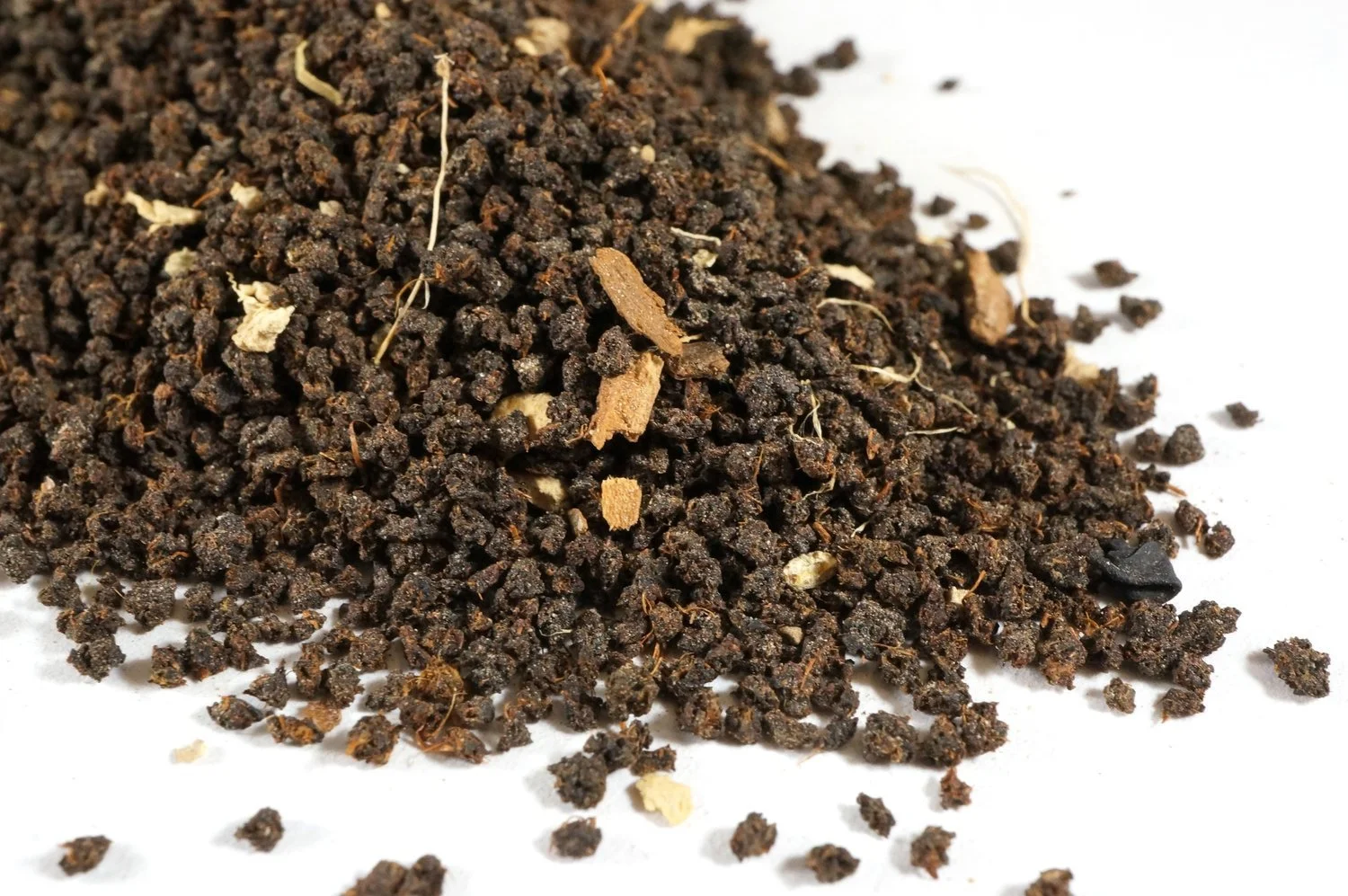
Malawi Chisunga CTC Tea Grounds after brewing. 

CTC black tea grounds after brewing.

Use a CTC tea for the best extraction

We recommend a CTC black tea. CTC stands for "cut, tear, curl" (you'll also see "crush, tear, curl"), a machine method that turns tea leaves into tiny, uniform pellets. Because the pieces are so small, water pulls flavor out of them quickly, which is exactly what you want in the short time a shot takes. They also pack into a portafilter much like ground coffee, while big, fluffy whole leaves don't.

Our Irish Breakfast is a CTC blend of Assam and Kenya black teas with a strong, malty flavor that loves milk, so it's a great place to start.

CTC tea in the porta-filter.

CTC tea in the porta-filter.

Fill and tamp the portafilter

Fill and tamp the portafilter the way you normally would for coffee, but don't overfill it. Then pull your shot.

Adjust to taste

If the shot is too strong to enjoy on its own, top it up with hot water, much like an Americano. For a tea cappuccino or latte, add steamed milk and foam, and play with the ratio until it tastes right to you. A little honey or sugar is lovely, too.

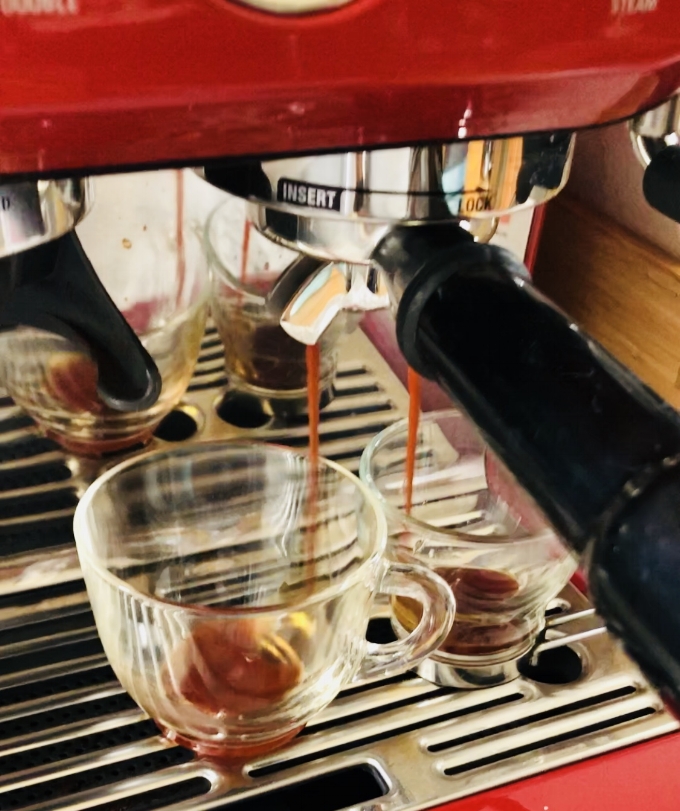
Tea espresso dripping out into the cups.

Tea espresso dripping out into the cups.

Now turn on the machine and enjoy your first tea espresso! For more ways to brew, read our guide on how to brew the perfect cup of black tea, or browse our Black Tea collection.

Peppermint Tea: Flavor, History, and How to Brew It Hot or Iced
FullSizeRender.jpg

Peppermint is one of the most popular herbal teas in the world, and one sip explains why. It's cool, clean, and intensely aromatic, with a sweet finish that lingers. It's also naturally caffeine free, so you can enjoy a cup any time of day.

What is peppermint?

Peppermint (Mentha × piperita) is a natural hybrid of spearmint and watermint. Its leaves are rich in aromatic oils, especially menthol, which gives peppermint its signature cooling taste. Peppermint tea is simply the dried leaves steeped in hot water.

A little history

Peppermint has a long history as a cultivated herb. In England, the village of Mitcham in Surrey was famous for growing it commercially from around 1750. Mitcham peppermint plants later crossed the Atlantic, reaching Michigan by the 1880s, and in the early 20th century peppermint farming spread to Oregon and Washington. The Pacific Northwest is still one of the great mint-growing regions today.

A classic after-dinner cup

Peppermint tea is a traditional after-meal drink, and many people find a warm cup soothing after a big dinner. Researchers have studied peppermint oil, mostly in coated capsules, for digestive complaints like irritable bowel syndrome, with encouraging results. A cup of tea holds far less oil than those capsules, though, so think of peppermint tea as a comforting ritual rather than a treatment. Peppermint can make heartburn worse for some people, so if you have reflux, check with your doctor.

Tasting notes and pairings

Bright and bold, with a cooling, sweet finish. Peppermint pairs beautifully with chocolate desserts, brownies, and fresh fruit, and a pinch blended with green tea makes a refreshing combination.

Peppermint
from $2.95

Cool, clean and intensely aromatic, our Peppermint is a classic herbal infusion, naturally caffeine free and refreshing hot or iced.

History & Heritage

Peppermint has a rich history as a cultivated herb. In England, the village of Mitcham in Surrey was famous for commercial peppermint from around 1750, and by the end of the 18th century its fields covered about 100 acres. Mitcham peppermint plants later crossed the Atlantic, and in the early 20th century peppermint farming spread to Oregon and Washington, which became major mint-growing regions. Oregon's commercial mint growing began near Eugene around 1908, and Washington's expanded after 1917, especially in the Yakima area.

Interesting Facts

  • The best peppermint comes from the northwestern United States.

  • The pure, moist mountain air of the spring and early summer growing season gives this peppermint some of the highest volatile oil counts of any member of the mint family.

  • Black Mitcham peppermint plants reached Michigan by the 1880s.

Tasting Notes & Pairings

Bright and bold, with a cooling, sweet finish that lingers. Peppermint is traditionally enjoyed after meals, and it is equally delicious iced on a summer day. It pairs beautifully with chocolate desserts, brownies, and fresh fruit, and a sprig of it blends nicely with green tea. An interesting and tingling idea: a handful of peppermint leaves in a warm bath makes a refreshing, aromatic soak after a hot summer's day.

Brewing tips (general guideline): use 1–2 teaspoons per 8 oz of freshly boiled water (212°F), steeped 5–7 minutes. For iced peppermint, brew it double strength and pour over ice.

Like everything at Beantown Tea & Spices, Peppermint is a quality blend offered at an affordable price, with sample and larger sizes so you can find your favorite. Explore more in our Herbal & Fruit Tea collection, or pair it with our tea accessories.

How to brew peppermint tea

Hot: As a general guideline from our product page, use 1 to 2 teaspoons per 8 oz of freshly boiled water (212°F) and steep 5 to 7 minutes. A longer steep gives a stronger, mintier cup. Peppermint is usually enjoyed plain, without milk.

Iced: Brew it double strength and pour it over plenty of ice. To make about a quart, steep 6 teaspoons in 1¼ cups of freshly boiled water for 5 minutes. Strain it into a pitcher that's a quarter full of cold water, add ice, and top it up with cold water. Garnish and sweeten to taste.

Sizes

Our Peppermint comes in a sample size (makes about 5 cups), 4 oz (about 50 cups), 8 oz (about 100 cups) and 1 lb (about 200 cups). Find it on our Peppermint page, or explore more caffeine-free options in our Herbal & Fruit Tea collection.

FullSizeRender.jpg
How to Brew Tea in a Moka Pot: A Bold Cup of Black Tea, Step by Step
FullSizeRender.jpg

Want a bold, full-bodied cup of tea with real strength behind it? If you have a stovetop moka pot at home, try brewing tea in it. A moka pot pushes hot water up through the leaves under gentle pressure, and the result is a rich, concentrated brew that's wonderful on its own or as the base for a black tea latte.

What kind of tea works best in a moka pot?

In our experience, black tea is the best fit. It's fully oxidized, so it holds up to the high heat and pressure of a moka pot and still tastes smooth and malty. Green and white teas are much more delicate; at these temperatures they tend to turn bitter or grassy, so save them for gentle steeping in a cup or teapot.

Small, broken-leaf black teas are especially good here because they release their flavor quickly. Our Irish Breakfast is a CTC tea (cut, tear and curl) made from Assam and Kenya teas, and its tiny pellets pack evenly into the moka pot basket. English Breakfast and Assam Hunwal are also great choices if you love a malty, robust cup with milk.

FullSizeRender.jpg

How to brew tea in a moka pot

  1. Fill the base with hot water. Starting with hot water shortens the time the leaves sit over the heat. Fill only to just below the safety valve.

  2. Add the tea to the filter basket. Fill the basket with tea leaves and level them off with a spoon. Don't press or tamp the leaves down, and don't overfill the basket.

  3. Assemble the pot. Screw the top section on firmly (use a towel, since the base will be hot) and set the pot on the stove.

  4. Heat over medium. Keep the flame or burner at medium, and make sure it doesn't reach up around the handle.

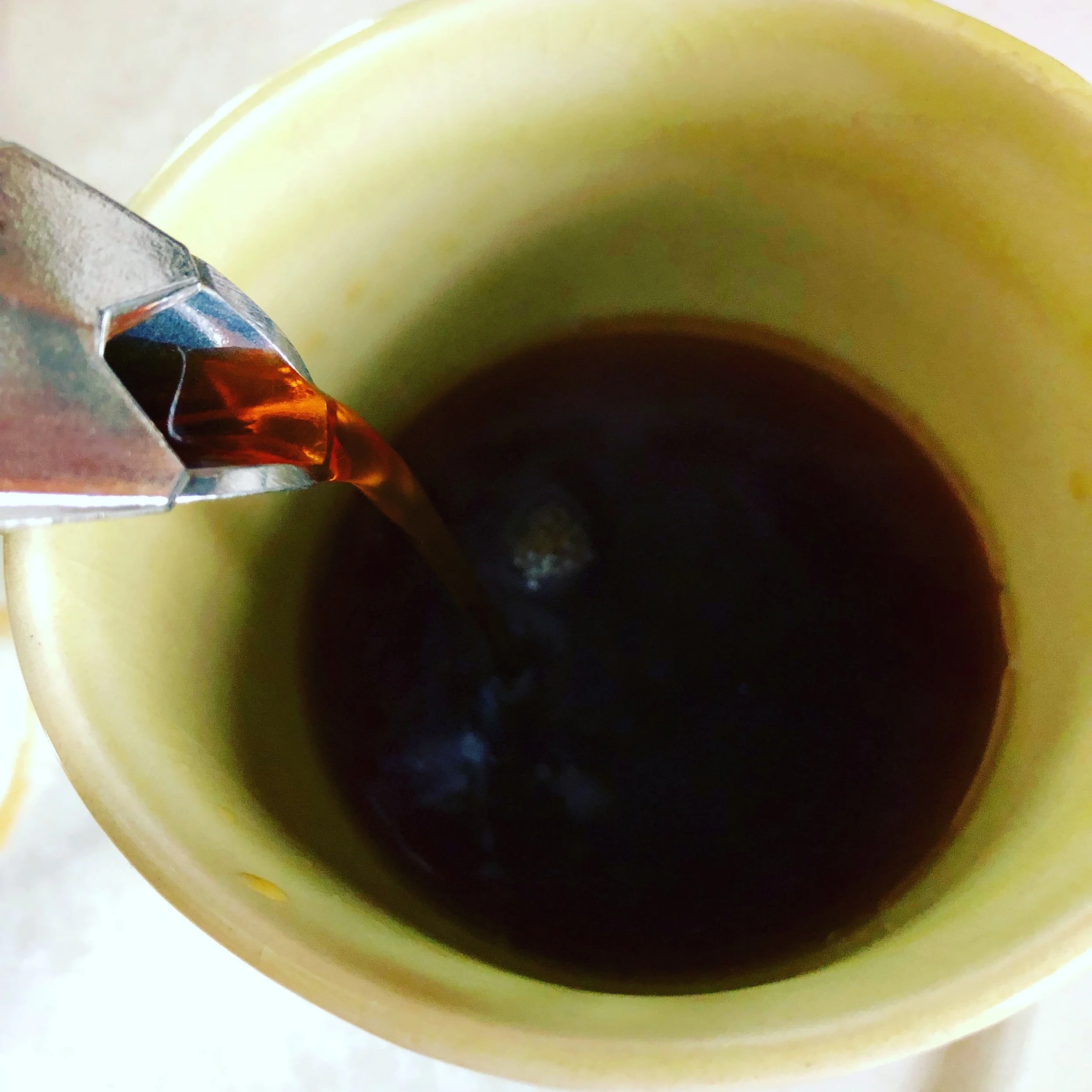
  5. Watch for the first trickle. Take the pot off the heat as soon as tea starts dribbling out of the spout. The remaining heat will push the rest of the tea through.

  6. Pour and enjoy. Moka pot tea is strong and concentrated, so you can drink it as is, top it up with a little hot water, or add steamed milk for a creamy tea latte.

Tips for the best moka pot tea

  • Adjust the strength. If the tea is too strong, use a little less tea in the basket next time rather than packing it tighter.

  • Keep it clean. Rinse the basket and gasket well after each brew so tea residue doesn't build up or flavor your coffee.

  • Sweeten to taste. A spoonful of honey or sugar goes well with the bold, malty flavor, especially in a latte.

Prefer a more traditional cup? See our tips for brewing the perfect cup of black tea, or try making a tea espresso and cappuccino with your espresso machine. You can find all of our loose-leaf black teas here.

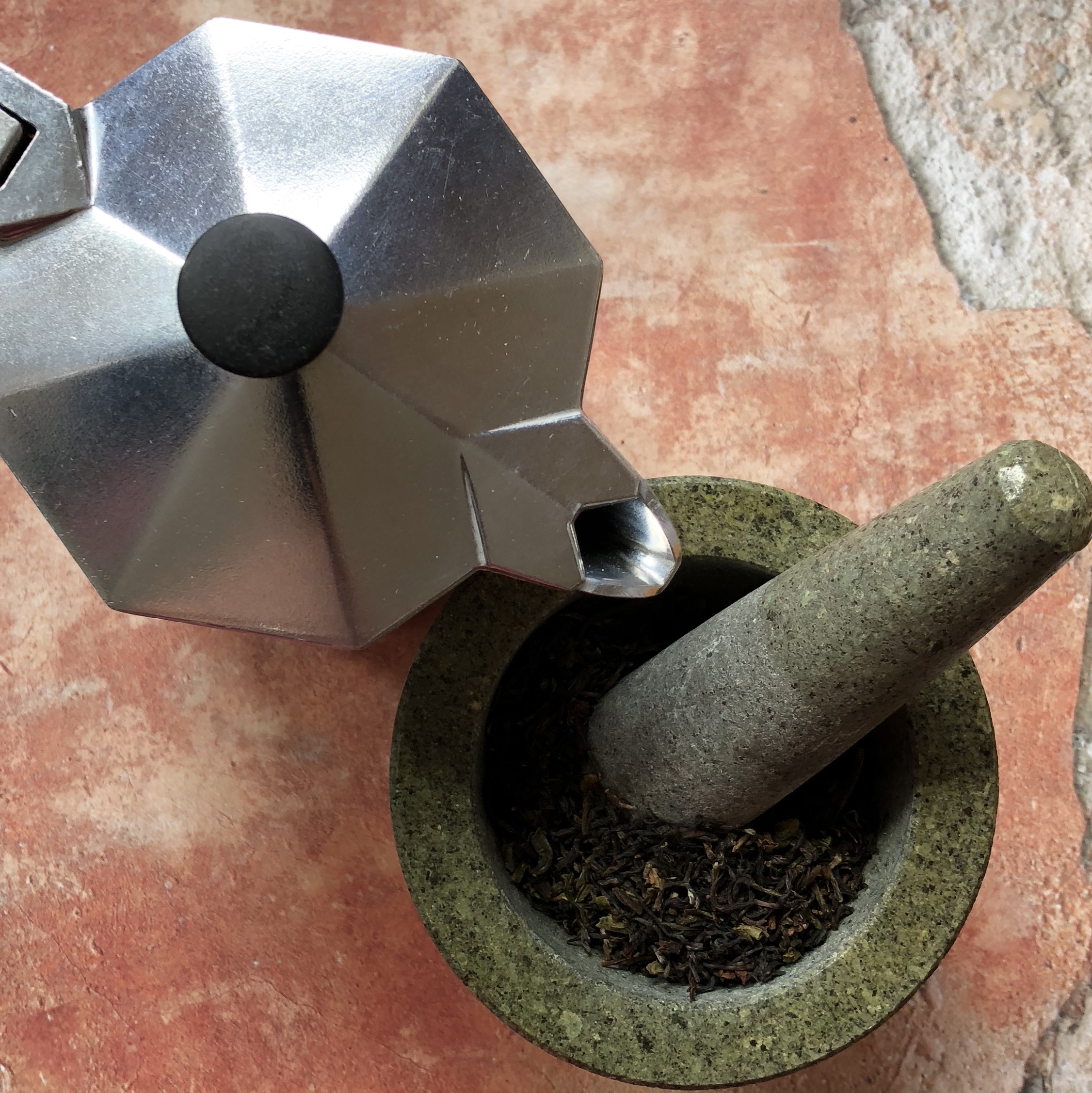
When tea starts dribbling out, take the pot off the stove. 

When tea starts dribbling out, take the pot off the stove.