Kukicha: Japan's Sweet, Low-Caffeine Stem Green Tea

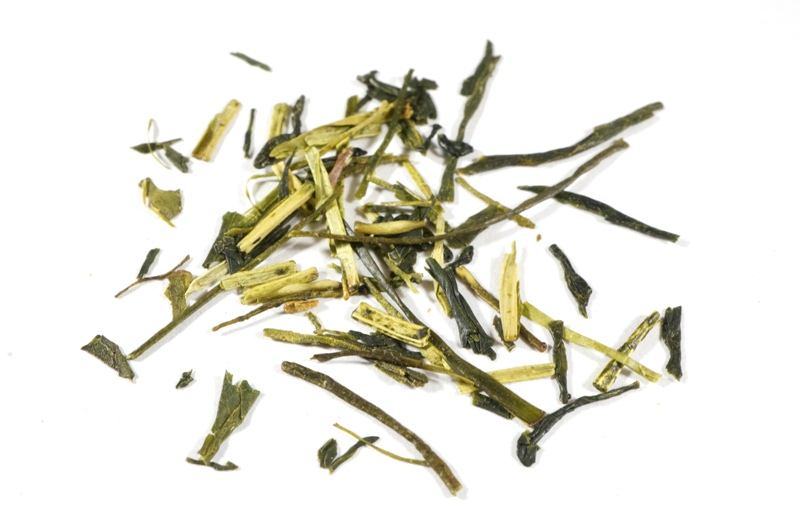
Kukicha (茎茶) is a green tea from Japan. The name means "stem tea," and it's sometimes called twig tea. As the name suggests, kukicha is made from a mix of green tea leaves and young tea stems, which give it a gentle, naturally sweet character that's very different from leaf-only green teas.

Kukicha has humble roots. It was traditionally made from the stems and stalks left over after processing leaf tea, a thrifty way for farmers to use every part of the harvest. What began as an everyday tea has become a favorite in its own right.

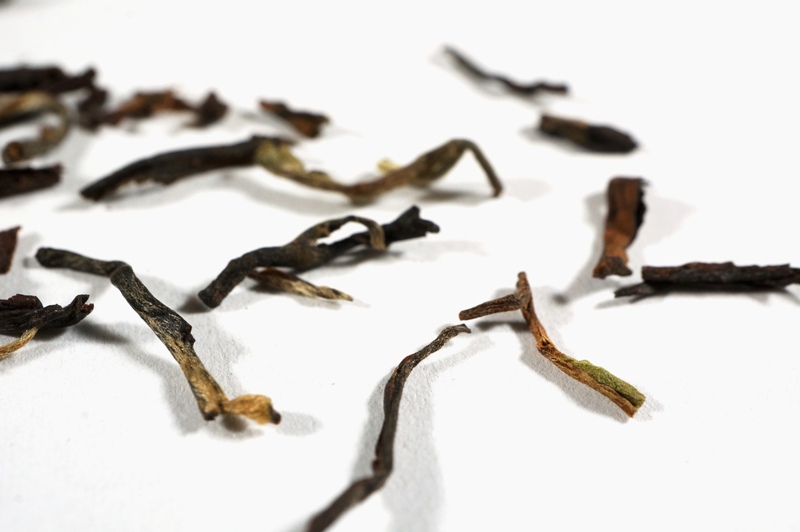
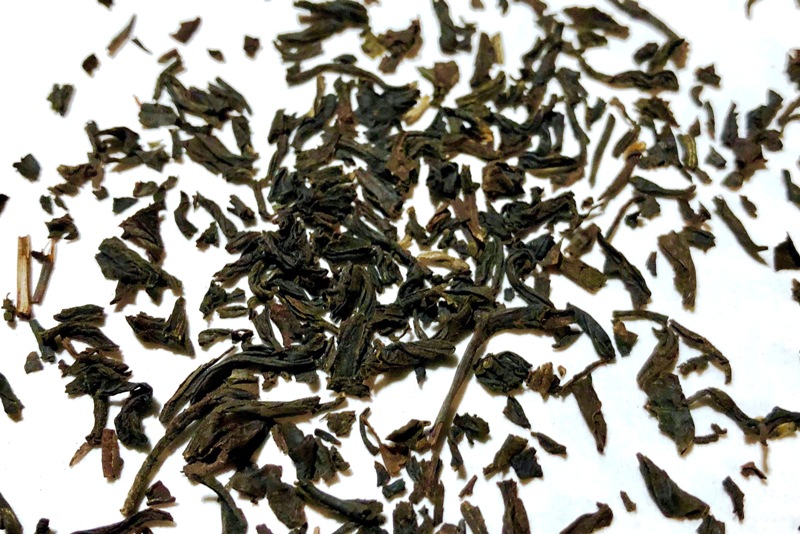
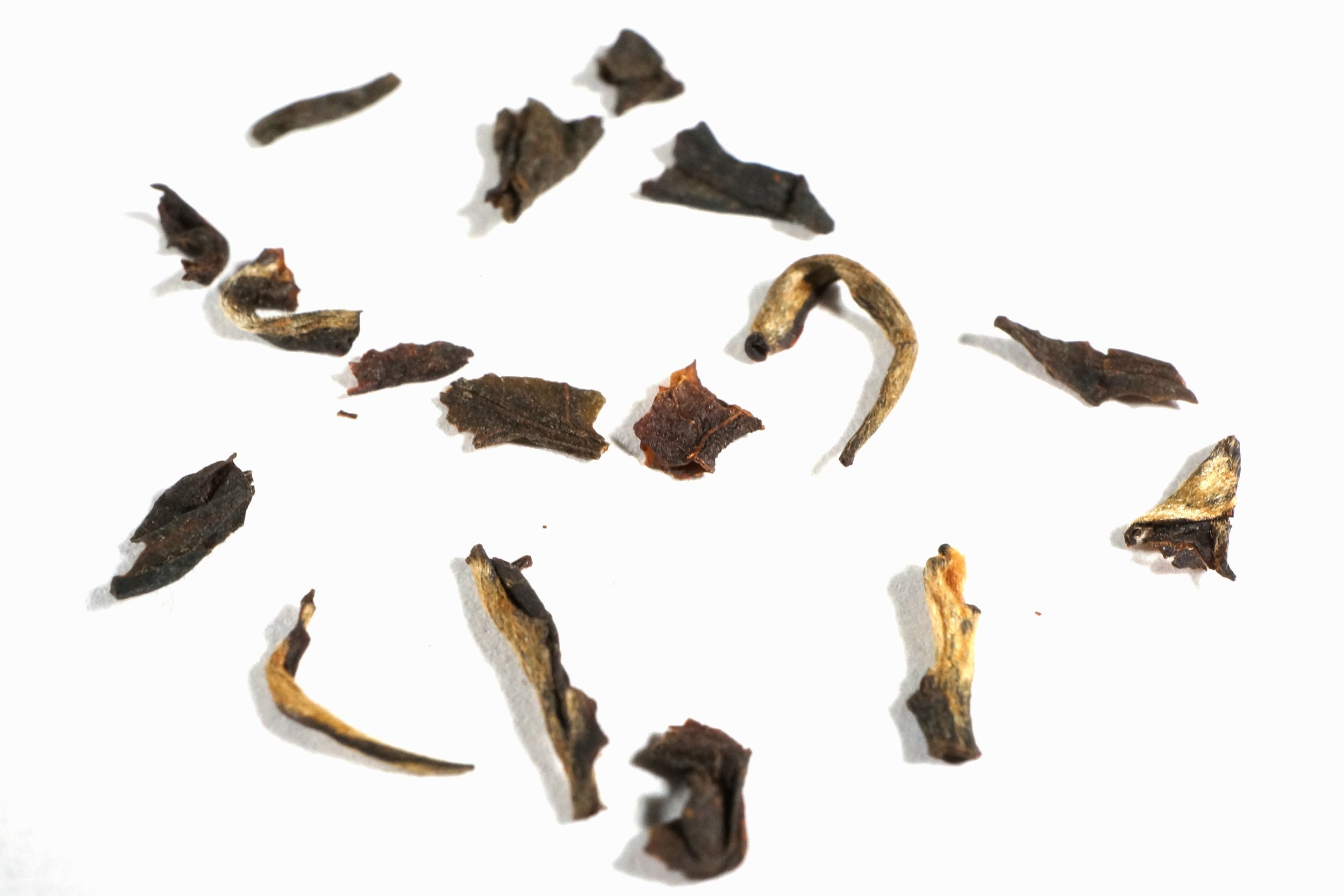
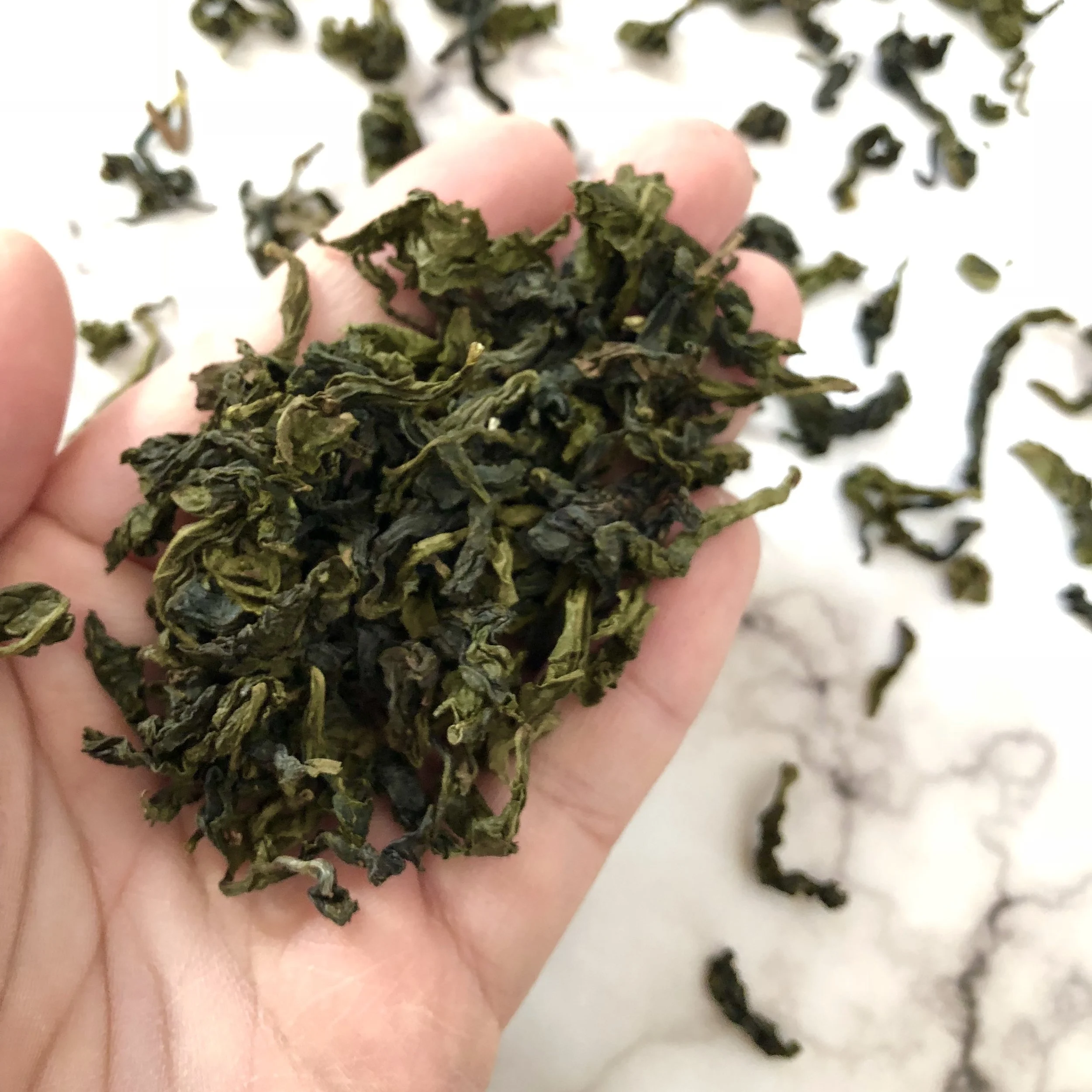
Pictured above is our Kukicha. Ours is Gyokuro and Sencha base green tea with both young leaves and delicate tea stems. Click “here” to view product.

Pictured above is our Kukicha. Ours is Gyokuro and Sencha base green tea with both young leaves and delicate tea stems. Click “here” to view product.

What does kukicha taste like?

Thanks to the stems, kukicha brews a light, golden-green cup that's nutty, slightly creamy and naturally sweet, with very little bitterness. Our kukicha is made with a Sencha and Gyokuro base, and the Gyokuro leaves add a rich layer of umami.

Umami is a Japanese word for the savory, mouth-filling taste linked to amino acids such as glutamate. You'll find it in foods like mushrooms, aged cheese and broths, and in fine Japanese green teas. In kukicha, it balances the sweetness of the stems for a smooth, rounded flavor.

IMG_3744.JPG

Is kukicha low in caffeine?

Yes. Tea stems contain less caffeine than the leaves, so kukicha is lower in caffeine than most green teas. That makes it a popular choice for the afternoon or evening, and a gentle option if you find other green teas too strong or too grassy.

Different grades of kukicha

Kukicha comes in many grades, depending on the leaves its stems come from. Kukicha made from Gyokuro and Sencha, like ours, is especially prized in Japan for its sweetness and deeper umami.

How to brew kukicha

  • Tea: 1 heaping teaspoon (about 3 g) per 8 oz of water

  • Water temperature: 175–185°F (about 80–85°C), never boiling

  • Steep time: 1–3 minutes, adjusted to taste

  • Re-steeping: the same leaves can be infused several times

Kukicha also makes a refreshing, naturally sweet iced tea. For step-by-step instructions, see our Cold Brewing Guide.

What to pair with kukicha

Its mellow, nutty flavor goes well with rice dishes, roasted vegetables, grilled fish and simple rice crackers. Our Kukicha comes in sample, 4 oz and 8 oz sizes. If you enjoy toasty Japanese teas, try our Hojicha or Genmaicha too, or browse our full green tea collection.
Kukicha
Quick View
Kukicha
from $2.95

Nutty, creamy and mellow, Kukicha is a traditional green tea from Japan. Our Kukicha uses a Sencha and Gyokuro base with both young leaves and stems.

History & Heritage

Kukicha means "stem tea" and is sometimes called twig tea. It has humble roots: it was traditionally made from the stems and stalks left over from processing leaf tea, a frugal way for farmers to make use of every part of the harvest. What began as a thrifty everyday drink has become a well-loved tea in its own right, prized for its gentle, sweet character. Bancha, the later-season harvest, is another of Japan's traditional everyday teas, and like Kukicha it reflects a practical, nothing-wasted approach to tea.

Interesting Facts

  • The Gyokuro base leaves enhance the umami (a Japanese term for savory flavor) and give the tea a unique flavor profile.

  • Kukicha is very low in caffeine, among the lowest of traditional teas.

  • In Japan it can even be mixed with juice to make a children's drink.

  • Stems give the tea a lighter color and a naturally sweet taste.

Tasting Notes & Pairings

It brews a flavorful cup that is nutty and slightly creamy, with very little bitterness. It is easy to enjoy any time of day, including the evening. Pair it with rice dishes, roasted vegetables, or simple rice crackers. Its soft sweetness also makes it a lovely iced tea in summer, and a gentle choice for those who find other green teas too grassy.

Brewing tips (general guideline): use 1 heaping teaspoon (about 3 g) per 8 oz of water at 175–185°F, steeped 1–3 minutes. Adjust to taste.

Like every tea at Beantown Tea & Spices, Kukicha is a quality loose-leaf tea offered at an affordable price, with sample and larger sizes so you can find your favorite. Explore more in our Green Tea collection, or pair it with our tea accessories.

Sangria Iced Tea: An Alcohol-Free Summer Pitcher Recipe
FullSizeRender.jpg

This alcohol-free Sangria Iced Tea is all the fun of a summer sangria without the wine. Bold black tea stands in for the red wine, and a pitcher full of fresh fruit, lime and mint makes it bright, fruity and kid-friendly. It's an easy one to make ahead for cookouts, picnics or a hot afternoon on the porch.

Ingredients (makes a 60 oz pitcher)

  • 5 teaspoons loose-leaf black tea. We use our Assam Behora Estate because its strength and malty body hold up well over ice and fruit.

  • 2 cups fresh fruit, cut into bite-size pieces. Use whatever is ripe at your local market. Strawberries, mandarin oranges, peaches and apricots all work well.

  • Honey or sugar to taste (or stevia for a sugar-free version)

  • 1 lime, sliced

  • 5 fresh mint leaves

  • Ice

  • 30 oz water

Directions

  1. Put the fruit, lime slices, mint and sweetener in a large pitcher.

  2. Muddle gently for about 30 seconds to release the juices and mint oils.

  3. Fill the pitcher with ice.

  4. Bring 30 oz of water to a boil. In a teapot or heat-safe pot, steep the tea leaves in the freshly boiled water for 5 minutes.

  5. Strain the hot tea straight into the ice-filled pitcher. The ice chills it fast and dilutes it to the right strength.

  6. Stir well and top off with more ice if needed.

Tips

  • For the best fruit flavor, let the pitcher sit in the fridge for an hour before serving.

  • Like a lighter cup? Try a Ceylon black tea instead of Assam.

  • Strong tea is the secret. It's brewed double strength on purpose, since the ice melts into it.

Enjoy, and find more teas to try below in our Black Tea collection.

Green Tea Mojito with Matcha (Plus an Alcohol-Free Version)
FullSizeRender.jpg

Summer calls for something cold and refreshing, and this Green Tea Mojito is one of our favorites. It's made with Matcha Green, our all-purpose matcha. Its fresh, grassy and slightly sweet flavor goes beautifully with mint and lime. Here's how to make a full pitcher.

Ingredients (makes 1 pitcher)

  • 1 tablespoon Matcha Green

  • 1/2 cup white sugar

  • 2 handfuls fresh mint, or to taste

  • 3 to 4 limes

  • 1 cup white rum (for an alcohol-free version, use 1 cup coconut water instead)

  • 36 oz club soda

  • Ice

Directions

  1. Put the sugar and mint in a pitcher and muddle until the mint leaves are broken down.

  2. Quarter the limes and squeeze the juice into the pitcher. Drop in the squeezed lime pieces and muddle for 30 seconds to 1 minute.

  3. In a small bowl, whisk the matcha with a splash of cool water until smooth, then add it to the pitcher. This keeps it from clumping.

  4. Pour in the rum (or coconut water) and stir.

  5. Add ice, then the club soda, and stir until the matcha and sugar are fully mixed in.

Tips

  • Taste and adjust. Add more lime for tartness or a little more sugar if your limes are very sour.

  • Serve right away so the club soda stays bubbly.

  • Please enjoy the rum version responsibly, and only if you're 21 or older.

Cheers to summer!

Matcha Avocado Smoothie with Yogurt and Banana (5-Minute Recipe)

This matcha smoothie is creamy, filling and ready in about 5 minutes. A teaspoon of matcha green tea powder gives it a gentle green tea flavor and a little natural caffeine, while avocado and banana make it thick and smooth without any ice cream. It’s an easy breakfast or afternoon pick-me-up.

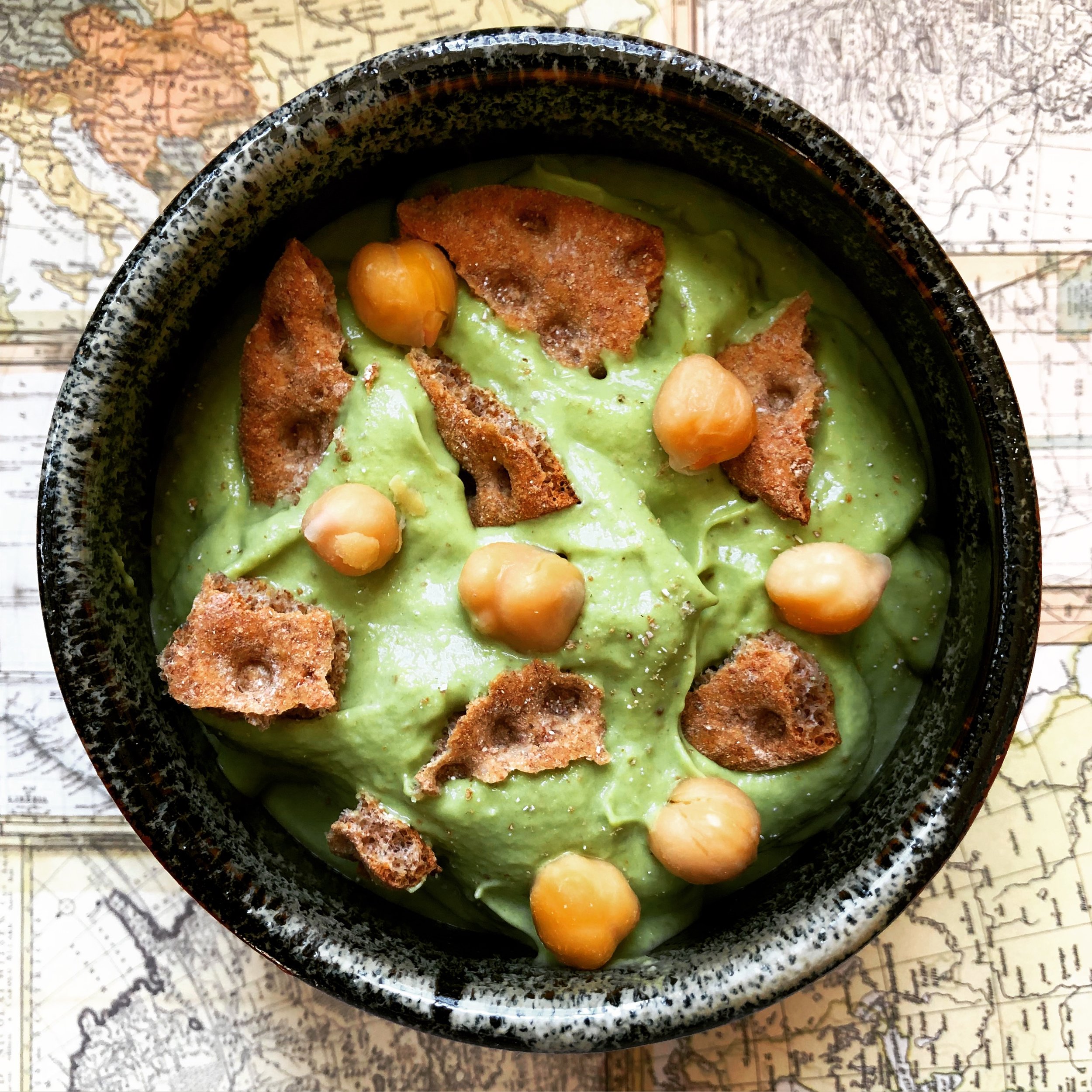
Here we blend our Matcha Samidori with avocado, plain yogurt, banana and raisins, then top it with boiled chickpeas and whole-grain crisps for some crunch.

IMG_2897.JPG

Ingredients (2 servings)

  • 1 ripe avocado

  • 1 banana

  • 1/2 cup raisins

  • 2 cups plain yogurt

  • 1 teaspoon matcha green tea powder

Toppings (optional): whole-grain crisps and boiled chickpeas

Directions

  1. Scoop the avocado into a blender and add the banana, raisins and yogurt.

  2. Add the matcha. Sprinkling it over the yogurt helps keep it from clumping.

  3. Blend until smooth. If it’s too thick, add a splash of milk or water.

  4. Pour into two glasses or bowls, add your toppings and enjoy right away.

Tips

  • Want it colder? Use a frozen banana or add a few ice cubes.

  • Raisins and banana add natural sweetness. If you like it sweeter, add a little honey.

  • For smoothies and other recipes, Culinary Matcha is a budget-friendly choice. Save a ceremonial-style matcha like Samidori for when you want the matcha flavor to stand out.

IMG_3394.JPG

Enjoy, and explore our full Matcha collection.

Beantown Tea
How to Make a Matcha Latte at Home: Hot or Iced, Step by Step
Matcha latte in a glass, made with Beantown Tea Matcha Green

Matcha latte made using our Matcha Green. Click “here” to view product. 

A matcha latte is one of the easiest café drinks to make at home. You only need good matcha, a little hot water, milk, and a whisk or frother. In a few minutes you'll have a smooth, creamy, bright green cup that's as good as anything from a coffee shop.

What is a matcha latte?

Matcha is shade-grown green tea that's stone-ground into a fine powder. Instead of steeping leaves and throwing them away, you whisk the powder into liquid and drink the whole leaf. A matcha latte simply combines whisked matcha with steamed or warmed milk, plus a little sweetener if you like. The milk softens matcha's natural astringency and brings out its sweet, grassy side.

What you'll need

  • Matcha: 1 to 2 teaspoons, depending on how strong you like it

  • Hot water: about 2 oz, at 160–175°F (not boiling)

  • Milk: about 6 oz of dairy milk, soy milk, or your favorite non-dairy milk

  • Sweetener (optional): sugar, honey, or maple syrup, to taste

  • Tools: a mug or glass, a small sieve, and a bamboo matcha whisk or handheld milk frother

How to make a hot matcha latte

  1. Sift 1 to 2 teaspoons of matcha into a mug or glass. Sifting breaks up clumps so your latte stays smooth.

  2. Add about 2 oz of hot water at 160–175°F and whisk until smooth and frothy, with no lumps.

  3. Stir in sweetener to taste.

  4. Heat or steam about 6 oz of milk or soy milk.

  5. Pour the milk in slowly while whisking or stirring the matcha.

  6. For a treat, top with whipped cream and a sprinkle of chocolate powder. Enjoy right away.

How to make an iced matcha latte

Whisk the matcha with 2 oz of hot water (160–175°F) the same way, then stir in your sweetener while it's still warm so it dissolves. Fill a glass with ice, pour in about 6 oz of cold milk, and pour the matcha over the top. Stir and enjoy.

Tips for a smoother latte

  • Skip the boiling water. Water that's too hot can make matcha taste bitter. If you don't have a thermometer, let boiled water cool for a few minutes before using it.

  • Make a paste first. Whisking the matcha with a small amount of water before adding milk is the best way to avoid clumps.

  • Adjust to taste. Start with 1 teaspoon and work up to 2 for a bolder, greener flavor.

  • Enjoy it fresh. Matcha settles as it sits, so give it a stir if you don't finish it right away.

Which matcha is best for lattes?

  • Culinary Matcha is made for mixing. It's bold and green, with enough astringency to stand up to milk and sweetener, so it's our go-to for lattes, smoothies, and baking.

  • Matcha Green, the matcha in the latte pictured above, is a versatile all-purpose matcha from Japan. It's smooth and gently sweet, and equally good whisked straight or blended with milk.

  • Matcha Kenya Highlands is a black tea matcha for something different. It's malty and smooth and makes a wonderful latte with steamed milk. Whisk it with hotter water, around 175–195°F.

Save a premium matcha like Matcha Samidori for whisking on its own, where you can taste its full sweetness.

Matcha naturally contains caffeine, so a matcha latte makes a nice morning or early-afternoon cup. Curious why many people find matcha's lift calmer than coffee? Read Matcha and Focus. For the traditional bowl and other methods, see our matcha brewing guide, or explore our full matcha selection.

As tea enthusiasts, we've been sharing quality tea at affordable prices since 2006, and a homemade matcha latte is one of our favorite ways to enjoy it.

Assam Hunwal: A Smooth, Malty FBOP Black Tea and How to Brew It

Assam Hunwal is a black tea from the Hunwal Estate in Assam, India. It has everything people love about a classic Assam, full body and rich malty flavor, with a smoother, more delicate finish than most. If you usually find Assam a little too brisk, this is the one to try.

What does FBOP mean?

Our Hunwal is graded FBOP, short for Flowery Broken Orange Pekoe, and it's made in the orthodox style. Tea grades describe the leaf, not the flavor, so there's no orange in this tea. "Broken" means the leaves are broken into smaller pieces, which helps them brew a full-flavored cup. "Flowery" means the tea includes tips, the young buds of the tea plant, and those tips play a big part in Hunwal's smooth character.

What does Assam Hunwal taste like?

The brewed cup is full-bodied, malty and smooth, with a bright, coppery color. Its astringency, the brisk, drying feel you get from strong black tea, is a little less pronounced than in a typical Assam. That's thanks to the tippy leaves in the tea. The result is a well-balanced cup that's lovely on its own or with a few drops of milk.

Pair it with a cooked breakfast, banana bread, or spiced cookies.

A little Assam history

Tea grew wild in Assam's Brahmaputra valley, and local people used it, long before the outside world took notice. In 1823, Scottish trader Robert Bruce was introduced to the plant by a Singpho chief through the Assamese nobleman Maniram Dewan. It was later identified as a distinct large-leaf variety, Camellia sinensis var. assamica. The first Assam tea was auctioned in London in 1839, and Assam went on to become the largest tea-growing region in the world by volume.

How to brew Assam Hunwal

  • Tea: 1 rounded teaspoon (about 2–3 g) per 8 oz of water

  • Water temperature: freshly boiled, 205–212°F

  • Steep time: 3–5 minutes, adjusted to taste

  • Milk: optional; a few drops bring out its malty sweetness

These are general guidelines from our product page. A shorter steep gives a lighter cup, and a longer one gives more strength. For more on getting black tea just right, see our tips for brewing black tea. To enjoy it cold, follow our iced tea brewing guide. Hunwal is also one of our picks for brewing tea in a moka pot.

Sizes

Assam Hunwal comes in a sample size (makes about 5 cups), 4 oz (about 50 cups), 8 oz (about 100 cups) and 1 lb (about 200 cups), so you can try it before stocking up.

More teas to try if you like Assam

  • Assam Behora is bolder and stronger, a classic malty Assam that stands up beautifully to milk and sugar.

  • Irish Breakfast blends Assam and Kenya black teas into a very full-bodied cup that's best with milk.

  • English Breakfast blends Ceylon, Kenya and India black teas for a classic morning cup with excellent body.

As tea enthusiasts, we've been sharing quality tea at affordable prices since 2006. Browse our full black tea selection to find your next favorite.

Assam Hunwal
Quick View
Assam Hunwal
from $2.95

Full-bodied yet refined, Assam Hunwal is a very well-balanced Assam tea. It has the classic Assam character with a more delicate finish.

History & Heritage

Assam's tea plant was growing wild in the Brahmaputra valley, and used by local people, long before the outside world took notice. In 1823 a Scottish trader, Robert Bruce, was introduced to the plant by a Singpho chief through the Assamese nobleman Maniram Dewan. It was later identified as a distinct large-leaf variety, Camellia sinensis var. assamica. The first Assam tea was auctioned in London on January 10, 1839, and Assam went on to become the largest tea-growing region in the world by volume. The Assam Company, India's first tea company, was formed in London that same year. Decades later, in 1930, the CTC method of processing was invented in Assam, making its teas a mainstay of tea bags around the world.

Interesting Facts

  • The astringency of Hunwal is slightly less prominent than a typical Assam because of the tippy leaves in the tea.

  • Our Hunwal is an FBOP (Flowery Broken Orange Pekoe) grade made in the orthodox style.

Tasting Notes & Pairings

It is full-bodied, malty and smooth, with a bright, coppery infusion. The result is a well-balanced tea that is good on its own or with a few drops of milk. Pair it with a cooked breakfast, banana bread, or spiced cookies.

Brewing tips (general guideline): use 1 rounded teaspoon (about 2–3 g) per 8 oz of freshly boiled water (205–212°F), steeped 3–5 minutes. Adjust to taste.

Like every tea at Beantown Tea & Spices, Assam Hunwal is a quality loose-leaf tea offered at an affordable price, with sample and larger sizes so you can find your favorite. Explore more in our Black Tea collection, or pair it with our tea accessories.
What Is Hojicha? Japan's Toasty, Low-Caffeine Roasted Green Tea

Hojicha is a Japanese green tea that has been roasted until the leaves turn a warm reddish brown. Roasting changes everything about the cup: instead of the fresh, grassy taste of most green teas, Hojicha is toasty, nutty and lightly sweet, with almost no bitterness. It's also known as a low-caffeine tea, which makes it a favorite for evenings in Japan.

What is Hojicha made from?

Our Hojicha starts as Bancha, a later, summer-harvest Japanese green tea. Bancha includes both leaves and some of the tea plant's twigs and stems. When it's roasted at high heat, the green leaves and stems turn brown and give off a rich, toasty aroma, a little like roasted nuts or caramel.

Hojicha is a relatively young tea. The most widely repeated story says it was created in Kyoto around the 1920s, when a tea merchant began roasting leftover leaves so they wouldn't go to waste. Today it's enjoyed all over Japan and has become a popular flavor for lattes and desserts.

What does Hojicha taste like?

Brewed Hojicha makes an amber cup that's nutty, toasty and slightly sweet, with a very clean finish. Roasting takes away the vegetal, grassy edge of green tea and almost all of its astringency, so it's an easy, mellow tea to sip, even for people who don't usually like green tea. It's also excellent iced.

Is Hojicha low in caffeine?

Hojicha is generally lower in caffeine than many green teas, though it isn't caffeine-free. It's usually made from later-harvest Bancha leaves and stems, which tend to have less caffeine than young spring leaves. Its low caffeine is why Hojicha is a popular evening tea in Japan, often served during and after dinner, and why it's a common choice for children and older people there. If you're comparing it with your other drinks, our guide to caffeine in tea vs. coffee has the basics.

How to brew Hojicha

  • Tea: 1 to 2 heaping teaspoons (about 3 g) per 8 oz of water. Roasted leaves are light and bulky, so a heaping spoonful is normal.

  • Water: 195–212°F. Unlike most green teas, Hojicha likes hot water, which brings out its roasted flavor.

  • Time: 30 seconds to 2 minutes. Start short and adjust to taste.

You can steep the same leaves again for a second cup. For more on that, see how many times you can re-steep loose-leaf tea.

Iced Hojicha: brew it hot and pour it over ice, or try our cold brew method for an extra-smooth, naturally sweet glass.

What to pair with Hojicha

Hojicha's toasty flavor goes well with grilled fish, rice bowls and other savory meals. It's also lovely with desserts like vanilla ice cream, roasted sweet potato or chocolate.

IMG_2082.JPG

Hojicha comes in a sample size plus 4 oz and 8 oz bags, so it's easy to try. Shop Hojicha. If you enjoy Japanese green teas, you may also like Genmaicha, green tea with toasted rice, or Kukicha, a sweet stem tea; read more in our Kukicha guide. Or browse our full green tea collection.

Matcha Oatmeal: An Easy Green Tea Breakfast Recipe

Looking for an easy breakfast with a little green tea in it? Matcha oatmeal takes just a few minutes and one extra step: whisk some matcha and stir it into your oats. You get a creamy, bright green bowl with matcha's gentle, grassy sweetness and a little natural caffeine to start your morning.

IMG_0939.JPG

Pictured above is a bowl of matcha oatmeal made with almond milk and topped with pine nuts, chopped almonds and sweet red beans. Here's how to make it.

What you'll need

  • Your usual oatmeal (rolled oats or quick oats), for one serving

  • Milk for cooking: we like almond milk, but regular milk, coconut milk or rice milk all work

  • 1 teaspoon matcha, such as our Culinary Matcha

  • 1 to 2 oz hot water, around 160–175°F

  • Toppings of your choice: nuts, fruit, sweet red beans, or a drizzle of honey

How to make matcha oatmeal

  1. Cook the oatmeal the way you normally would, using milk or a mix of milk and water.

  2. Whisk the matcha. Sift 1 teaspoon of matcha into a small bowl or cup, add 1 to 2 oz of hot (not boiling) water, and whisk until smooth, thick and lump-free.

  3. Stir it in. Take the oatmeal off the heat and stir in the matcha until the color is even. Adding it at the end keeps the flavor fresh and the color bright.

  4. Top and enjoy. Add nuts and fruit to taste. We like pine nuts, chopped almonds and sweet red beans.

Tips

  • Don't skip the whisking. Matcha powder clumps if you sprinkle it straight into oatmeal. Making a smooth paste first gives you an even, green bowl.

  • Adjust the strength. Start with 1 teaspoon. Use a little less for a milder bowl, or a little more if you love matcha's flavor.

  • Try it as overnight oats. Stir the whisked matcha into oats and cold milk, refrigerate overnight, and add toppings in the morning.

Which matcha should I use?

Culinary Matcha is made for mixing. It's bold and green, with enough astringency to stand up to milk and sweet toppings, so it's our pick for oatmeal, lattes, smoothies and baking. For a smoother, gently sweet bowl, try Matcha Green, a versatile all-purpose matcha from Japan.

Want more ways to enjoy it? Try our matcha latte recipe, learn the traditional method in our matcha brewing guide, or explore our full matcha selection.

Jasmine Green Tea: Floral, Smooth, and How to Brew It Hot or Iced

Jasmine Green Tea is a classic Chinese green tea scented with real jasmine blossoms. Ours is a first-grade jasmine with surprising body and a captivating floral taste, and it's just as good iced as it is hot.

 Click “Here” to view product.
 

Click “Here” to view product.

Pictured above is our Jasmine Green Tea. Open the bag and the floral bouquet wakes up your senses before you've even brewed a cup.

How jasmine tea is made

Jasmine tea has a long history in China, and the city of Fuzhou in Fujian is especially famous for it, with scenting traditions recorded as far back as the Southern Song dynasty. The craft is all about timing. Jasmine blossoms are picked during the day while they're still closed, then layered with green tea in the evening as the flowers open and release their fragrance. After the tea and flowers rest together, the spent blossoms are removed and the tea is dried. The process is often repeated several times for a deeper scent.

Our Jasmine Green Tea is a pan-fired green tea from China, grown at about 1,500 feet. It brews a pale green cup.

What it tastes like

Sweet, floral and smooth, with more body than you might expect from a green tea and a lovely lingering finish. There are many grades of jasmine tea. This one sits just below the exotic, top-tier jasmines: it has all the flavor, aroma and good green tea qualities, without the exorbitant price. That makes it an easy everyday cup.

How to brew Jasmine Green Tea

  • Tea: 1 teaspoon (about 2 to 3 g) per 8 oz of water

  • Water: 175 to 185°F. Avoid boiling water, which can make green tea bitter.

  • Time: 2 to 3 minutes, then adjust to taste

No thermometer? Let boiled water sit a few minutes before pouring. Our guide to tea brewing temperatures has more tips.

Making iced jasmine tea

Brew the tea at double strength (2 teaspoons per 8 oz of water, same temperature and time), then pour it over a full glass of ice. The ice chills and dilutes it to just the right strength, and the floral notes stay bright. Add a little honey while the tea is still warm if you like it sweet.

What to pair it with

Jasmine tea pairs naturally with Chinese food, spring rolls, steamed rice dishes and light desserts.

Sizes and more jasmine teas

Jasmine Green Tea comes in a sample size (makes 5 cups) plus 4 oz, 8 oz and 1 lb bags, so you can try it before you stock up. If you love it, explore our other jasmine teas: Jasmine Dragon Pearls, Jasmine Needle and Organic Jasmine Green, or browse our full green tea collection.

Black Dragon Pearls: Hand-Rolled Yunnan Black Tea and How to Brew It

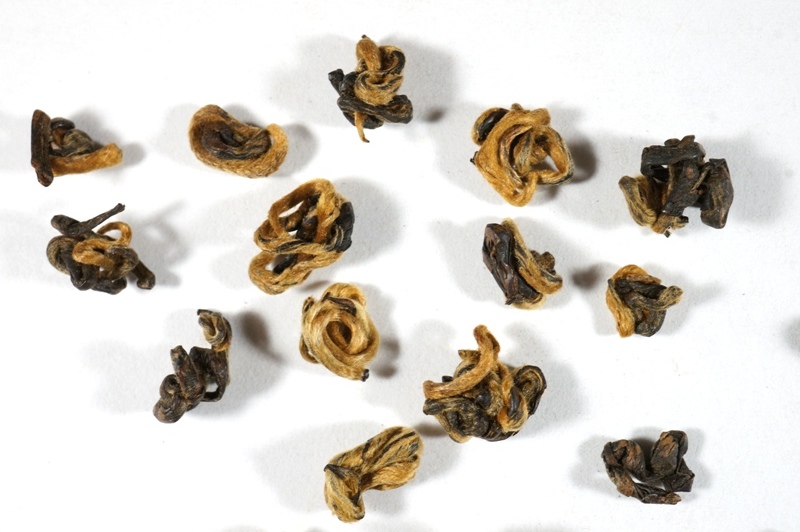
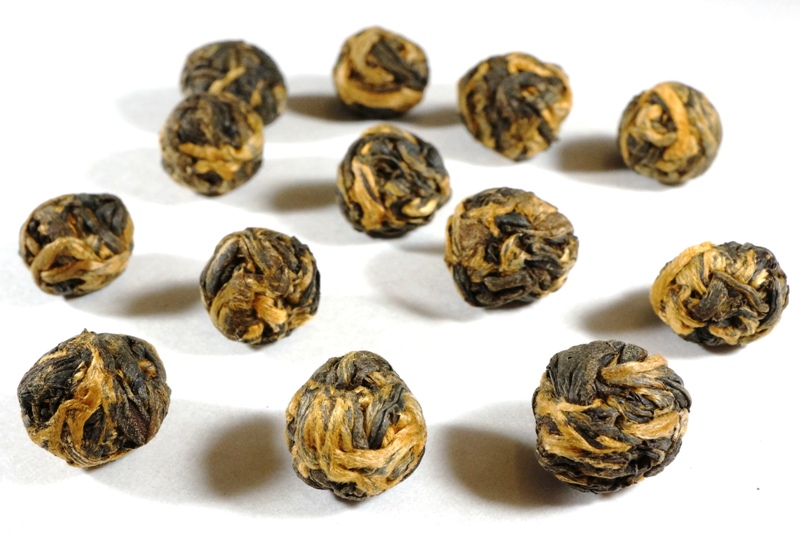
Our Black Dragon Pearls, also called Yunnan Black Pearls, are a hand-rolled, small-batch black tea from Yunnan, China. Each little pearl is a bundle of tea leaves and buds that slowly unfurls in your cup.

The pearls are rolled by hand using only the highest quality leaves and buds. Rolling tea into pearls takes skilled handwork, and the tight shape protects the leaf until it opens in hot water. Watching them unfurl is half the fun.

A Dian Hong black tea from Yunnan

Black Dragon Pearls belong to the Dian Hong family of Yunnan black teas. The name means "red tea of Dian," after an ancient name for Yunnan. In China, what the West calls black tea is called red tea, after the color of the brewed cup.

Yunnan black tea has a surprisingly modern story. Before 1939, the province mainly made green-style tea and had no black tea tradition. In the autumn of 1938, with China's traditional eastern tea regions cut off by war, tea specialist Feng Shaoqiu traveled to Shunning (today's Fengqing) and found large tea trees with plump, downy buds. His trial black tea impressed buyers, and in 1939 a new factory produced Yunnan's first export batch. Fengqing is still celebrated as the homeland of Dian Hong.

What it tastes like

The pearls brew a rich, mellow cup with Yunnan's signature sweetness, hints of jammy flavor and a touch of earthiness. It's complex but gentle, with just the right amount of astringency. It's also a forgiving tea: if you lose track of time and it steeps a little long, it still tastes good. That makes it a lovely all-day black tea.

How to brew Black Dragon Pearls

  • Tea: 2 to 3 pearls per 8 oz cup of water

  • Water: 212°F (a full boil)

  • Time: 3 to 5 minutes, then adjust to taste

A splash of milk is optional, but the pearls are lovely on their own. For more black tea tips, see how to brew the perfect cup of black tea.

What to pair it with

Try it with dark chocolate, roasted nuts or a slice of spiced cake.

Sizes and more Yunnan teas

Black Dragon Pearls come in a sample size (makes 5 cups) plus 2 oz, 4 oz and 8 oz bags. If you enjoy them, try more Yunnan black teas like Golden Yunnan and Golden Spiral, or browse our full black tea collection.

IMG_1524.JPG
Indian Chai Spice Mix: A Caffeine-Free Chai and How to Make It Your Own

Our Indian Chai Spice Mix is a warming blend of classic chai spices. It brews a full-bodied cup with just the right amount of spice, and it’s naturally caffeine free because there’s no tea in it at all.

What’s in it

Cinnamon, ginger, green cardamom pods, allspice, cloves and black pepper.

Three ways to enjoy it

  • As a caffeine-free chai: perfect in the evening or for anyone cutting back on caffeine.

  • As your own custom chai: add your favorite black tea, green tea or even coffee to the spices. A malty Assam makes a classic, bold chai.

  • Hot or iced: make a hot chai to warm up on cold winter days, or brew it strong and pour it over ice in summer.

How to brew it

  • Use 1 teaspoon per 8 oz of boiling water (212°F) and steep for 5 minutes.

  • For a creamy, chai-stall style cup, simmer the spices in a mix of water and milk for about 5 minutes, then strain.

  • Adding tea? Add 1 teaspoon of black tea along with the spices.

  • Sweeten with honey or sugar to taste.

In India, “chai” simply means tea, and masala chai means “spiced tea.” This mix lets you make it just the way you like.

Prefer a chai with tea already blended in? Try our Masala Chai or Vanilla Chai , or browse our full Chai collection.

IMG_1324.JPG
Kenya Highlands Black Tea Matcha: A Malty, Smooth Twist on Matcha

Kenya's highlands are one of the best places in the world to grow tea. The altitude, rich soil and steady climate near the equator let tea be plucked year-round, and Kenya has become the world's largest exporter of black tea.

Kenyan tea farms are also quick to try new ideas, and our Kenya Highlands Black Tea Matcha is a great example. It takes a full-leaf Kenyan black tea and grinds it into a fine powder, the way Japanese matcha has been made on stone mills for centuries. It's craft-ground in small batches.

Shop Matcha Kenya Highlands (Black Tea Matcha)

IMG_0903.JPG

What it tastes like

This black tea matcha brews a well-balanced cup that's smooth and malty with a gentle astringency. It's less vegetal than green matcha, so if you find green matcha too grassy, it's a nice alternative. It pairs beautifully with milk or cream.

How to whisk it

  • Whisk about 1 teaspoon (1–2 g) with 6–8 oz of hot water, around 175–195°F, until smooth and frothy.
  • For a latte, whisk it with a little hot water, then top with steamed milk.
  • Experiment with the amount, water temperature and whisking time until you find the strength that's perfect for you.

Why you'll like it

Because you drink the whole ground leaf, matcha gives you more of the tea in every cup. It's also a fun way to enjoy black tea: try it with banana bread, oatmeal cookies or a chai-spiced dessert.

Want to learn more? Browse our full Matcha collection or visit our Tea Info page.

What Is Bruising in Tea Making? How It Shapes Oolong and Black Tea

Bruising is a tea-making step that breaks down the cell structure of the leaves so they can oxidize. Once the cell walls are damaged, the leaf's natural enzymes meet the air and oxidation begins. It's a key step in making both oolong and black tea.

Bruising in oolong tea

For oolong tea, the leaves are usually tossed or tumbled in baskets or rolling drums. This bruises the edges of the leaves, and oxidation starts there.

Tea makers then decide how far to let oxidation go. Some oolongs are only lightly oxidized, while others are taken much further, which is why oolongs can taste so different from one another:

  • Lightly oxidized oolongs tend to taste floral and fresh, with a gentle green note.
  • Darker, more oxidized oolongs have a fuller body with earthy, nutty and sometimes toasty notes.
Pictured here is the infused leaves of the lightly oxidized Jade Oolong tea. It is noticeable that the edges of the leaves are bruised while the overall appearance of the leaves remained green. 

The infused leaves of our lightly oxidized Jade Oolong. The edges are bruised, while most of the leaf stays green.

Shop Jade Oolong

Bruising in black tea

For black tea, the leaves are rolled and bruised more thoroughly, then left to oxidize fully. Because nearly the whole leaf is oxidized, black teas brew a full-bodied cup with rich, malty notes and little to no vegetal taste.

IMG_0154.JPG

Pictured above: a brewed cup of our Golden Monkey black tea.

Taste the difference

The best way to understand bruising and oxidation is to taste it. Brew a light oolong and a black tea side by side and notice how the color, aroma and flavor change.

Explore our Oolong Tea selection and Black Tea selection, or visit our Tea Info page for more.

Very Berry Fruit Blend

If you like an all natural antioxidants filled caffeine free fruit blend, you should definitely try the Very Berry blend. 

FullSizeRender.jpg

We blended delicious and nutritious fruits and herbs to make this tea. The ingredients are black currants, raspberries, elderberries, bilberries, hibiscus flowers and rose hips. 

Very Berry makes excellent iced tea. When garnished with some honey,  kids will sure love this fruit punch like healthy tea.

Visit this link to view product  https://www.beantowntea.com/herbal-tea/very-berry

Green Curls Green Tea

A high altitude grown crisp green tea with depths and classic green tea characters. 

Green Curls make a perfect afternoon tea.  

Green Curls make a perfect afternoon tea.  

Green Curls are grown in the mountainous area of Fujian province. The leaves are tigltly rolled and green in appearance. The cup is crisp and complex with little to no vegetal grassiness. It is slightly smokey and pleasantly refreshing. Excellent both hot and iced. 

If you would like more information, click “here” to visit the product page  

Pouchong Oolong

Pouchong Oolong is a very green (slightly oxidized) Oolong from Taiwan.  

The leaf appearance of Pouchong is green and wavy. Click here to view this product.

The leaf appearance of Pouchong is green and wavy. Click here to view this product.

It is arguably the greenest Oolong of all. Pouchong brews a very floral cup with melon like fragrance.  It has a lot of the green tea characteristics but does not have the sharp green tea vegetal notes. Its name in Chinese, literally "the wrapped kind", refers to a practice of wrapping the leaves in paper during the drying process that has largely been discontinued due to advancement in tea processing. At its best, Pouchong gives a floral and melon fragrance and has a rich, mild taste.

FullSizeRender.jpg

Brewed Pouchong. 

Japanes Tencha The Tea Base For Making Matcha
FullSizeRender.jpg

So what is Tencha? Tencha is a unique kind of green tea from Japan. It is a green tea of the Gyokuro variety. In the past, it was used almost solely as a the base for Matcha. In short, Matcha is a finely ground version of Tencha.

Since Tencha is a Gyokuro variety, some would wonder what the differences are between Tencha and the famouse Gyokuro.

FullSizeRender.jpg

Firstly, it is harvested a little differently than Gyokuro. tencha leaves plucking is “three leaves and a bud”, while the Gyokuro plucking is “two leaves and a bud” on a tea branch. In layman’s term, when compared, the Tencha making calls for leaves that are slightly older. This is necessary, because Tencha needs to have a fuller flavor in order to produce a good Matcha. 

​

Secondly, Tencha is flat, while the Gyokuro is rolled to needle like shape after the steaming processe. The reason for Tencha leaves being flat is that staying flat makes it easier to strip of the stems and veins. Stems and veins will bring bitterness and undesired flavor to Matcha. 

​

So who does it taste? The taste profile of Tencha is similar to Gyokuro. However, because the leaves are little bit older and stems are striped, Tencha has a fuller body and taste sweeter.

FullSizeRender.jpg

Availabilty of Tencha is more limited due to the fact that it is produced mainly for Matcha production.  

If you are a fan of Japanese teas such as Gyokuro, Sencha and Matcha, you should definitely give Tencha a try.

Matcha Salt

Matcha Salt is a great seasoning salt. Matcha salt is a simple and easy to make. It brings out the “umami” (Japanese for savory flavor) of meat and seafood. Matcha is uniquely flavorful. As a seasoning ingredient, it adds a vegetal and almost seeweed like flavor and natural sweetness to food. It is also not overpowering, it rather compliments your food. Combined with a quality salt, it can really add more depths and make your dish more interesting. 

Here are some things we would like to highlight: 

1. Use a Matcha to salt ratio of 5:1 or a ratio of your liking. 

2. We recommend Using sea salt or rock salt. 

3. Mix them well. 

4. Use Matcha salt as a rub for meat. 

5. Sprinkle Matcha salt on seafood and steak when serving.

Matcha being added.

Matcha being added.

FullSizeRender.jpg

We use pink salt to mix with Matcha

We sprinkle Matcha salt on pan seared scallops.  

We sprinkle Matcha salt on pan seared scallops.  

We recommend using our culinary grade matcha when making steak rub Matcha salt. And when used as seasoning salt. We recommend the Matcha Green and Matcha Samidori 

Have fun cooking! 

Hojicha & Kukicha Mix
50/50 blend of Japanese Hojicha and Kukicha

50/50 blend of Japanese Hojicha and Kukicha

Hojicha is a classic roasted green tea from Japan. It is low in caffeine and has a clean toasty and slightly sweet taste.  

Kukicha is also a traditional green tea from Japan. It is uniquely flavorful. It brews a light cup of tea that is nutty with a  slightly creamy finish. It is very rich in antioxidants and low in caffeine as well. 

We made this blend at the request of a customer. And since we love both teas, we thought we should at keep some for ourselves. When we first tried it, we were surprised at how good and different it tasted. We loved it so much that we decided to add this blend to our roster. It should become available very soon.

IMG_0099.JPG

So what does the blend of Hojicha and Kukicha taste like? It is very crisp, toasty and slightly sweet. Notes of honey and walnuts are very noticeable. It does not taste astringent at all. This blend is perfect for cold brewing, because of its taste profile.  

If you are a fan of Japanese green tea you should definitely give it a try. 

Cheers!